Chapter 4: Choosing a Form of Business Ownership
Sole Proprietorships (71.8%) (4%)
oMost large corps started out as sole prop
oAdv: Ease of startup/closure, Pride of ownership, Reten%on of all
pro&ts, No special taxes, Flexibility of being own boss
oDisadv: Unlim liab, Lack of con%nuity, Lack of money, Limited
management skills, Di1 in hiring emps
oLimited amt one person can do; To reduce this prob is to have more
owners
Partnerships (8.7%) (15%)
oType of Partners: General partners, Limited partners, Master limited
partnership
oarticle of Partnerships: An agrmnt lis%ng and explrng the terms of
the partnership
Who has &nal decision, Each partner’s duties, Invmt
each partner makes, How much pro&t/loss each partner
receives/responsible for, What happens of partner
wants to dissolve partnership or dies
oAdv: Ease of startup, Availability of capital and credit, Personal
interest (concern w/ opera%on, mo%va%on w/ each other), Combined
bus skills and knowledge, Reten%on of pro&ts, No special taxes
oDisadv: Unlim liab, Management disagr, Lack of con%nuity, Frozen
investment (easy to put money in, but di1 to take out)
corporation (19.5%) (81%)
oCorporation: “Is an ar%&cial person, invisible, intangible, and exis%ng
only in contempla%on of the law”; Exists only on paper
oCorp does not guarantee success, Form a corp if it suits needs
oTypes: Closed corp, Open corp, domestic, Foreign, Alien, S-Corp, LLC,
Govnt-owned corp, Not-for-pro&t corp
oMay Req Legal Help In: Choosing type of ownership, construction of
partnership agrmnt, Inc a bus, Reg a corp’s stock, Obtaining
oConglomerate Merger: Merger that takes place b/w &rms of comp di1
industries
Trends for the Future
oTakeover advocates say:
Corps that are taken over are made more pro&table and
produc%ve
Proceeds from the sale of non-core subsidiaries help
pay o1 debt or enhance the company
oTakeover opponents say:
Takeover threats force managers to spend %me on
defense rather than vital business ac%vi%es
The only people who bene&t are investment bankers,
brokerage &rms, and takeover artist who manipulate
corps
oMergers during the &rst part of the 21st century will be the result of
cash-rich companies looking to enhance their posi%on in the
marketplace
oThere will be more mergers involving companies or investors from
other countries
oFuture mergers and acquisition will be driven by solid business logic
and the desire to compete internationally
oThere will be more leveraged buyouts
A purchase arrangement that allows a &rm’s managers
and emps or a group of investors to purchase the
company
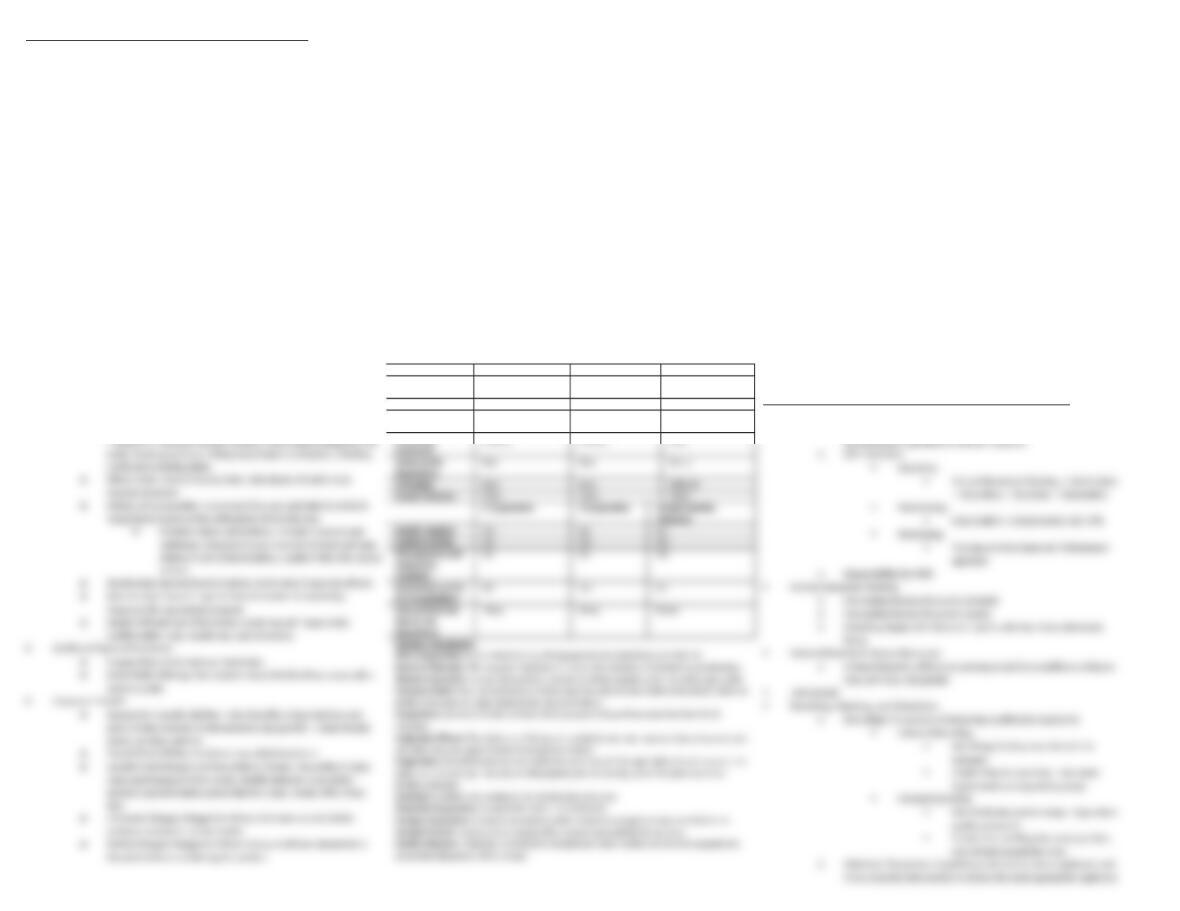
Table of Advantages and Disadvantages:
Sole Proprietorship General Partnership C Corpora!on
Protec!ng Against
Liability
DiEcult DiEcult Easy
Raising Money DiEcult DiEcult Easy
Ownership
Transfer
DiEcult DiEcult Easy
Preserving
DiEcult DiEcult Easy
Join Venture: An agrmnt b/w two or more groups to form a bus en%ty in order to achieve a
speci&c goal or to op for a speci&c pd of %me
Limited Liability: A feature of corp ownership that limits each owner’s &nancial liab to the amt of
money that he or she has paid for the corp’s stock
Limited Partner: A person who inv money in a bus but has no mngmnt resp or liab for losses
beyond the amt inv
Limited-Liability Corpora!on (LLC): A form of bus ownership that combines the bene&ts of a corp
and a partnership while avoiding some of the restriction and disadv of those forms of ownership
Master Limited Partnership (MLP)/Publicly Traded Partnership (PTP): A lim partnership that has
unites of ownership that can be traded on sec exchanges much like shares of ownerships in corp
Merger: The purchase of one corp by another
Not-for-Pro4t Corpora!on: A corp organized to provide a social, educa%onal, religious, or other
service rather than to earn a pro&t
Open Corpora!on: A corp whose stock can be bought and sold by any indv
Partnership: A voluntary assoc of two or more persons to act as co-owners of a bus for pro&t
Preferred Stock: Stock owned by indv or &rms who usually do not have voting rights but whose
claims on dividends are paid before those of common stock owners
Proxy Fight: A technique used to gather enough stockholder votes to control a targeted co
Proxy: A legal form lis%ng issues to be decided at a stockholders’ meeting and enabling
stockholders to transfer their vo%ng rights to some other indv(s)
S-Corpora!on: A corporation that is taxed as though it were a partnership; <100 of certain
stockholders
Sole Proprietorship: A bus that is owned (and usually op) by one person
Stock: Shares of ownership of a corp
Stockholder: A person who owns a corp’s stock
Syndicate: A temp assoc of indvs or &rms organized to perform a speci&c task that req a large amt
of capital
Tender o5er: An offer to purchase the stock of a &rm targeted for acquisi%on at a price just high
enough to tempt stockholders to sell their shares
Unlimited Liability: A legal concpt that holds a bus owner personally resp for all the debts of the
bus
Chapter 9: A8rac!ng and Retaining the Best Employees
Human Resources Management: An Overview
oHRM: All the ac%vi%es involved in acquiring, maintaining, and