Chapter 39
Question 1(1 point)
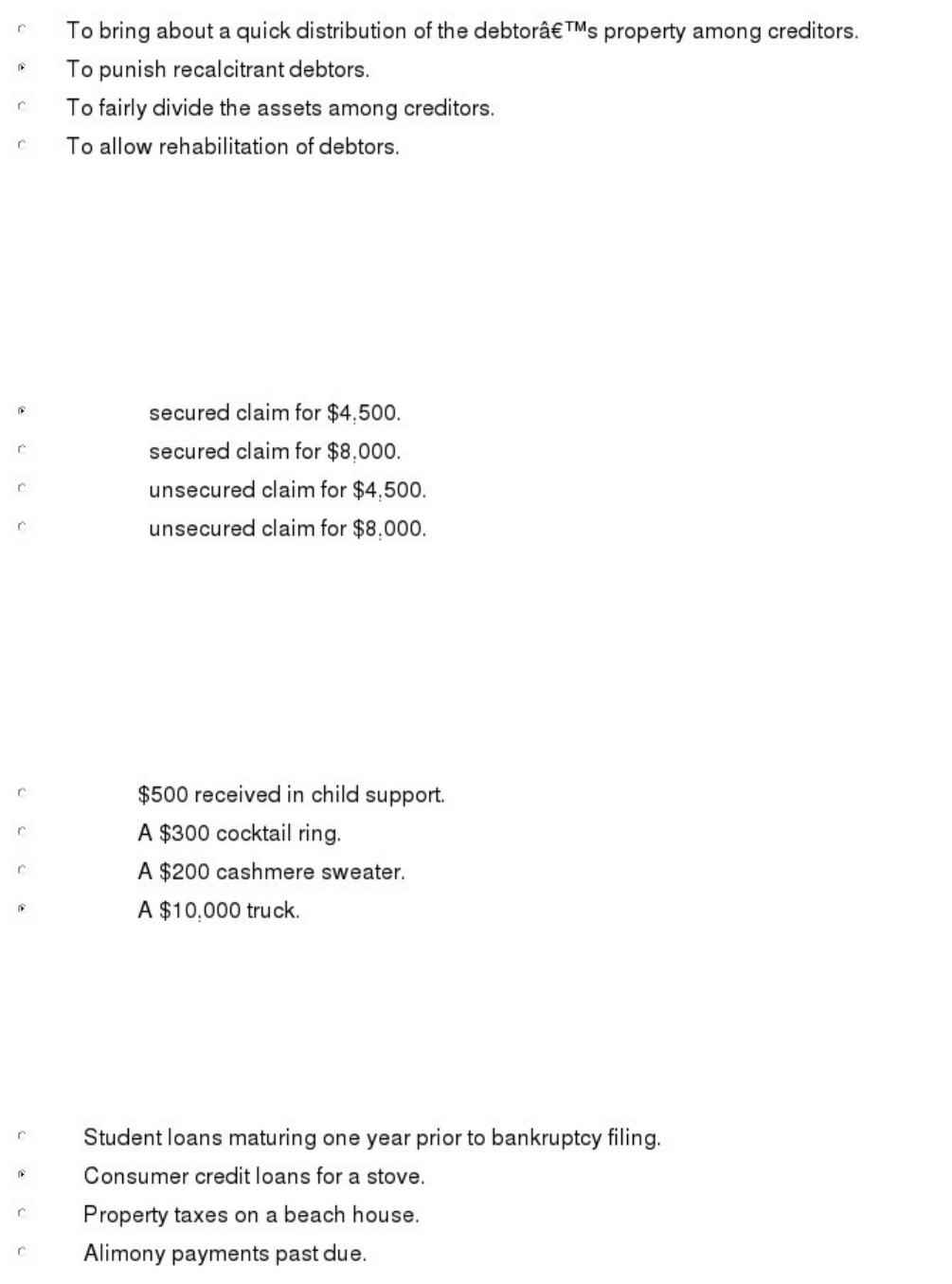
All but one of the following is a purpose of bankruptcy legislation:
Question 2(1 point)
Ken loaned Barb $8,000 and took back a note secured by Barb’s car. If Barb files for
bankruptcy when the value of the car is $4,500, what is Ken’s status? He has a(n):
Question 3(1 point)
All but which one of the following would be exempt from bankruptcy under the federal
law?
Question 4(1 point)
Which of the following debts would be discharged in bankruptcy?
Question 5(1 point)
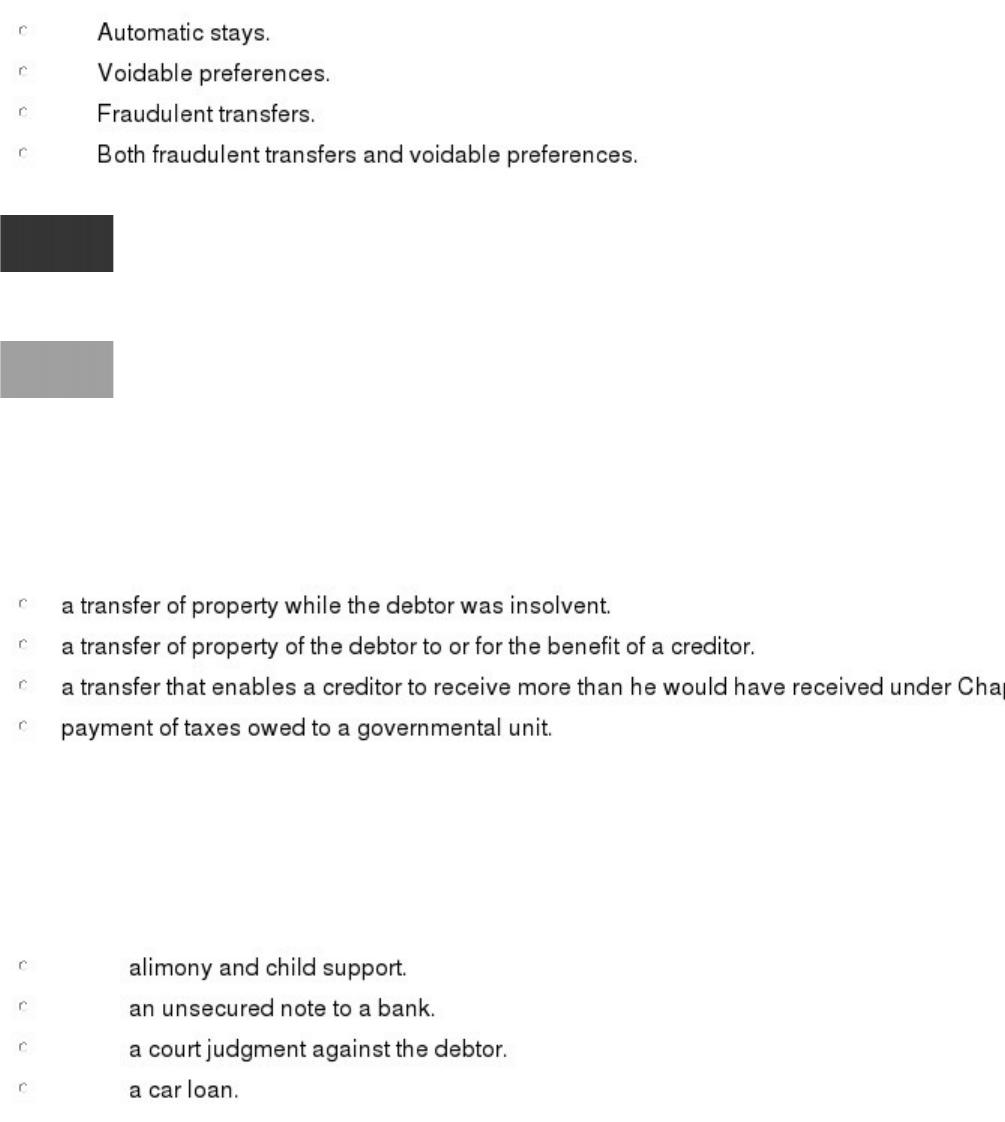
A trustee in bankruptcy may avoid which of the following?
Random
Question 6(1 point)
Voidable preferences include all of the following EXCEPT:
Question 7(1 point)
All of the following are dischargeable in bankruptcy EXCEPT:
Question 8(1 point)
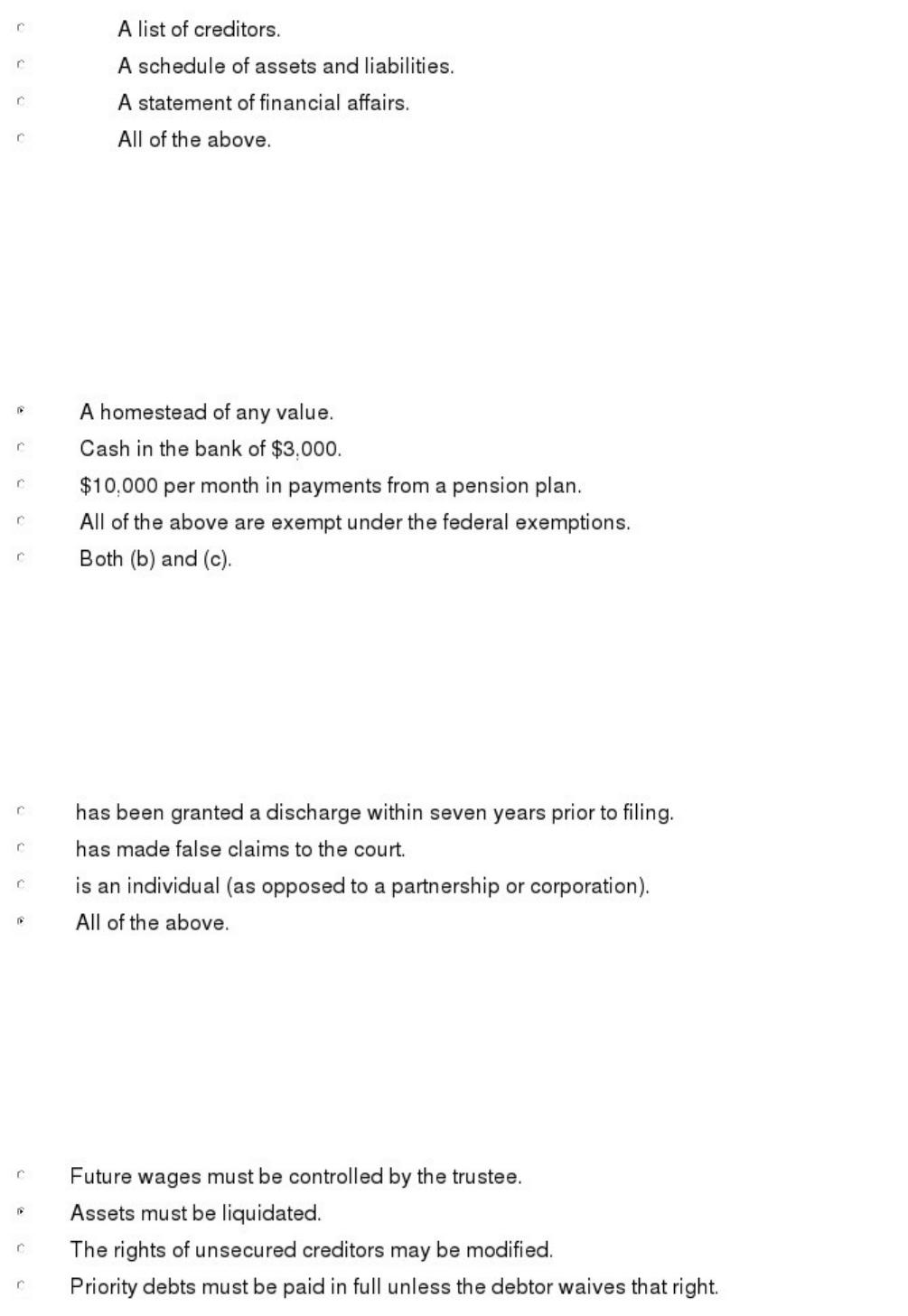
Under the Bankruptcy Code, the debtor must file which of the following?
Question 9(1 point)
Under the exemptions found in the federal Bankruptcy Code, which of the following items
may be kept by the debtor?
Question 10(1 point)
A court will not grant a discharge under Chapter 7 to a debtor who:
Question 10 options:
Question 6
(1 point)
A Chapter 13 plan of reorganization may include all but which one of the following?
Question 7(1 point)
Which of the following claims will be paid first from the debtor’s estate in a Chapter 7
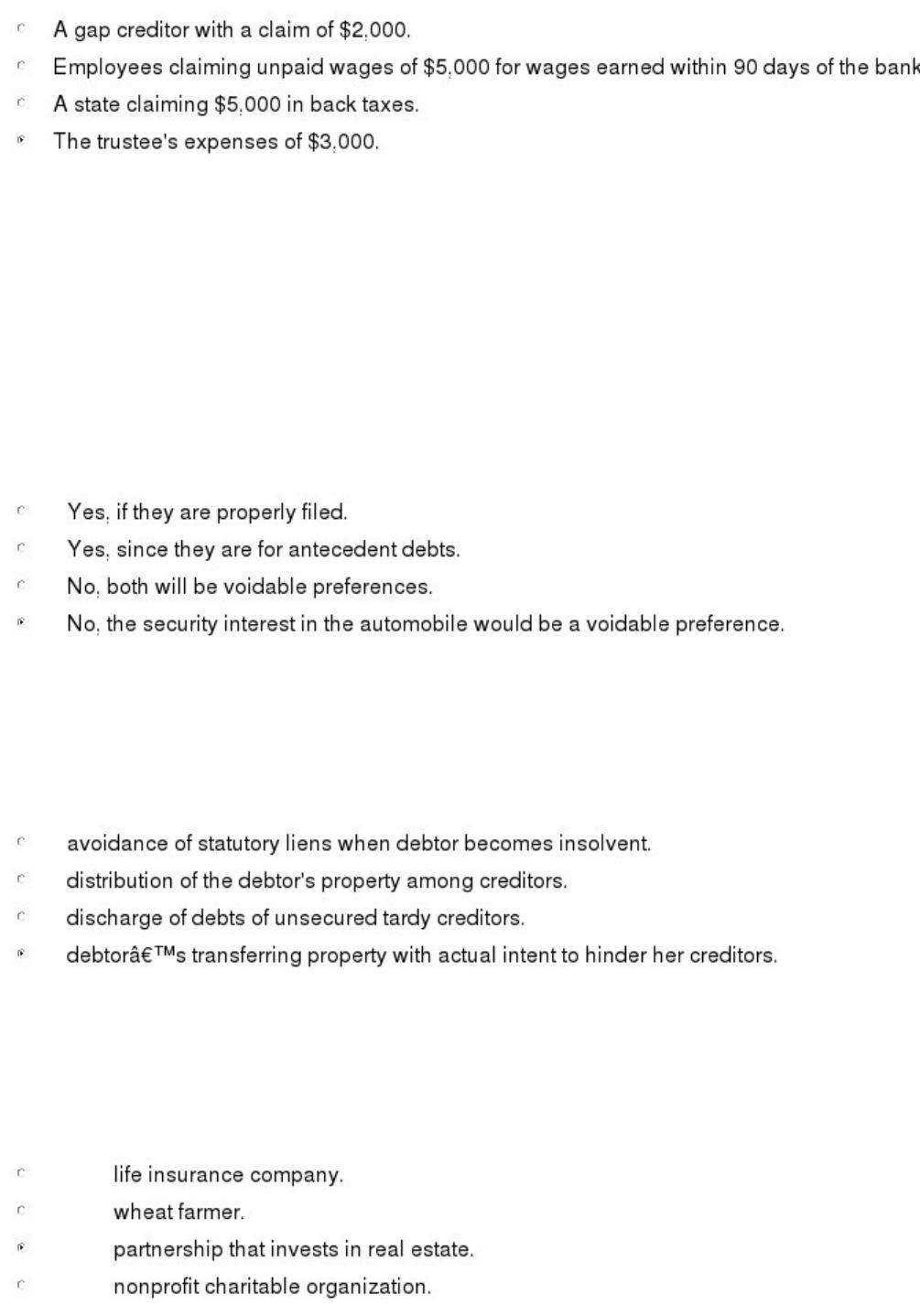
bankruptcy?
Question 8(1 point)
In March, Margaret made a loan to Pete for $10,000. Three months later, she began to hear
rumors about Pete’s failing financial condition. When in July, Pete asked her to loan him an
additional $2,000 to buy inventory, Margaret required a security interest in the inventory
and also demanded that Pete secure the first loan with his personal automobile. In
September, Pete filed bankruptcy. Will these security interests stand up?
Question 9(1 point)
One type of fraudulent transfer consists of the:
Question 10(1 point)
An involuntary petition for bankruptcy can be filed against a: