Chapter 3: Demand and Supply
Markets bring buyers and sellers together so they can interact and transact with
each other.
Let’s start by thinking about markets where there are shortages or surpluses.
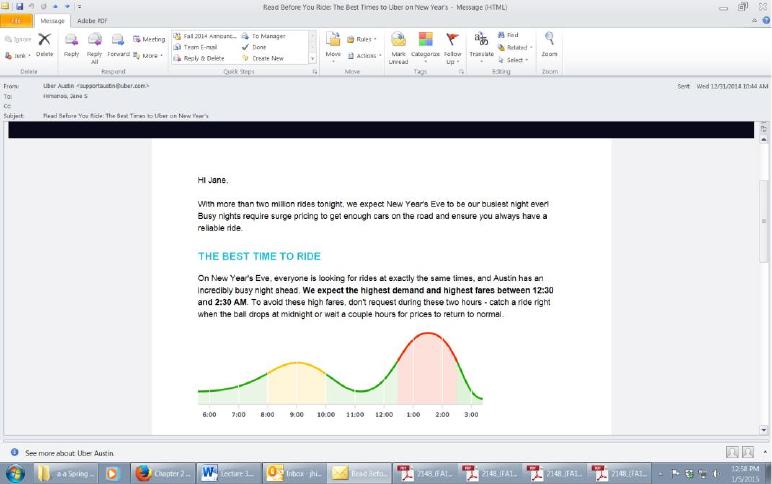
Here’s an email I received from Uber on 12/31/2014. Why would the price
fluctuate so much on New Year’s Eve? Why would a believer in free-markets
think that the fluctuations are good?
Shortages occur when buyers want to buy more units than are available for sale
at the current price. Shortages are signals for buyers and sellers to raise the
price of the good in question. If the price rises then both buyers and sellers will
react. Buyers will want to buy fewer units. Sellers will try to supply more units.
These behavioral changes will reduce the shortage.
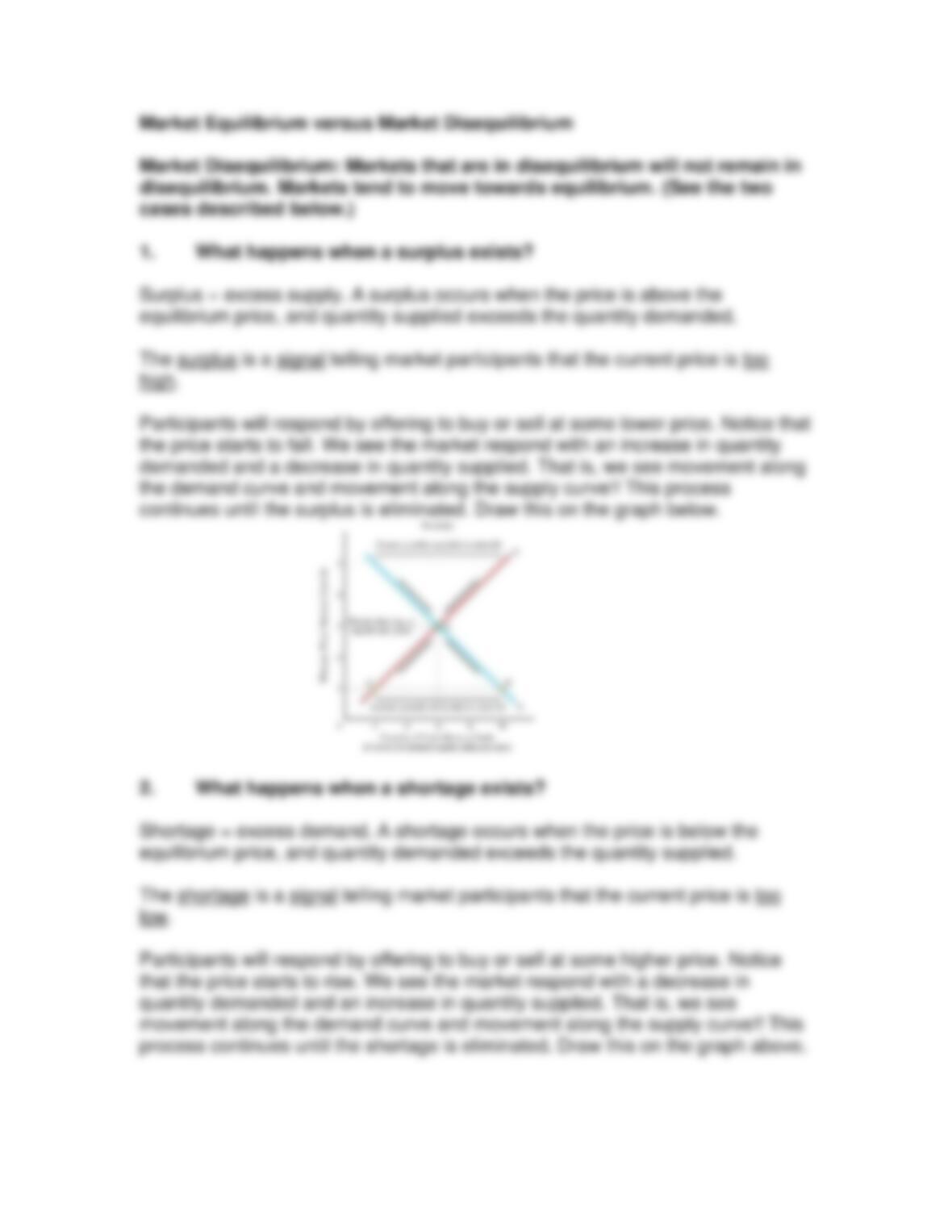
Surpluses occur when buyers want to buy fewer units than are available for sale
at the current price. Surpluses are signals for buyers and sellers to lower the
price of the good in question. If the price falls then both buyers and sellers will
react. Buyers will want to buy more units. Sellers will no longer want to supply as
many units. These behavioral changes will reduce the surplus.
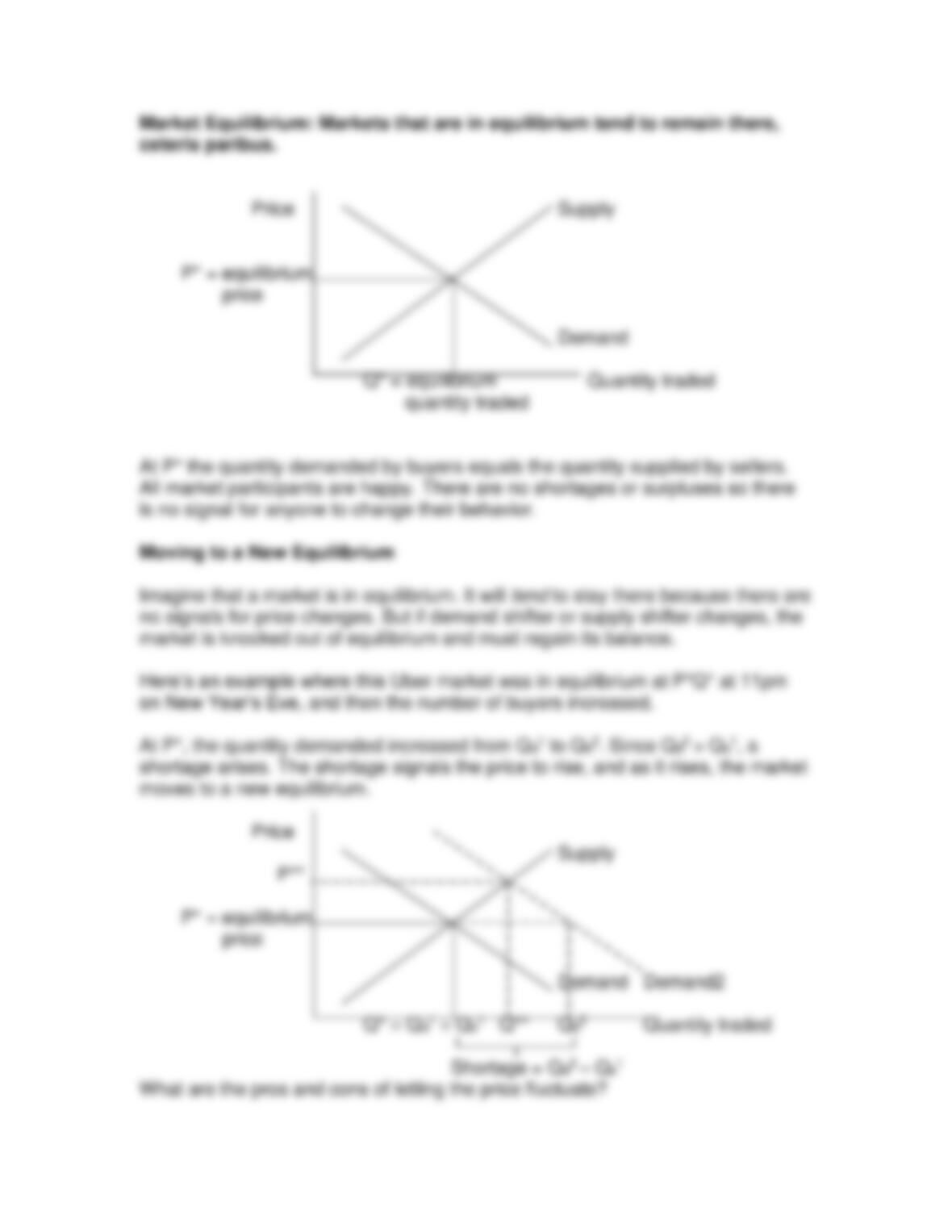
What happens if buyers want to buy the same number of units as are available
for sale at the current price? In this case there is no signal for price changes. The
market is in equilibrium where the number of units demanded by buyers equals
the number of units supplied by sellers.
Conclusion: surpluses and shortages generally lead to price changes.
Now, for the big question: What causes shortages or surpluses to occur?
Answer: Changes in market conditions.
Changes in market conditions frequently affect only potential buyers or only potential
suppliers. Therefore, economists typically classify these types of changes as “demand
shifters” and “supply shifters.”
Markets work best when they are allowed to respond to shortages and surpluses. Below,
we will develop and use graphs to study market responses. You will learn to predict what