Real Options
There is frequently an alternative to investing immediately—the decision to invest or not can be postponed
until more information becomes available. By waiting, a better-informed decision can be made, and
this investment timing option adds value to the project and reduces its risk.
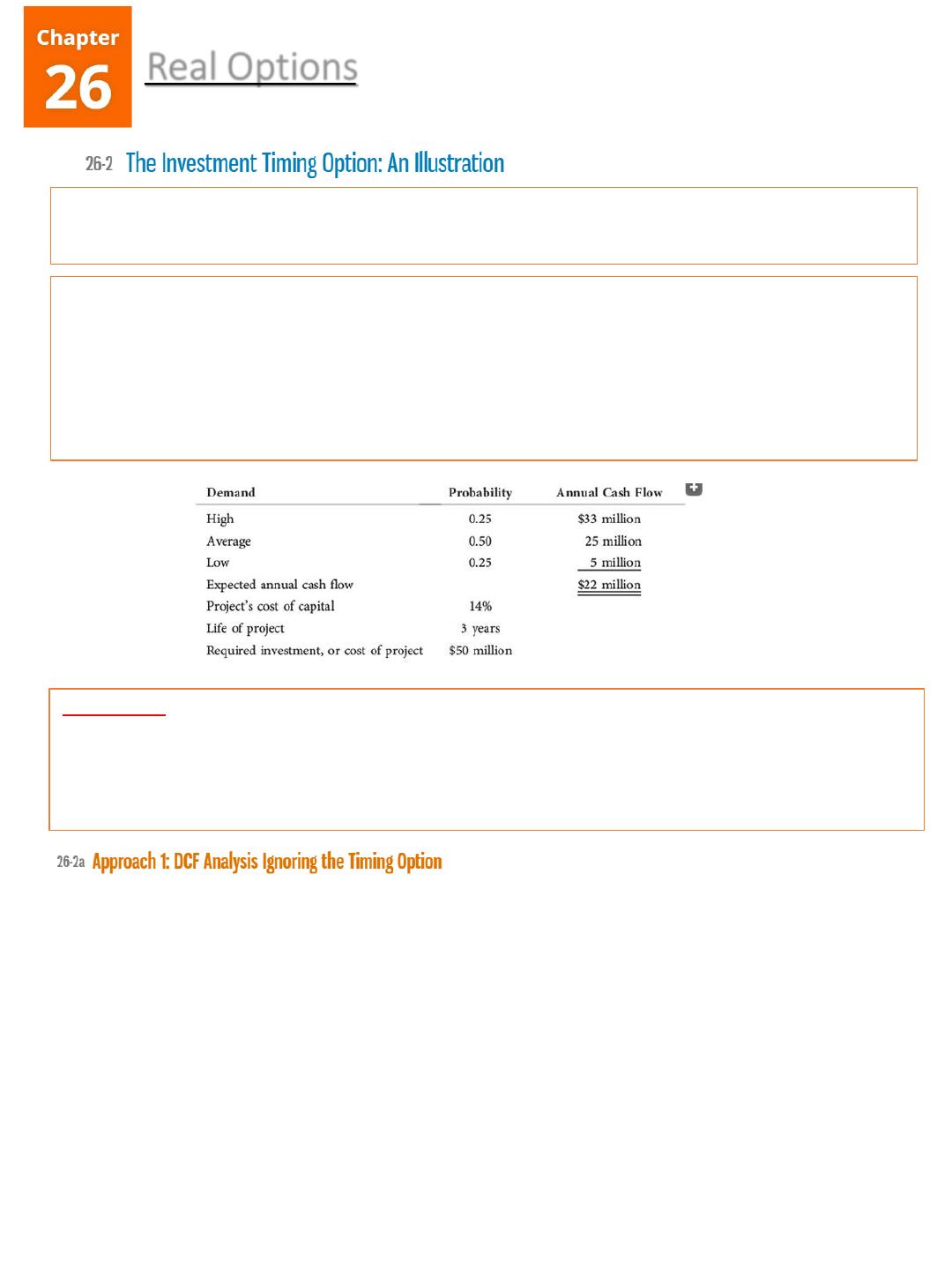
Murphy Systems is considering a project for a new type of handheld device that provides wireless Internet
connections. The cost of the project is $50 million, but the future cash flows depend on the demand for
wireless Internet connections, which is uncertain. Murphy believes there is a 25% chance that demand for
the new device will be high, in which case the project will generate cash flows of $33 million each year for 3
years. There is a 50% chance of average demand, with cash flows of $25 million per year, and a 25%
chance that demand will be low and annual cash flows will be only $5 million. A preliminary analysis
indicates that the project is somewhat riskier than average, so it has been assigned a cost of capital of 14%.
Here is a summary of the project’s data:
The OPTION: Murphy could choose to wait one year, when more information about demand will be available.
The cost will still be $50 million if Murphy waits, and the project will still be expected to generate the indicated
cash flows, but each flow will be pushed back 1 year. If Murphy waits, then it will know which of the demand
conditions—and hence which set of cash flows—will occur. Clearly, if the product is in low demand, they can
choose to abandon the project. The question we will answer in this chapter is now apparent, what is the value
of this option?
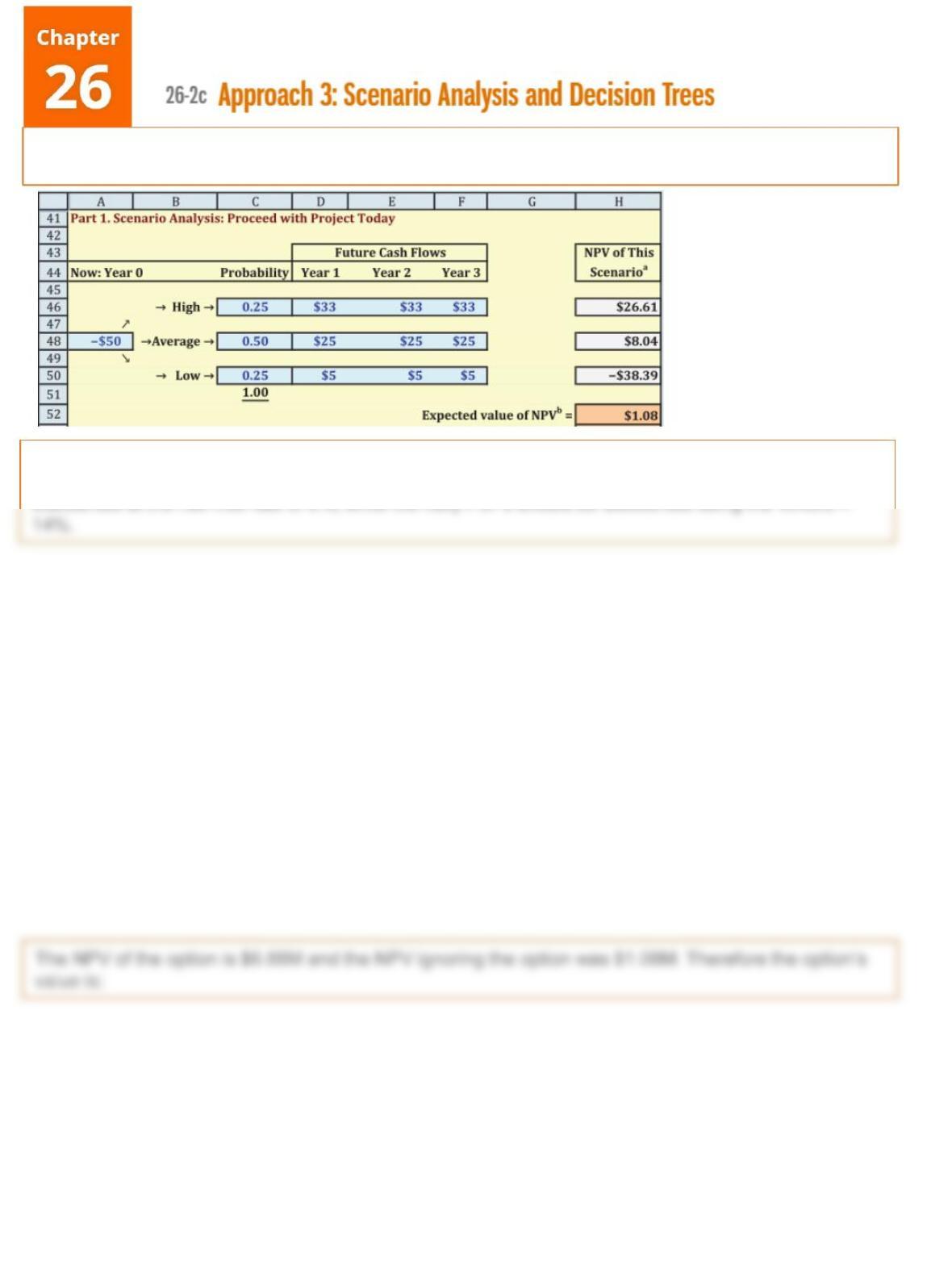
Part 1 of a decision tree similar to calculate the NPV of each Scenario. Each possible outcome is
shown as a “branch” on the tree.
Part 2 of the decision tree now replicates the option. For Murphy, the cash flows are pushed forward 1
year and the negative NPV scenarios are avoided. As the cash outflow of $50M is known, it should be