Chapter 2 Overview of Transaction Processing and Enterprise Resource Planning
Systems
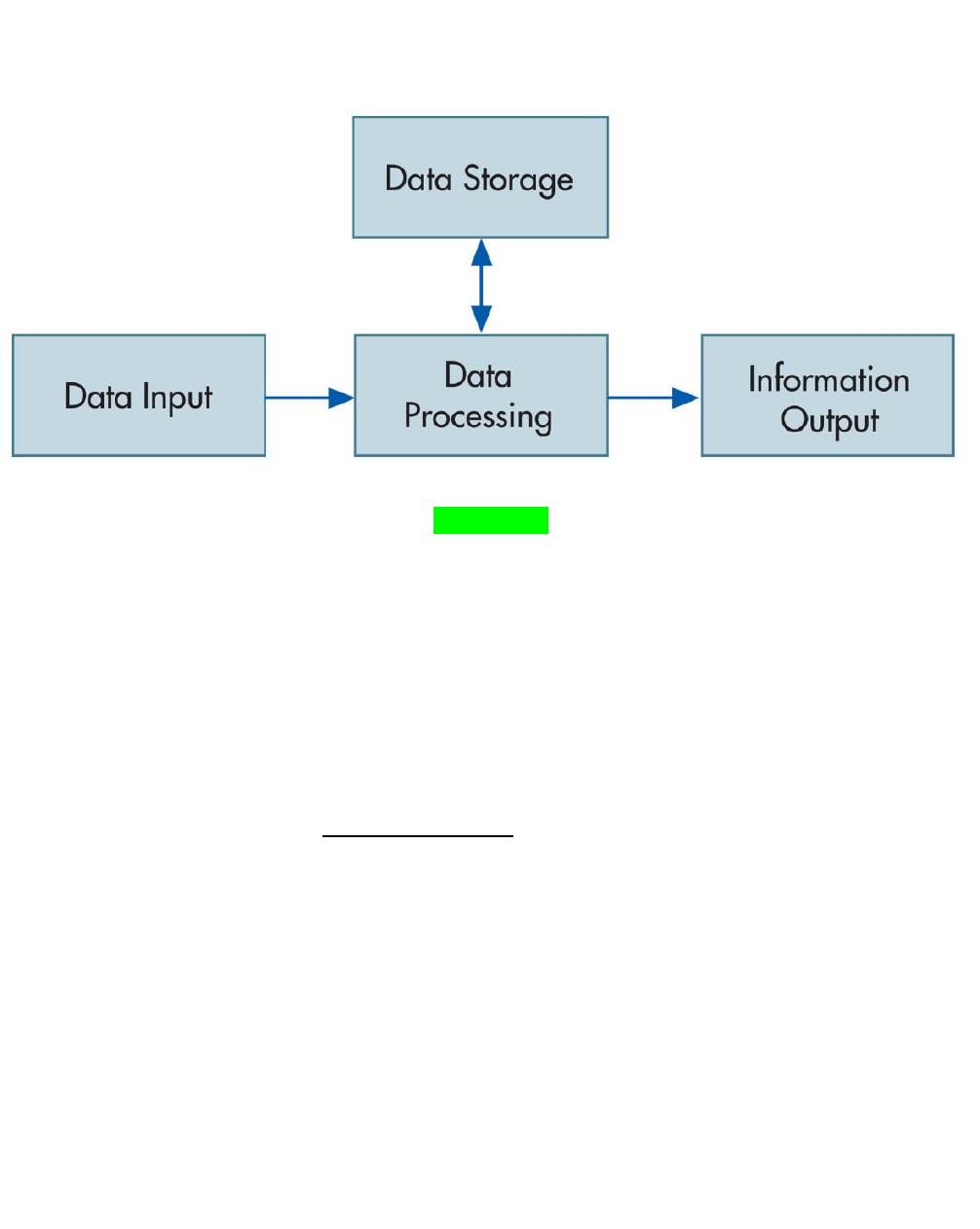
Data processing cycle – The four operations (data input, data storage, data processing, and
information output) performed on data to generate meaningful and relevant information.
Data Input
Steps in processing input are:
• Capture transaction data triggered by a business activity (event)
• Make sure captured data are accurate and complete
• Ensure company policies are followed (e.g., approval of transaction)
Data Capture
• Information collected for an activity includes:
o Activity of interest (e.g., sale)
o Resources affected (e.g., inventory and cash)
o People who participated (e.g., customer and employee)
• Information comes from source documents
Source Documents
• Capture data at the source when the transaction takes place
o Paper source documents
source documents – Documents used to capture transaction data at its source –
when the transaction takes place. (Examples: sales orders, purchase orders, and
employee time cards).
o Turnaround documents 周转文件 – Records of company data sent to an external
party and then returned to the system as input. Turnaround documents are in
machine-readable form to facilitate their subsequent processing as input records.
(example: utility bill).
o Source data automation (captured data from machines, e.g., Point of sale scanners
at grocery store) – The collection of transaction data in machine-readable form at the
time and place of origin. (Examples: point-of-sale terminals and ATMs.)
Data Storage
• Important to understand how data is organized
o Chart of accounts
▪ Coding schemas that are well thought out to anticipate management needs
are most efficient and effective
chart of accounts – A listing of all the numbers assigned to balance sheet and
income statement accounts. The account numbers allow transaction data to be
coded, classified, and entered into the proper accounts. They also facilitate financial
statement and report preparation. 会计科目表,是指按照经济业务的内容和经济管理的要
求,对会计要素的具体内容进行分类核算的会计科目所构成的集合。
o Transaction journals (e.g., sales)
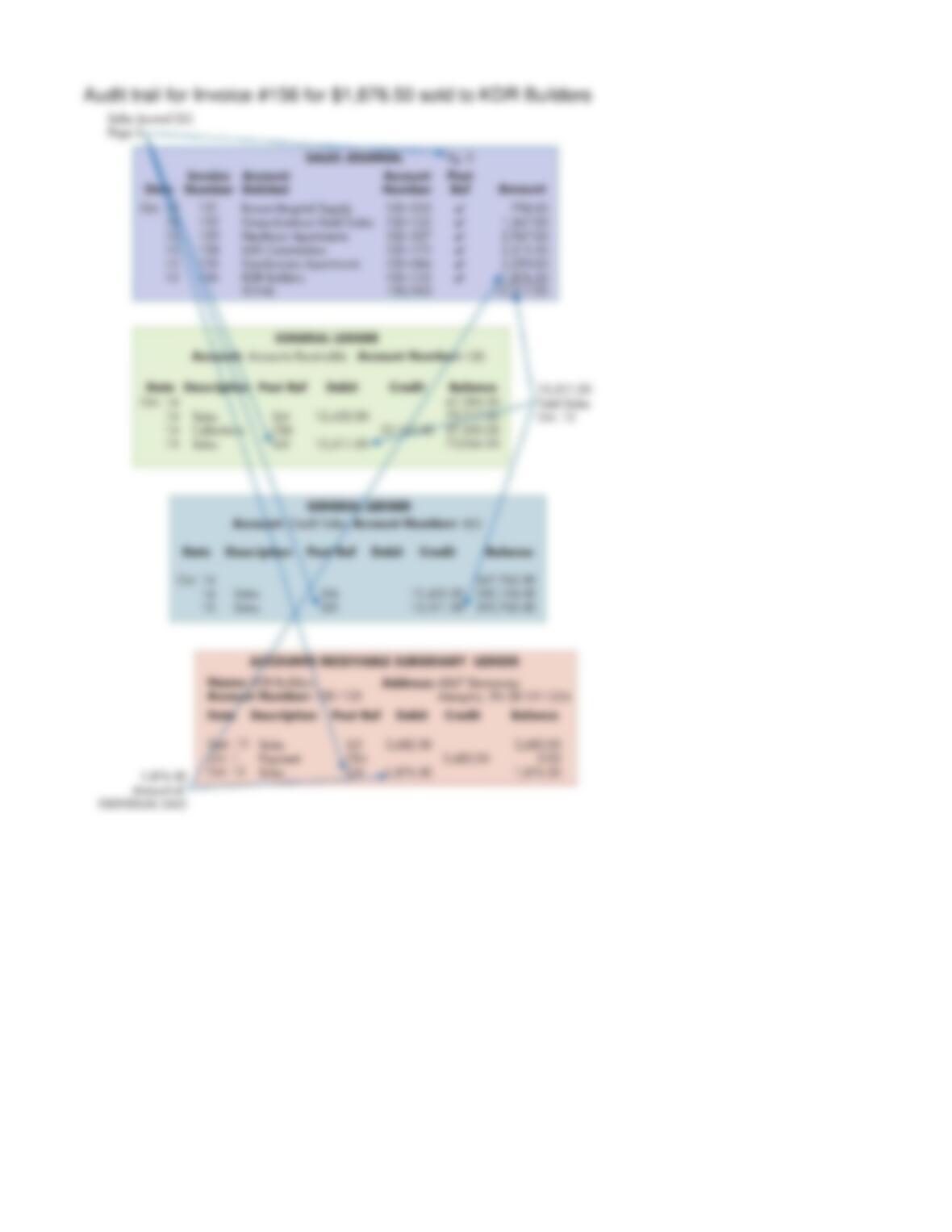
o Subsidiary ledgers (e.g., accounts receivable) – A ledger used to record detailed
data for a general ledger account with many individual subaccounts, such as