
INTERNALIZING ETHICS
IN THE CONDUCT OF
BUSINESS
2

All Rights Reserved
BUSINESS ETHICS (SECOND EDITION)
© Oxford Fajar Sdn. Bhd. (008974-T), 2018 2–3
At the end of this chapter, you should be able to:
❑Recognize the theoretical models of Kohlberg and Trevino
underpinning moral development and ethical reasoning
❑Identify and discuss the common ethical challenges faced by
business people
❑Identify and explain the three levels of decision-making
❑Differentiate between ethical management and management of
ethics
❑Discuss the importance of integrating economic, legal and moral
dimensions in making effective, fair business decisions
❑Identify and explain the three check questions that one has to ask
and self-assess when faced with an ethical challenge
❑Discuss the role of religion in resolving ethical issues in business
Learning Outcomes

All Rights Reserved
BUSINESS ETHICS (SECOND EDITION)
© Oxford Fajar Sdn. Bhd. (008974-T), 2018 2–4
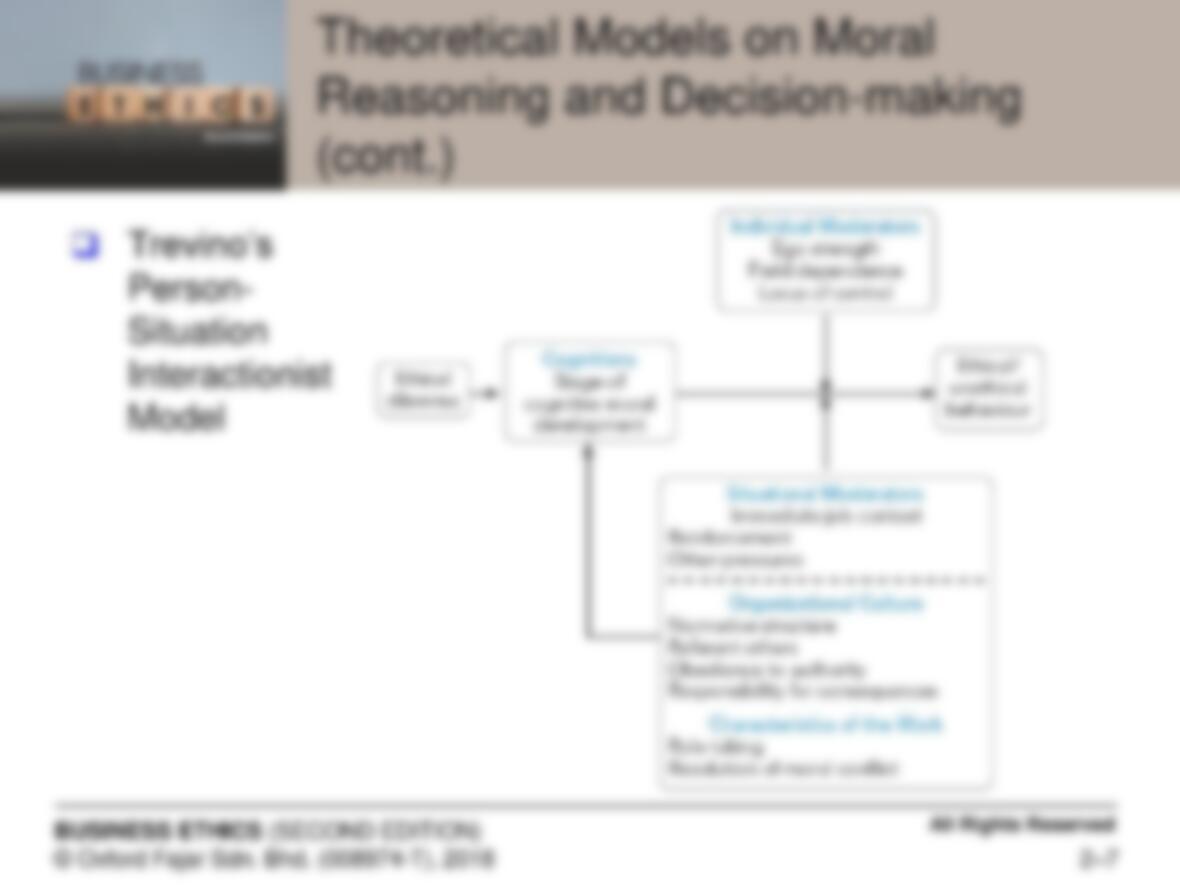
❑There are two theoretical models, Kohlberg’s Model of
Cognitive Moral Development and Trevino’s Person-Situation
Interactionist Model of ethical reasoning.
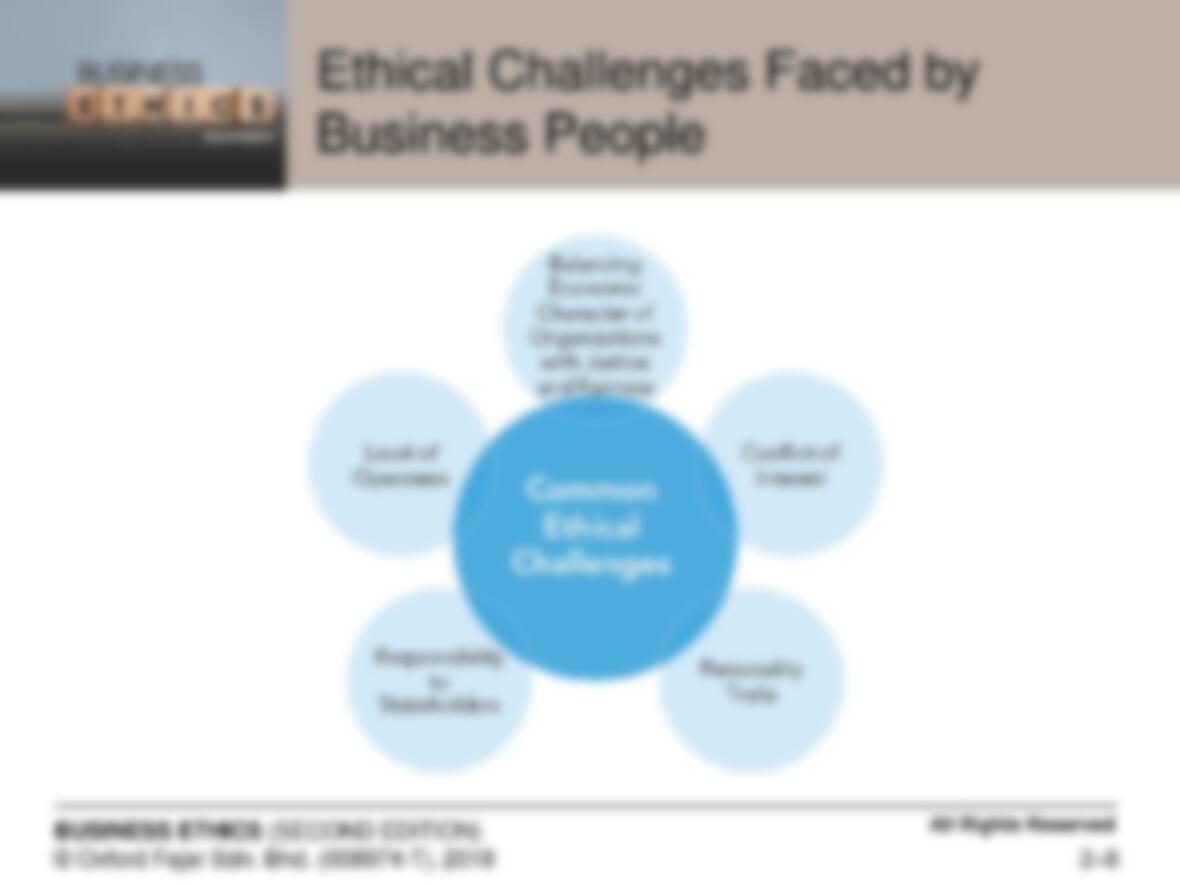
❑The ethical challenges commonly faced by business people
(balancing the economic character of organizations with
justice and fairness, conflict of interest, personality traits,
responsibility to stakeholders, level of openness) in a
corporate environment will be discussed.
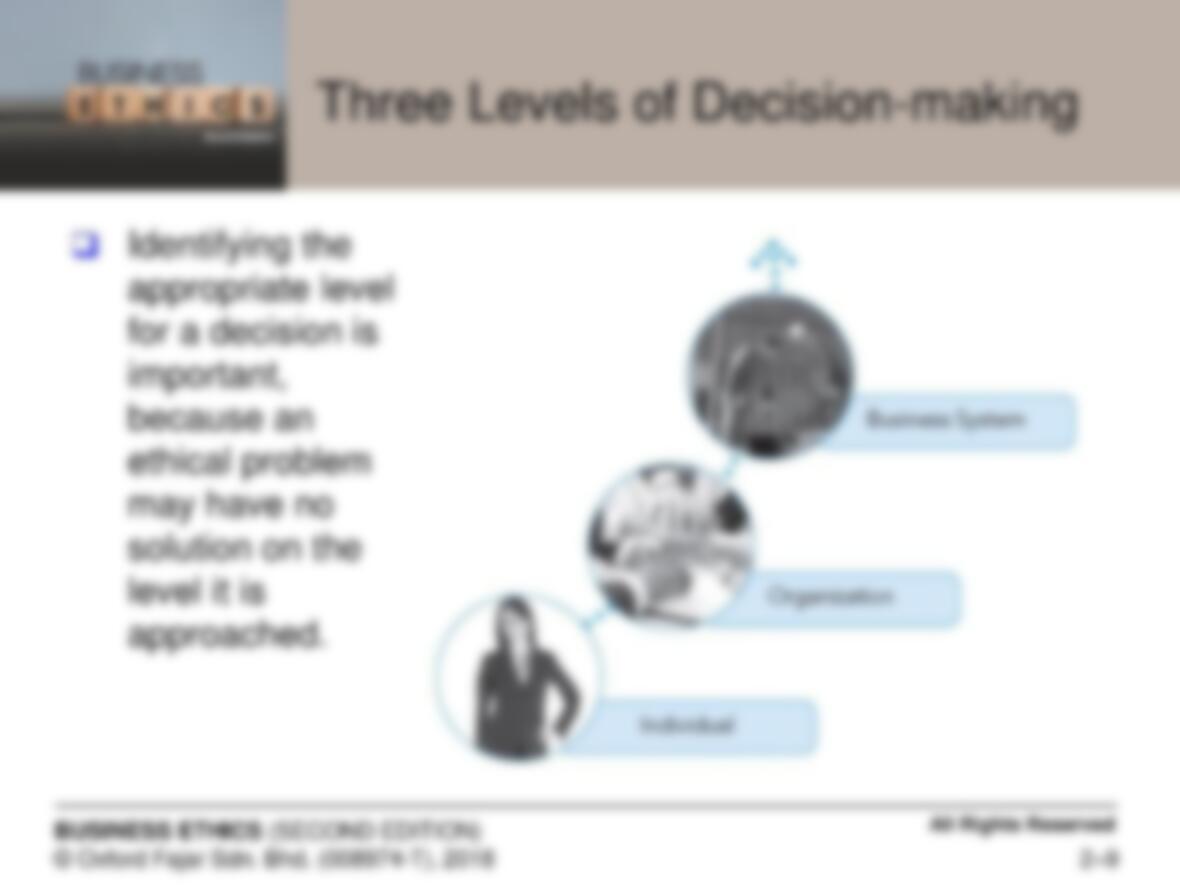
❑There are three levels of decision-making (the individual,
organizational and business systems).
Introduction
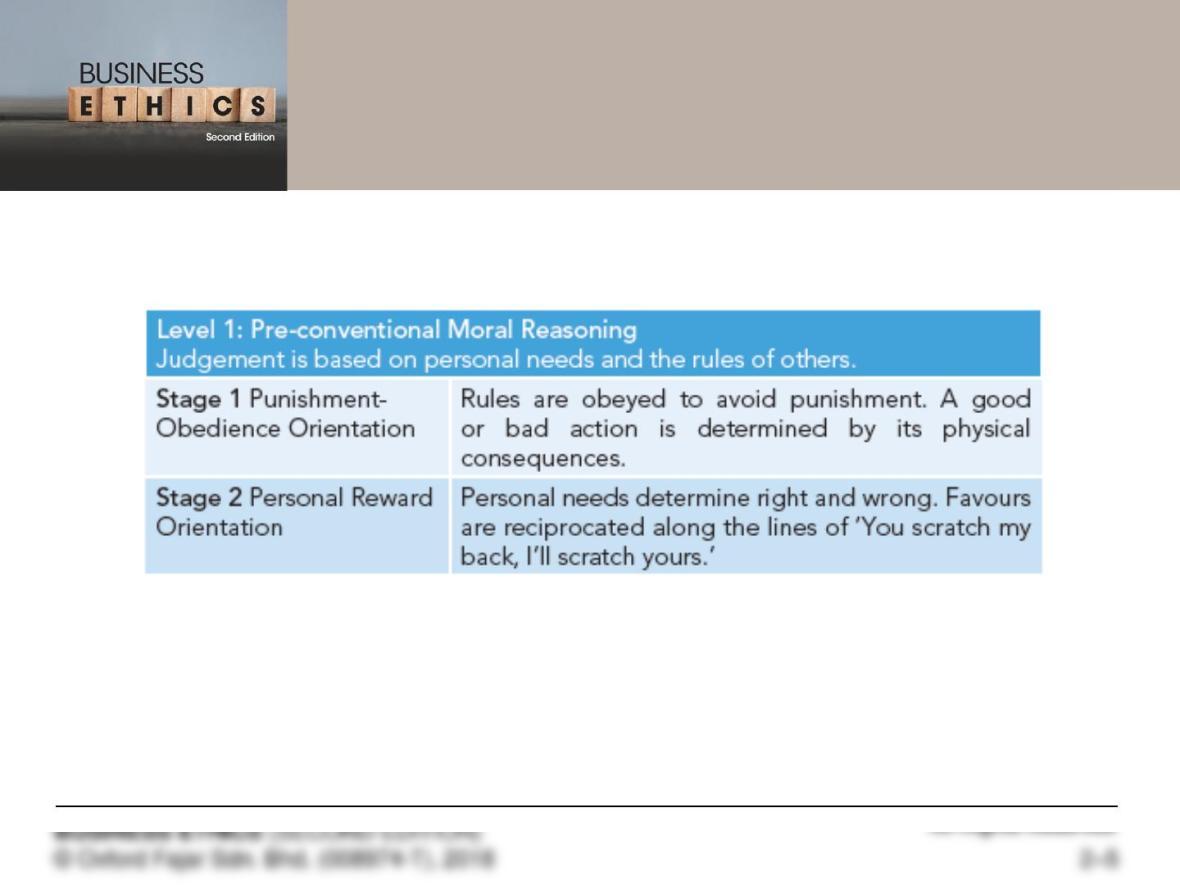
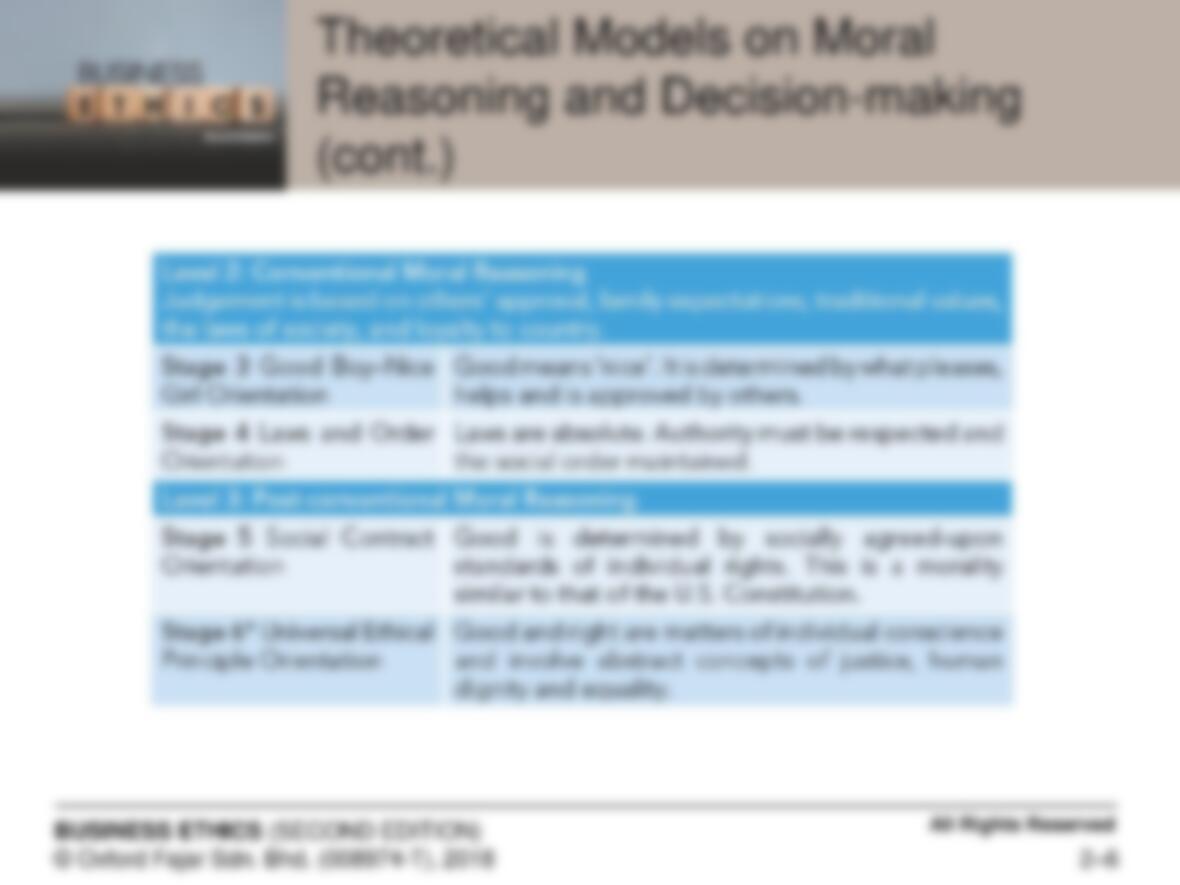
❑Kohlberg’s Model of Cognitive Moral Development
Theoretical Models on Moral
Reasoning and Decision-making