1
CHAPTER 1 : INTRODUCTION
Managerial economics :
Def : application of microeconomics theory and quantitative techniques to solve managerial
decision problems in order to achieve a firm’s objectives most efficiently subject to some
constraints
Microeconomics : supply, demand, cost competition
Quantitative methods : mathematical economics, optimization and econometrics
Theory of the firm :
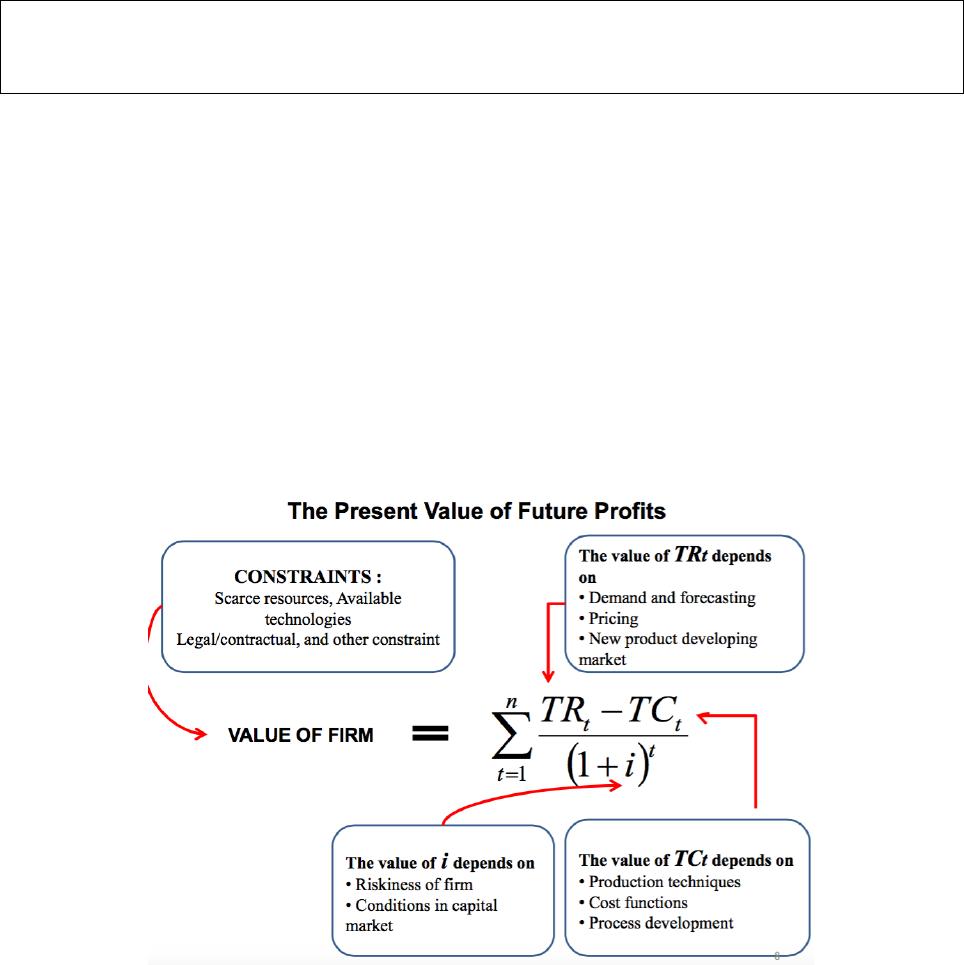
1st goal firm : maximize its wealth/value
Value of firm = present value of expected future net cash flows = profits
Profit = Total Revenue – Total Cost
i = annual discounting rate
Profit measurement :
2 measures of profit :
• Economic profit = Total Revenue – Opportunity Cost
Opportunity cost = explicit cost + implicit cost
• Accounting profit = Total Revenue – Explicit cost
Explicit cost : actual monetary expenses, going out/relevant costs ex : wages, interest, rent…
Implicit cost : things you gave up, forgot/non-cash costs ex : salary that could have been
earned/leisure time forgone
*Someone should do something or not if : accounting profit > implicit cost, economic profits > 0
Sources of profit :
➢ Innovation : producing products better than existing products in terms of functionality,
technology and style
➢ Risk taking : when future outcomes and likehoods are unknown
➢ Exploiting market inefficiencies : imperfect competition, building barriers to entry,
pricing strategies, diversifying and making good strategic product decisions
Demand and supply :
Market :
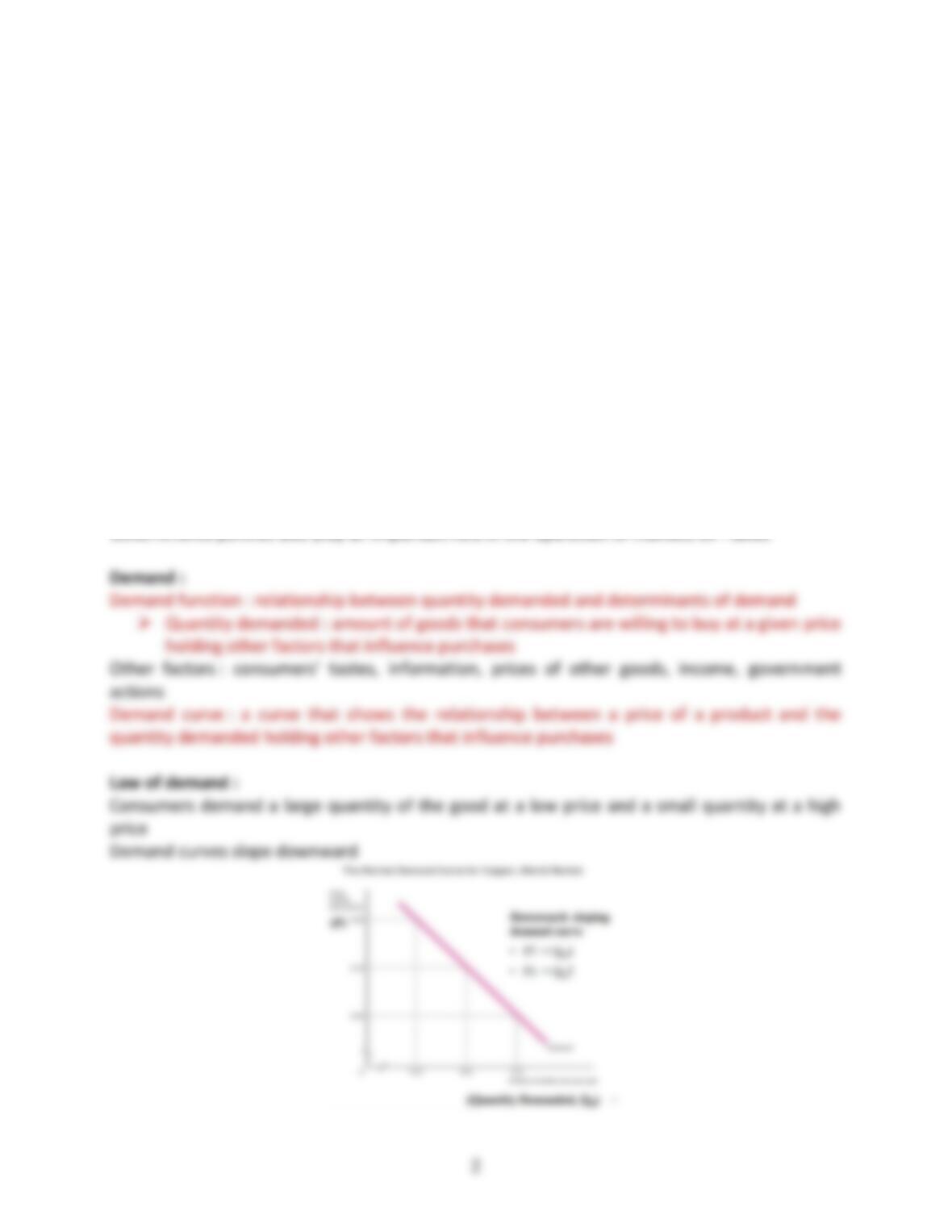
Def : exchange mechanism that allows buyers to trade with sellers
It does not have to be a physical place
Single market : trade in a single good or goods that are closely related
Primary participants : firms → sellers (supply the product) and consumers → buyers (who buy
it)