Central Bank of
Brazil
Edgar Marroquin
ECO 1002H
Professor Miriam Tsymuk
April 11th, 2016

Central Bank of Brazil
The first kind of Central Bank of Brazil was founded in 1080 when Regent Dom Joan VI
from Portugal first arrived in Brazil. Some of the first responsibilities of this Bank of Brazil were
to perform roles of a depositary, discount and issuing bank notes. The Bank of Brazil was also
responsible for the selling of exclusive products of the State administration and royal contracts.
By 1945, the President at that time Mr. Getulio Vargas established the Superintendency for the
Currency and Credit—SUMOC—that served as an institution to control the money supply and
would later become an essential branch of the Central Bank of Brazil. The Central Bank of Brazil
received its authority when three different institutions founded it: the Bureau of Currency and
Credit (SUMOC), the Bank of Brazil (BB), and the National Treasury. The Bank of Brazil would
slowly gain more power and responsibilities at a federal level and would be officially established
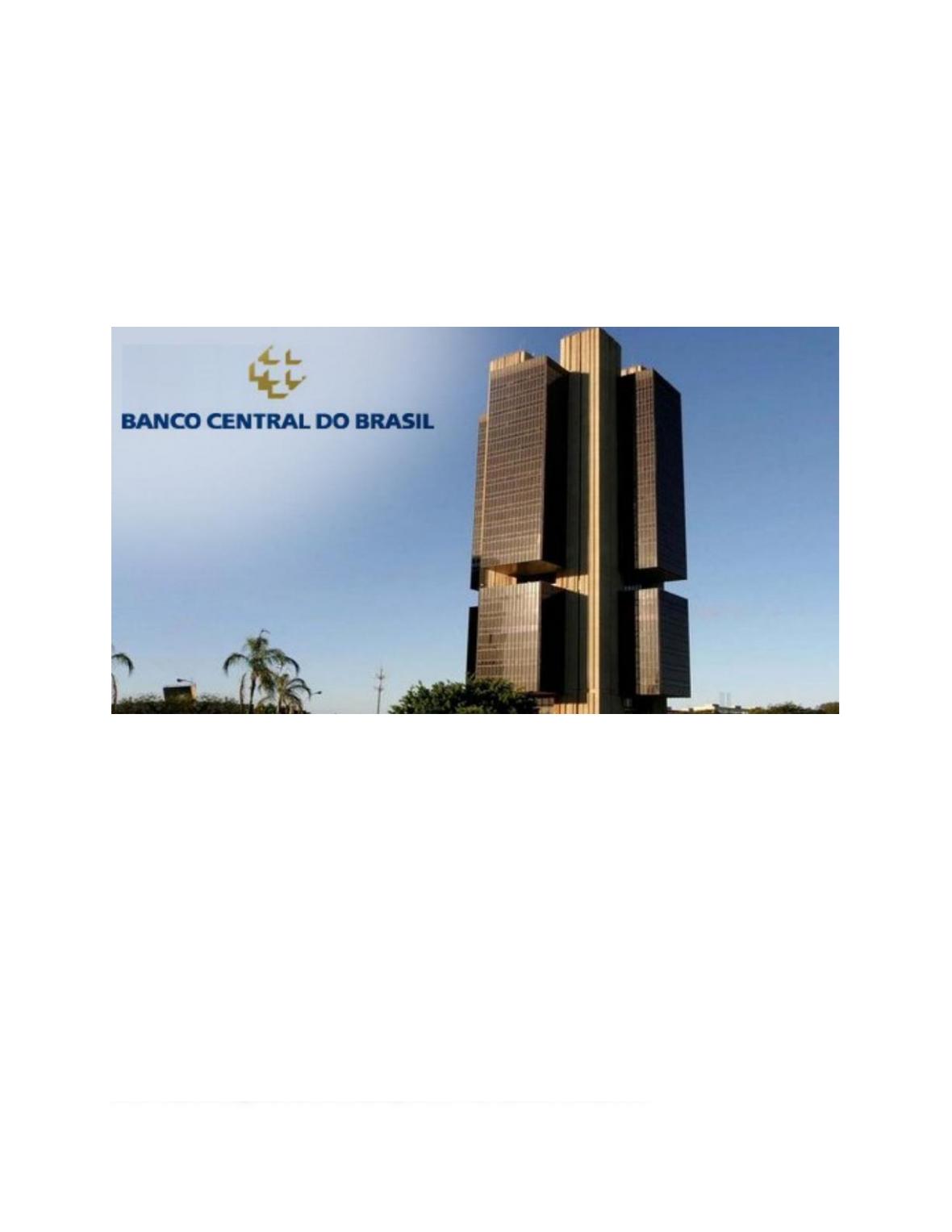
as a part of the Central Bank of Brazil on 1964.1 The Central Bank’s headquarters are located in
Brasília-DF, but there are offices in the state capitals of Rio Grande do Sul, Paraná, São Paulo,
Rio de Janeiro, Minas Gerais, Bahia, Pernambuco, Ceará and Pará. Today some of the main
responsibilities of this bank include managing a Brazil’s currency, money supply, and interest
rates as well as overseeing the commercial banking system of Brazil.
1 “Banco Central Do Brasil.” The Brazil Business. Web. 3 Apr. 2016.
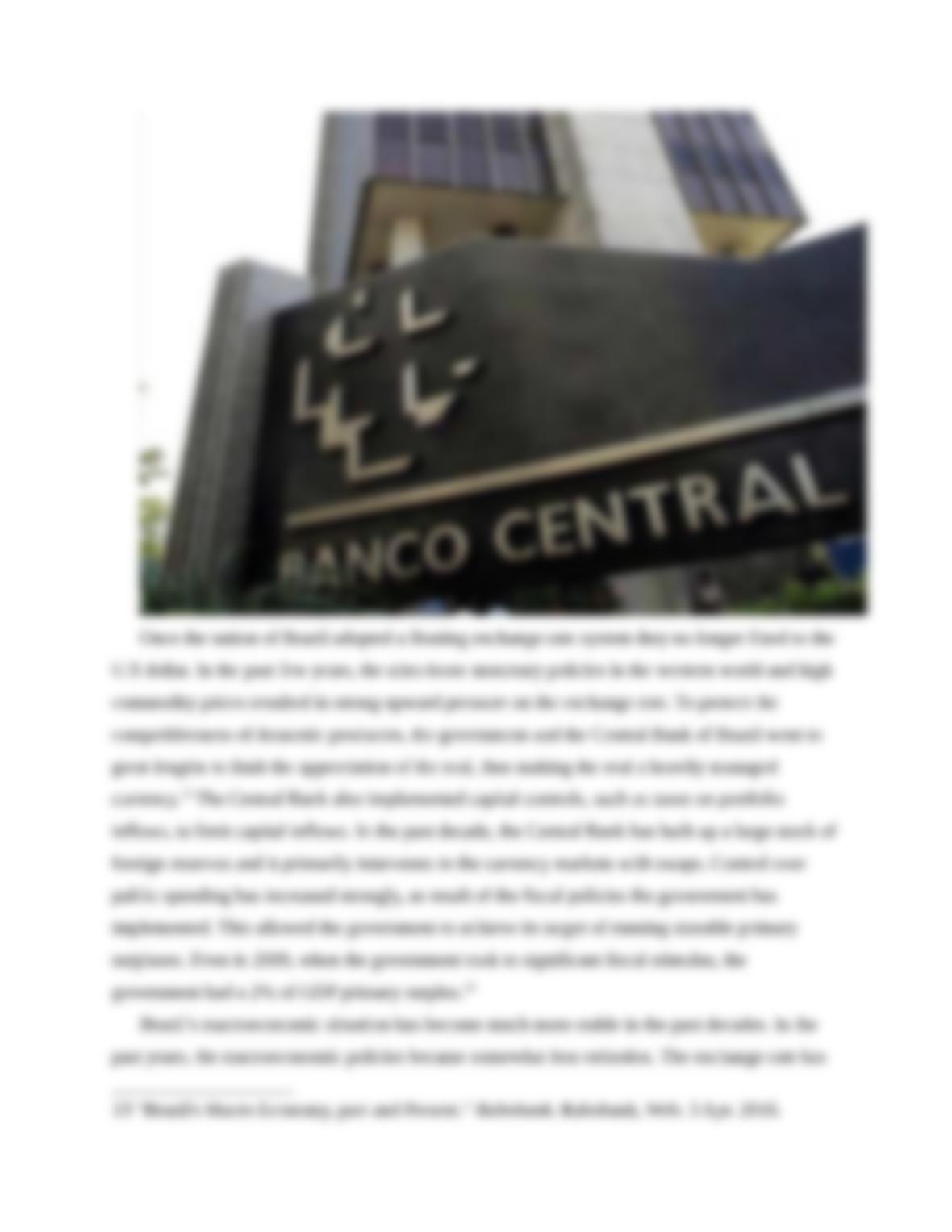
source: http://blog.euvoupassar.com.br/2013/09/
After 1941, the money expansion became very loose to finance the war efforts during
World War II, so inflation stepped up. It became evident that an active monetary entity was
needed and SUMOC (Superintendência da Moeda e do Crédito)—one of the most important
branches of the Central Bank— was founded in1945. SUMOC had limited powers because even
though President Vargas understood well the need for an independent Central Bank to fight
inflation, he could not go so far as to create one because it would limit his powers. Some of the
duties SUMOC had to perform were setting the reserve requirements for commercial banks,
determining the discount rate and the rate for financial assistance in case of insufficient liquidity:
as well as to determine interest rates for bank deposits. SUMOC was also responsible for
supervising the activities of commercial banks, controlling the foreign exchange policy and in
some instances represented the country before international institutions.