1. As completely as possible, sketch the supply chain for Zara from raw materials to
consumer purchase.
Zara makes 40 percent of its own fabrics and produces more than half of its own clothes.
Zara clothes for its stores worldwide are produced in its remote Northeast corner of Spain.
http://info.opas.com/Portals/191
49/images/international-shipping-from-zara.jpg
And this is the sketch of the supply chain from its raw material to the consumers purchase:
First, Zara cuts fabric in-house. It then sends the designs to one of several hundred local
co-operatives for sewing, minimizing the time for raw material distribution.
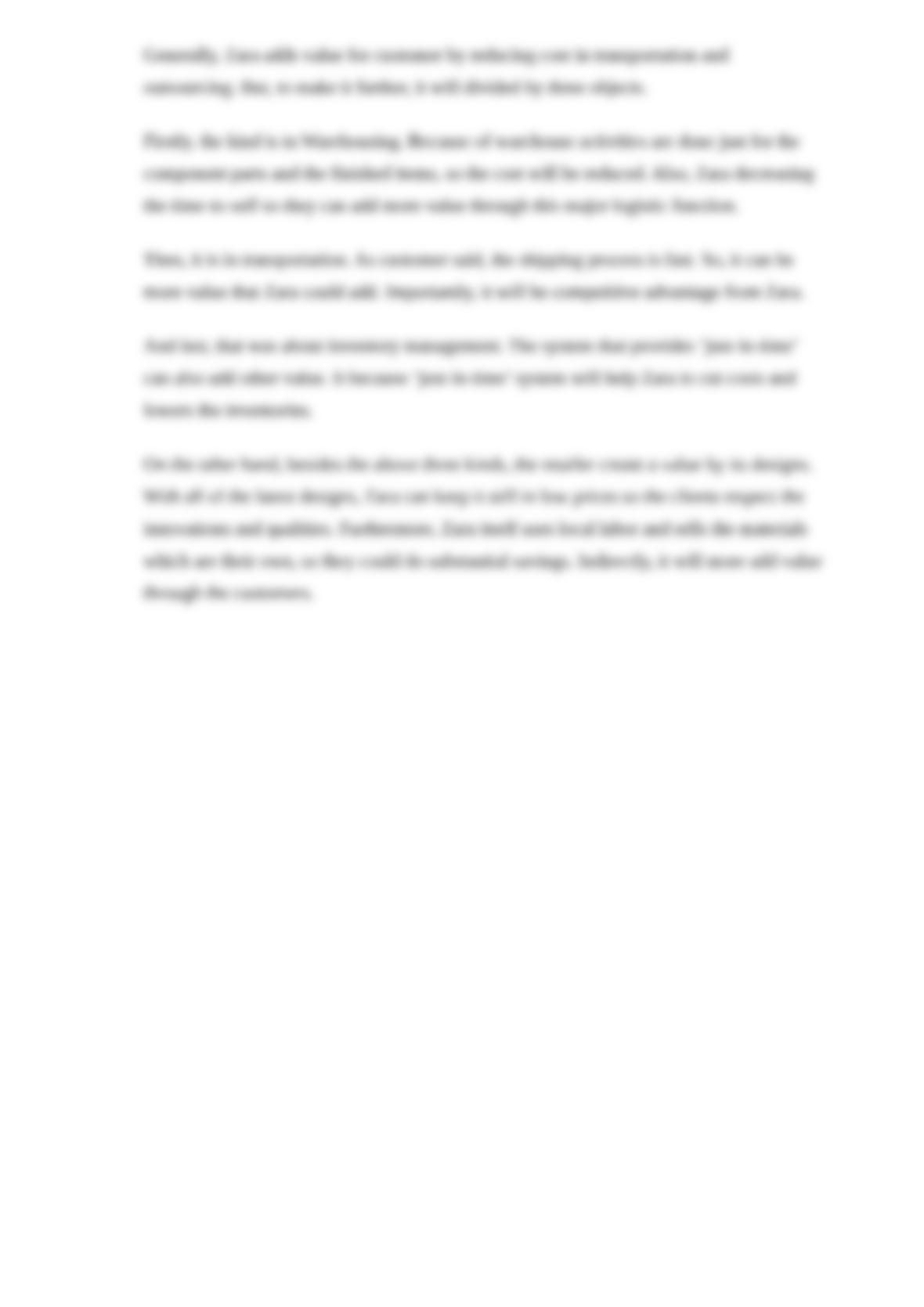
When items return to Zara’s facilities, they are ironed by an assembly line of workers who
specialize in a specific task (lapels, shoulders, etc) and then the clothing are wrapped in
plastic and transported on conveyor belts to a group of giant warehouses. In the warehouse
contains a lot of modern tools and technology that can help the process faster and swift.
For example customized machines patterned after the equipment used by overnight parcel
services process up to 80,000 items an hour. The computerized system sorts, packs, labels,
and allocates clothing items to every one of Zara’s stores. For stores within 24-hours drive,
and then Zara deliver the goods by truck, whereas it ships merchandise via cargo jet to
stores farther away.
So, those are the attempts of Zara’s supply chain.
2. Discuss the concepts of horizontal and vertical conflict as they relate to Zara.
3. Which type of vertical marketing system does Zara employ? List all the benefits