Running Head: WHOLE FOODS MARKET CASE STUDY
1
Case Study: Whole Foods Market
A Case Study of Whole Foods Market
Zachary Stig Moeller
Lock Haven University
WHOLE FOODS MARKET CASE STUDY
2
INTRODUCTION
Whole Foods Market (WFM) is an industry leader for natural and organic food sales
since its inception in 1980. Headquartered in Austin, Texas, WFM was designated the first U.S.
grocer as “Certified Organic” and specializes in the sale of high-quality organic and natural
foods. Ownership of 379 stores throughout 41 U.S. states, Canada, and Great Britain, WFM can
contribute its consistent growth to many internal and external factors. Current day trends,
increased demand for organic and natural foods, strong company values, and a sustainable
strategic approach are all components to WFM’s success over the years. This case study will
analyze both the internal and external environments, as well as the company’s strategic direction
followed by a recommendation and implementation plan.
ENVIRONMENTAL ANALYSIS (INTERNAL AND EXTERNAL)
Internal environmental analysis
WFM focuses on the value-added as an organic and natural foods retailer. WFM
differentiates themselves from the competition by creating an “all–in–one” shopping experience.
Besides offering organic and natural foods, WFM offers many perishable and ready-to-eat foods.
In-store chefs working with chefs from different geographical and demographical stores, WFM
attracts many return customers that enjoy the ever-changing menus.
WHOLE FOODS MARKET CASE STUDY
3
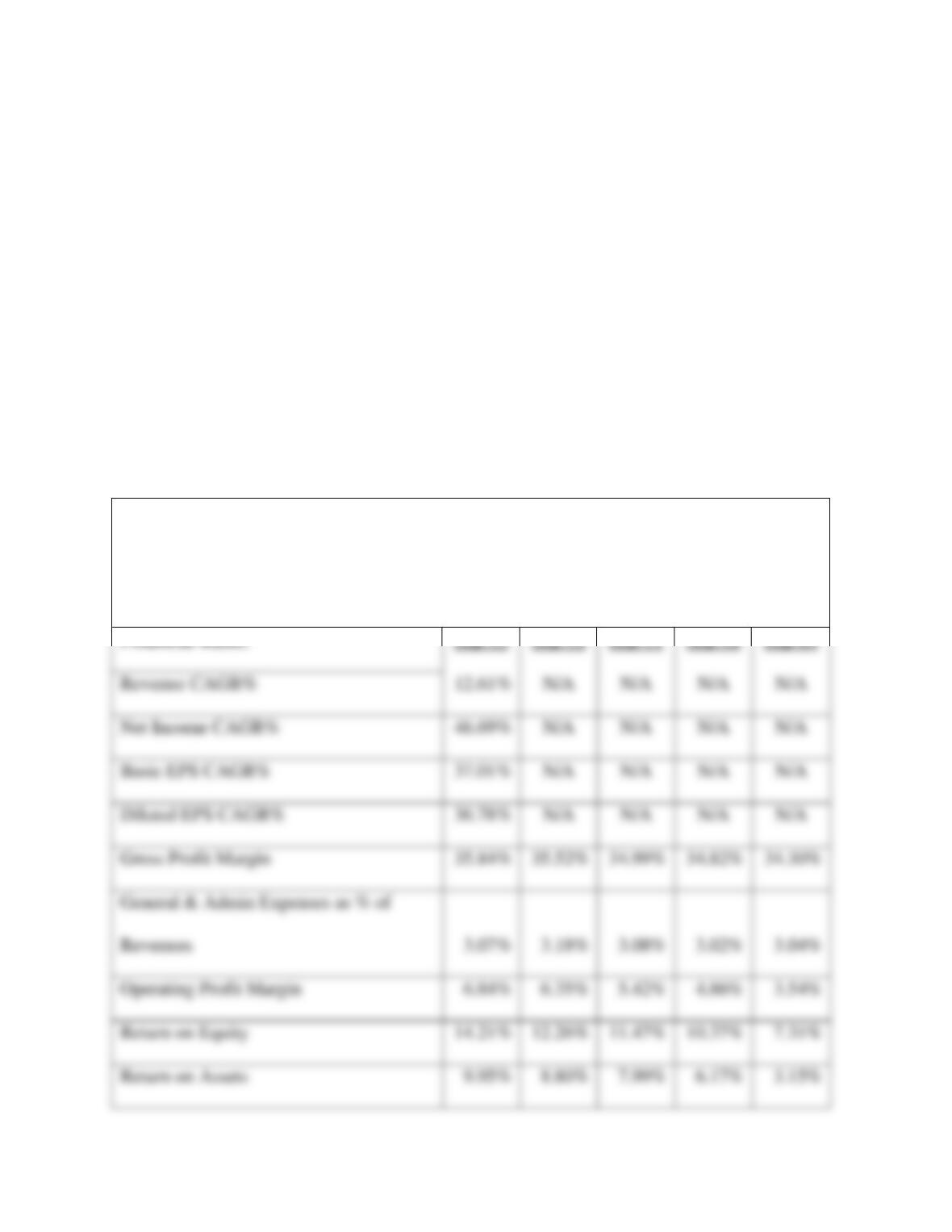
Financially speaking, WFM have consistently improved its economic growth. From
FY09-13 sales have grown at a compound average rate of 12.61%, and net income grew at a
compound average rate of 46.69%. The debt to assets ratio sees the most noticeable change, with
a decrease from 19.53% in FY09 to 0.49% in 2013, a favorable change. The return on assets
shows an increase from 3.15% in FY09 to 9.95% in FY13, a favorable increase of 315%.
Operating profit margin and return on equity have improved about 2 times from FY09-FY13.
WFM is financially healthy and shows good indication for economic growth. The ratios are
represented in the table below.
Table 1
Whole Foods Market, Key Financial Ratios, Fiscal Years 2009-2013
Financial Ratio: