1
Case Study 5.1 Liqui-Gas Enjoys a Lesson in Service Quality
There was a puzzled look on the face of Jan Smeets, European Marketing Manager for Liqui-Gas Gmbh,
who was pondering the latest market research report to arrive from its research agency. In addition to
the regular report on the state of the market – size, growth rate, segment size, competitor market shares,
and so on – at the urging of the Global Marketing Director, Jan had specially commissioned the agency
to do a service quality report for Liqui-Gas. Liqui-Gas concentrates on the industrial market for liquefied
petroleum gas (LPG). Jan’s major customers were in the manufacturing, construction and agricultural
industries. LPG is used in these industries for such things as welding, space heating, fruit and grain
drying, and manufacturing aerosols. Jan had never previously given a great deal of thought to whether
these customers were concerned about customer service. They were, after all, business-people, and Jan
assumed that they would be concerned about the price, the quality and the delivery arrangements for the
product, but not much else. Indeed, if they got the right quality of product, at the right price, in the right
place and at the right time, Jan had thought that was about all he had to worry about. However, his
research agency seemed to think there was more to it than that. Jan continued to read the report.
The methodology we have applied to understand customers’ beliefs about the service quality they are
receiving from Liqui-Gas is the SERVQUAL approach. This is the best-established approach to service
quality measurement, having originally been developed by American professors Parasuraman, Zeithaml
and Berry in the 1980s, and successfully applied to the measurement of service quality in a wide range
of industries since then. The basic principle of the SERVQUAL approach is to measure service quality
as the gap between customer perceptions of a company’s actual performance and customer expectations
of the company’s performance. Simply, service quality is defined as customer perceptions of service
minus customer expectations of service. Service quality is usually measured along five dimensions:
1. Reliability: the ability to deliver a promised service dependably and promptly.
2. Assurance: the knowledge and courtesy of employees, and their ability to inspire trust and
confidence.
3. Tangibles: physical aspects of service delivery, such as equipment and facilities.
4. Empathy: providing caring and individual attention to customers.
5. Responsiveness: the willingness to help the customer and provide prompt service.
Other dimensions have been suggested, such as ‘recovery’ (the ability of the organization to rectify
problems), but for this study we measured these five only. Each of these dimensions is measured using
a number of indicators, all measured using 7-point Likert scales (1 = strongly disagree to 7 = strongly
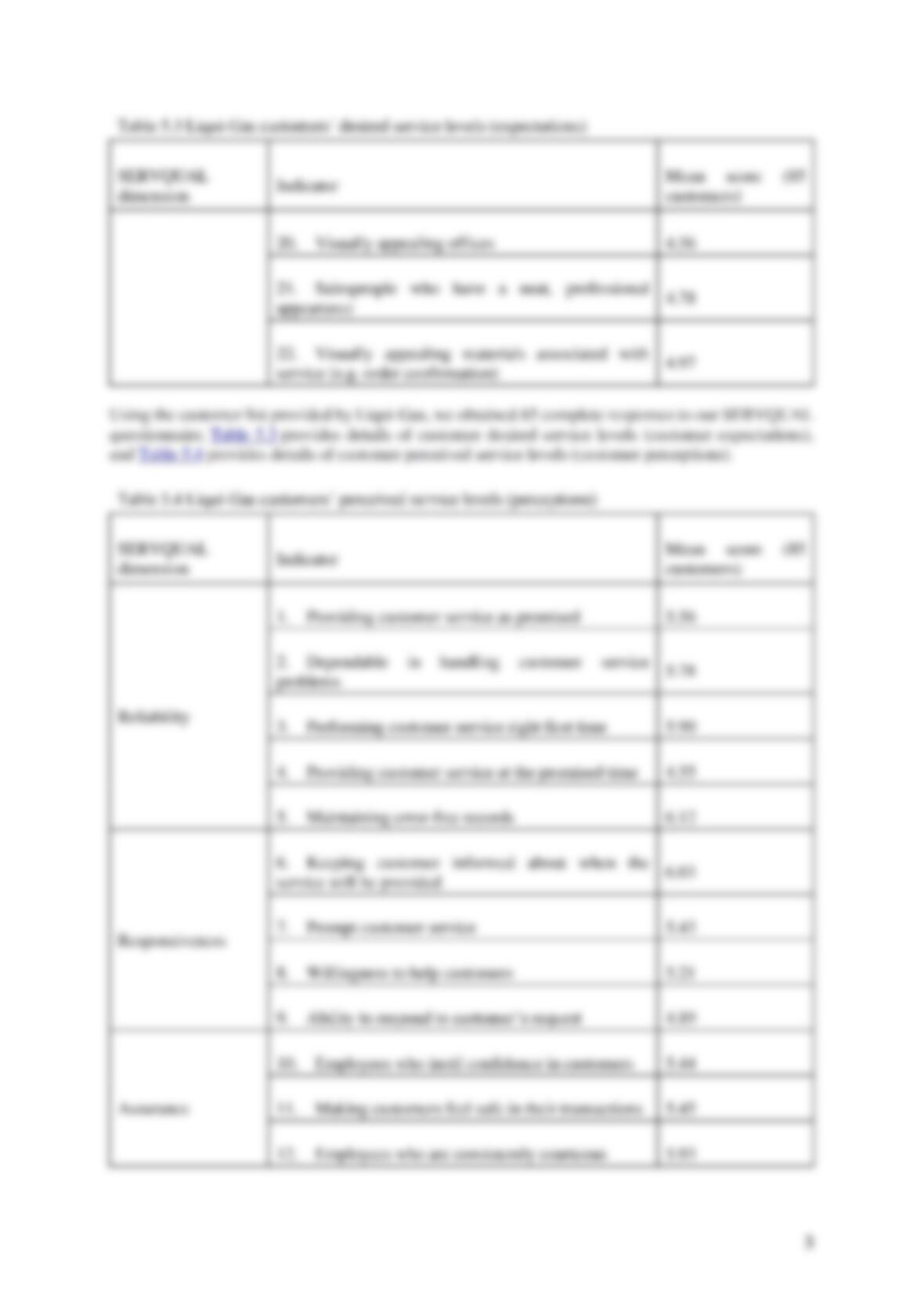
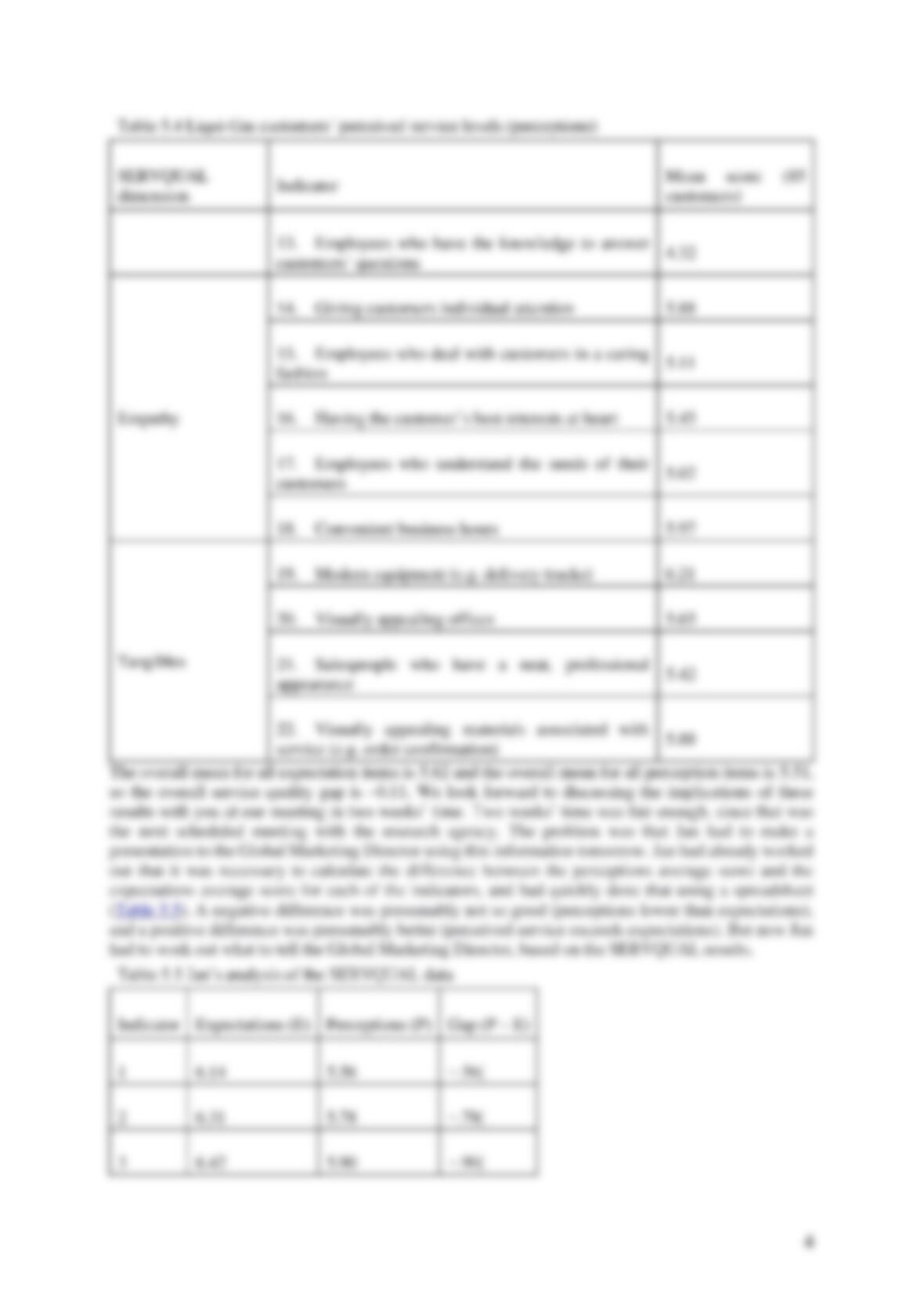
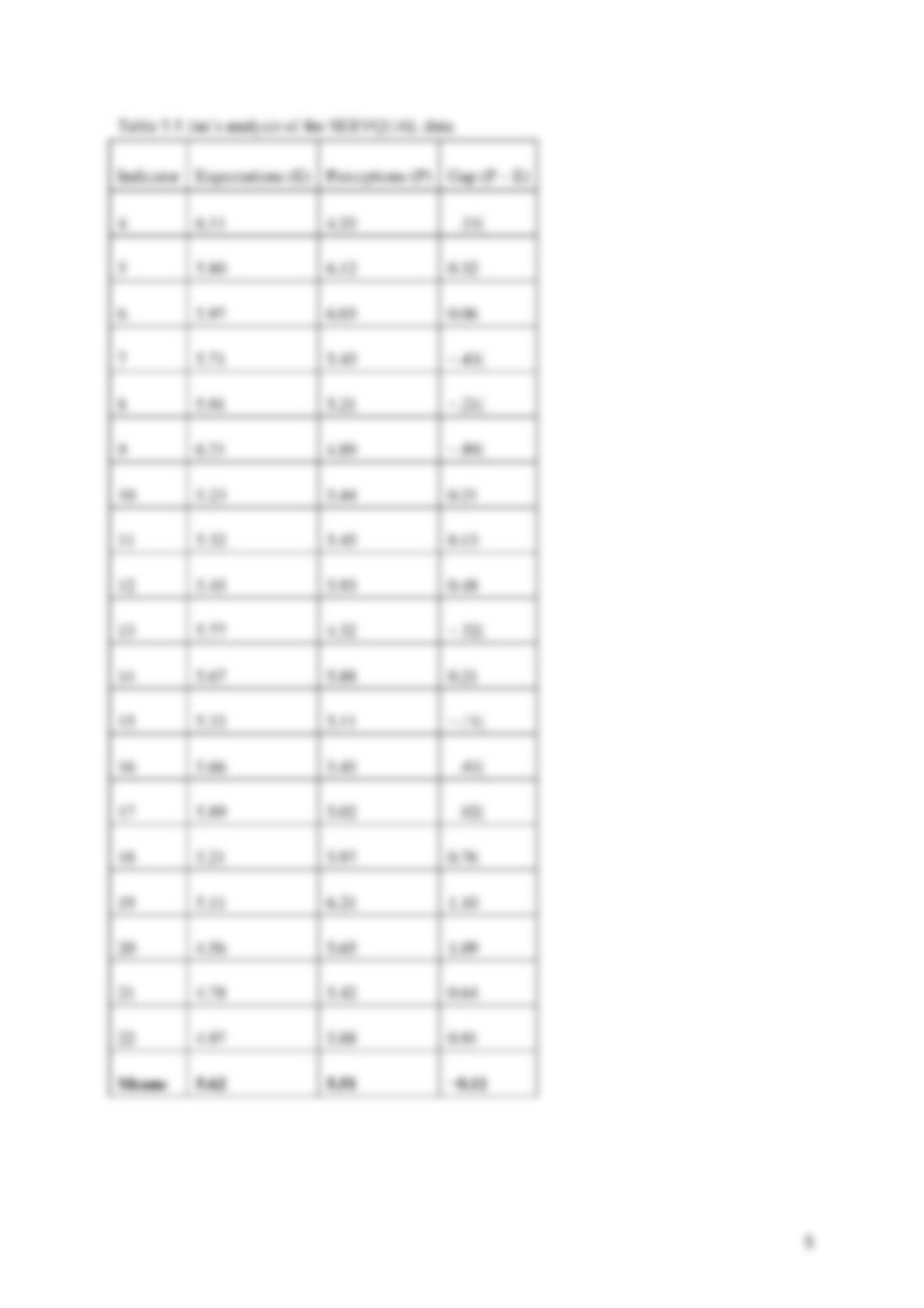
agree). Tables 5.3, 5.4 and 5.5 provide details of the indicators. The same indicators are used for
customer perceptions (P) and customer expectations (E); for the former, customers are asked for their
‘desired service level’ (defined as excellent customer service), and for the latter, customers are asked
what they think of Liqui-Gas’s actual customer service. For example, ‘When firms promise to do
something by a certain time, they should do so’ is one indicator of service reliability; customers are
asked for their desired service level, and then for their perception of Liqui–Gas’s service level. Using
this approach, we can identify the overall gap between customer perceptions and expectations of service,
the gap for particular dimensions of service quality, and the gap for individual indicators within the
dimensions.
Although Jan understood most of this, it seemed rather academic and quite far-removed from the day-
to-day realities of competing in the European industrial LPG market. Nevertheless, it was important to
make sense of the information pretty quickly. The Global Marketing Director was currently visiting the
European office and expected Jan to give a presentation based on the latest market research report. The
Global Marketing Director would no doubt be particularly interested in the service quality aspects of
the report. What Jan had read so far was not much use. The Global Marketing Director would expect
some hard facts, and was known to believe in the maxim ‘If you can’t measure it, you can’t manage it’.
Jan read on, very much hoping to find some hard facts and some concrete measurements.
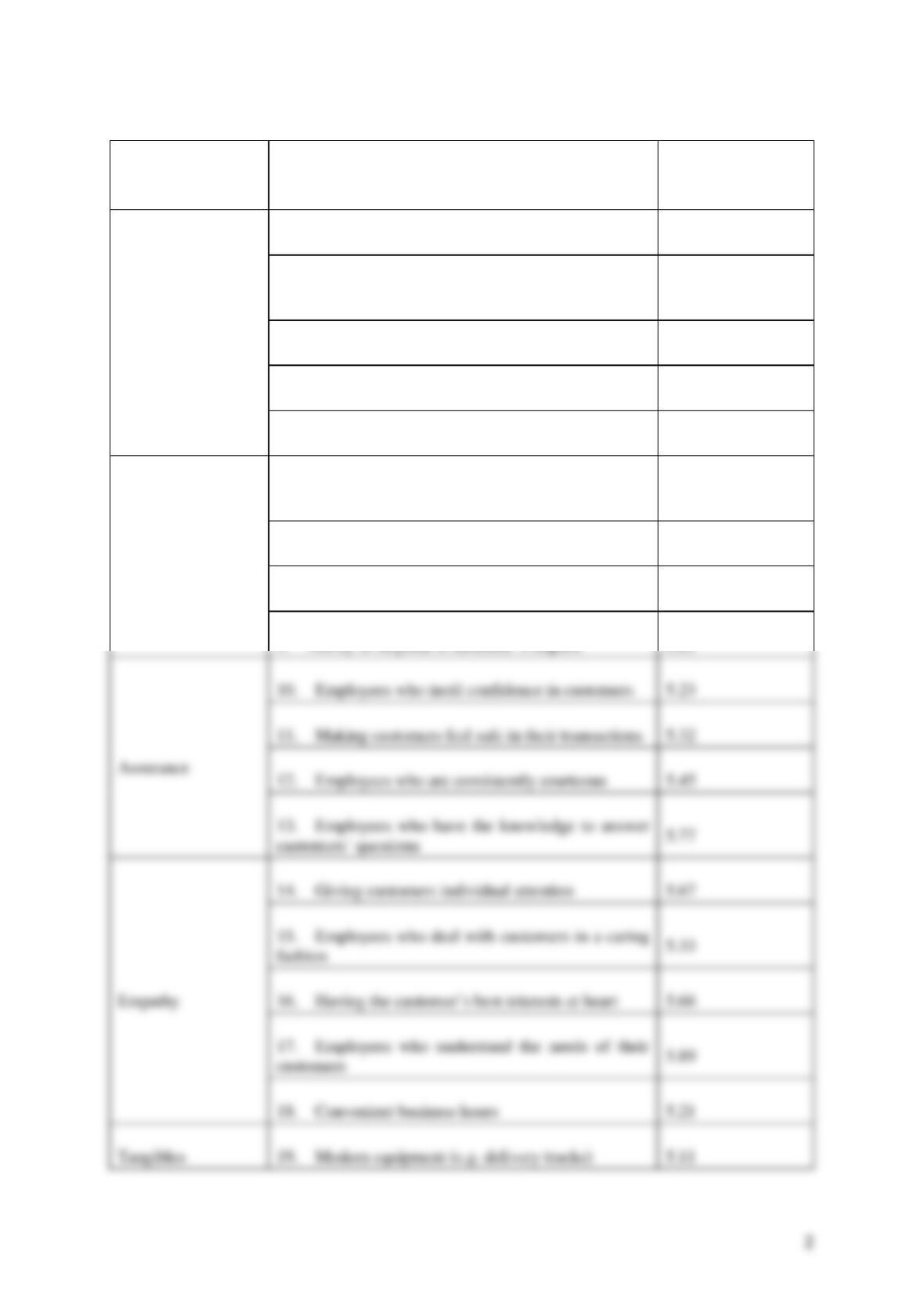
Table 5.3 Liqui-Gas customers’ desired service levels (expectations)
SERVQUAL
dimension
Indicator
Mean score (85
customers)
Reliability
1. Providing customer service as promised
6.14
2. Dependable in handling customer service
problems
6.31
3. Performing customer service right first time
6.42
4. Providing customer service at the promised time
6.11
5. Maintaining error-free records
5.80
Responsiveness
6. Keeping customer informed about when the
service will be provided
5.97
7. Prompt customer service
5.71
8. Willingness to help customers
5.91
9. Ability to respond to customer’s request
6.21
10. Employees who instil confidence in customers
5.23
11. Making customers feel safe in their transactions
5.32
12. Employees who are consistently courteous
5.45
13. Employees who have the knowledge to answer
5.77
14. Giving customers individual attention
5.67
15. Employees who deal with customers in a caring
fashion
5.33
16. Having the customer’s best interests at heart
5.66
17. Employees who understand the needs of their
customers
5.89
18. Convenient business hours
5.21
Tangibles
19. Modern equipment (e.g. delivery trucks)
5.11