On March 11, 2011, a 9.0-magnitude earthquake struct off the coast of Japan causing a
huge Tsunami waves and three nuclear reactors experienced Level 7 meltdowns. The impact of the
combined three disaster was devastating, people of Japan suffered into a sorrowful humanitarian
crisis and economic crisis. Recovering from such a catastrophe was unprecedented. A massive drop
in monthly production in automotive were experienced across the industry. Markets outside of Japan
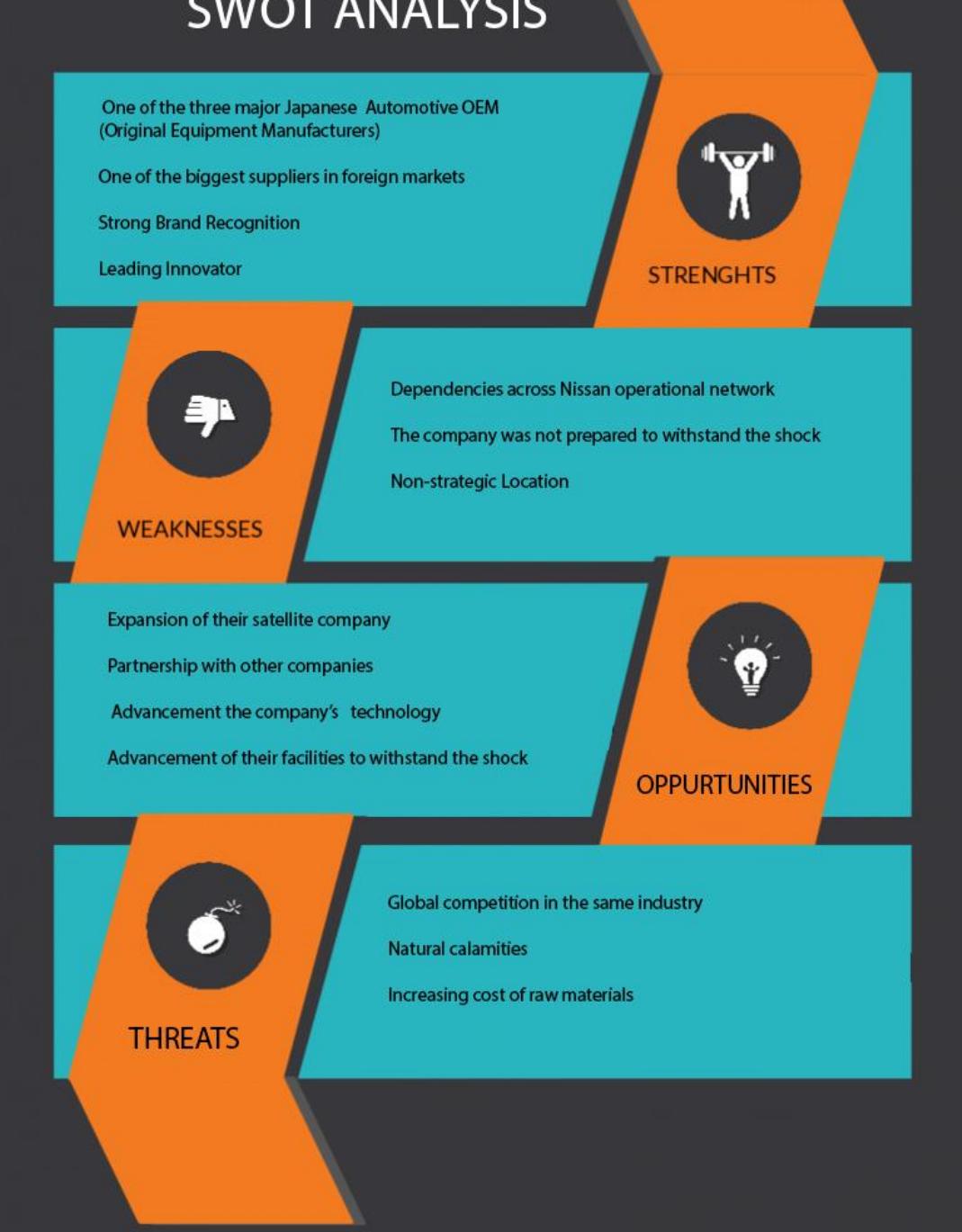
were affected as well. Nissan is one of the three major Japanese automotive original equipment
manufacturers (OEM). Declines in Japanese production impacted product availability in those export
markets. In addition, overseas production had expanded in recent years, but only 70% to 80% of the
production components were sourced locally with the remaining 20% coming from Japan. Disruption
to the Japanese supply base affected firms and factories around the world. Nissan suffered damage
to six production facilities and about 50 of its critical suppliers were impaired. Nevertheless, the
company was prepared to withstand the shocks.
The company should undergo countermeasure about the supply chain risk and must
consider one of the alternative that has given from the study.
This discussion will provide an overview to Nissan’s Resiliency towards the crisis that they
face from those different devastating disasters that obstruct and suspend the production of Nissan
Motor company. This case focuses on Nissan’s attitudes toward risk and emergency response
emerged through the company’s experience in overcoming daunting challenges, and use it to design
more resilient strategies and develop plans that significantly reduce the financial impact of
disruptions.
1. Viewpoint : Vice President
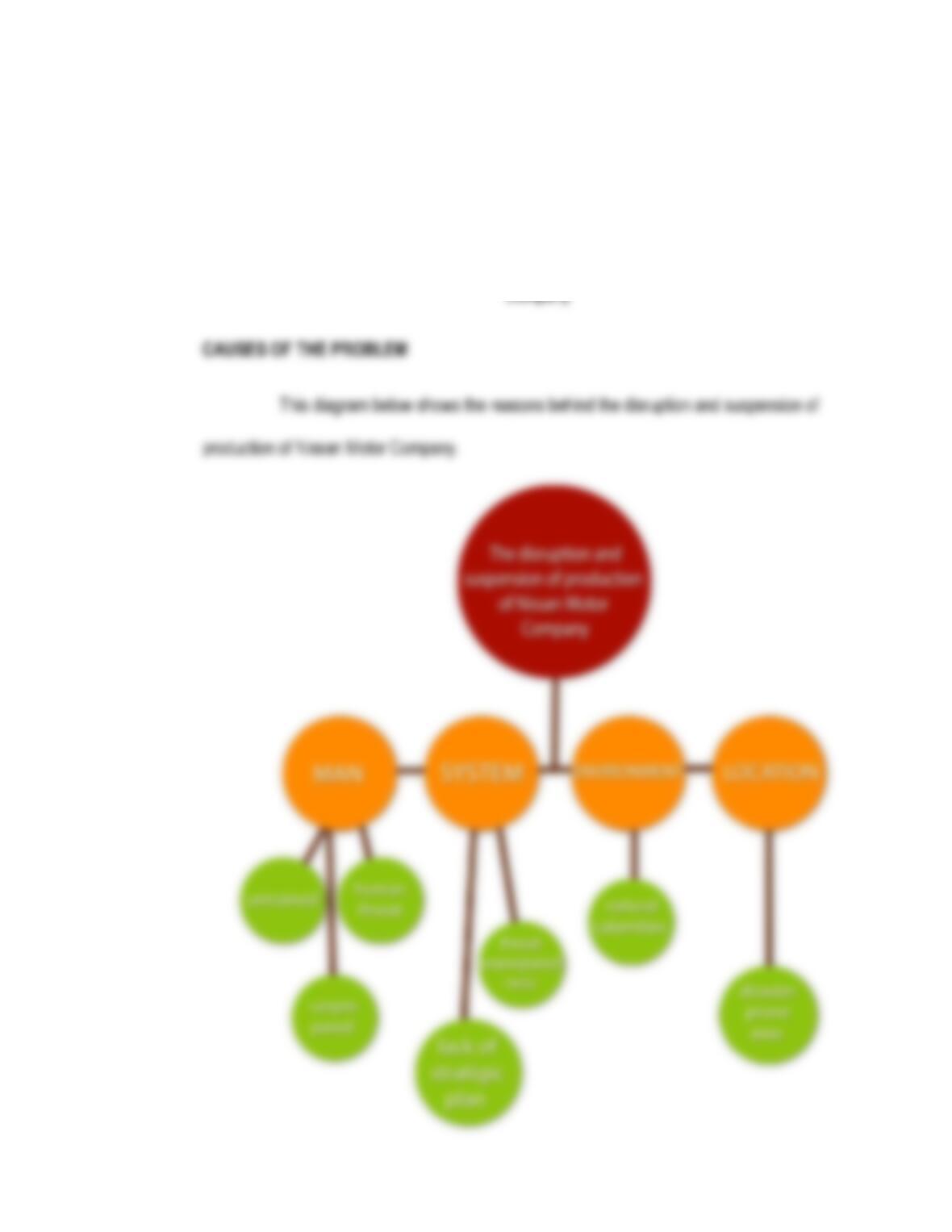
2. Statement of the Problem : The disruption and suspension of
production of Nissan Motor
ó