Case Study 11.1 Routes to Market in the Toys and Games Industry
Established in 1982, the German toy group Simba-Dickie realized a turnover of €616 million in 2018
(Spielwarenmesse, 2019). Although organic growth had a part to play, acquisition has been key to the
company’s development, supported by a concentrated number of production centres and an extensive
sales, marketing and warehousing network around the world. By 2019, the company had 20 toy brands
in its portfolio, regional headquarters in France, Hong Kong and the United States, eight wholly owned
production facilities in five different countries, production facilities in six different countries,
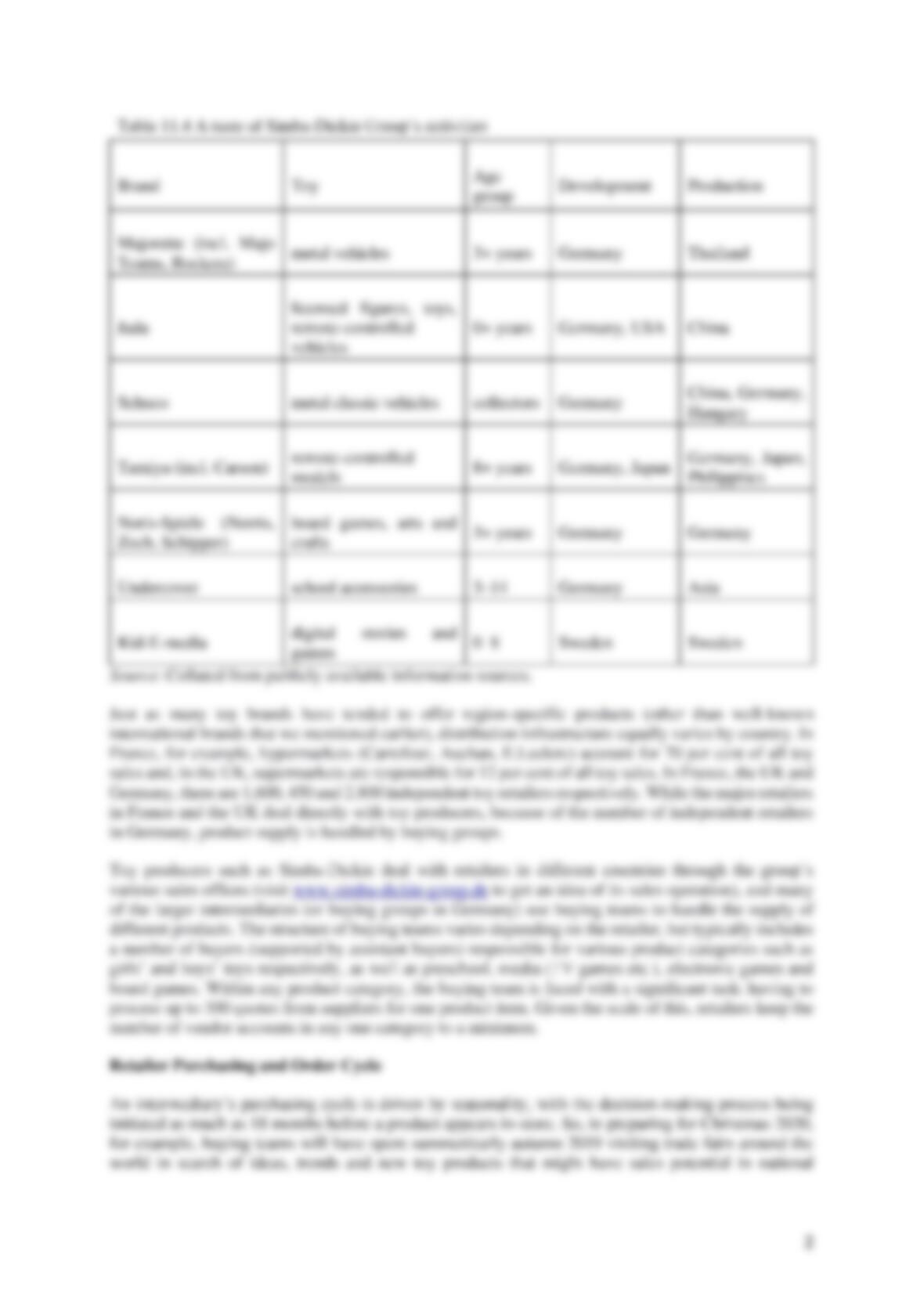
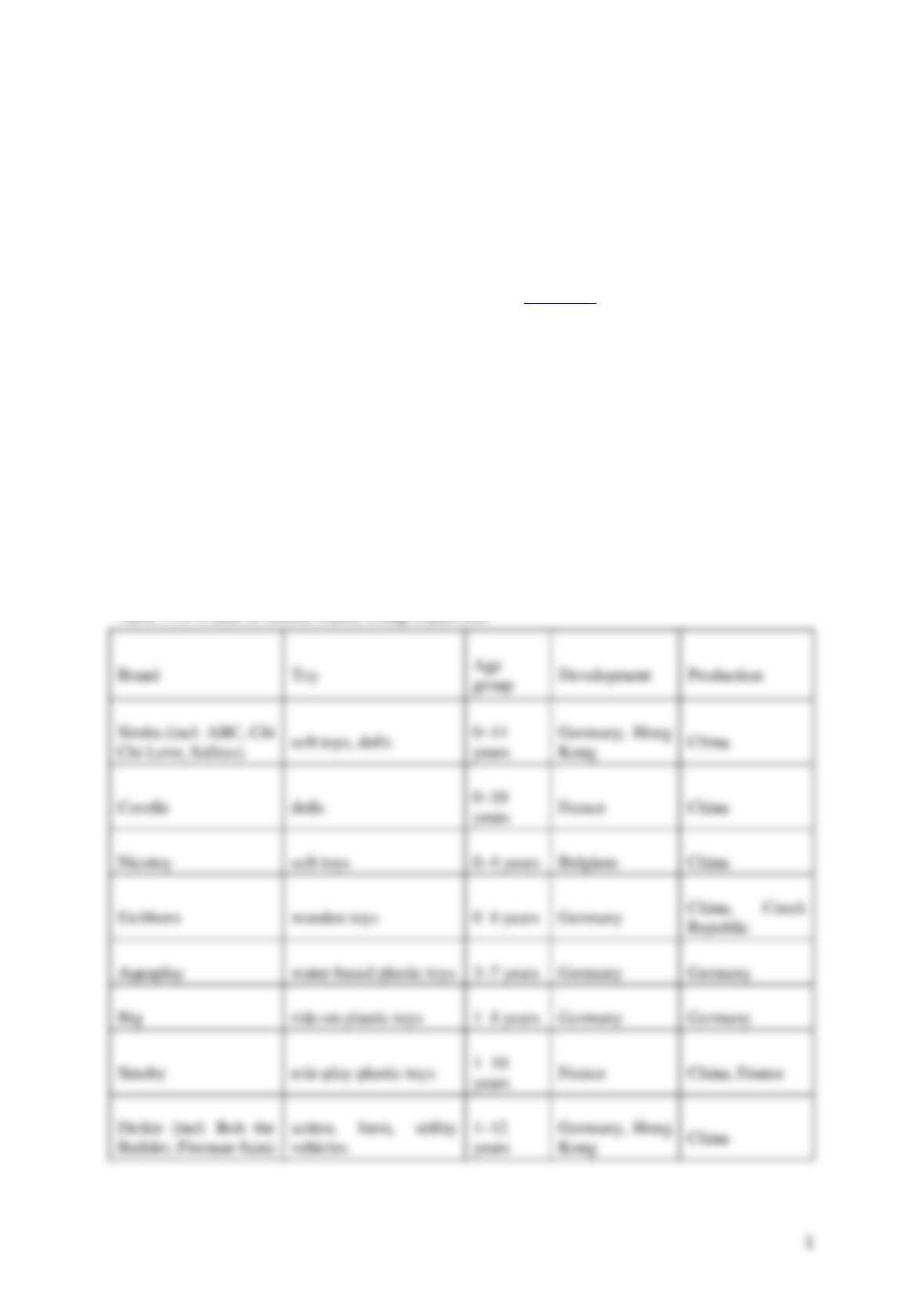
subsidiaries in 23 and agencies in a further six countries (see Table 11.4 for an indication of some of the
group’s key brands, products and manufacturing locations). Few toy producers have global presence
(think Hasbro, Lego and Mattel), and, as a medium-sized business, operating in this way allows Simba-
Dickie to extend geographic market coverage for all its brands and, perhaps most importantly, to offer
retailers an extensive product range (Simba-Dickie has in the region of 4000 products).
Germany, France, Italy and the UK represent the group’s most important market. The majority of Simba–
Dickie’s products are now produced in Europe, while the company’s Hong Kong office oversees
subcontract manufacture in various Asian countries – irrespective of production location, the company’s
automated storage and warehouse facility in Sonnenburg, Germany acts as the producer’s central
logistics hub. Items produced in Europe might be shipped direct to retailers or to the group’s warehouse,
while Chinese production and delivery to Simba-Dickie’s distribution network are coordinated by the
group’s offices in Hong Kong and sales headquarters in Fürth. So, for example, in scheduling deliveries
from China to Simba-Dickie’s logistics centre in Sonnenberg, planners have to factor in the production
time as well as the 25 days it takes for shipments to reach Germany.