Case Study 01 (Page 09)- Strategy statements
Question 01
Construct short strategy statements covering the goals, scope and advantage of Samsung and the
University of Utrecht. How much do the different private- and public-sector contexts matter?
Samsung Electronic
Mission- Inspire the World, Create the Future
Vision – $400bn in revenue, and top five brand by 2020
Scope – expanding, from mostly consumer electronics into health, medicine and biotechnology. Samsung
believes its competitive advantages lie in new technologies, innovative products, creative solutions and
the brightest talent in the world
Strategy statements
“To become one of the world’s top five brands by 2020 by expanding, from consumer electronics into
health, medicine and biotechnology, focusing on the competitive advantage in terms of new technologies,
innovative products, creative solutions”.
University of Utrecht
Mission –educate young people … address social issues’, etc.
Objectives – retain third place, etc.
scope – equally education, research, research training and addressing social issues;
advantages – (over some rivals at least) lie in its University-wide education model, its Summer School and
so on.
Strategy statements
“To become the top research universities with the highest number of bachelor’s programs rated
good/excellent by 2020, focusing on the competitive advantage in terms of wide education model,
innovative educational development”.
Different private- and public-sector contexts
There is not much difference between Samsung and Utrecht: strategy statements – and strategy – are
relevant to both private and public sectors. However, Samsung features a financial goal (revenues),
whereas Utrecht prioritizes a quality goal (the highest number of programs rated good or excellent).

Question 02
Construct a strategy statement for your own Organisation (university, sports club or employer). What
implications might this statement have for your particular course or department?
Company – Expolanka
“To become a leader in global supply chain solutions by 2021, focusing on the competitive advantage in
terms of air freight, ocean freight, warehousing and other solutions to the international shipping
community and the strength of our relationships with key partners”.
This Strategy statement implies the clear vision of Expolanka seeks; the scope or domain of the Expolanka
activities; and the particular advantages or capabilities.
Case Study 02 (Page 60)- How much does industry matter?
Question 01
Why might some industries have a larger influence on their members’ profitability than others?
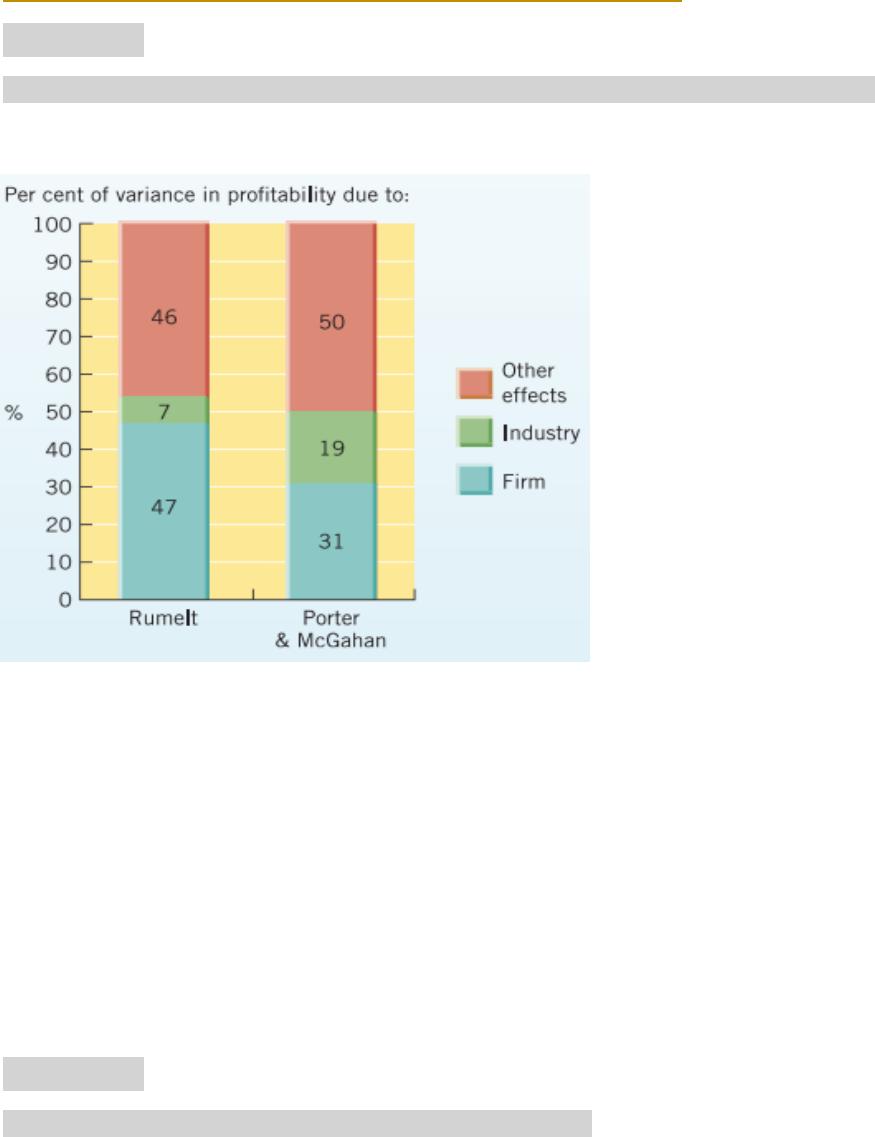
*** Good Industry – If the external factors are less affecting to the company then it’s a good industry***
A good start in strategy must be to
choose a profitable industry to
compete in. The two most important
studies in fact find that more of the
variance in profitability is due to
firms rather than industries .
If we took Porter & McGahan as the
standard model, PESTEL (political,
economical, social cultural,
technological, ecological and legal
factors) & Porter’s five forces
(Bargaining power of supplier,
bargaining power of buyer, rivalry,
new entrance and competency) are
the most suitable models to analyze
the External factors which are
affecting to the organization. After analyzing, can identify whether the external factors are affecting the
organization up to which extend. If the percentage of effectiveness of external factors are low, then that
industry is a good to compete and will have a larger influence on organizations’ profitability.
• If firms within the same industry tend to bunch together in terms of profitability (as per
5 forces), it is industry that is accounting for the greater proportion of profitability:
• An external approach to strategy is supported (Generic strategies).
• If firms within the same industry vary widely in terms of profitability, it is the specific
skills and resources of the firms that matter most:
• An internal approach is most appropriate (Competency based strategies).
Question 02
What other factors might account for business unit profitability?
• Segmentation
• Branding
• Positioning
• Market Share
• Financial position
• Client Base
• Demographic
Case Study 03 (Page 81)- Groupon and the sincerest form of flattery
Question 01
Andrew Mason admits that Groupon has thousands of copycats, yet his assessment is that imitating
Groupon is difficult. Do you agree?
I do agree with Groupons CEO that copycats of its company will find it hard to imitate because the
company is based on the number of customers. Group on is a company which has established itself heavily
with a strong foundation in the industry of online business since 2008. Irrespective of its nature of business
and the profit which the brand makes it has managed to establish a strong base for itself in terms of the
customers and the type of daily deals which it sends its customers.
Group on’s major advantage is that it has a vast exposure to the local merchants who can offer wonderful
deals and it can in turn churn the business out of those deals by reaping excellent profits. Its sustained
strategic capability arises out of its advanced technology platform which has allowed itself to target more
better customers and give them deals which are more relevant to them. Their way of acquiring customers
was also a noticeable game which has managed to let the other competitors down.
Group on had a massive operational complexity where it has employed hundreds of people in about 46
countries where its sales people also talk to thousands of merchants on a daily basis to know about all the
possible competitors and get the win the business to a maximum extent. Appreciating Group on is a
sincere move where they are able to withstand serious competition and provide a great service to the
Customers by slashing out their competitors.
As a summary Imitating groupon is difficult and the reasons are as follows; The provision of daily deals
via email is not as simple as it may seem, this involves whole series of things working together. To imitate
groupon, competitors would have to replicate everything in its operational complexity. A business model
is more than its technical components like the value chain or revenue model or the products. The business
model also includes soft factors like the value proposition-values and corporate culture or the core
competences. One can copy the hard components, but the human aspects of the business model such as
the value, culture or tact knowledge is difficult to copy. A group business model is not defended by
patents or high- technology but by the excellent interaction of all its components particularly, by the
human factor.
Question 02
Assess the bases of Groupon’s strategic capabilities using the VRIO criteria ( Figure 3.2 and Table 3.2).
Valuable
Rare
Inimitable
Org support
Competitive Implications
Advanced technological
platform
Y
Y
N
N
Temporary Completive
advantage
Customer base
Y
Y
N
N
Temporary Completive
advantage
Employee base
Y
N
N
Y
Competitive parity
Operational Complexity
Y
Y
Y
Y
Sustainable competitive
Advantage
Question 03
Which is the most important strategic capability that provides, or could provide, Groupon with
sustainable competitive advantage?
According to the above VRIO model to identify the most important strategic capability, upderstood that
Group on had a massive operational complexity where it has employed hundreds of people in about 46
countries where its sales people also talk to thousands of merchants on a daily basis to know about all the
possible competitors and get the win the business to a maximum extent. Appreciating Group on is a
sincere move where they are able to withstand serious competition and provide a great service to the
Customers by slashing out their competitors.
Valuable
Rare
Inimitable
Org support
Competitive Implications
Operational Complexity
Y
Y
Y
Y
Sustainable competitive
Advantage
Merchant base – Reach target customers, truly use groupon as an advertising platform, locked into
groupons service – sustainable organic growth.
Case Study 04 (Page 86)- A value system for Ugandan chilled fish fillet exports
Question 01
Draw up a value chain or value system for another business in terms of the activities within its
component parts.
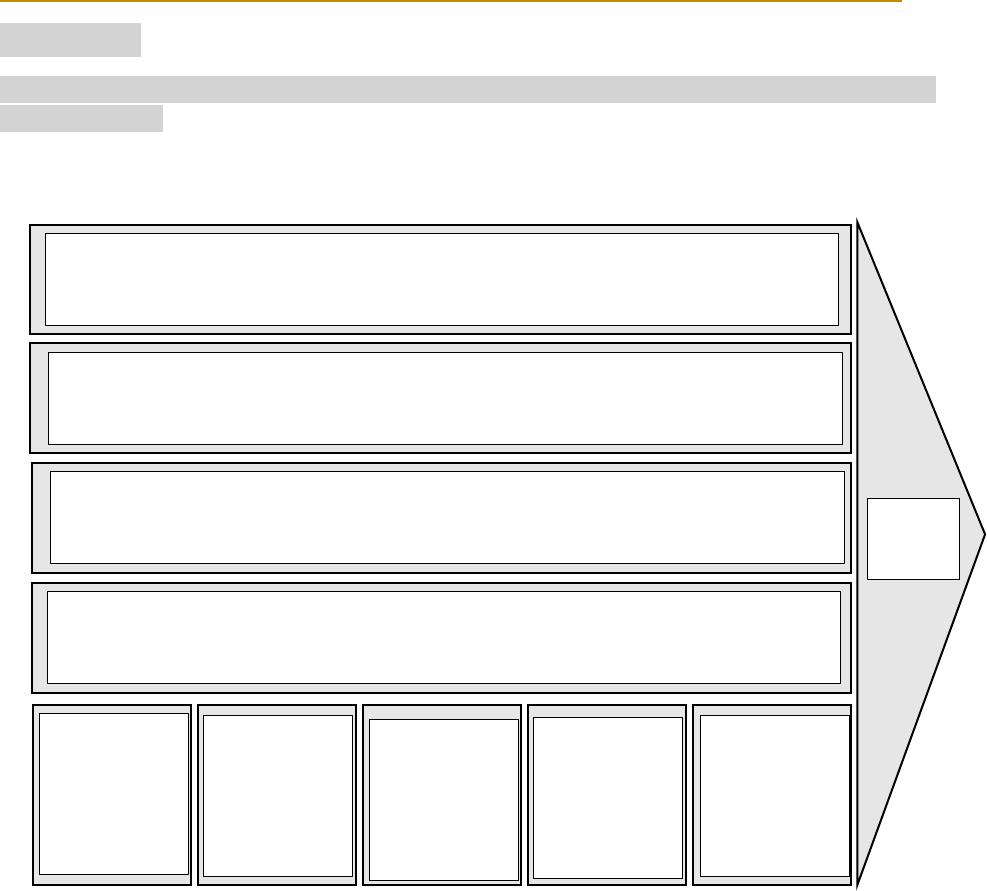
Business – Salted Peanuts
Inbound Logistics
Taking Raw
peanuts, Spices
and Plastic covers
for packing.
Services
Increase
customer
satisfaction,
Customization
Operations
Tampering the
Peanut & Adding
Spices.
Packaging
Marketing &
Sales
Posters, Word of
mouth
Outbound
Logistics
Distribute the
final product to
wholesalers &
retailers
Firm Infrastructure
Great financial discipline with low debt, Market place solution, delivery and support
Procumbent
Long term and trusting relationship with suppliers, Localized & bulk procumbent
Human Recourse Management
Minimum hierarchy concept, High ethical values
Technology Development
Product improvement, Ability to change
Margin
10%
Question 02
Estimate the relative costs and/or assets associated with these activities.
Raw Materials for 100g:
Raw Peanuts – 90 LKR
Spices & covers – 10LKR
Labor – 15 LKR
OH – 10 LKR