CASE ANALYSIS OF MOUNT EVEREST-1996
GAYATRI SUBRAMANIAN
ALEXANDER DONOYAN
DAVID LINEHAN
RICHARD LEHMAN
SEN DAI
MBA 521- BRYANT UNIVERSITY
OCTOBER 8, 2015

Executive Summary:
The Mount Everest case can be summed up as inefficient distribution of leadership, skills
and resources in the face of imminent natural disaster. Teamwork consist of interdependency,
mutual accountability and understanding common goals and working with respect to each other’s
complementary skills.
Effective team’s consist of understanding perceptions of others and help motivate each
other to continually work towards the common goal. Working towards a goal in a team usually
does not run a straight course. In order to offset these issues that can come into play one may
need to optimistically receive suggestions, abstain from narrow perceptions and outlook and trust
on the team. Trust helps to create path for communication, collaboration, competence,
commitment and ideas.
Problem Statement:
The goal was to reach the summit of Mount Everest and return safely. However the
teams were unable to accomplish the task and this failure eventually led to human casualties.
Causes:
In the case Mount Everest -1996, Roberto and Cardioggia, factors that contributed to failure
would include
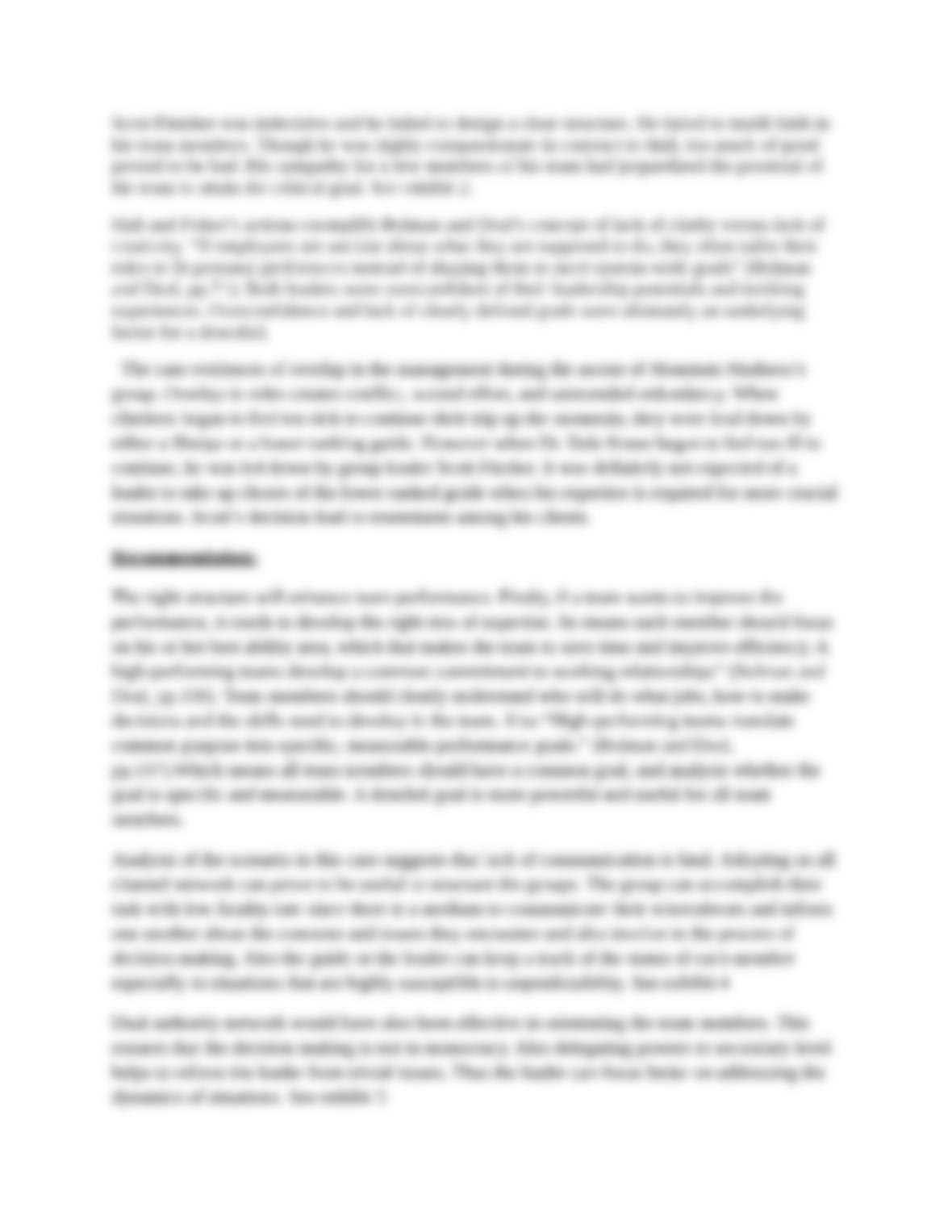
1. Ineffective leadership (overconfidence, ego, and personality issues)
2. Lack of planning,
3. Poor communication
4. Poor teamwork.
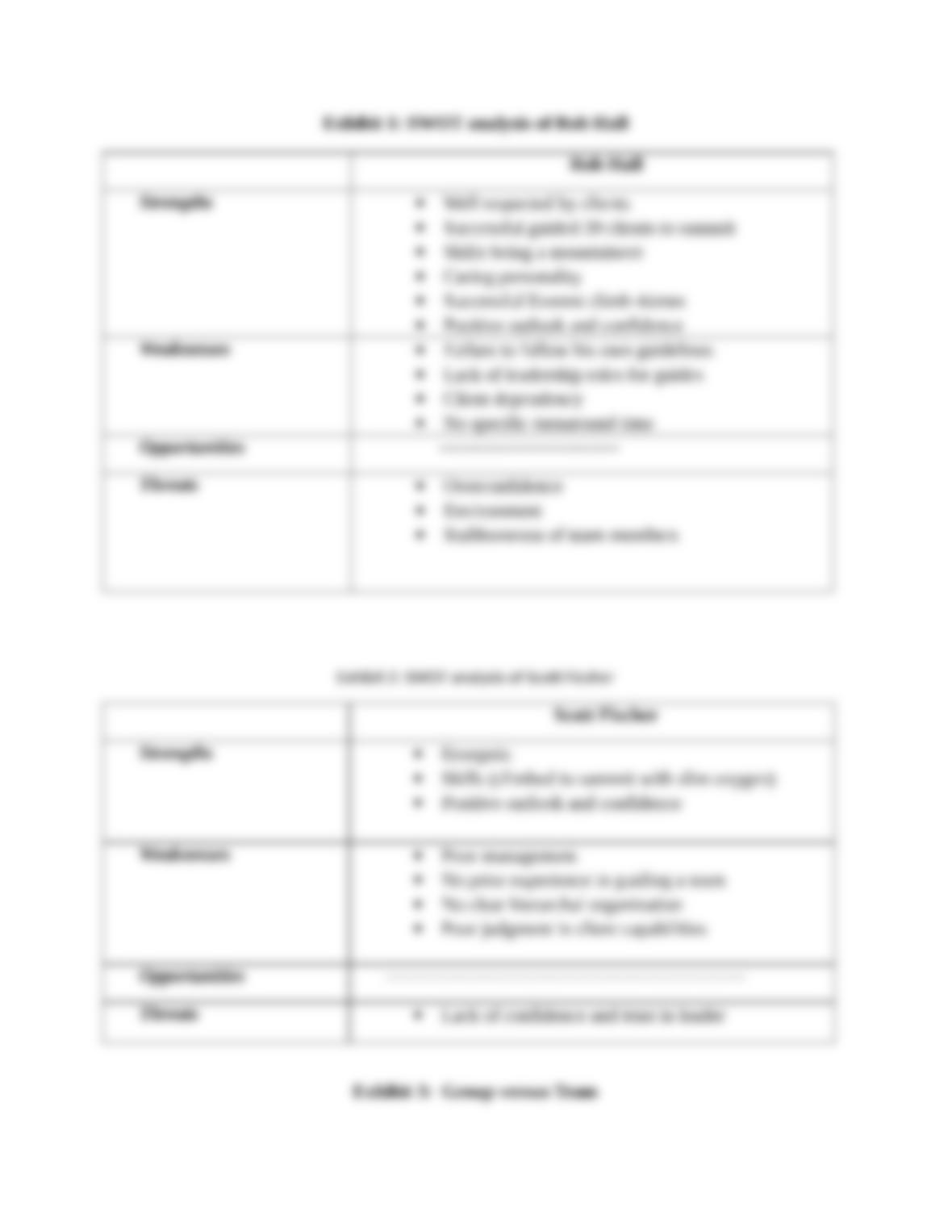
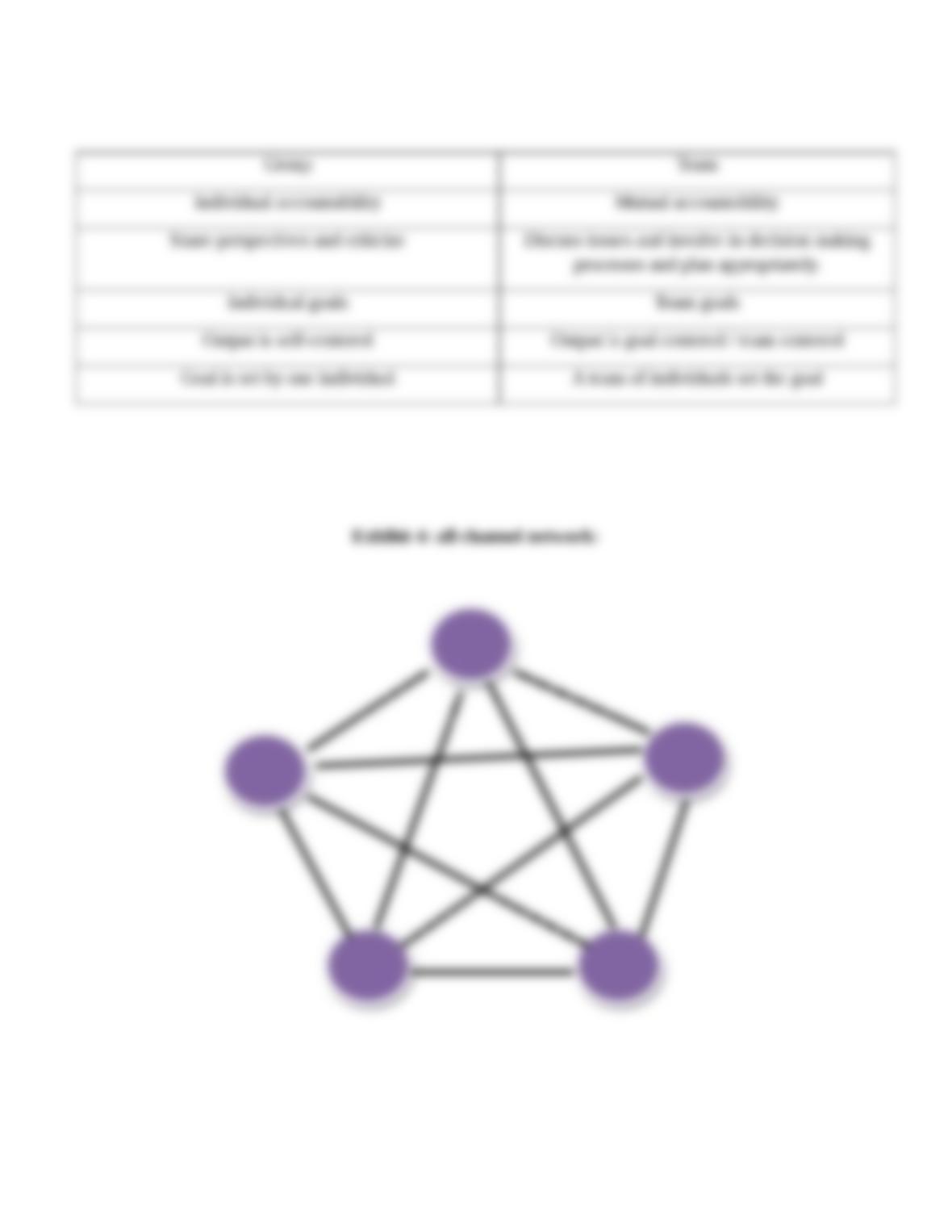
Precisely in this case, one of the main cause of catastrophe was that both Mountain Madness and
Adventure Consultants proved to be a group but not a team. The members of the team did not
share a good rapport as they had never met before and failed to know each other before this
venture, this gave rise to a gap in communication. Members did not get along well with the
leader as well. There was lack of trust due to this anonymity. In this case Kraukauer said “I felt
so disconnected from the climbers around me…. We were a team in name only….we would
leave camp as a group, we would ascend as individuals, linked to one another by neither rope not
deep sense of loyalty. Each client was in it for himself or herself, pretty much.” (Roberto &
Cardioggio, 2003, pp.8). This example surely validates that a group is different from a team. See
exhibit 3
One can decipher from the Mount Everest case that Rob Hall demonstrated an INFP personality
type while Scott Fishier demonstrated an ENFP personality type based on the MBTI personality
type evaluator. Rob Hall was too strict and inflexible for an environment that was unpredictable.