Case 12 Tesla: Disrupting
the Auto Industry
Tesla’s strategy was no secret: in 2006, chairman and CEO, Elon Musk, had announced:
“So, in short, the master plan is:
●Build a sports car
●Use that money to build an affordable car
●Use that money to build an even more affordable car
●While doing above, also provide zero emission electric power genera-
tion options
●Don’t tell anyone.”1
By July 2017, Tesla had implemented its master plan. Phase 1 (“Build a sports car”)
was realized with the launch of its Roadster in 2007. Phase 2 (“Use that money to build
an affordable car”) began in 2013 with the launch of Model S. Phase 3 (“Use that money
to build an even more affordable car”) was realized with the launch of Model 3 in July
2017. Providing “zero emission electric power generation options” involved, first, estab-
lishing SolarCity, which installed solar power systems; then, merging SolarCity with
Tesla in 2016. The only deviation from Musk’s original plan had been the introduction
of Model X—an SUV derivative of Model S—in 2015.
Tesla’s “Master Plan, Part Deux,” which would take Tesla into integrating solar energy
generation with storage, expanding to “cover the major forms of terrestrial transport”
(including heavy-duty trucks), fully autonomous driving, and vehicle sharing, was out-
lined by Elon Musk on July 20, 2016:
“So, in short, Master Plan, Part Deux is:
●Create stunning solar roofs with seamlessly integrated battery storage
●Expand the electric vehicle product line to address all major segments
●Develop a self-driving capability that is 10X safer than manual via massive
fleet learning
●Enable your car to make money for you when you aren’t using it.”2
The success of Tesla’s strategy was reflected in the company’s stock market
performance. Despite incurring huge losses, Tesla’s stock market capitalization was
$55 billion on August 2, 2018. By comparison, Ford Motor Company—which in 2017
had produced 6.6 million vehicles compared to Tesla’s 103,184—was valued at $39
billion. General Motors, which sold 9.6 vehicles in 2017, had a market valuation of $53
billion. The optimism that supported Tesla’s valuation reflected the company’s remark-
able achievements during its short history—including the acclaim that has greeted its
first four models of car—and investors’ faith in the ability of Elon Musk to realize his
mission “to accelerate the advent of sustainable transport by bringing compelling mass
market electric cars to market as soon as possible.”3
This case was prepared by Robert M. Grant assisted by Nitish Mohan. ©2019 Robert M. Grant.

504 CASES TO ACCOMPANY CONTEMPORARY STRATEGY ANALYSIS
Indeed, Musk’s vision for Tesla extended beyond revolutionizing the automobile
industry: Tesla’s battery technology would also provide an energy storage system that
would change “the fundamental energy infrastructure of the world.” The installation of
the world’s biggest lithium-ion battery at a South Australian wind farm on December 1,
2017 was a landmark in this ambition.4
For a technology-based, start-up company, Tesla’s strategy was unorthodox. This
was most clearly manifest in the scale of its ambition: not only did Musk wish to estab-
lish Tesla as one of the world’s leading car companies, he also wanted to “accelerate
the world’s transition to sustainable energy” and, if this wasn’t enough to save Planet
Earth, to develop pace travel in order to make homo sapiens an interplanetary species.5
Rather than minimizing risk and investment requirements by outsourcing to other com-
panies, Tesla was the world’s most vertically integrated automobile supplier. Instead
of keeping tight control over its proprietary technology, Tesla had opened its patent
portfolio to its competitors.
During the first half of 2018, Tesla’s strategy was facing some major challenges.
Operational difficulties in ramping up the production at its both Fremont CA auto plant
and Nevada battery plant, the “Gigafactory,” had prevented Tesla from reaching its
target production of 5000 Model 3s per week until the final week of June—six months
behind schedule. With capital expenditures in 2018 expected to reach $2.5 billion
spent in 2018, cash burn remained a problem, despite Tesla’s forecast that it would
achieve a positive free cash flow in the second half of 2018. Meanwhile, competition
in electric vehicles (EVs) was intensifying: the main feature of the March 2018 Geneva
Motor Show was the number of new EVs being launched by the world’s leading auto-
makers.6 Was Tesla’s strategy consistent with its capability and the emerging situation
in the world vehicle market and with the resources and capabilities available to Tesla?
Electric Cars
The 21st century saw the “second coming” of electric cars. Electric motors were widely
used in cars and buses during the 1890s and 1900s, but by the 1920s they had lost out
to the internal combustion engine.
However, most of the world’s leading automobile companies had been undertaking
research into electric cars since the 1960s, including developing electric “concept cars,”
and, in the early 1990s, several had introduced EVs to California in response to pressure
from the state. The first commercially successful electric cars were hybrid electric vehi-
cles (HEVs), the most successful of which was the Toyota Prius, 10 million of which
had been sold by January 2017. The first all-electric, battery-powered cars (BEVs) were
the Tesla Roadster (2008), the Mitsubishi i-MiEV (2009), the Nissan Leaf (2010), and the
BYD e6 (launched in China in 2010), In addition, there were plug-in hybrid electric
vehicles (PHEVs), which were fitted with an internal combustion engine to extend their
range. General Motors’ Chevrolet Volt, introduced in 2009, was a PHEV.
Other types of BEVs included highway-capable, low-speed, all-electric cars such
as the Renault Twizy and the city cars produced by the Reva Electric Car of Ban–
galore, India. Others were for off-highway use. These “neighborhood electric vehi–
cles” (NEVs) included golf carts and vehicles for university campuses, military bases,
industrial plants, and other facilities. Global Electric Motorcars, a subsidiary of Polaris,
was the US market leader in NEVs. Most NEVs used heavier, but cheaper, lead–acid
batteries.
Electric motors had very different properties from internal combustion engines—in
particular, they delivered strong torque over a wide range of engine speeds, thereby

CASE 12 TESLA: DISRuPTING ThE AuTO INDuSTRY 505
dispensing with the need for a gearbox. This range of torque also gave them rapid
acceleration. Although electric motors were much lighter than internal combustion
engines, the weight advantages were offset by the need for heavy batteries, which were
also the most expensive part of an electric car, costing from $10,000 to $25,000.
Electric cars were either redesigns of existing gasoline-powered models (e.g., the
Ford Focus Electric and Volkswagen’s e-Golf) or newly designed electric cars (e.g., the
Tesla Roadster and Nissan’s Leaf). Complete redesign had major technical advantages:
the battery pack formed part of the floor of the passenger cabin, which saved on space
and improved stability and handling due to a lower center of gravity.
Predictions that electric cars would rapidly displace conventionally powered cars
proved false. In 2017, global registrations of plug-in EVs totaled 1,223,600. Although
this was a 58% increase on 2016, this still represented just 1.3% of total sales of cars and
light trucks, with China the world’s largest market. Forecasts of the growth in demand
varied substantially—most predicted that the market share of EVs would be between
7% and 20% by 2025. Much depended on government policy: by March 2018, eight
countries had announced their intention to ban the sale of new gasoline and diesel-
powered vehicles at some date between 2020 and 2040. The countries where EVs
had gained the highest market shares were those with the most generous government
incentives. Thus, in Norway, where plug-in EVs had a 39% market share in 2017, incen-
tives included exemption from purchase taxes on cars (including VAT), road tax, and
fees in public car parks, and the right to use bus lanes. In the US, federal government
incentives included development grants to the manufacturers of EVs and batteries, and
tax credits for purchases of EVs. Several countries had announced a phasing out or
scaling back of subsidies. The US federal government’s $7,500 tax credit to buyers of
Tesla cars would be halved In January 2019 and phased out a year later. The impact of
lower fiscal incentives would be offset, in part, by EVs falling prices relative to conven-
tional vehicles—in addition to lower battery prices, EVs benefitted from fewer compo-
nents than conventional vehicles.
“Range anxiety”—the threat of running out of battery charge—was seen as a major
obstacle to the market penetration of battery-powered EVs. However, by 2018, these
concerns were dissipating. Improved battery technology had doubled the average
range of EVs between 2015 and 2018. Secondly, the density of charging stations was
increasing rapidly. By the end of 2017, there were 210,000 publicly available charging
points in China, 43,000 in the US, 33,000 in Netherlands, and 24,000 in Germany.
Although battery-powered electric propulsion was the leading zero-emission tech-
nology available to automakers, it was not the only one: fuel cells offered an alternative.
Several automakers had developed prototypes of fuel-cell cars, but in 2018 only Toyota
was producing cars powered by fuel cells. The dependence of fuel cell vehicles on a
network of hydrogen fueling stations was the main disadvantage of this technology.
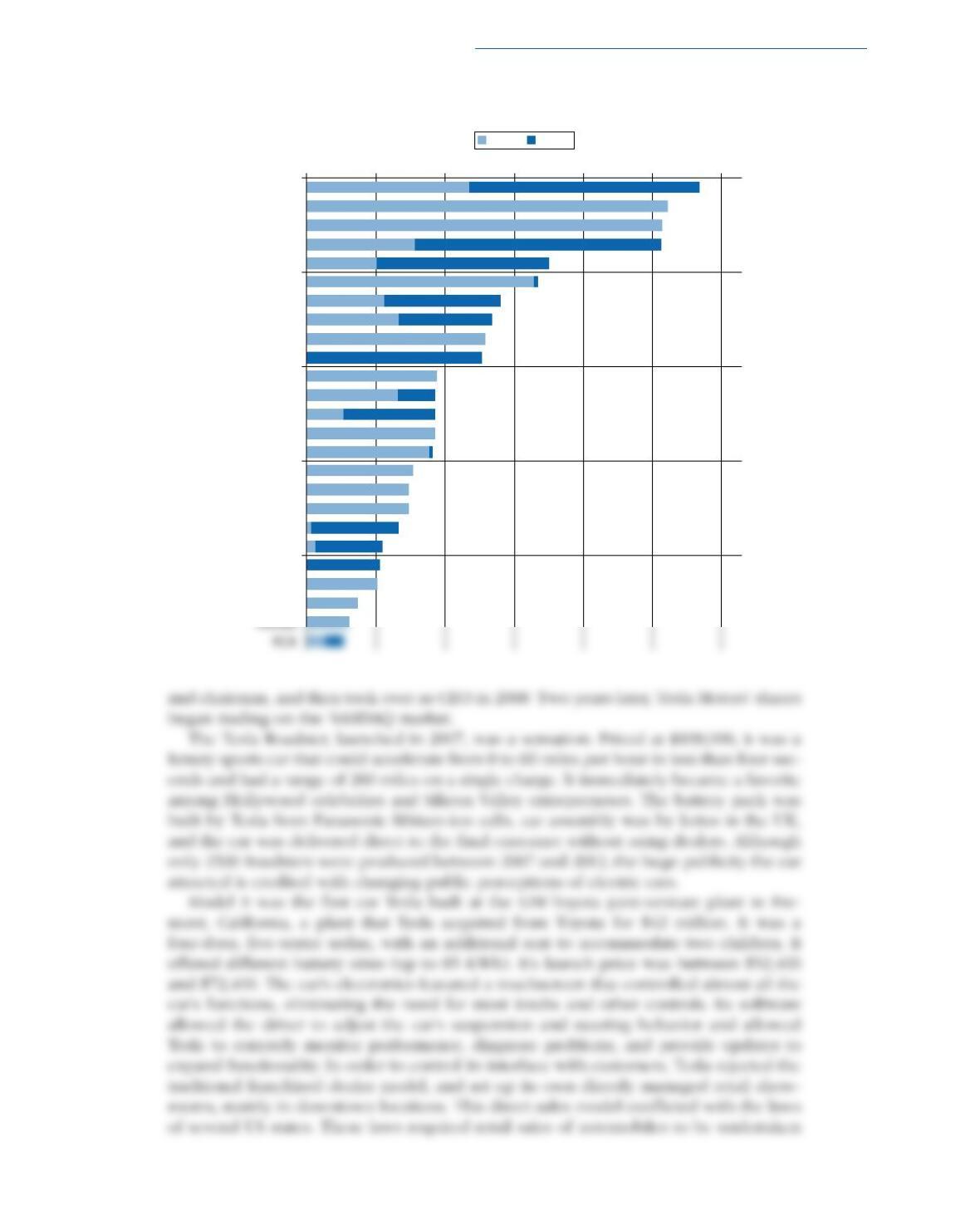
Figure1 shows the leading suppliers of EVs in 2017.
Tesla Motors, 2003–2018
Elon Musk is a South-African-born, serial entrepreneur, who moved to Canada at the
age of 17. He cofounded Zip2, a developer of Web-based publishing software, and then
PayPal, which earned him $165 million when it was acquired by eBay. His next start-
ups were SpaceX, which became the world’s leading satellite launch company, and
SolarCity, which aimed to become “the Walmart of solar panel installations.”
Tesla Motors Inc., founded in 2003, was named after Nikola Tesla, a pioneer of
electric motors and electrical power systems. In 2004, Musk became its lead shareholder
506 CASES TO ACCOMPANY CONTEMPORARY STRATEGY ANALYSIS
BYD
020406080 100 120
BAIC
Tesla
BMW Group
VW Group
Geely
SAIC
GM
Nissan
TMC
Renault
Hyundai-Kia
Daimler
Zotye
Chery
JAC
JMC
Changan
Mitsubishi
Ford
Volvo
Dongfeng
Kandi
BEV PHEV
FIGURE 1 World’s leading suppliers of plug-in electric vehicles, 2017 (thousands of units)