Introduction
Every business decision is associated in one way or another with the financial condition of
the organization. The results of a working capital analysis will assist in the determination
of organizations ability to remain in a particular line of business. The primary focus of
Team Cs analysis of Wal-Mart, Inc is its current and future financial condition. The most
imperative areas that are found in the Capital Structure Analysis Report fall into the
following categories: Working Capital Management, Valuation and Investment, and Cost
of Capital. The companys operational processes within each area can be examined and
related financial data reviewed. Once the financial data is collected and calculated
potential areas for improvements can be identified and corrective or innovative measures
can be implemented. As in all businesses, which include Wal-Mart, it must be considered
that there is always room for improvement.
Working Capital Management
In order to fully understand the companys financial position a financial manager must
consider the amount of net working capital available. The net working capital is the
difference between current assets and current liabilities. Companies normally have a
positive net working capital. The components of working capital change continually within
the cycle of operations. (Brealey, 2001) Therefore, an effective manager will monitor the
cash conversion periods to determine the length of the production process. The longer the
process, the longer the companys money will be tied up in the process. The two elements
in the business cycle that normally absorb the most cash are inventory and receivables. The
main sources of cash are payables and equity or loans. Speeding up the working capital
cycle will generate more cash for the company. www.planware.org This management of
working capital will allow the company to maximize its use of existing cash flows as well
as leverage additional sources of working capital.
Underperforming Company Ratios
Although Wal-Mart is performing well overall and remains a leader within the retail
industry, the company is not without opportunities for improvement. An analysis of the
financial ratios for the company over the last three years as well as an industry comparison
has identified areas in which the company could enhance its processes through capital
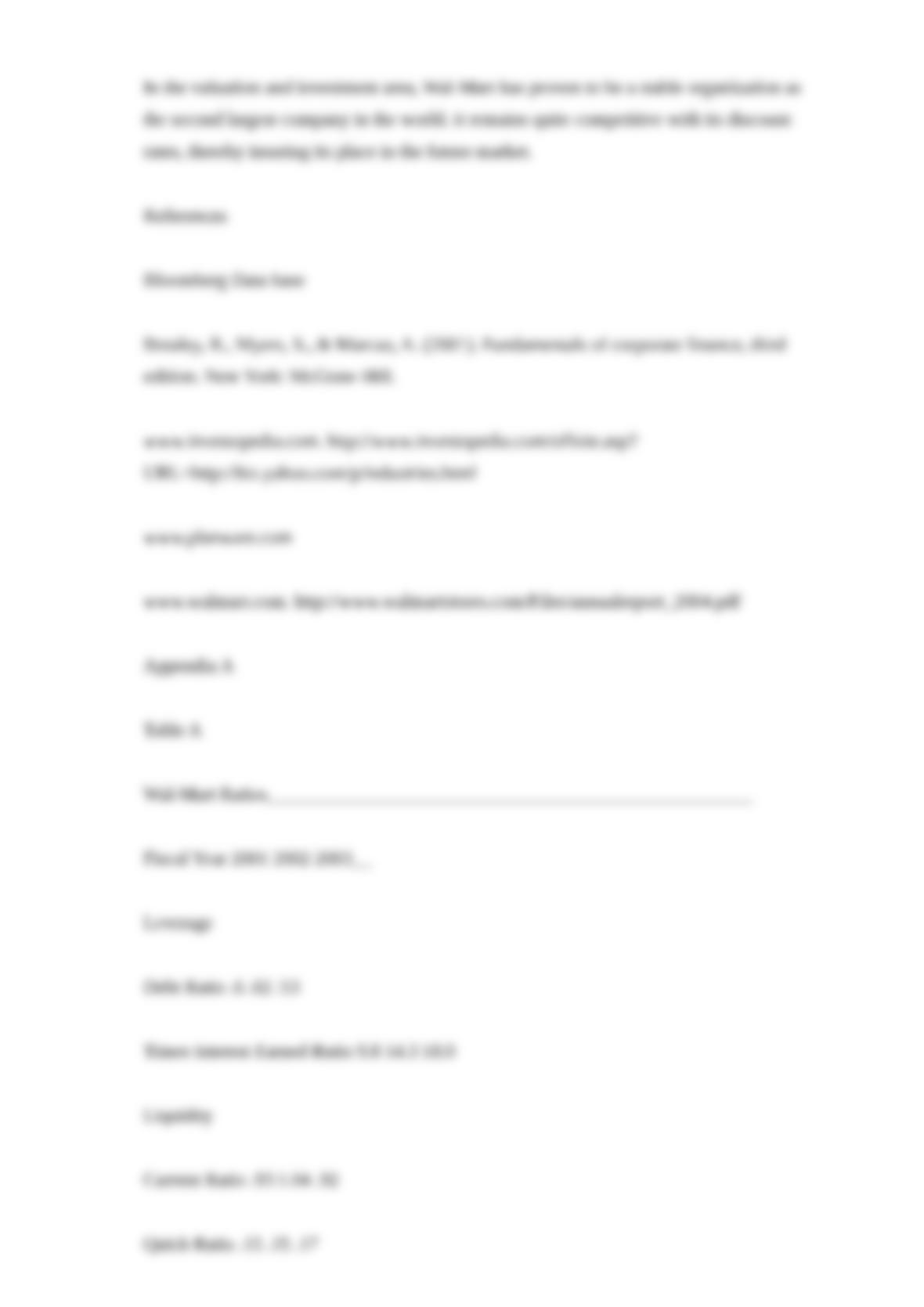
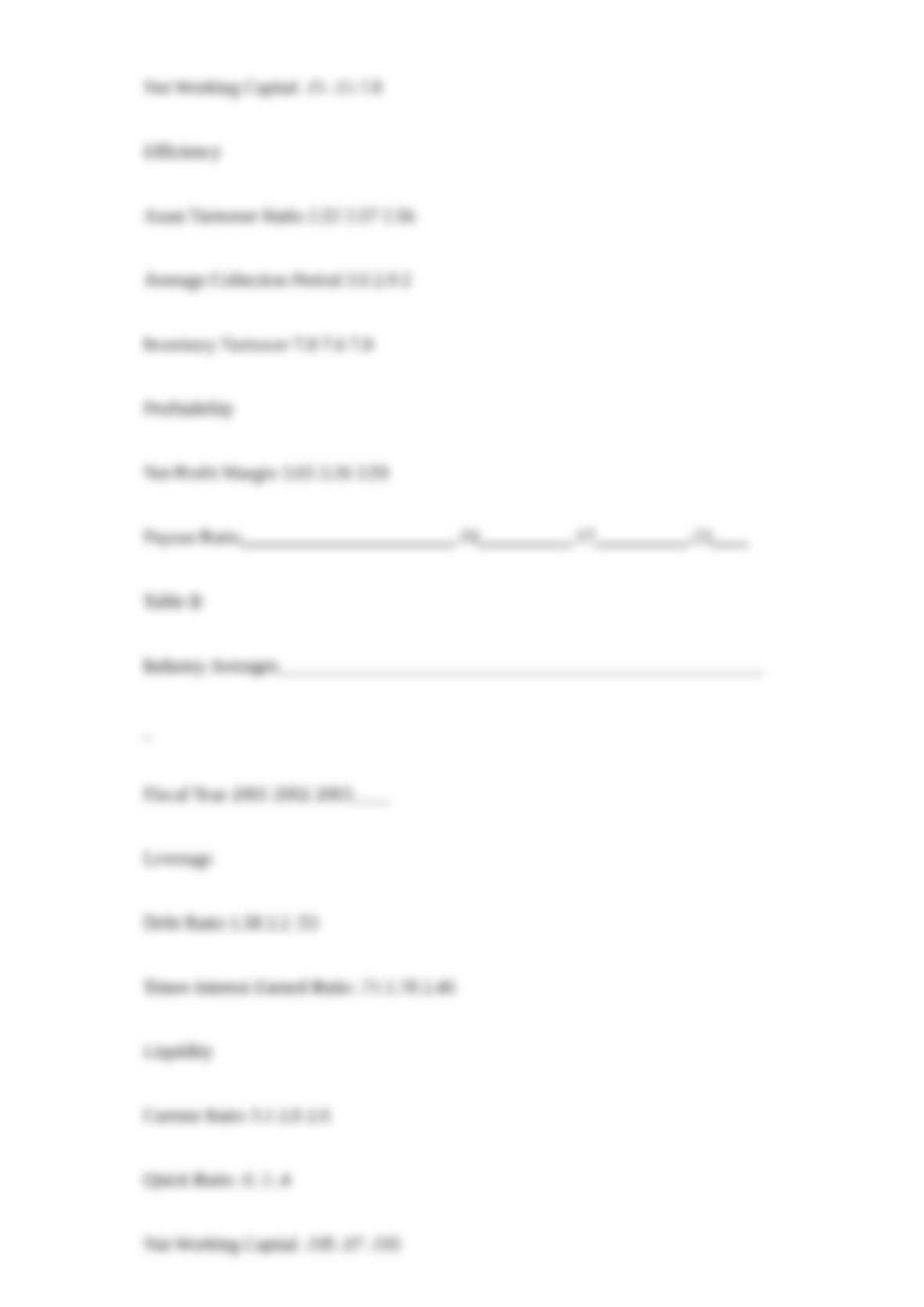
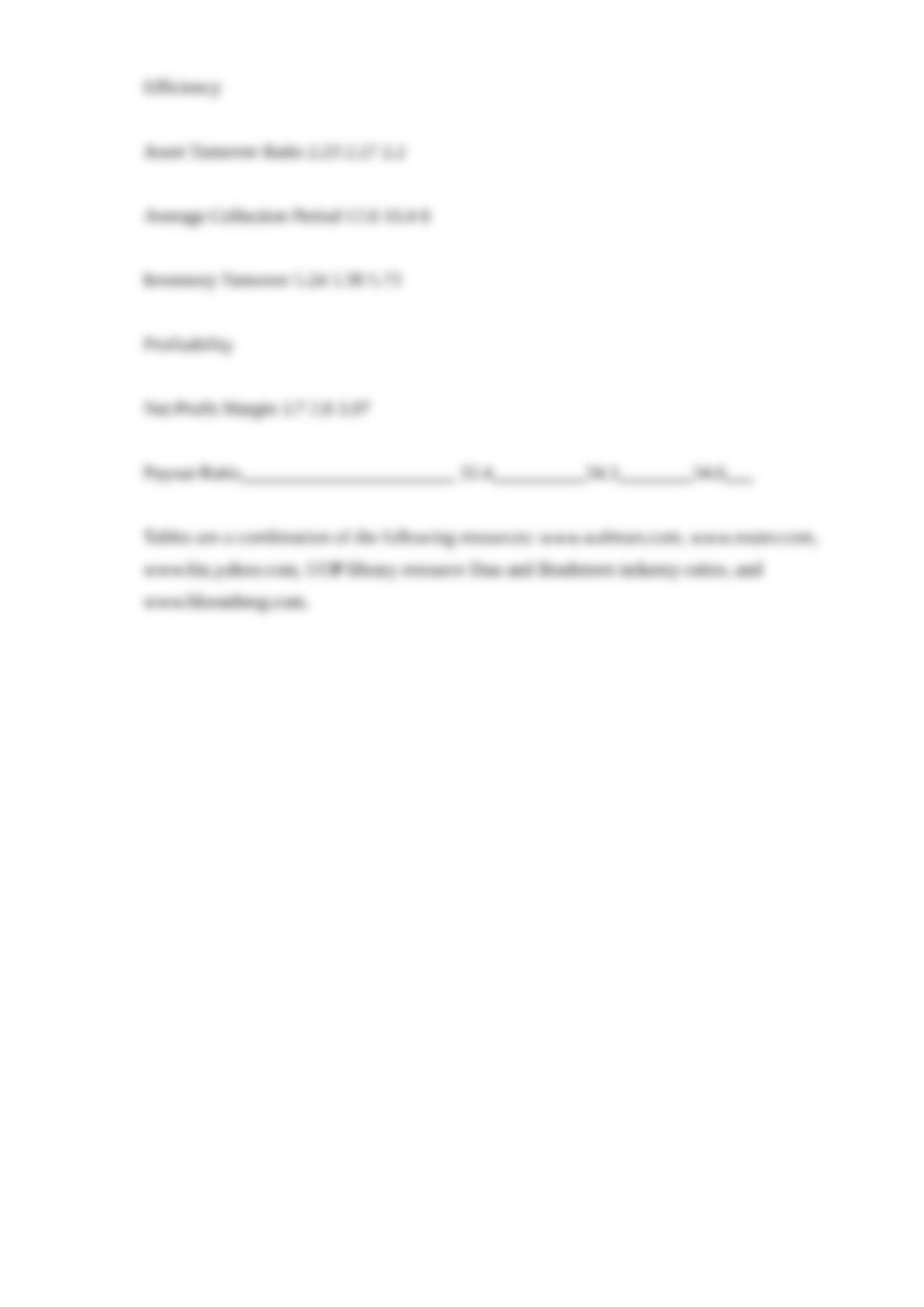
management. (See Appendix A for actual data) Although the current ratio has remained
stable over the last three years, it is significantly below the industry average. The current
ratio indicates that the company has had significant debt at the end of each year that it
would need to pay off by the end of the following year. The amount of this debt increased
each year, as evidenced by the slight decrease in the ratio. In order to avoid the continual
decrease of the ratio the company would need to reduce the amount of debt incurred each
year. The quick ratio has also remained stable, but well below the industry average. This
signifies that the proportion of assets that are easily liquidated is below that of other
companies. If it became necessary to liquidate some assets to raise capital, the ratio
indicates that the company may have difficulty. The asset turnover ratio remained
consistent with industry averages for the last three years. In other words, the amount of
revenue covers the cost of acquired assets. However, in order to continue its profitability,
the company may want to increase this number. The companys problem appears to lie
within the management of its liabilities and improvements in capital management
strategies may assist in the reduction of these problem areas.
Recommendations/Strategies
A working capital strategy is a financial plan that details the companys intentions
regarding the management of assets and liabilities. Plans for improvements are formulated
and implemented following the identification of weaknesses. These plans would require a
review of the companys long and short-term goals. Last years annual report reveals the
following pertinent information: the Wal-Mart segment accounted for 68% of company
sales (a 10% increase over the previous year), the Sams Club segment accounted for
13.5% of company sales (an 8.9% increase), and the International segment accounted for
18.5 % of company sales (a 16.6% increase), and cash flows increased 3 billion due in part
to improved inventory management. www.walmart.com The short-term goal is to reduce
liability/increase cash, thereby increasing the underperforming ratios, and the long term
goal is to continue its international expansion efforts while maintaining sales and profits.
In order for management to make the most appropriate decision the potential negative
consequences of the planned changes must also be analyzed. To meet company goals,
potential changes in the following areas should be explored: cash and marketable
securities, short-term financing, credit policies, and inventory management.
Cash and Marketable Securities
Cash and marketable securities are important current assets. A financial manager can
review financial documentation to identify significant sources of cash and can forecast
future sources and uses of cash. The company may also choose to purchase or sell
securities in order to enhance its financial position. A review of the last three annual
reports shows that company debt has increased due to the expansion efforts while sales
have steadily increased at a rate of only 12%. Total current liabilities have increased by
37% and long term debt has increased by 9%. Total current assets increased by 24% and
total assets increased by 25%. These numbers show that although the company has
increased its current assets, it has increased its current liabilities at a higher rate. The
easiest way to attempt to correct the problem and accomplish the identified short term goal
is to increase sales and/or decrease debt. While overall company sales increased, some