Strategic Capacity
Planning for Products and
Services
PART 2
Copyright © 2015 McGraw-Hill Education. All rights reserved. No reproduction or distribution without the prior written consent of McGraw-Hill
Education.
Capacity is the upper limit or ceiling on the load that
an operating unit can handle.
Capacity needs include
Equipment
Space
Employee skills
Others
Alternatives should be evaluated from varying
perspectives
Economic
Is it economically feasible?
How much will it cost?
How soon can we have it?
What will operating and maintenance costs be?
What will its useful life be?
Will it be compatible with present personnel and present
operations?
Non-economic
Public opinion
A number of techniques are useful for evaluating
capacity alternatives from an economic perspective.
Cost-volume analysis
Financial analysis
Decision theory
Waiting-line analysis
Simulation
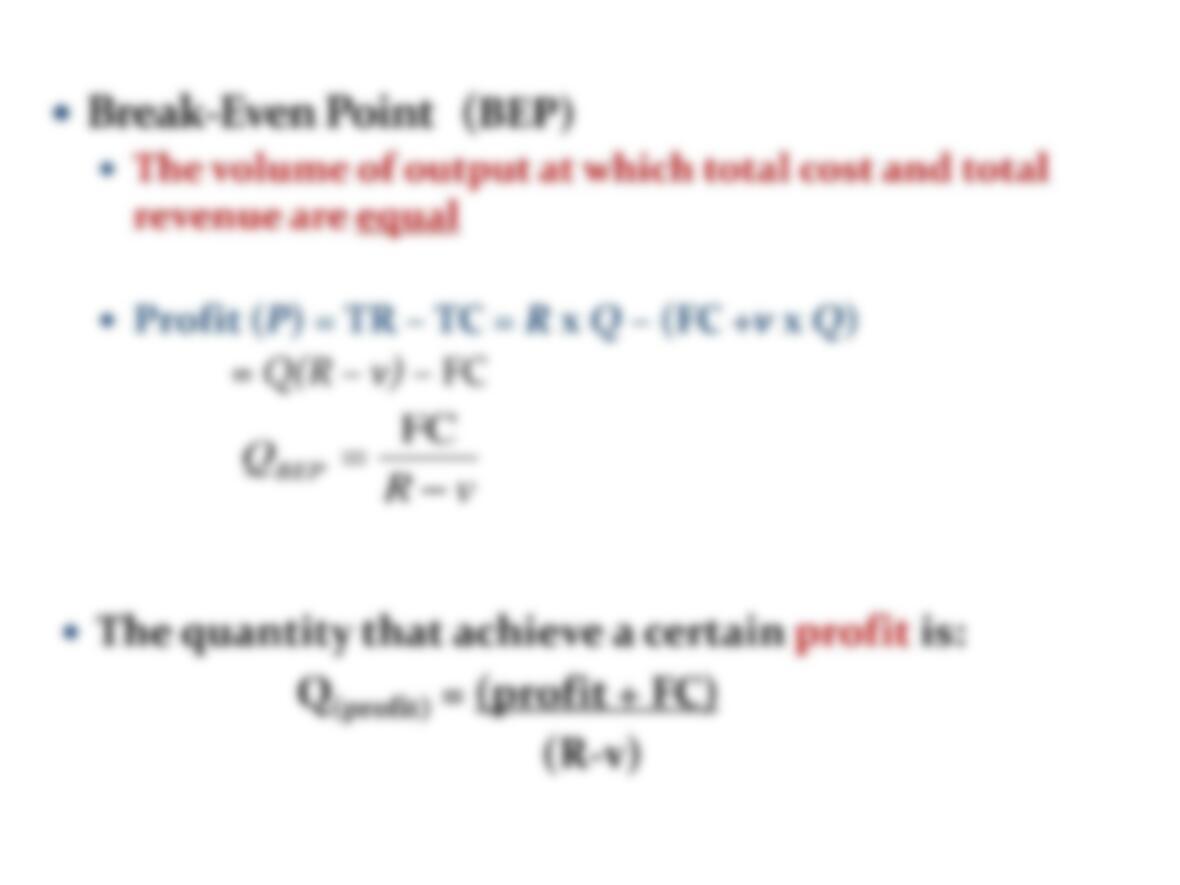
Focuses on relationships between cost, revenue and
volume of output.
The purpose of cost-volume analysis is to estimate the
income of an organization under different operating
conditions.
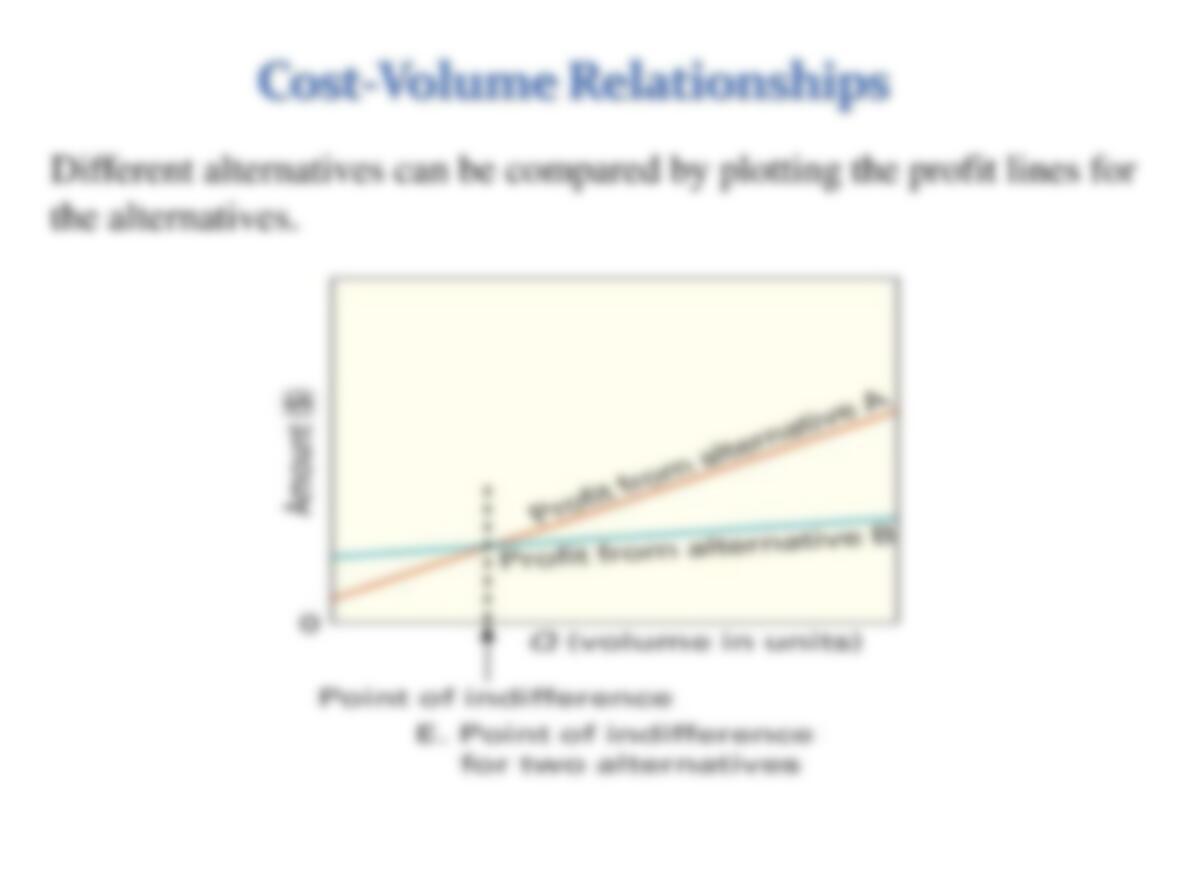
It is a useful tool for comparing capacity alternatives.
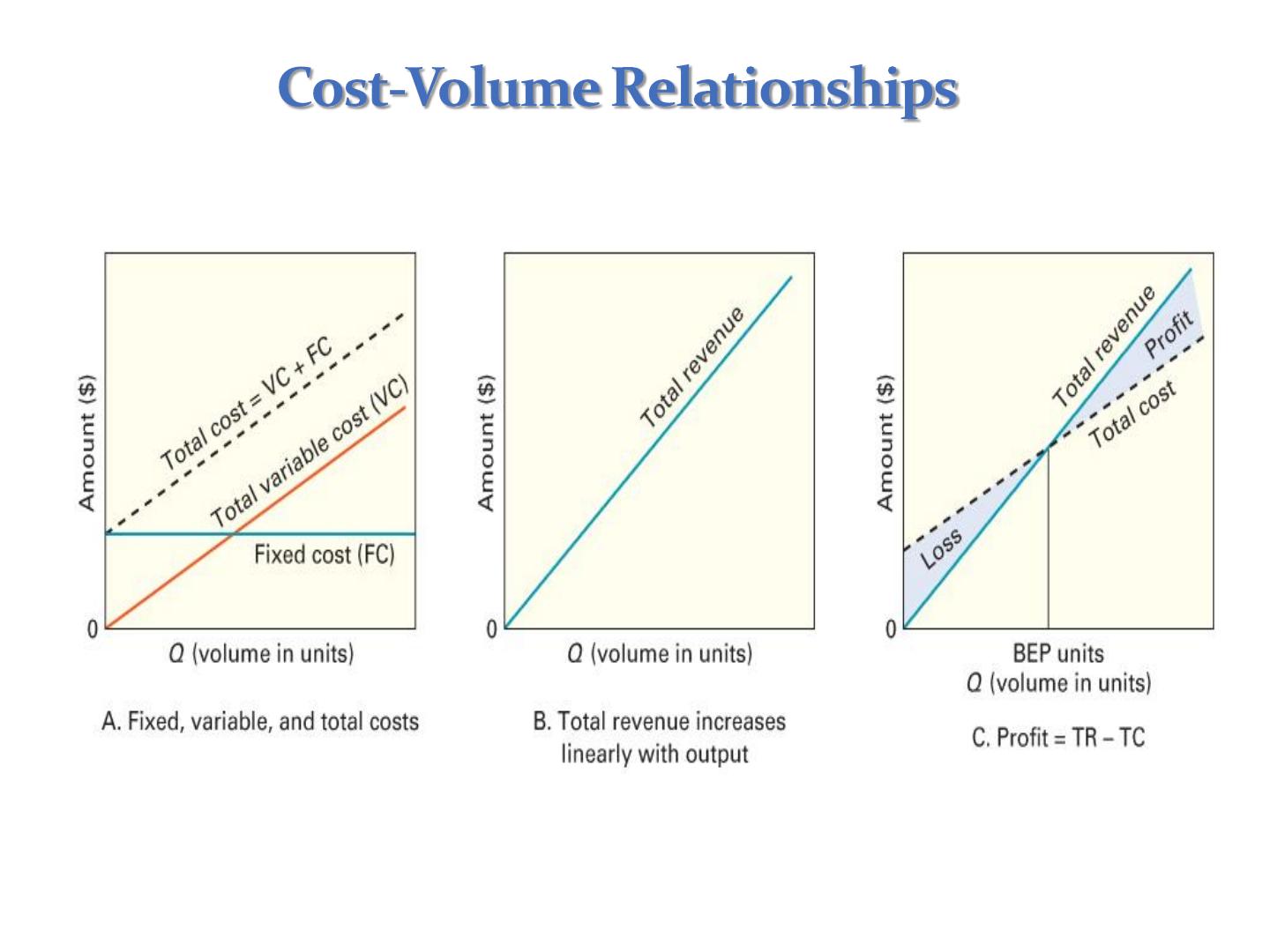
Cost-volume analysis
Focuses on the relationship between cost, revenue, and
volume of output
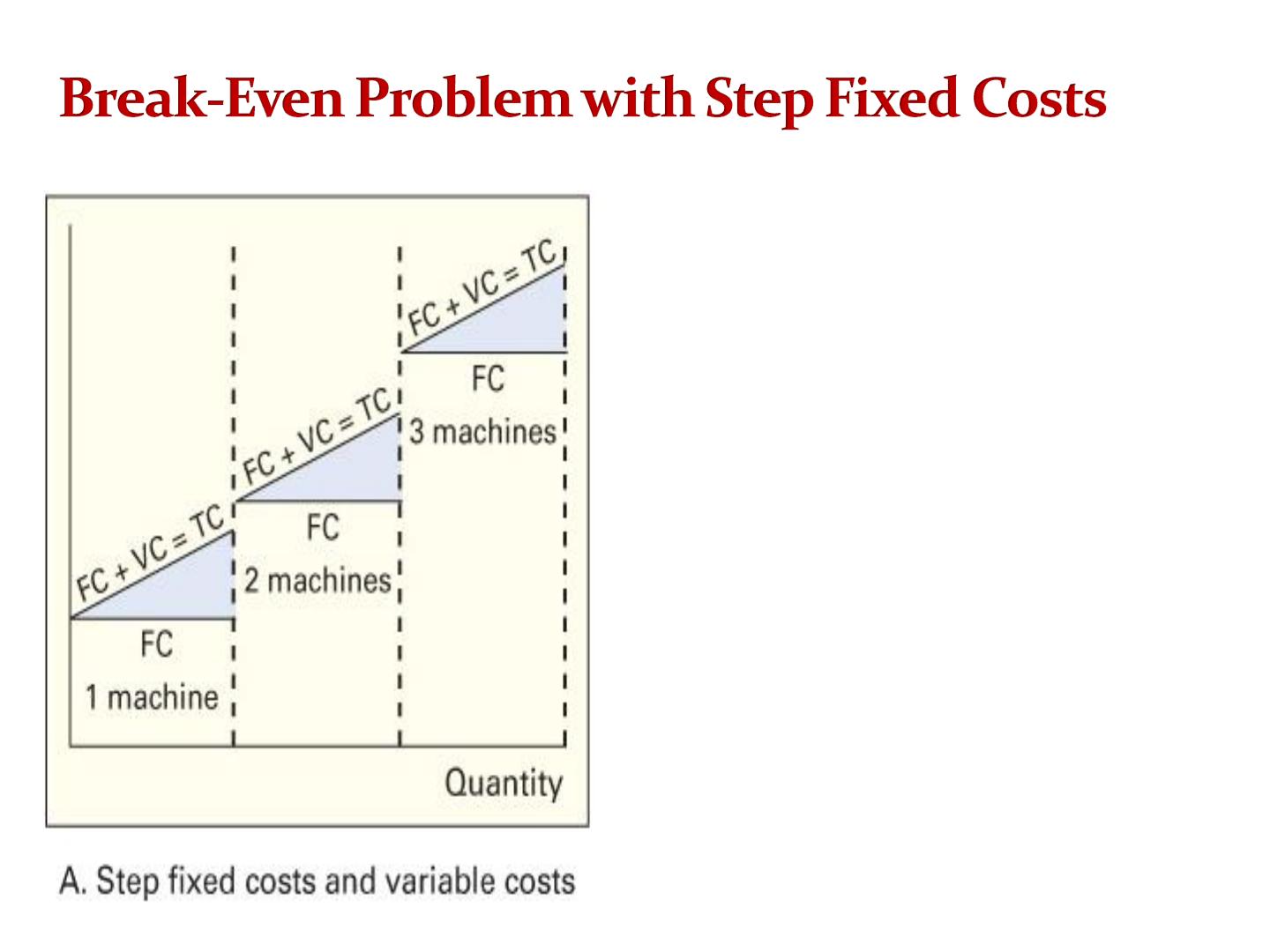
Fixed Costs (FC)
tend to remain constant regardless of output
volume
Variable Costs (VC)
vary directly with volume of output
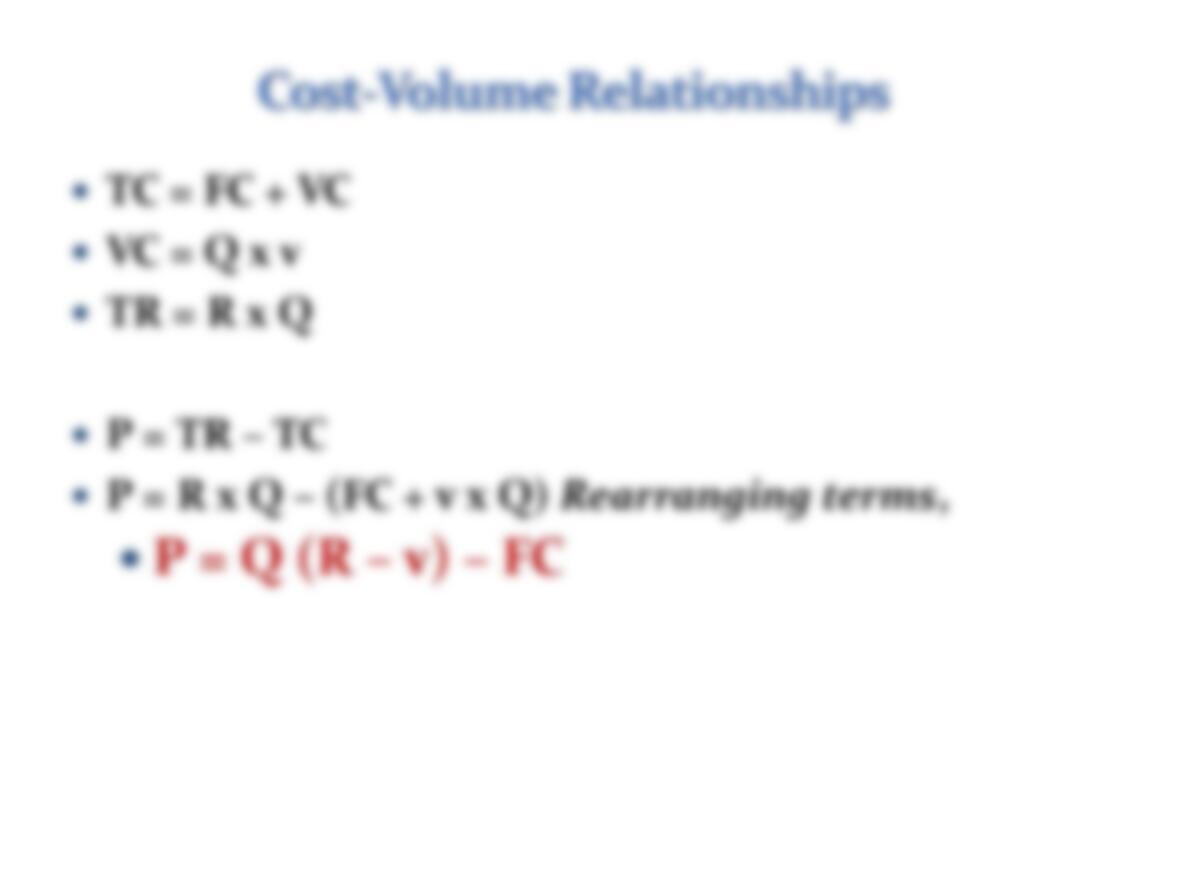
VC = Quantity(Q) x variable cost per unit (v)
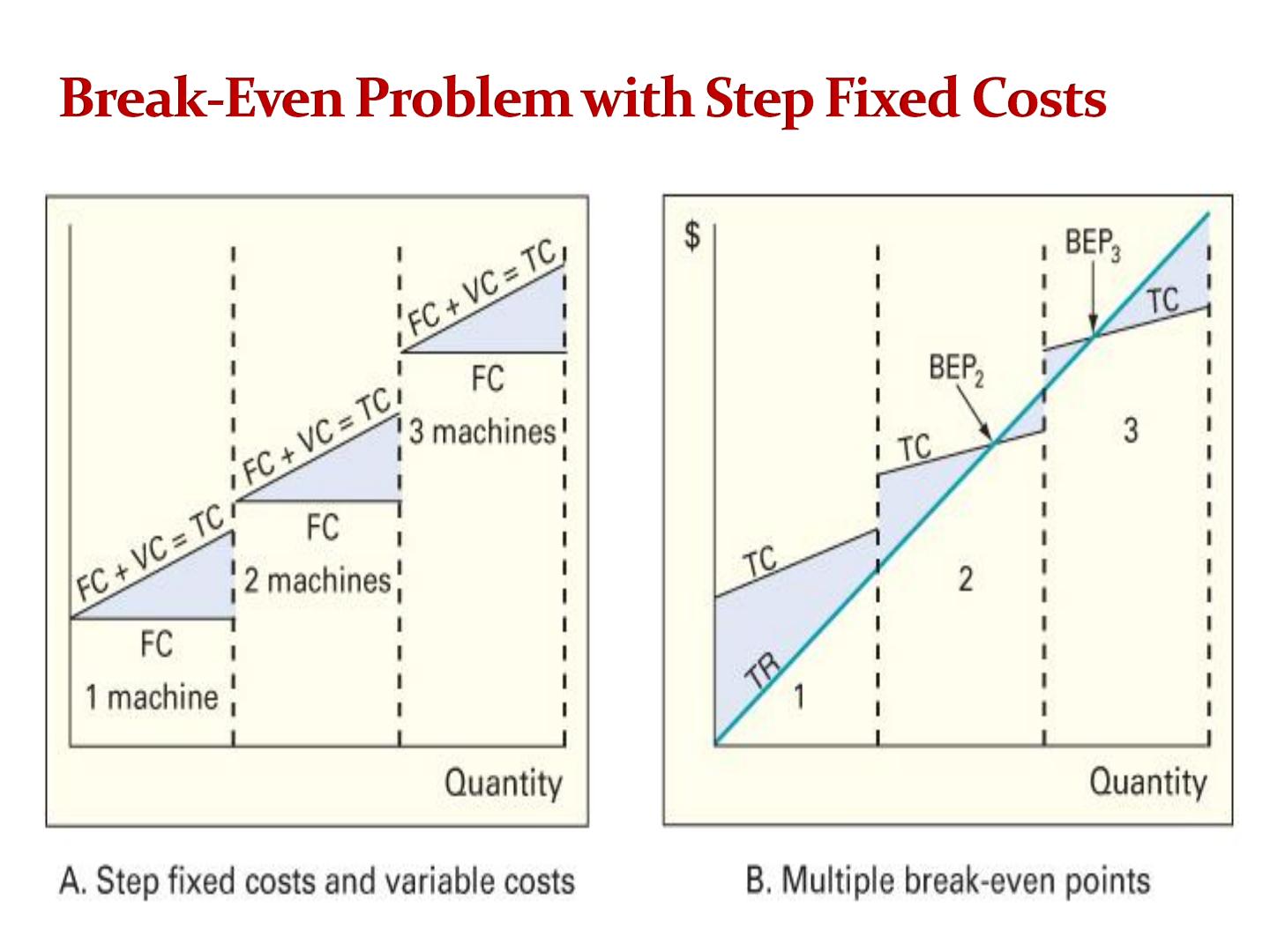
Total Cost
TC = FC + VC
Total Revenue (TR)
TR = revenue per unit (R) x Q
FC = Fixed cost
VC = Total variable cost
v = Variable cost per unit
TC = Total cost