I. Summary
McDonald’s Food chain worked frenetically to put the perfect supply chain
in place when McDonald’s opened its first outlet in India, between 1992 and
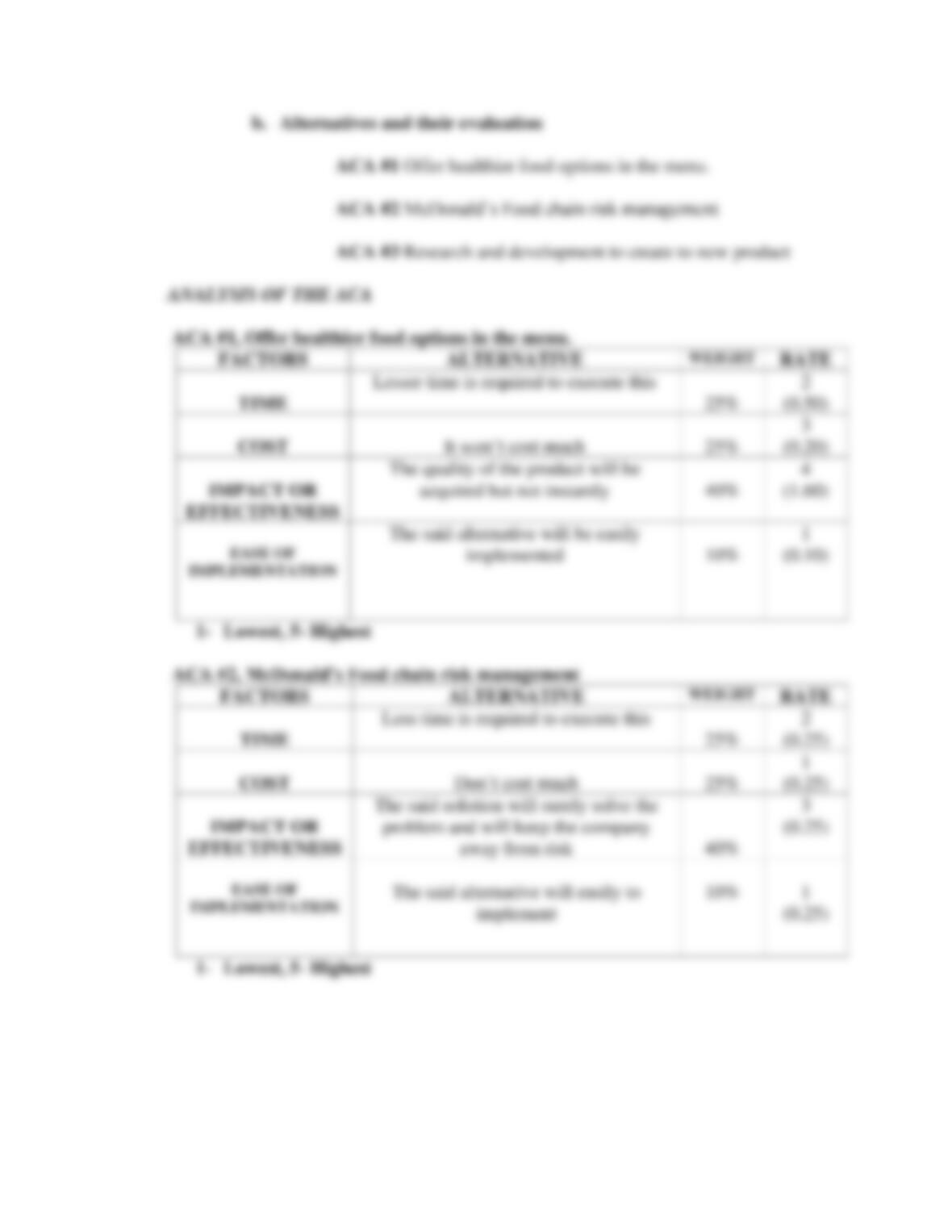
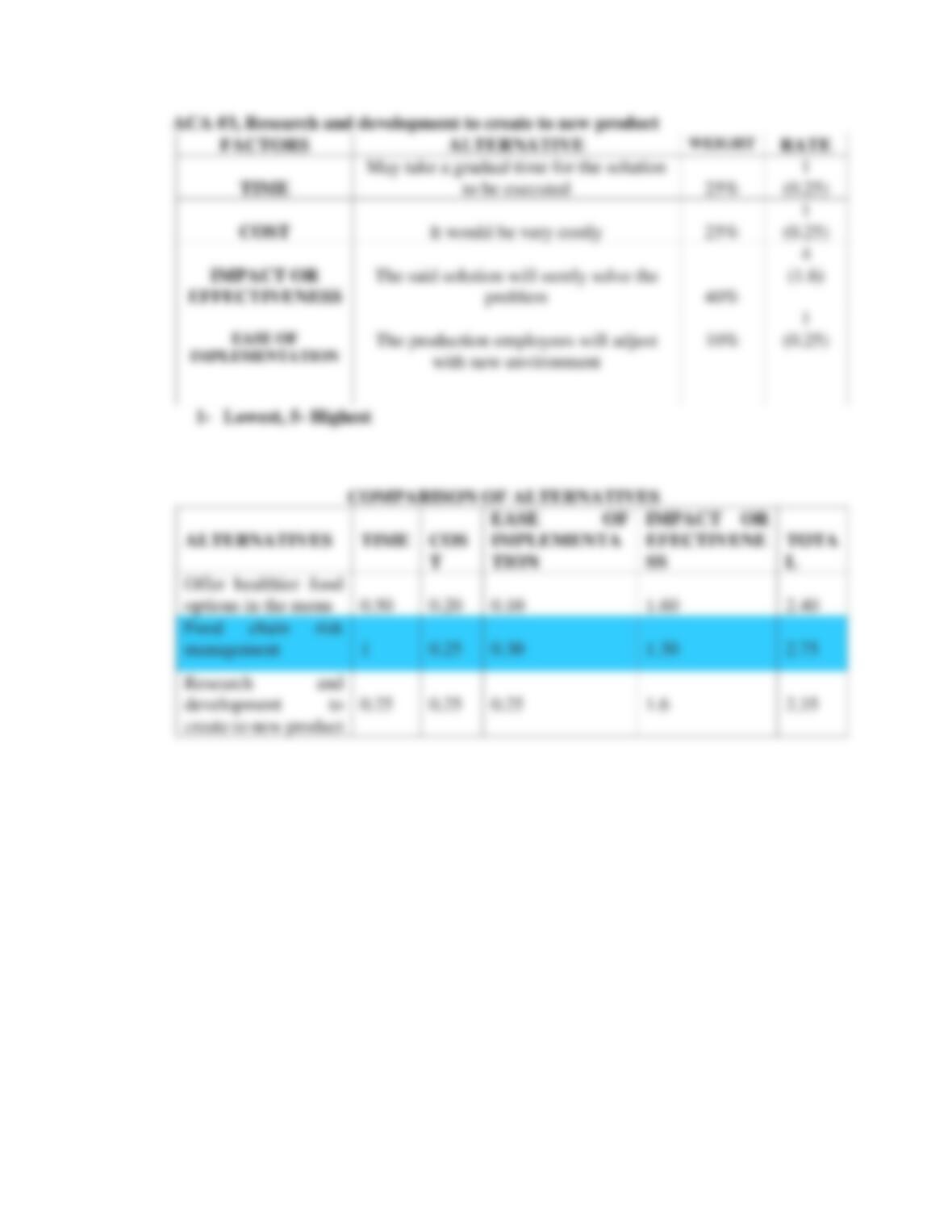
1996. The company’s success can be attributed to the McDonald’s Supply Food
chain risk management, where it is the most effective and efficient solution
according to the alternative course of action. The company should choose to
improve its process, price, product, target customers, ability of its suppliers, and
environment. A mature McDonald’s food chain risk management is needed. It
has a great impact to the whole operational performance of the company.
In this case analysis, the analysts identified the cause of the problem through
fishbone analysis. Further, the SWOT analysis was also presented to get the
managers/company’s thinking about everything that could potentially impact
the success of the business and alternatives course of action has been discussed.
The analysts studied in detail the entry of McDonald’s in India and how
McDonald’s have penetrated to various part of the world and manage to run the
business smoothly especially in India. The McDonald’s action plan provided
by the analysts is also discussed, to clarify what resources are required to reach
the goal, formulate a timeline for when specific tasks need to be completed and
determine what resources are required.
II. Introduction
The main purpose of this case analysis is to present a detail insight into the
success story of McDonald’s in India.
It was early evening and one of the 25 McDonald’s outlets in India was
bustling with activity with hungry souls trooping in all the time. No matter what
one ordered – a hot Maharaja Mac or an apple pie – the very best was served every
time. But did anyone ever wonder as to how this US giant managed the show so
perfectly? The answer seemed to lie in a brilliantly articulated food chain, which
extended from these outlets right up to farms all across India.
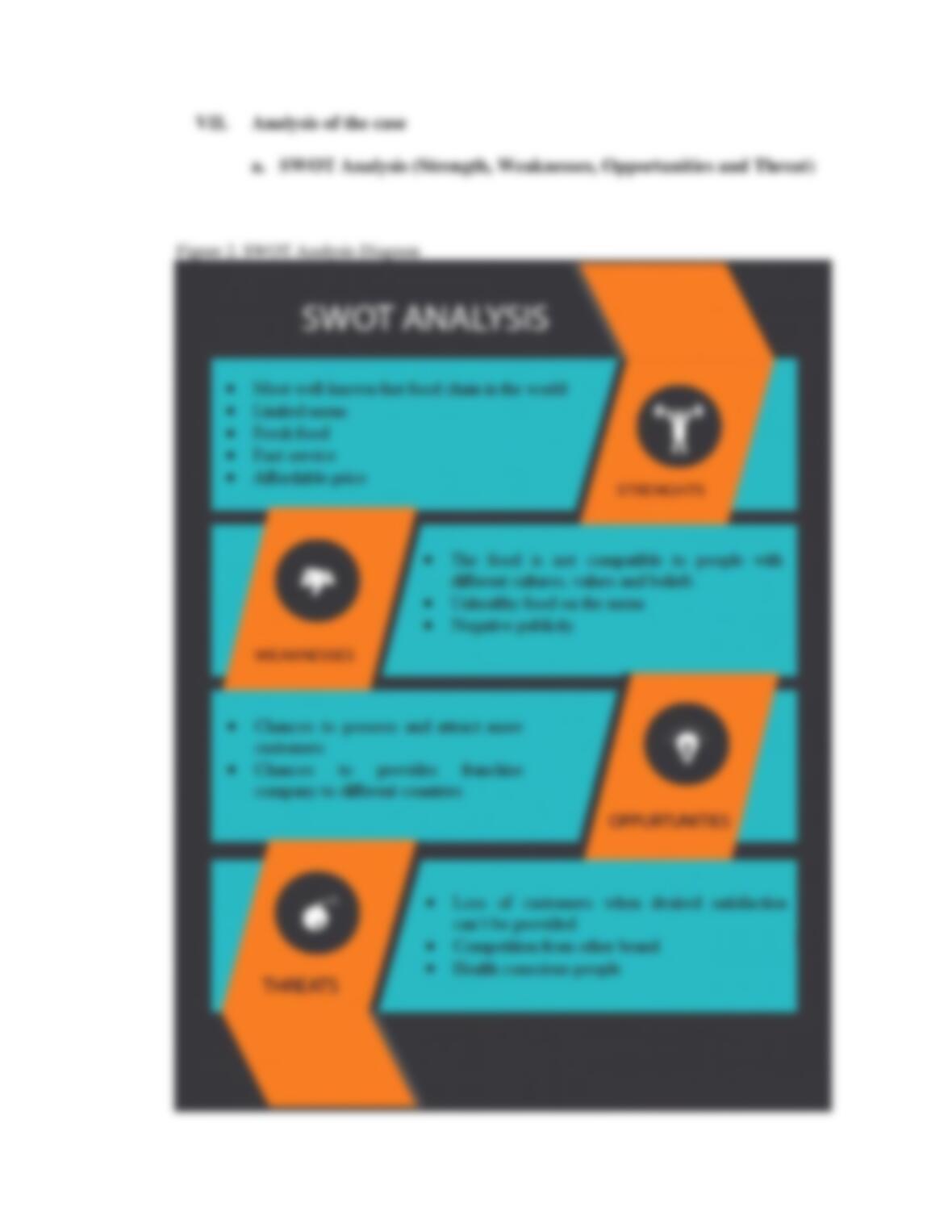
US-based fast food giant, McDonald’s success in India had been built on four
pillars: limited menu, fresh food, fast service and affordable price. Intense
competition and demands for a wider menu, drive-through and sit-down meals –
encouraged the fast food giant to customize product variety without hampering the
efficacy of its supply chain. Around the world (including India), approximately
85% of McDonald’s restaurants were owned and operated by independent
franchisees. Yet, McDonald’s was able to run the show seamlessly by outsourcing
nine different ingredients used in making a burger from over 35 suppliers spread
all over India through a massive value chain.
Between 1992 and 1996, when McDonald’s opened its first outlet in India,
it worked frenetically to put the perfect supply chain in place. It trained the local
farmers to produce lettuces or potatoes to specifications and worked with a vendor
to get the perfect cold chain in place. And explained to the suppliers precisely why
only one particular size of peas was acceptable (if they were too large, they would
pop out of the patty and get burnt). These efforts paid off in the form of joint
ventures between McDonald’s India (a 100% wholly-owned subsidiary of
McDonald’s USA) and Hardcastle Restaurants Pvt. Ltd, (Mumbai) and Connaught
Plaza Restaurant (New Delhi).
The company is in the path of continuous innovation to strengthen its
business model in Indian and to keep evolving according to the customer needs.
Also, McDonald’s survival in India is only due to the complete understanding of
the Indian Economy.
III. Viewpoint
From the viewpoint of manager
IV. Statement of the Problem
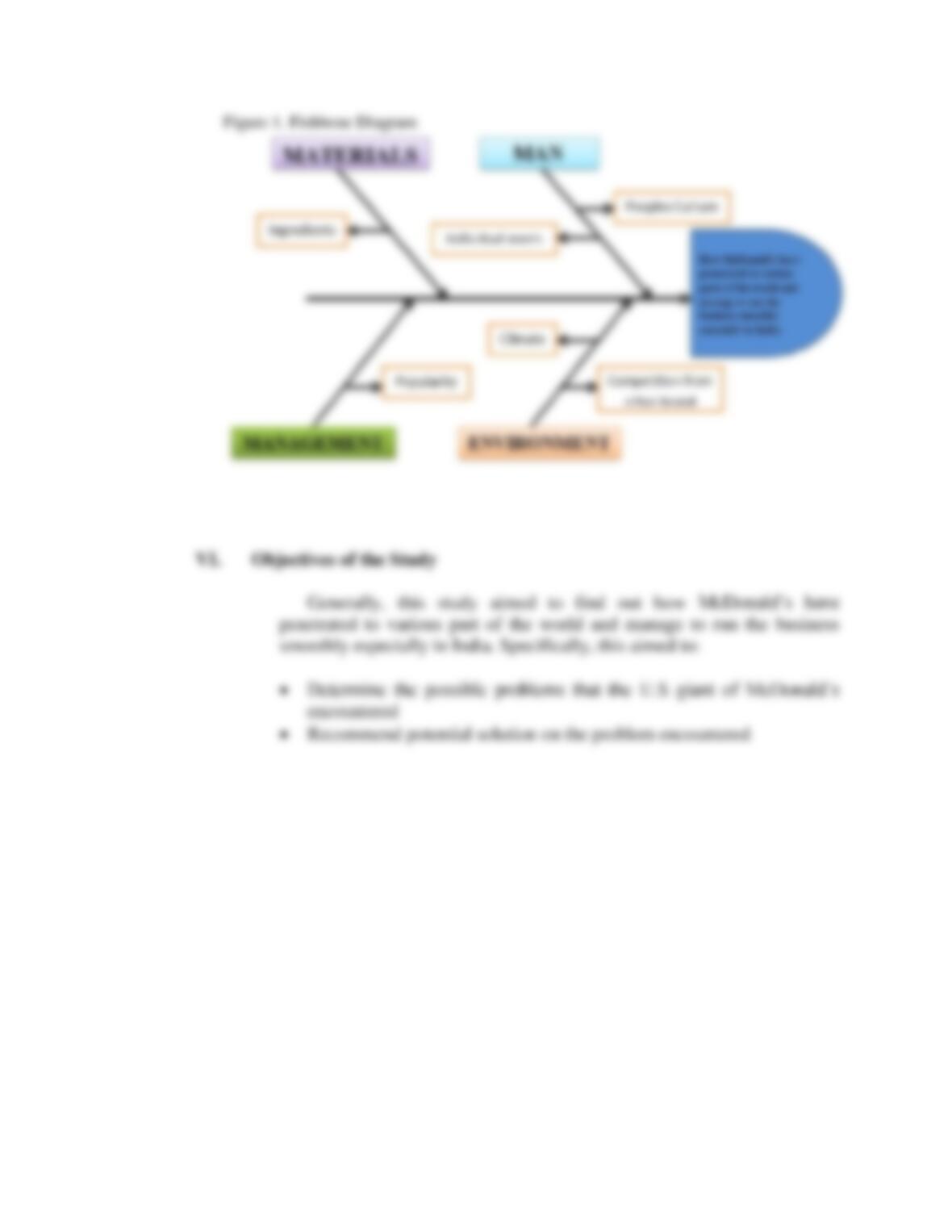
The case presents how U.S based fast food giant of McDonald’s
have penetrated to various part of the world and manage to run the business
smoothly especially in India
V. Causes of the Problem
• Man
o Peoples culture – Indians are vegetarian because that are
forbidden from eating beef meals
o Individual wants – Not all customers have similar wants and
needs to eat.
• Materials