1
q
University of Southeastern Philippines
College of Business Administration
BA 2213 – Strategic Management
ESSAY FORMAT or Written Analysis of the Case (WAC)
” Cacho Hermanos, Inc.
Presented by
Alimohammadi, Fatemeh
falimohammadi@usep.edu.ph
Student ID: 2019-03063
Presented to
Professor Alex Roldan
roldanalex@yahoo.com
December 3, 2020
1st Semester SY 2020-2021
2
TABLE OF CONTENTS
I. INTRODUCTION 3
II. BACKGROUND 3
III. ANALYSIS 5
Porter’s Five Forces Framework 5
SWOT Analysis 5
IV. STATEMENT OF THE PROBLEM 9
Objectives and Areas of Consideration
V. ALTERNATIVE COURSE OF ACTIONS 9
VI. CONCLUSION 12
VII. RECOMMENDATIONS 13
LIST OF FIGURES
Figure 1. CHI subsidiaries and sister companies with their publication field 4
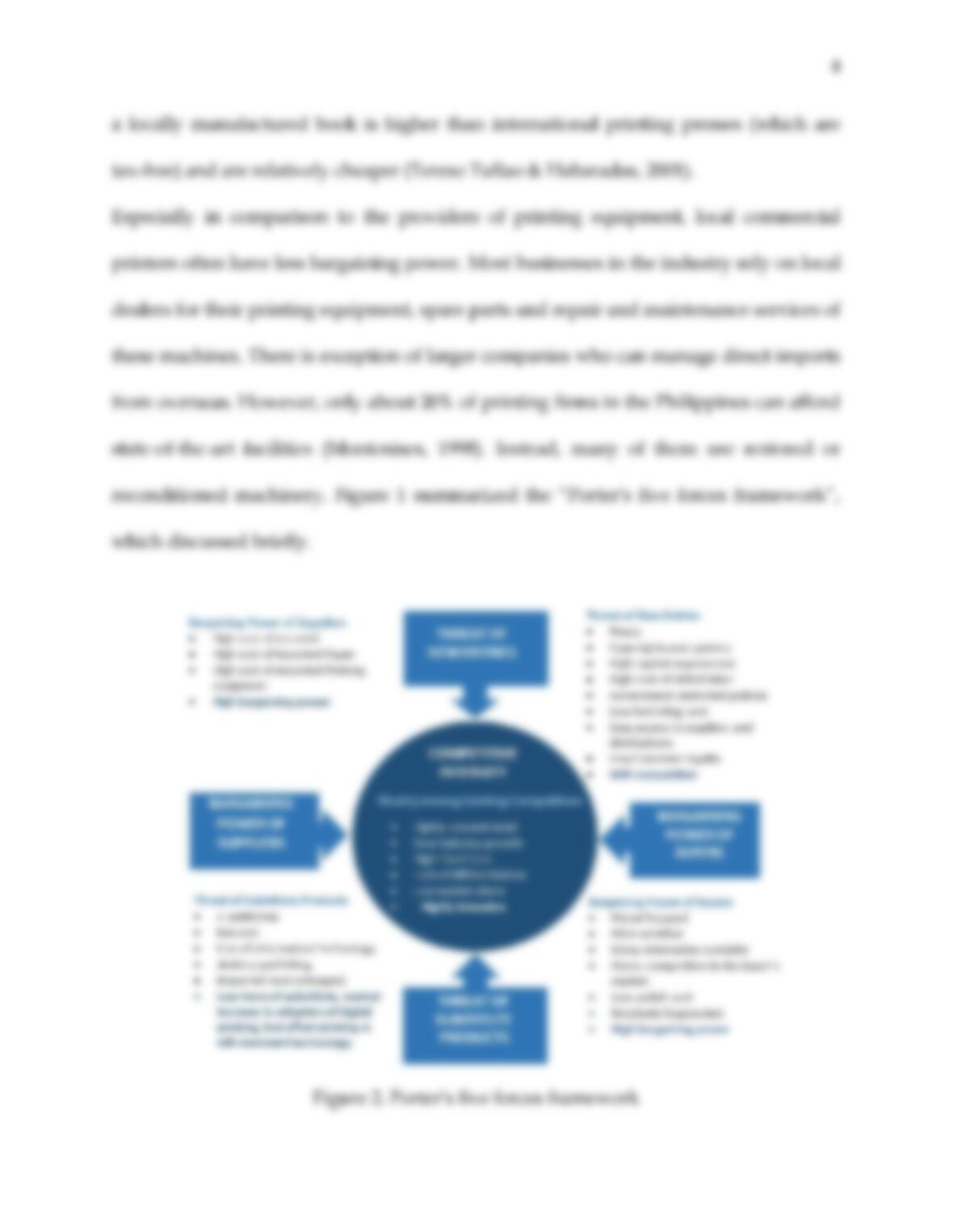
Figure 2. Porter’s five forces framework for CHI 10
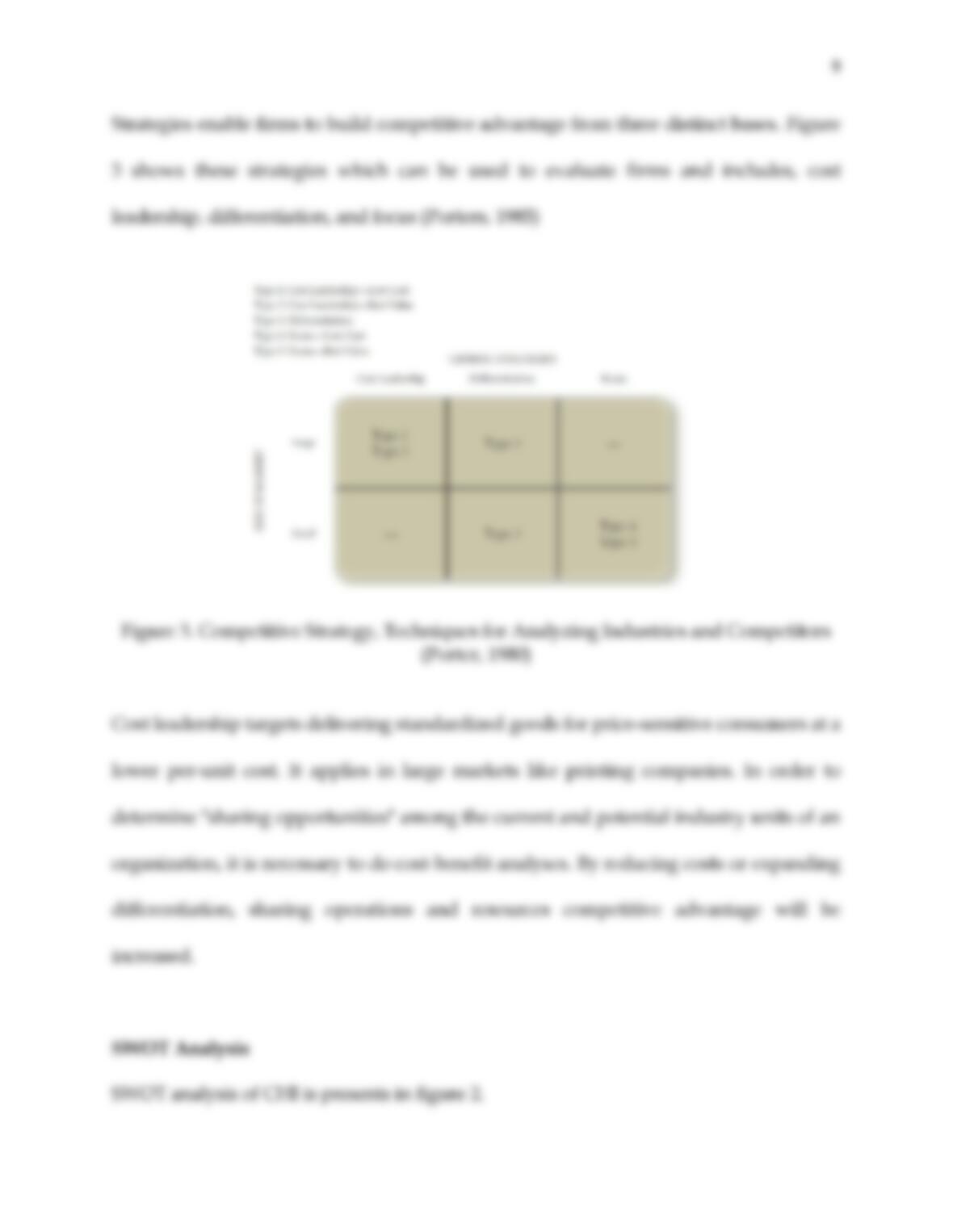
Figure 3. Competitive Strategy, Techniques for Analyzing Industries
and Competitors (Porter, 1980) 12
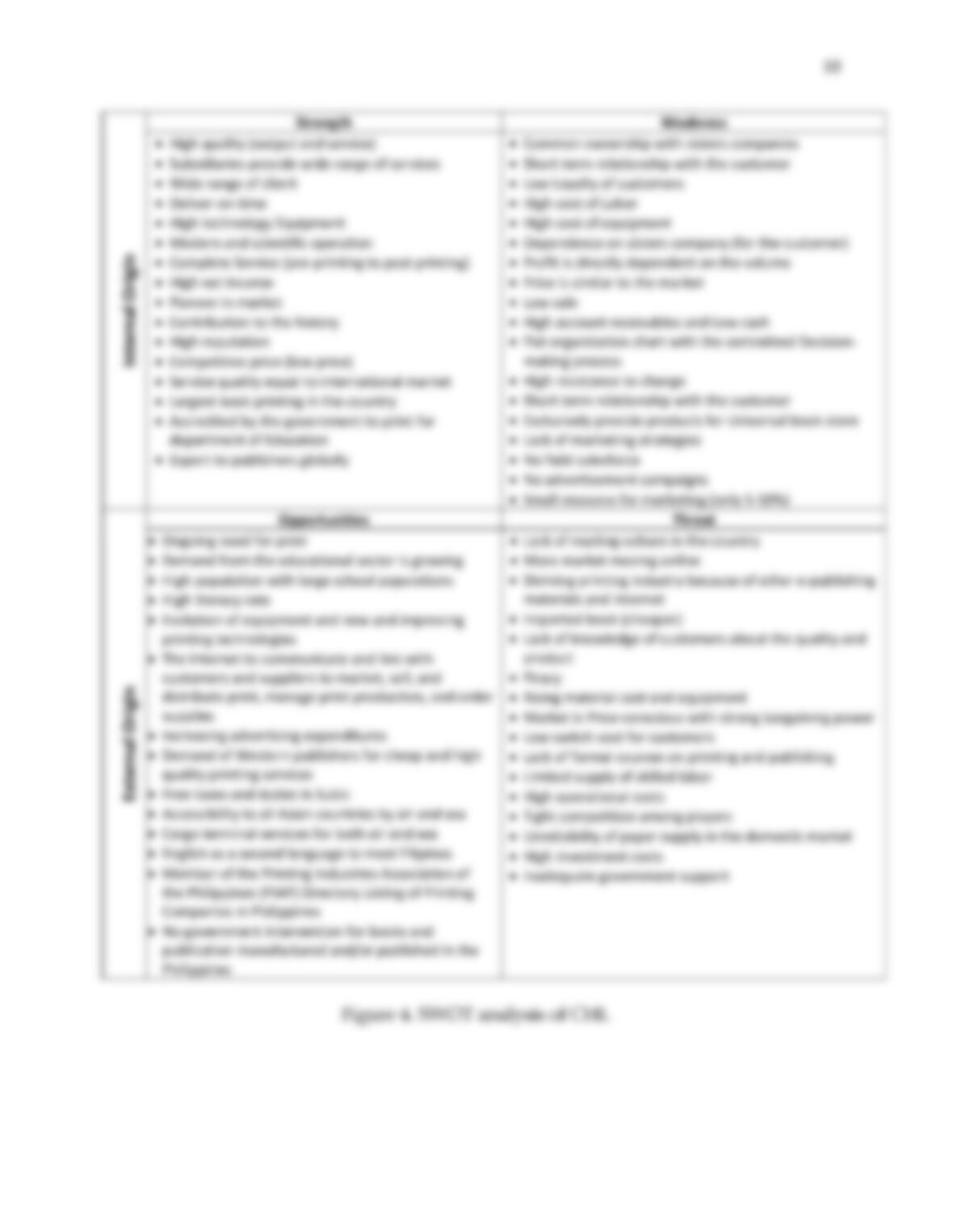
Figure 4. SWOT analysis of CHI 11
REFERENCES 19
3
I. INTRODUCTION
The printing and publishing industry is extremely intensive and price-driven. The
majority of relationships are short-term and relational. While Cacho Hermanos Inc.
(CHI) net profits still remained relatively high, the company has experienced a drop in
revenue. However, the cash situation was mildly challenged by accounts receivable and
their sister firms. There is no guarantee that if CHI wanted cash to pay for its trade
payables, these accounts receivable will be obtained on time. In order to increase market
share and diversify its consumers and minimize dependency on its sister companies,
the company needed a marketing strategy.
II. BACKGROUND
CHI started operation in the printing and publishing industry in 1880 in the
Philippines. Lopez family owner of Universal printers Group of the company bought
CHI in the year 1990. The printing and publishing industry is growing both at national
and regional levels while the bigger players are more profitable than relatively smaller
players are. CHI in the year 2000 was the largest book printing in the country and
offered a one-stop-shop for quality and expert printing services, with the product
quality equal to the international market. In the same year, CHI was expanded, its
operations on Subic Bay Freeport (SBF), and the company was achieved its long-term
goal of being global. CHI was the provider of a wide range of services from pre-printing
service to post-printing service, provide the best value for the customer’s money,

4
deliver on time and produced good reputation as a pioneer by using modern
technology.
CHI’s target market was the companies that publish reading materials belonging to the
B and C market segment, which are very price-conscious. CHI did not have any clear
marketing plan and followed the old school method. They mostly accommodated their
sister’s companies. The process was simple, Sisters Company ask CHI for cost
estimation to bid for a particular job, after signing the contract they conduct frequent
follow-up. Unfortunately, CHI did not contact directly with its customers and in many
cases lost the relationships. However, CHI experienced sales visits were very effective,
strengthen customer relationship with present customers, and many time add new
customers for the company. Lack of sales and marketing team aside from an integrated
strategy causes many problems in the company. Cacho usually publishes children’s
books while other Subsidiaries and Sister Companies offer their specialty field, which is
presented in figure 1.
Company
Publication field
CHI’s
Subsidiaries
Carmelo & Bauermann
Printing Corporation
Small item like invoices, calling cards
Capitol Publishing
House, Inc.
print bible and books for DECS, Binding
and printing for DPC, Publisher of the
telephone directory of the Philippines
Cauderno & Yasake
Manufacture notebooks for Universal
Book Store (UBS)
CHI’s Sister
Companies
Solar Publishing
Woman and Glitter Magazines
Atlas Publishing
Comics and Magazines
Figure 1. CHI subsidiaries and sister companies with their publication field
5
III. ANALYSIS
To have a better understanding and analysis of the case, researcher will apply Porter’s
analysis and SWOT analysis.
Porter’s Five Forces Framework
Market structure has a significant impact in determining the competitive standards.
According to Porter, the state of competition in the market relies on five competitive
fundamental forces, namely industry competitors, suppliers, buyers, potential entrants,
and substitutes. The forces jointly recognize the intensity of competition and
profitability. Just like any industry, the printing and publishing industry is primarily
affected by the actions taken by these players, primarily by the firm in the industry