CHAPTER 1
The Beginnings: Native Americans,
Europeans, and Africans to 1650
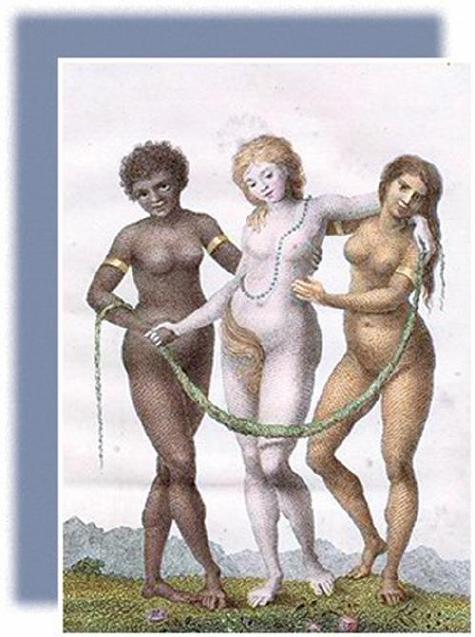
Figure 1.1 In Europe supported by Africa and America (1796), artist William Blake, who was an abolitionist, depicts the
interdependence of the three continents in the Atlantic World; however, he places gold armbands on the Indian and African
women, symbolizing their subjugation. The strand binding the three women may represent tobacco.
John Mack A History of the United States Page 1
Chapter 1 Outline
Introduction, Watch and Learn, Questions to Guide your Reading
1.1 The First Americans
1.2 Portuguese Exploration and Spanish Conquest
1.3 Challenges to Spain’s Supremacy
1.4 Enforced Labor, Commerce, and the Columbian Exchange
Key Terms, Section Summaries, Summary Timelines, Virtual
Explorations in Learning
Introduction
Globalization, the ever-increasing interconnectedness of the world, is not a new phenomenon,
but it accelerated when western Europeans discovered the riches of the East. During the
Crusades (1095–1291), Europeans developed an appetite for spices, silk, porcelain, sugar, and
other luxury items from the East, for which they traded fur, timber, and Slavic people they
captured and sold (hence the word slave). But when the Silk Road, the long overland trading
route from China to the Mediterranean, became costlier and more dangerous to travel,
Europeans searched for a more efficient and inexpensive trade route over water, initiating the
development of what we now call the Atlantic World. In pursuit of commerce in Asia, fifteenth-
century traders unexpectedly encountered the “Americas” populated by millions and home to
sophisticated and numerous peoples. Mistakenly believing they had reached the East Indies,
these early explorers called its inhabitants Indians. West Africa, a diverse and culturally rich
area, soon entered the stage as other nations exploited its slave trade and brought its peoples
to the Americas in chains. Although Europeans would come to dominate the
John Mack A History of the United States Page 2
Americas, they could not have done so without Africans and native peoples.
The story of the Atlantic World is thus the story of global migration, a migration driven in large
part by the actions and aspirations of the ruling heads of Europe. Christopher Columbus’
journey in 1492 sparked new rivalries among European powers as they scrambled to create
American colonies, fueled by the quest for wealth and power as well as by religious passions.
Almost continuous war resulted. Spain achieved early preeminence, creating a far-flung empire
and growing rich with treasures from the Americas. Native Americans who confronted the
newcomers from Europe suffered unprecedented losses of life, however, as previously
unknown diseases sliced through their populations. They also were victims of the arrogance of
the Europeans, who viewed themselves as uncontested masters of the Americas, sent by God
to bring Christianity to the “Indians.”
Watch and Learn (Crash Course in History videos for chapter
1)
• The Black Legend, Native Americans, and Spaniards
• The Columbian Exchange (part 1)
• The Columbian Exchange (part 2)
Questions to Guide Your Reading
1. The Inca were able to control an empire that stretched from modern Colombia to
southern Chile. Which of their various means for achieving such control do you think
were most effective, and why?
2. How did the Olmec, Aztec, Inca, Maya, and North American Indians differ in their ways
of life and cultural achievements? How did their particular circumstances—geography,
history, or the accomplishments of the societies that had preceded them, for example—
serve to shape their particular traditions and cultures?
John Mack A History of the United States Page 3
3. What types of labor systems were used in the Americas? Did systems of unfree labor
serve more than an economic function?
4. What is meant by the Columbian Exchange? Who was affected the most by the
exchange?
5. What were the various goals of the colonial European powers in the expansion of their
empires? To what extent were they able to achieve these goals? Where did they fail?
6. On the whole, what was the impact of early European explorations on the Americas?
What was the impact of the Americas on Europeans?
1.1 The First Americans
By the end of this section, you will be able to:
• Locate on a map the major American civilizations before the arrival of the Spanish
• Discuss the cultural achievements of these civilizations
• Discuss the differences and similarities between lifestyles, religious
practices, and customs among the native peoples of the Americas
Between nine and fifteen thousand years ago, a land bridge existed between Asia and
North America that we now call Beringia. The first inhabitants of what would be named
the Americas migrated across this bridge in search of food. When the glaciers melted,
water engulfed Beringia, and the Bering Strait was formed. Later settlers came by boat
across the narrow strait. Continually moving southward, the settlers eventually
populated both North and South America, creating unique cultures that ranged from the
highly complex and urban Aztec civilization in what is now Mexico City to the woodland
tribes of eastern North America.
About ten thousand years ago, humans also began the domestication of plants and
animals, adding agriculture as a means of sustenance to hunting and gathering
techniques. With this agricultural revolution, and the more abundant and reliable food
supplies it brought, populations grew, and
John Mack A History of the United States Page 4
people were able to develop a more settled way of life, building permanent settlements.
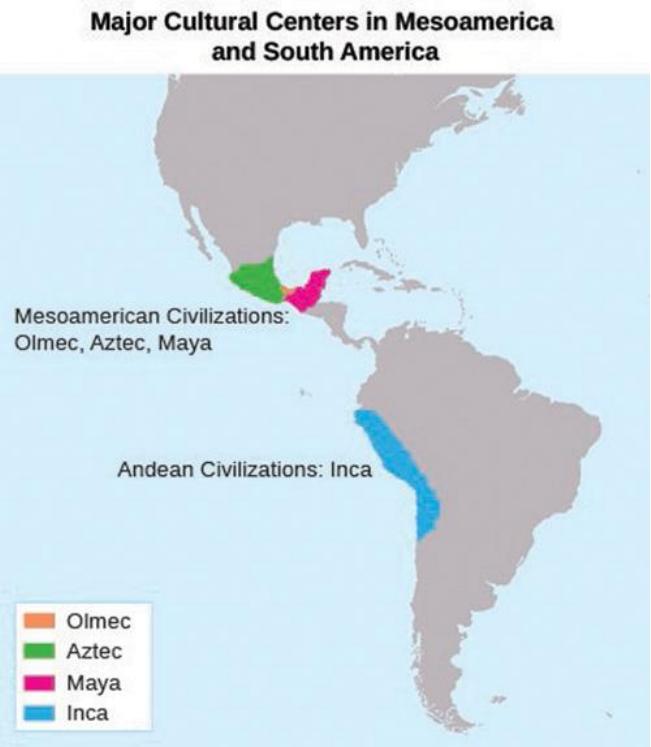
Figure 1.2 This map shows the extent of the major civilizations of the Western Hemisphere. THE “MOTHER”
CIVILIZATION: THE OLMEC
Mesoamerica is the geographic area stretching from north of Panama up to the desert of
central Mexico. Although marked by great topographic, linguistic, and cultural diversity, this
region cradled a number of civilizations with similar characteristics. Mesoamericans developed
a mathematical system, built huge edifices, and devised a calendar that
John Mack A History of the United States Page 5
accurately predicted eclipses and solstices and that priest-astronomers used to direct the
planting and harvesting of crops. Most important for our knowledge of these peoples, they
created the only known written language in the Western Hemisphere. Though the area had no
overarching political structure, trade over long distances helped diffuse culture. Weapons made
of obsidian, jewelry crafted from jade, feathers woven into clothing and ornaments, and cacao
beans that were whipped into a chocolate drink formed the basis of commerce. The mother of
Mesoamerican cultures was the Olmec civilization.
Flourishing along the hot Gulf Coast of Mexico from about 1200 to about 400 BCE, the Olmec
produced a number of major works of art, architecture, pottery, and sculpture. Most
recognizable are their giant head sculptures and the pyramid in La Venta. The Olmec built
aqueducts to transport water into their cities and irrigate their fields. They grew maize, squash,
beans, and tomatoes. They also bred small domesticated dogs which, along with fish, provided
their protein. Although no one knows what happened to the Olmec after about 400 BCE, in part
because the jungle reclaimed many of their cities, their culture was the base upon which the
Maya and the Aztec built. It was the Olmec who worshipped a rain god, a maize god, and the
feathered serpent so important in the future pantheons of the Aztecs (who called him
Quetzalcoatl) and the Maya (to whom he was Kukulkan). The Olmec also developed a system of
trade throughout Mesoamerica, giving rise to an elite class.
John Mack A History of the United States Page 6
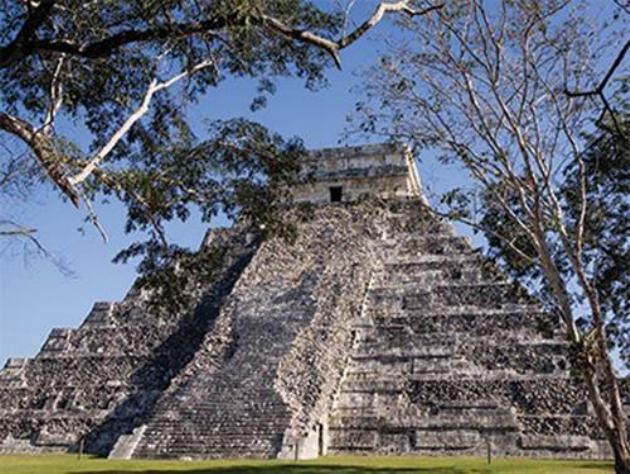
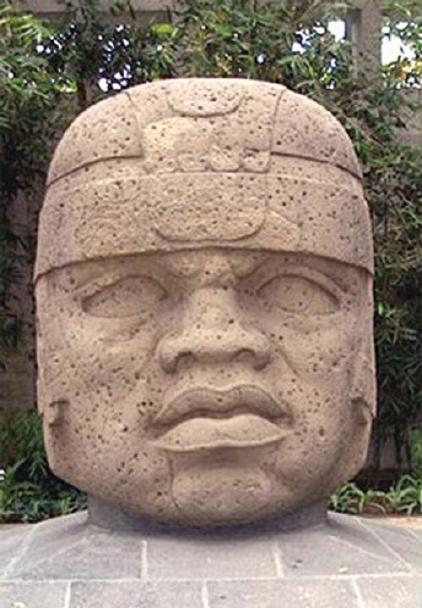
Figure 1.3 The Olmec carved heads from giant boulders that ranged from four to eleven feet in height and could weigh up to
fifty tons.
THE MAYA
After the decline of the Olmec, a city rose in the fertile central highlands of Mesoamerica. One
of the largest population centers in pre-Columbian America and home to more than 100,000
people at its height in about 500 CE, Teotihuacan was located about thirty miles northeast of
modern Mexico City. Large-scale agriculture and the resultant abundance of food allowed time
for people to develop special trades and skills other than farming. Builders constructed over
twenty-two hundred apartment compounds for multiple families, as well as more than a
hundred temples. Among these were the Pyramid of the Sun (which is two hundred feet high)
and the Pyramid of the Moon (one hundred and fifty feet high). The city was also the center for
trade, which extended to settlements on Mesoamerica’s Gulf Coast.
John Mack A History of the United States Page 7
Figure 1.4 El Castillo, located at Chichen Itza in the eastern Yucatn peninsula, served as a temple for the god Kukulkan. Each
side contains ninety-one steps to the top. When counting the top platform, the total number of stairs is three hundred and
sixty-five, the number of days in a year. (credit: Ken Thomas)
The Maya were one Mesoamerican culture that had strong ties to Teotihuacan. The Maya’s
architectural and mathematical contributions were significant. Flourishing from roughly 2000
BCE to 900 CE in what is now Mexico, Belize, Honduras, and Guatemala, the Maya perfected
the calendar and written language the Olmec had begun. They devised a written mathematical
system to record crop yields and the size of the population, and to assist in trade. Surrounded
by farms relying on primitive agriculture, they built the city-states of Copan, Tikal, and Chichen
Itza along their major trade routes, as well as temples, statues of gods, pyramids, and
astronomical observatories. However, because of poor soil and a drought that lasted nearly two
centuries, their civilization declined by about 900 CE and they abandoned their large population
centers.
John Mack A History of the United States Page 8
THE AZTEC
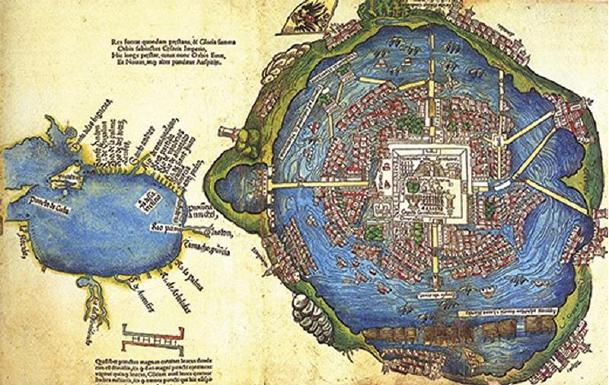
According to legend, a warlike people called the Aztec (also known as the Mexica) had left a city
called Aztln and traveled south to the site of present-day Mexico City. In 1325, they began
construction of Tenochtitln on an island in Lake Texcoco. By 1519, this settlement contained
upwards of 200,000 inhabitants and was certainly the largest city in the Western Hemisphere at
that time and probably larger than any European city. Bernal Daz del Castillo, one the first
Europeans to visit this city, recorded his impressions upon first seeing it: “When we saw so
many cities and villages built in the water and other great towns on dry land we were amazed
and said it was like the enchantments . . . on account of the great towers and cues and buildings
rising from the water, and all built of masonry. And some of our soldiers even asked whether
the things that we saw were not a dream? . . . I do not know how to describe it, seeing things as
we did that had never been heard of or seen before, not even dreamed about.”
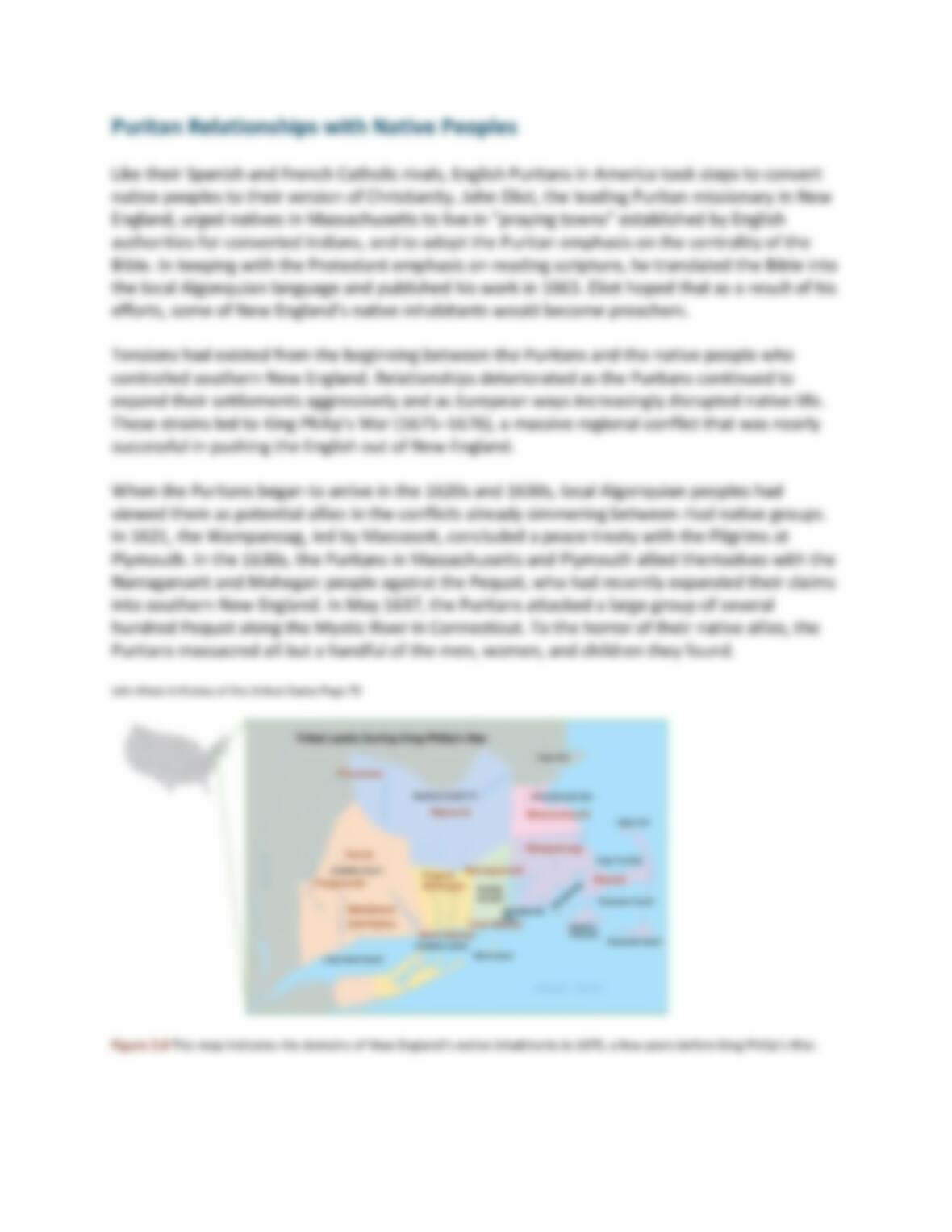
Figure 1.5 This rendering of the Aztec island city of Tenochtitln depicts the causeways that connected the central city to the
surrounding land. Envoys from surrounding tribes brought tribute to the Emperor.
Tenochtitln was well planned, clean, and orderly. The city had neighborhoods for specific
occupations, a trash collection system, markets, two aqueducts bringing in fresh water, and
public buildings and
John Mack A History of the United States Page 9
temples. Aztecs bathed daily, and some wealthy homes even contained a steam bath. A labor
force of slaves from subjugated neighboring tribes built the fabulous city and the three
causeways that connected it to the mainland. To farm, the Aztec constructed barges made of
reeds and filled them with fertile soil. Lake water constantly irrigated these chinampas, or
“floating gardens,” which are still in use and can be seen today in Xochimilco, a district of
Mexico City.
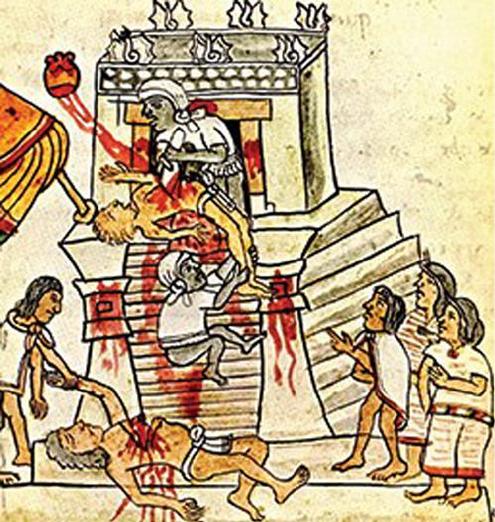
Each god in the Aztec pantheon represented and ruled an aspect of the natural world, such as
the heavens, farming, rain, fertility, sacrifice, and combat. A ruling class of warrior nobles and
priests performed ritual human sacrifice daily to sustain the sun on its long journey across the
sky, to appease or feed the gods, and to stimulate agricultural production. The sacrificial
ceremony included cutting open the chest of a criminal or captured warrior with an obsidian
knife and removing the still-beating heart.
Figure 1.6 In this illustration, an Aztec priest cuts out the beating heart of a sacrificial victim before throwing the body down
from the temple. Aztec belief centered on supplying the gods with human blood—the ultimate sacrifice—to keep them strong
and well.
John Mack A History of the United States Page 10
THE INCA
In South America, the most highly developed and complex society was that of the Inca, whose
name means “lord” or “ruler” in the Andean language called Quechua. At its height in the
fifteenth and sixteenth centuries, the Inca Empire, located on the Pacific coast and straddling
the Andes Mountains, extended some twenty-five hundred miles. It stretched from modern-
day Colombia in the north to Chile in the south and included cities built at an altitude of 14,000
feet above sea level. Its road system, kept free of debris and repaired by workers stationed at
varying intervals. The Inca, like all other pre-Columbian societies, did not use axle-mounted
wheels for transportation. They built stepped roads to ascend and descend the steep slopes of
the Andes. These roads enabled the rapid movement of the highly trained Incan army. The Inca
were effective administrators. Runners called chasquis traversed the roads in a continuous
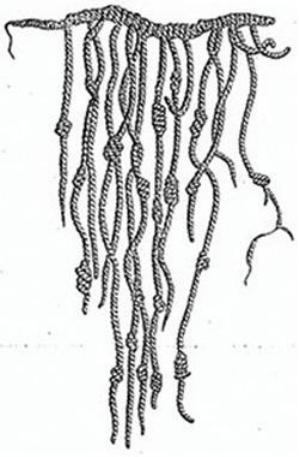
relay system, ensuring quick communication over long distances. The Inca had no system of
writing, however. They communicated and kept records using a system of colored strings and
knots called the quipu.
Figure 1.7 The Inca had no written language. Instead, they communicated and kept records by means of a system of knots and
colored strings called the quipu. Each of these knots and strings possessed a distinct meaning intelligible to those educated in
their significance.
John Mack A History of the United States Page 11
The Incan ruling class lived off the labor of the peasants, collecting vast wealth that
accompanied them as they went, mummified, into the next life. The Inca farmed corn, beans,
squash, quinoa (a grain cultivated for its seeds), and the indigenous potato on terraced land
they hacked from the steep mountains. Peasants received only one-third of their crops for
themselves. The Inca ruler required a third, and a third was set aside in a kind of welfare system
for those unable to work. Huge storehouses were filled with food for times of need. Each
peasant also worked for the Inca ruler a number of days per month on public works projects, a
requirement known as the mita. The Inca worshipped the sun god Inti and called gold the
“sweat” of the sun. Unlike the Maya and the Aztecs, they rarely practiced human sacrifice and
usually offered the gods food, clothing, and coca leaves.
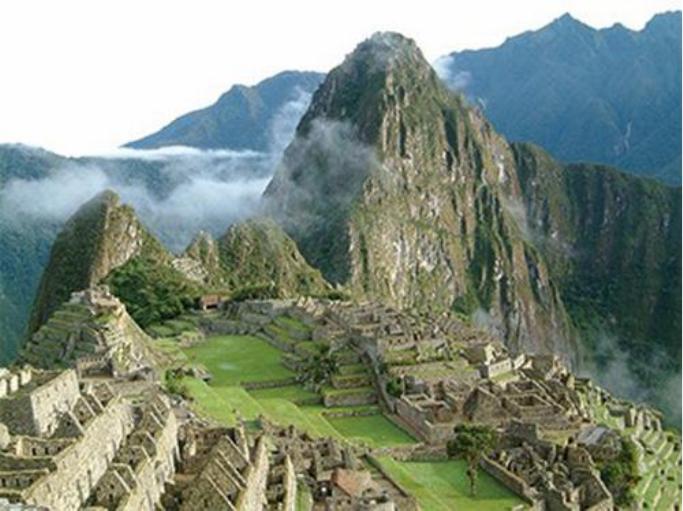
Figure 1.8 Located in Peru at an altitude of nearly 8,000 feet, Machu Picchu was a ceremonial Incan city built about 1450 CE.
John Mack A History of the United States Page 12
NORTH AMERICAN INDIANS
With few exceptions, the North American native cultures were much more widely dispersed
than the Mayan, Aztec, and Incan societies, and did not have their population size or organized
social structures. Although the cultivation of corn had made its way north, many Indians still
practiced hunting and gathering.
Several groups we collectively call the Pueblo lived in the southwestern part of today’s United
States. The Spanish first gave them this name, which means “town” or “village,” because they
lived in towns or villages of permanent stone-and-mud buildings with thatched roofs. Like
present-day apartment houses, these buildings had multiple stories, each with multiple rooms.
The three main groups of the Pueblo people were the Mogollon, Hohokam, and Anasazi.
The Mogollon thrived in the Mimbres Valley (New Mexico) from about 150 BCE to 1450 CE.
They developed a distinctive artistic style for painting bowls with finely drawn geometric figures
and wildlife, especially birds, in black on a white background. Beginning about 600 CE, the
Hohokam built an extensive irrigation system of canals to irrigate the desert and grow fields of
corn, beans, and squash. By 1300, their crop yields were supporting the most highly populated
settlements in the southwest. The Hohokam decorated pottery with a red–on-buff design and
made jewelry of turquoise. In the high desert of New Mexico, the Anasazi, whose name means
“ancient enemy” or “ancient ones,” carved homes from steep cliffs accessed by ladders or
ropes that could be pulled in at night or in case of enemy attack.
John Mack A History of the United States Page 13
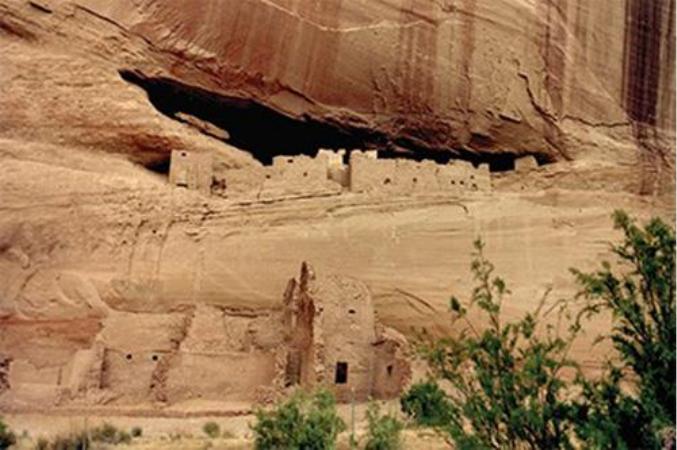
Figure 1.9 To access their homes, the cliff-dwelling Anasazi used ropes or ladders that could be pulled in at night for safety.
These pueblos may be viewed today in Canyon de Chelly National Monument (above) in Arizona and Mesa Verde National Park
in Colorado.
Roads extending some 180 miles connected the Pueblos’ smaller urban centers to each other
and to Chaco Canyon, which by 1050 CE had become the administrative, religious, and cultural
center of their civilization. A century later, however, probably because of drought, the Pueblo
peoples abandoned their cities. Their present-day descendants include the Hopi and Zuni tribes.
The Indian groups who lived in the present-day Ohio River Valley and achieved their cultural
apex from the first century CE to 400 CE are collectively known as the Hopewell culture. Their
settlements, unlike those of the southwest, were small hamlets. They lived in wattle-and-daub
houses (made from woven lattice branches “daubed” with wet mud, clay, or sand and straw)
and practiced agriculture, which they supplemented by hunting and fishing. Utilizing
waterways, they developed trade routes stretching from Canada to Louisiana, where they
exchanged goods with other tribes and negotiated in many different languages. From the coast
they received shells; from Canada, copper; and from the Rocky Mountains, obsidian. With these
materials they created necklaces, woven mats, and exquisite carvings.
John Mack A History of the United States Page 14
The largest indigenous cultural and population center in North America was located along the
Mississippi River near present-day St. Louis. At its height in about 1100 CE, this five-square-mile
city, now called Cahokia, was home to more than ten thousand residents; tens of thousands
more lived on farms surrounding the urban center. The city also contained one hundred and
twenty earthen mounds or pyramids, each dominating a particular neighborhood and on each
of which lived a leader who exercised authority over the surrounding area. The largest mound
covered fifteen acres. Cahokia was the hub of political and trading activities along the

Mississippi River. After 1300 CE, however, this civilization declined— possibly because the area
became unable to support the large population.
INDIANS OF THE EASTERN WOODLAND
The Indians living east of the Mississippi did not construct the large and complex societies of
those to the west. Because they lived in small autonomous clans or tribal units, each group
adapted to the specific environment in which it lived. These groups were by no means unified,
and warfare among tribes was common as they sought to increase their hunting and fishing
areas. Still, these tribes shared some common traits. A chief or group of tribal elders made
decisions, and although the chief was male, usually the women selected and counseled him.
Gender roles were not as fixed as they were in the patriarchal societies of Europe,