Business Application of Differentiation
Dr. Rashed Al Karim
PhD (UUM); MBA (UK);
M.Sc. (CU); B.Sc. (CU)
Page | 1
Differentiation: Differentiation is the process of finding out the derivatives of a continuous
function i.e., it is the process of finding the differential co-efficient of a function.
Derivative of a function: The derivative of a function is its instantaneous rate of changes in
the dependent variable with respect to small change in independent variables.
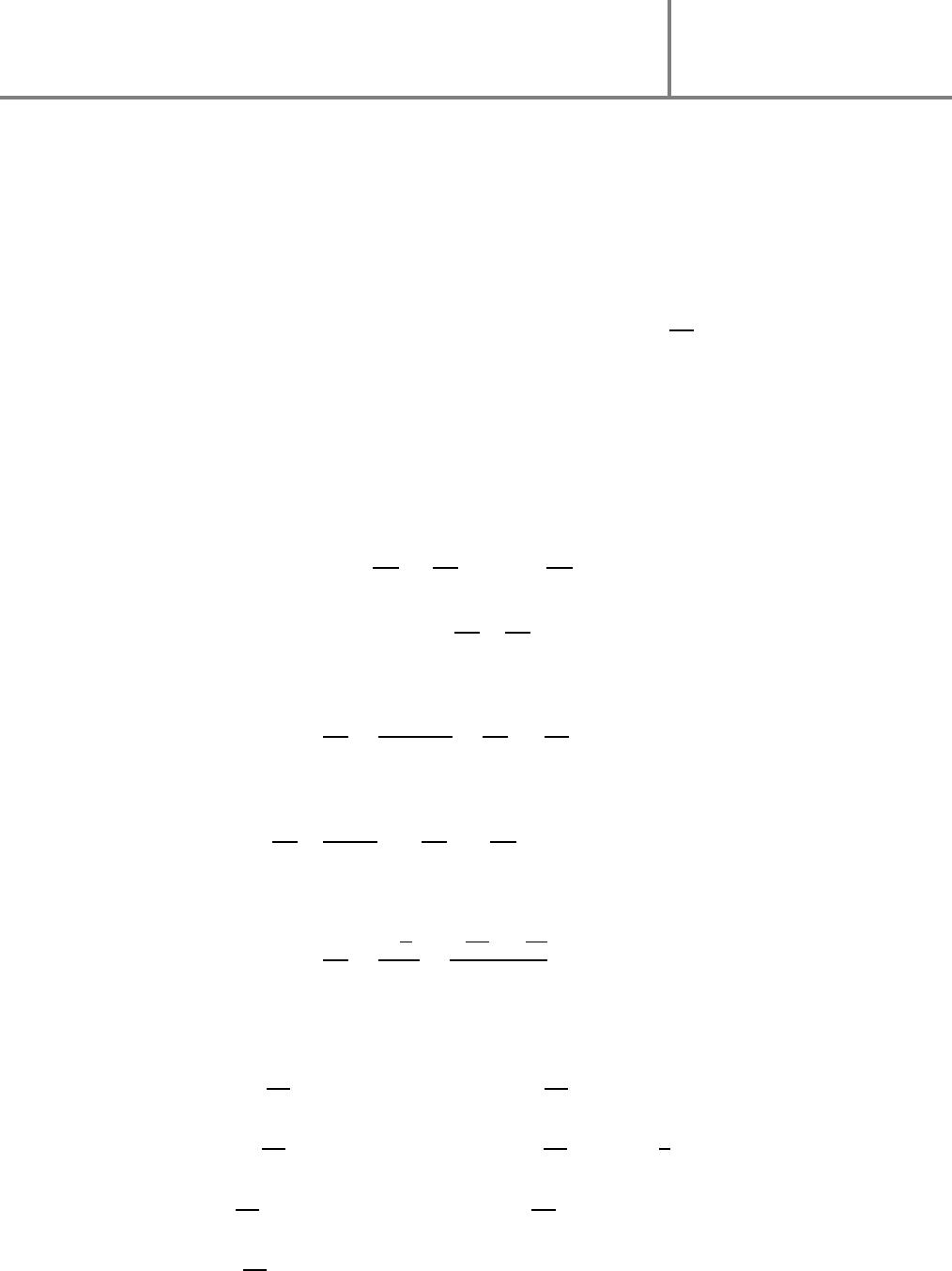
Let, y = f (x), ∴ the derivative of y with respect to x is denoted by 𝑑𝑦
𝑑𝑥; which means the rate
of change in variable y with respect to variable x.
General rule for differentiation:
1) Derivative of a Constant with any function:
If y = cu; where c is a constant and u is differentiable function of x, then
𝑑𝑦
𝑑𝑥 = 𝑑
𝑑𝑥 (cu) = c 𝑑𝑢
𝑑𝑥;
If y = c; where c is a constant then 𝑑𝑦
𝑑𝑥 = 𝑑𝑐
𝑑𝑥 = 0
2) Derivative of Sum/Difference of a function:
If y = (u
v); then 𝑑𝑦
𝑑𝑥 = 𝑑(𝑢
𝑣)
𝑑𝑥 = 𝑑𝑢
𝑑𝑥
𝑑𝑣
𝑑𝑥
3) Derivative of the product of two functions:
If y = uv; then 𝑑𝑦
𝑑𝑥 = 𝑑(𝑢𝑣)
𝑑𝑥 = u 𝑑𝑣
𝑑𝑥 + v 𝑑𝑢
𝑑𝑥
4) Derivative of the quotient of two functions:
If y = u/v; then 𝑑𝑦
𝑑𝑥 = 𝑑(𝑢
𝑣)
𝑑𝑥 = 𝑣 𝑑𝑢
𝑑𝑥− 𝑢 𝑑𝑣
𝑑𝑥
𝑣2
❖ General Formula
(i) 𝑑
𝑑𝑥 (xn) = n xn – 1 (ii) 𝑑
𝑑𝑥 (𝑒𝑥) = 𝑒𝑥
(iii) 𝑑
𝑑𝑥 (𝑒𝑚𝑥) = 𝑚𝑒𝑚𝑥 (iv) 𝑑
𝑑𝑥 (𝑙𝑜𝑔𝑥)= 1
𝑥
(v) 𝑑
𝑑𝑥 (𝑎𝑥) = 𝑎𝑥 log𝑒𝑎 (vi) 𝑑
𝑑𝑥 (𝑠𝑖𝑛𝑥)= cosx
(vii) 𝑑
𝑑𝑥 (𝑐𝑜𝑠𝑥)= – Sinx
Business Application of Differentiation
Dr. Rashed Al Karim
PhD (UUM); MBA (UK);
M.Sc. (CU); B.Sc. (CU)
Increasing & Decreasing Function:
If y = f(x), then y is said to be an increasing function of x at the point x = a, if
Again, If y = f(x), then y is said to be an decreasing function of x at the point x = a, if
Example-1: Determine whether the following functions are increasing or decreasing at point
x = 3.
(i) y = 3x2-25 (ii) y = 2x2-48x+27
Solution: (i) Given that, y = 3x2-25
∴ 𝑑𝑦
𝑑𝑥 = 𝑑
𝑑𝑥 (3x2 – 25)= 𝑑
𝑑𝑥 (3x2) – 𝑑
𝑑𝑥 (25)= 3.2x – 0 = 6x
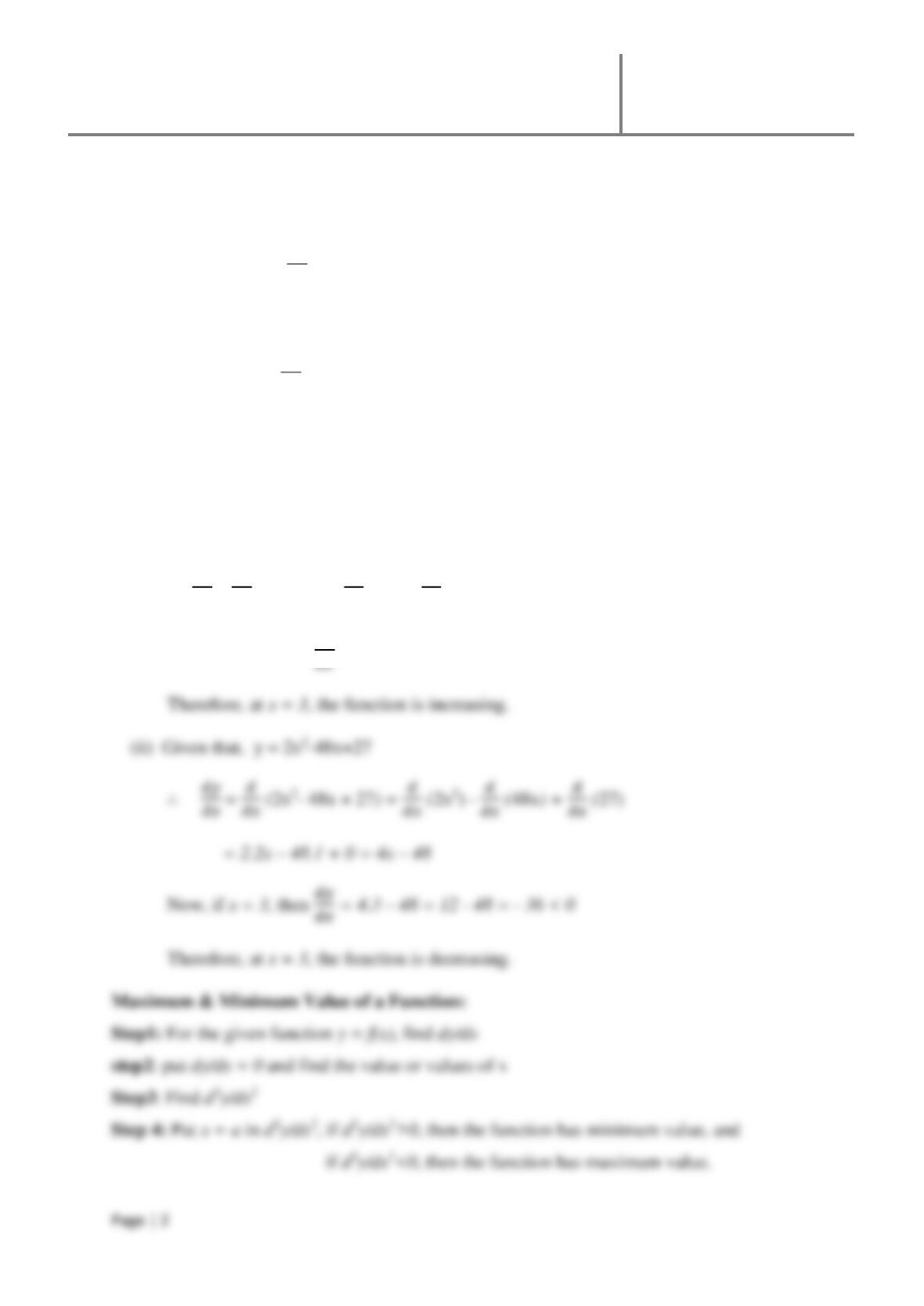
Now, if x = 3, then 𝑑𝑦
0
dx
dy
0
dx
dy