1.0Introduction
Derivative instrument is a contract that drives its value from the performance of
underlying entity which is assets, interest rate, bonds and so on. The purposes of using
derivative instrument include risk management, hedging, arbitrage between market and
speculation. Futures contracts, forward contracts, option, and swaps are the most common
types of derivatives that often being used by the investor. There are three types of derivative
instruments traded in Bursa Malaysia which included commodity, financial and equity
derivatives.
2.0Commodity Derivatives
Commodity derivatives is an exchange traded derivatives with an underlying products
based non-financial commodities such as gold, grains and chemicals. Commodity future
agreement allows the trader to buy or sell a commodity at a specific date in the future at a
specific price. The commodity derivative is normally used by hedger especially agriculture
sector to hedge against the price of commodity to go down. At the same time, it was also
used by the speculator to speculate and earn additional income. According to Bursa Malaysia,
the commodity derivative included Gold Futures (FGLD), Crude Palm Oil Futures (FCPO)
and etc.
2.1Financial Derivatives
Financial derivatives means contract that drives its value from the performance of an
underlying entity such as index, asset and interest rate. It included option, swap and futures.
Options are contracts between two parties to buy or sell a security at a given price, usually
used to trade stock option. Futures used for purchasing the rights to buy or sell a commodity,
but they are also used to purchase financial securities. Swap is contractual agreement
between two parties to exchange exposures in foreign currency or interest rate. There are
only futures and option traded in Bursa Malaysia.
2.2Equity Derivatives
Equity derivatives allow the retail investor to participate in the price action of an
underlying security. Investors who trade in equity derivatives aim to transfer certain risks
associated with the underlying security to another party. The equity derivatives involved
single stock futures, warrant and etc. Single stock future is a contract to deliver 1 lot of
specific stock on a designated date in the future. Warrant is similar with the option but it is
issued by a company whereas an option is an instrument of stock exchange. There are only
three types of equity derivatives available in Bursa Malaysia which is Single stock Futures,
FTSE Bursa Malaysia KLCI Futures and options.
3.0Trading Procedures
In today world, investment was become one of the skills and knowledge that needed by
everyone. Thus, derivatives instrument stand as a crucial position to protect against risk
exposure. 3 months KLIBOR Futures is one of the methods commonly used by the trader
for hedging, speculating and arbitraging.
3.1Hedging
Hedging is mostly used for those trader wish to protect their current position. KLIBOR
future is normally used by potential borrower and lender which borrower afraid rising in
interest rate will lead to operating loss whereas lender afraid falling interest rate will lead to
lower operating profit.
Firstly, the hedgers have to determine the risks they will expose to. The hedger have to
make sure their current position either expose to higher or lower interest rate.
Form the corporation perspective they will short their position in KLIBOR future to hedge
against the interest rate goes up. For example, a company needs RM 10 million after 3
months times and they afraid that an increase in interest rate between now and when the loan
is taken might increase their cost of fund and lower down their profit. The banker has agreed
to provide the loan at an interest rate of KLIBOR+2%.
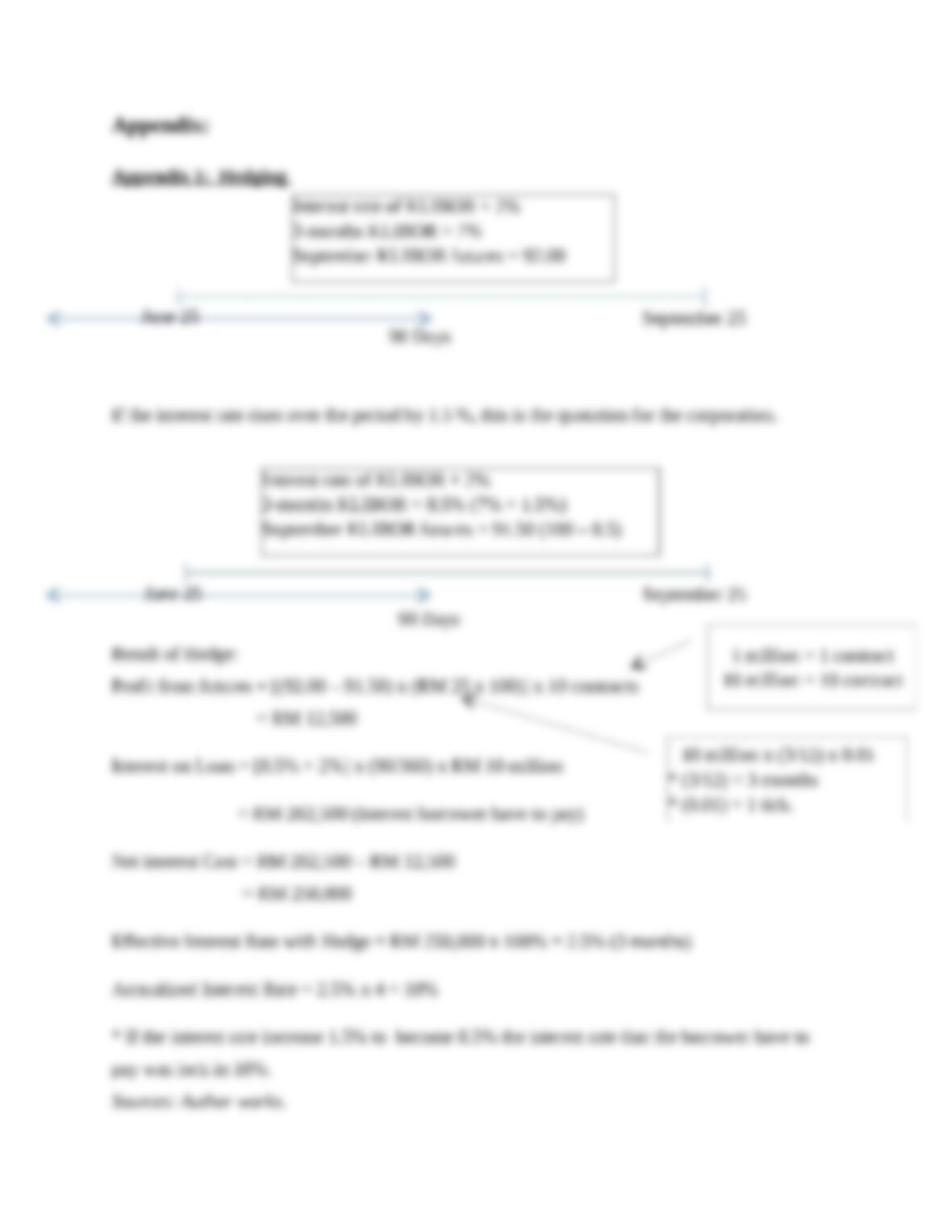
Assume it is now June 25. Loan will be taken in September. The following quotations
available on June 25:
3-months KLIBOR = 7%
September KLIBOR Futures = 92.00 (100-92=8%)
To “LOCK IN” is the yield (June 25) on the KLIBOR futures + 2% premium. Therefore,
10% (8%+2%) is needed now to enter KLIBOR futures.
Assuming interest rate is increased 1.5%in September 25:
3-months KLIBOR = 8.5%
September KLIBOR Futures = 91.5 (100-8.5)
As the results, this equal exactly 8%+2% (KLIBORE Futures was 8% in June). So, it allow
borrower to borrow at the future rate in June of 8%+2% instead of 8.5%+2% which saved 0.5%.
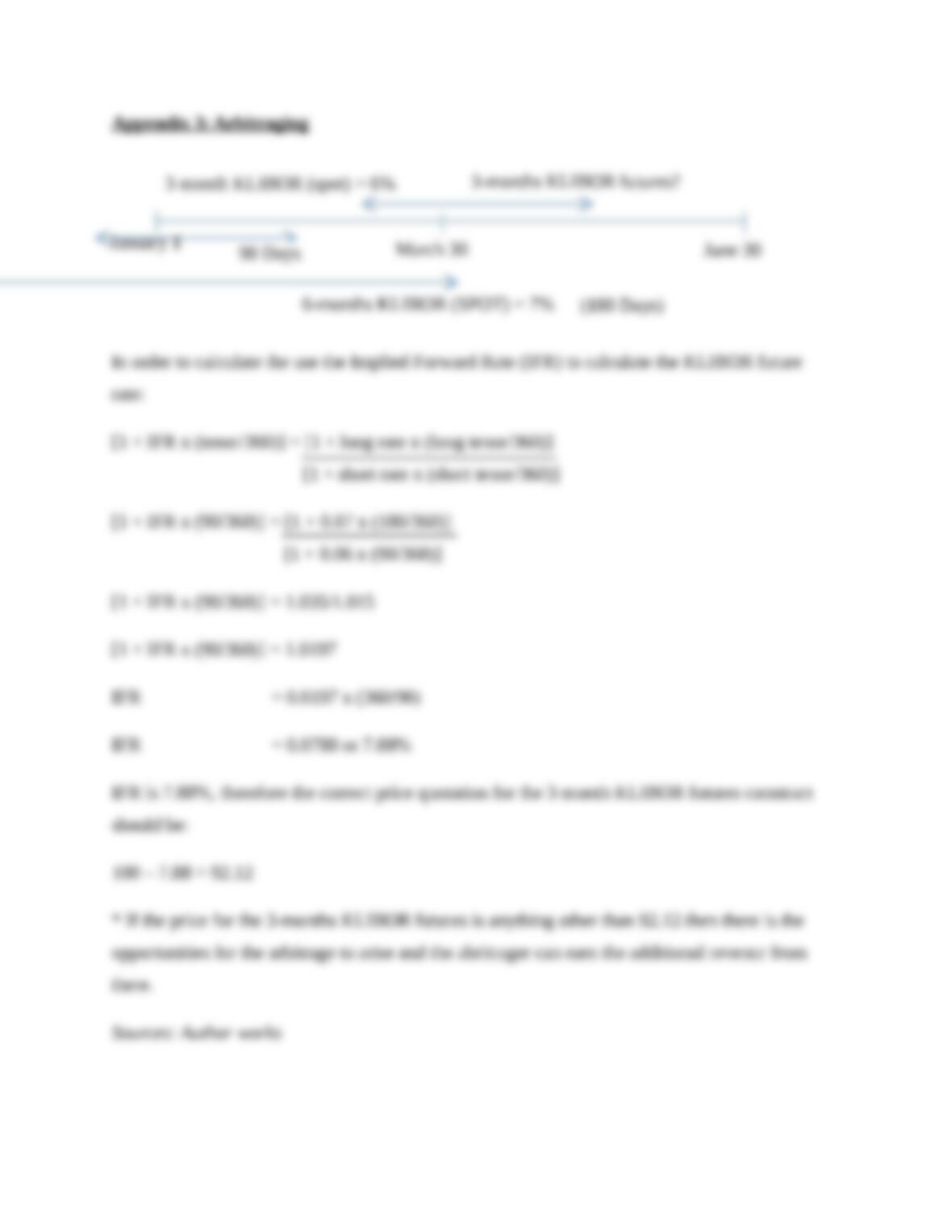
(Result of hedge showed in appendix 1)
3.2 Speculating
Speculators bet against the movements of the market to try to profit from fluctuations in
the price of securities. This theory same apply when the speculators bet against interest rate
movement in order to maximize their profit. They may speculate by either long or short in
KLIBOR Futures depends on their expectation of interest rate movement. For example,
Speculators analysis of economy conditions makes them to believe interest rate are likely to fall
over the next few months.
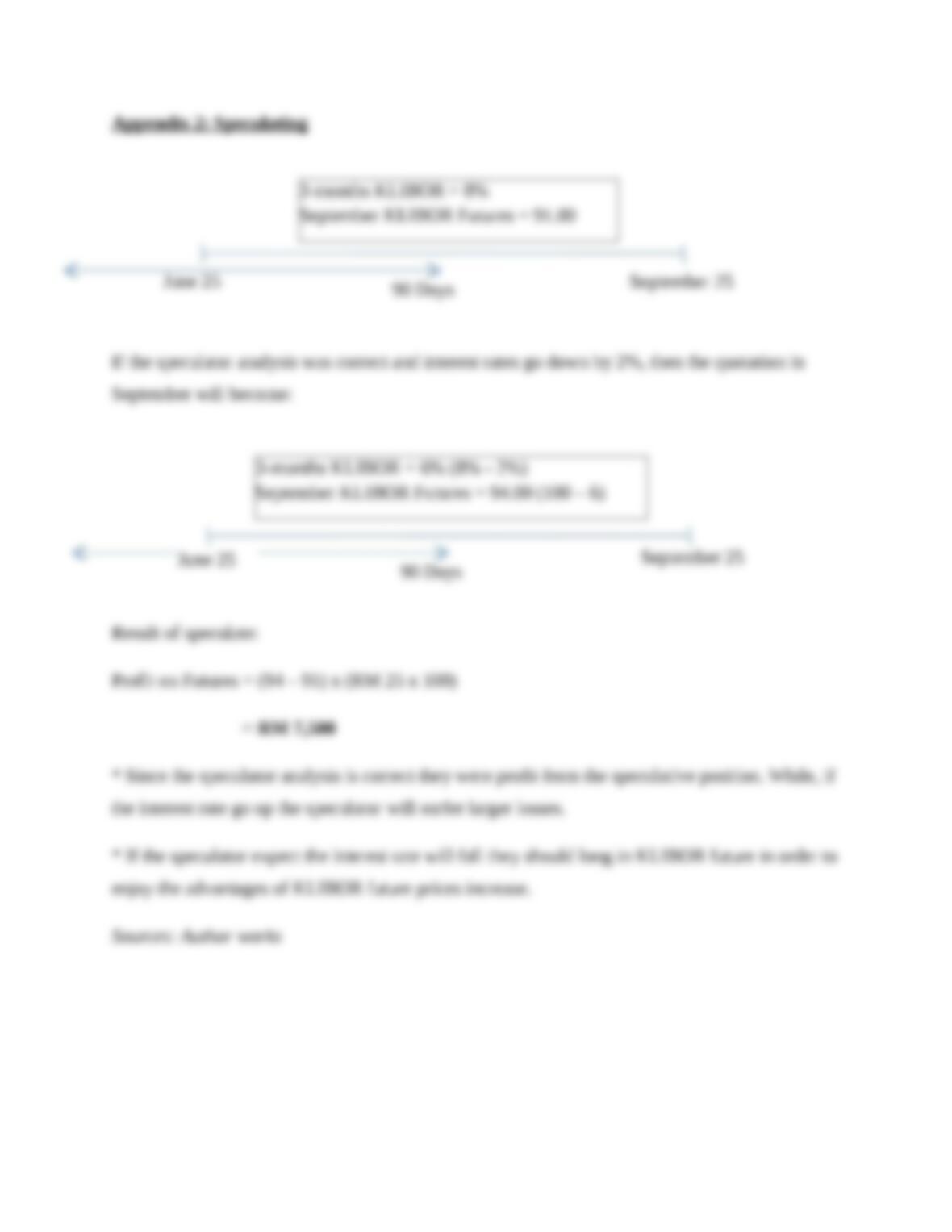
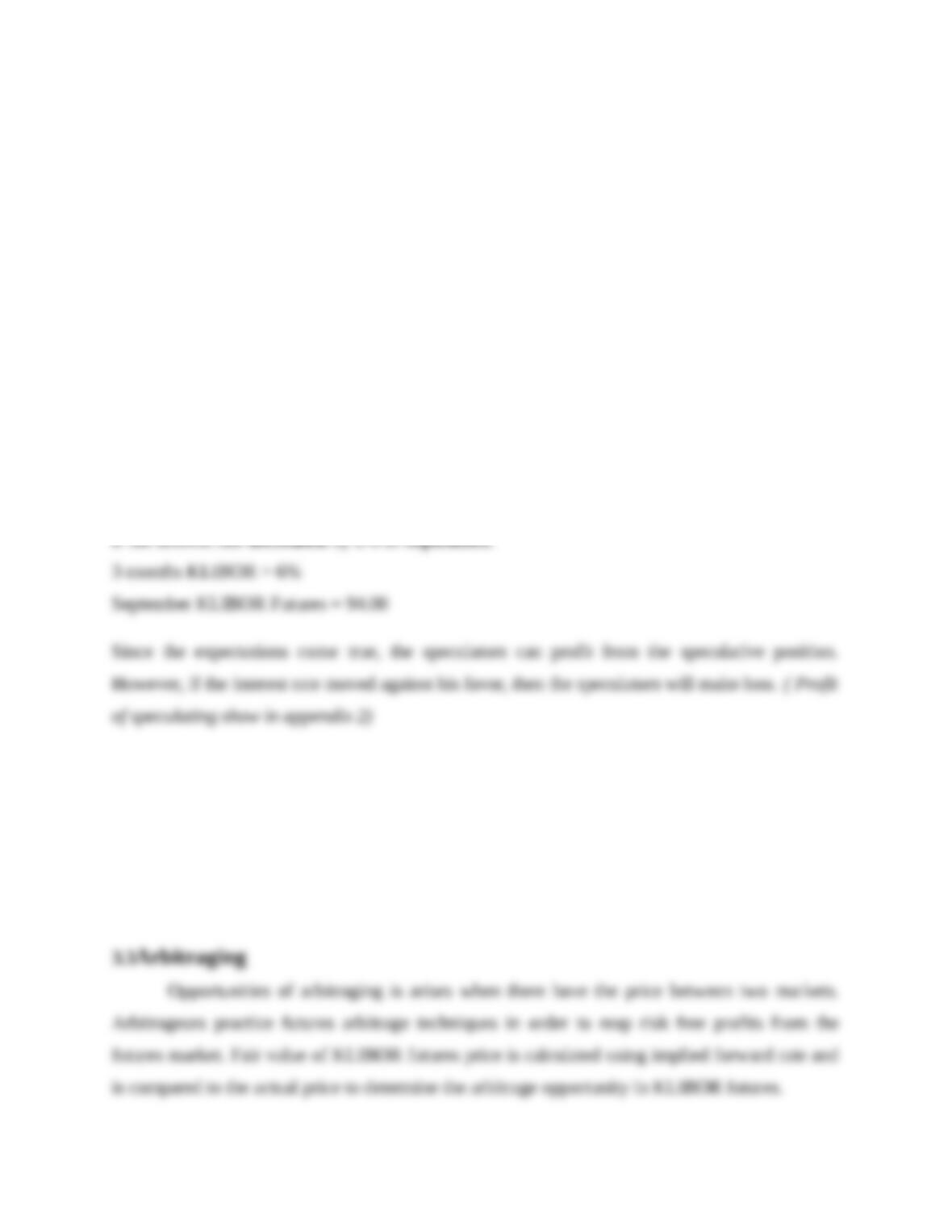
Assuming today is June 25, the following quotation:
3-months KLIBOR = 8%
September KLIBOR Futures = 91.00 (tenor = 90 days)
Since the speculators expect interest rate fall so they will long the KLIBOR futures which means
falling interest rate will raising KLIBOR futures price and they can take advantages from it.