Cross Cultural Management & Teamwork
Bonazzi Indo Joint Venture Case Analysis
Assignment Template for Individual Assignments
Executive Summary
Joint venture activity has become increasingly important due to the rapid growing
automotive industry in India. Bonazzi Indo Fasteners Limited was a joint venture between
Turin based Bonazzi group and the Mumbai based Indo group which was set up to
manufacture fasteners primarily for global original equipment manufacturers. The
relationship between both parties has soured due to it’s confrontational nature and lack of
understanding from both cultures. There is no common ground between both groups which
has led to the difficulty of brokering peace. The case analysis attempts to address key
issues faced by the joint venture. The first key issue was the inability to produce quality
products. Following which there was a standard disparity between both groups. Also, the
non-existence of goal congruency was critical in the success for the groups. The lack of
communication between both groups had caused for the non-alignment of goals which will
be discussed in this case analysis as well. In order to address these key issues, alternatives
will be generated and evaluated according to the selection criteria. Short and long term
solutions such as establishing common goals and exercise team building activities to foster
a greater understanding between both cultures. Such procedures help to promote a
functional and more effective team which would help the each group tackle it’s strategic
objectives in the best possible way.
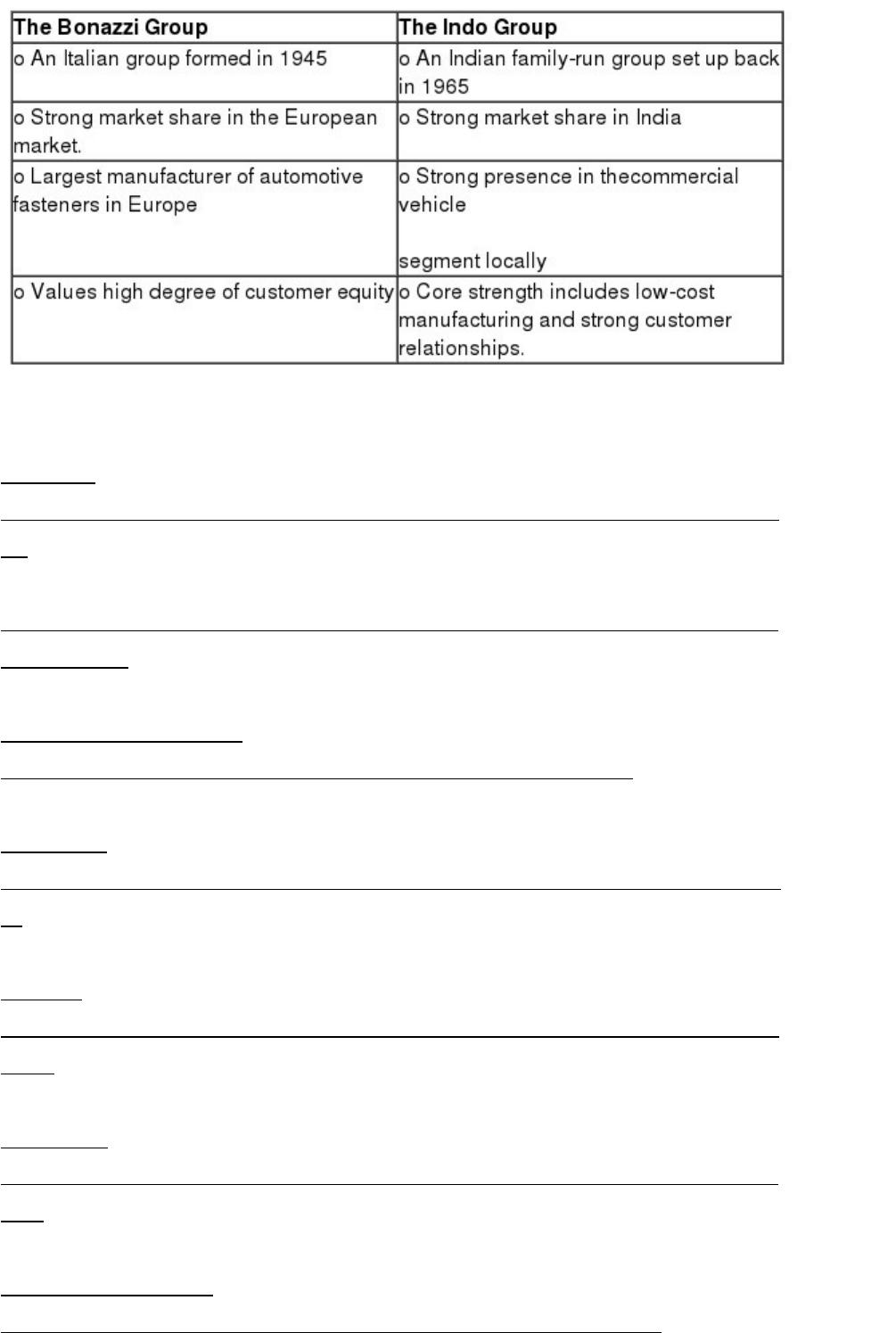
Table of Contents
Executive
Summary ………………………………………………………………………………………………………………..
.. 2
Introduction ……………………………………………………………………………………………………………
………………… 3
1. Issue Identification and
Analysis ………………………………………………………………………………………. 4
1.1 Quality
Problems………………………………………………………………………………………………………………
. 5
1.2 Goal
Congruency………… ………………………………………………………………………………………………
……. 6
1.3 Lack of
Communication………………………………………………………………………………………………
….. 7
1.4 Bringing the Issues
Together……………………………………………………………………………………………. 8

2 Alternative Analysis
…………………………………………………………………………………………………………….. 10
2.1 Establish Common
Goals…………………………………………………………………………………………………… 10
2.2 Team-building
exercises ………………………………………………………………………………………………….. 10
2.3 Cross-Cultural
Consultancies…………… ………………………………………………………………………….. .11
3.
Recommendation …………………………………………………………………………………………………….
…………. 12
3.1 Enforcing organizational culture and establishment of common
goals …………………… 12
3.2 Team building
exercises ………………………………………………………………………………………………….13
4.
Conclusion ………………………………………………………………………………………………………………
…………. 14
References ………………………………………………………………………………………………………………
……………… 15
Introduction
The Bonazzi Indo joint venture was promising for both parties due to the longevity in their
relationship as well as the mutual need for each others resources.
The central problem of this case is for us to analyze what caused the breakdown of
communication between both groups which subsequently led to a high chance of the joint
ventures failing. The report starts with identification of key issues. Issues such as quality
problems, goal congruency and lack of communication problems will be discussed and

linked to cultural differences. These key issues are evaluated against frameworks from
different sources. After which alternatives would be generated and evaluated against
various criteria such as cost time and ease of implementation. This would accommodate
for the long and short term to help salvage the joint venture.
1. Identification and Analysis of Issues
Many of the problems faced by the Bonazzi Indo group are interrelated issues. It is
possible that each issue did not happen in isolation and occurred over a period of time. As
such, we need to understand each issue in context of each other and whether one had led to
another.
1.1 Quality Problems
One of the early warning signs of failure was that this was Bonazzi’s first time carrying out
business in Asia. With no experience in Asia, Bonazzi struggled with the understanding of
practices in India. Contrary to Bonazzi, Indo had vast experience with other Asian
countries. As such Bonazzi did not expect to yield different results when investing in a
foreign country.
It was common to see machine breakdowns and quality complaints something that people
in Europe were not used to. Bonazzi had a lot of pride in their brand. Being very well
known in Europe offered them high prestige and they were probably able to sell their cars
at higher premiums due to this. The Italians preferred to hold themselves in a higher social
stature something in which Indians worried less about. (Hofstede, 1984). Therefore quality
was one of their higher priorities. On the other hand, Indo valued low-cost manufacturing.
We can safely assume that their products are of lower quality. Thus bringing their business
to a different culture did not enable Bonazzi to offer the same quality of products that they
had offered in Europe. This caused a lot of discontent amongst their customers.
Hofstede’s individualism dimension helps to explain the behavior of both groups
(Hofstede, 1984). Countries high in individualism tend to look after themselves and have
greater individual initiative. This reflects the behavior of the Italians more thus we can see
why they demand higher quality products for themselves. Indo on the other hand focus on
producing affordable products in which everyone can enjoy. There is no sense of prestige
as offered by Bonazzi’s products. This shows that the Indian’s lean towards more
collective behavior. Thus we can see that different cultures would expect different qualities
in products they receive.
Goal Congruency
The first question we have to ask is whether both group’s goals for the joint venture were
aligned. According to Steers, Sanchez-Runde & Nardon, (2013), one of the first criteria for
selecting a global partner is to have a similar strategic direction. The Bonazzi group were
experiencing a declining market and falling into debt. As such they were attracted to the
low labour costs in India. Due to long-term ties with Indo, it only made sense that they
worked together with them. On the other hand, Indo reflected a very weak presence in the
passenger car market. Therefore leveraging the Bonazzi brand would reap many benefits
from new technologies to increased market share in the passenger market.
It is apparent that both groups did not have a similar goal. Bonazzi was more interested in