BMW Case
Problem
As stated in the case study, BMW uses a Mixed Model ramp up strategy. They
produce the new series of BMW on the same production line where they are still producing
older models. For example, one new model would be intermixed between 10 of the old
models. As time passed, the ratio between the new and old would shrink until the old
models were officially phased out.
While the Mixed Model ramp up did allow for better utilization of their fixed assets,
it was realized that this strategy causes greater confusion and made logistics more
complex. As they continued to use this strategy more complications arose. Employees
were not able to find or solve all the potential production problems discovered in the pilot
production phases. Most of the time in pilot production was spent identifying and problem
solving. Ideally, BMW wanted to solve big problems and leave the fine tuning to be dealt
with in production.
Recommendations
BMW response to this issue was to assign specialized engineers who would help
fine-tune the process. As well as sending these engineers to supplier plants in catching
problems before they arise on the productions lines. However, this approach became too
costly.
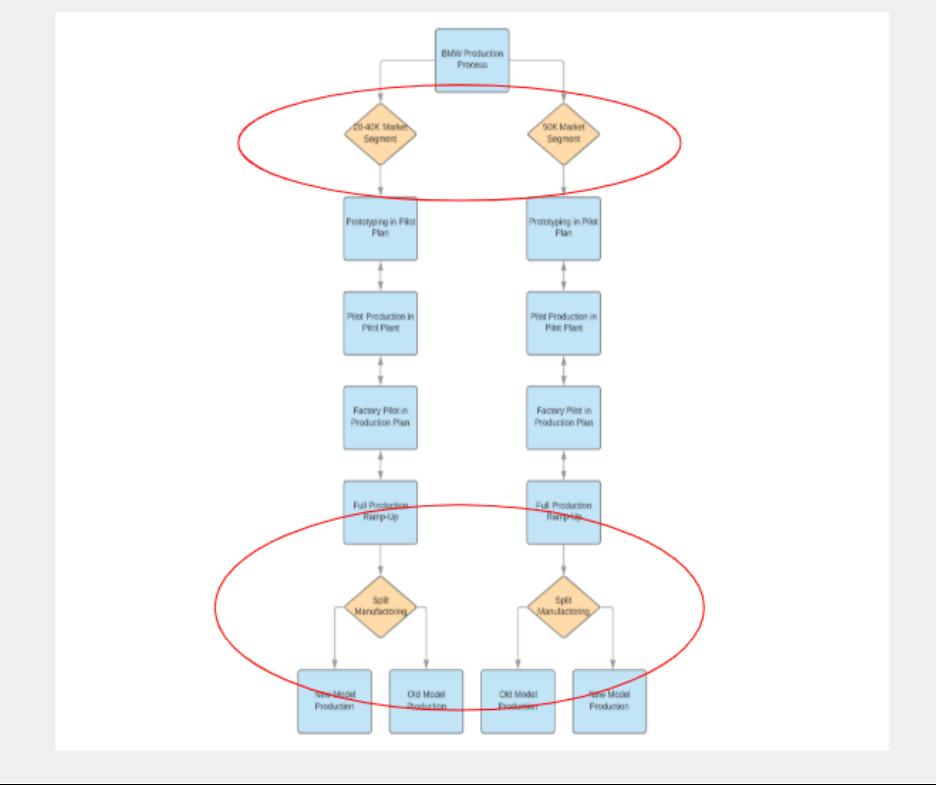
We recommend the use of Process Splitting which splits both the Market Segment
of consumers who would buy non luxury cars vs. consumers who would. This in turn limits
confusion and variability in the cars produced by cutting the forty different body and style