Biman Bangladesh Airlines MGT 489.4 Group 1
Table of Content
1.Internal Analysis of Biman Bangladesh Airlines Limited 2
1.1 CompetitiveAdvantage……………………………………………………………………………………….2
1.2 DistinctiveCompetencies……………………………………………………………………………………..2
1.3Resources…………………………………………………………………..………………………………..2-3
1.4Capabilities…………………………………………………….………………………………….………….3
1.5 Value Chain……………………………..…………………………………………………………………….3
1.6 Primary Activities…………………………………………………………………………………………….3-4
1.7 Support Activities………………………………………….………………………………………………..4-6
1.8 Return on Invested Capital………………………………………………………………………………….6-7
2. External Analysis of Biman Bangladesh Airlines 6
2.1 SWOT Analysis …………………………………..……………………………………………..………….6-7
2.2 External Environment Analysis…………………………………………………………………………..……8
2.3 External Business Market ……………………………………………………………………….……………9
3. Competitive Advantage ofBiman Bangladesh Airlines through Functional
Level Strategy 15
3.1 Achieving Superior Efficiency ……………………………………….…………………….……..…………9
3.2 Efficiency and Economies of Scale ……………………………….…………………………………..……..9
3.3 Experience Curve …………………………….. ……………………………………………………………10
3.4 marketing and Efficiency ……………………………………………………………………………….…..11
3.5 Materials Management, Just in Time, and Efficiency ………………………….…………………….……..12
3.6 Human Resource Strategy …………………………………………………………………………….….…12
3.7 Information System ………………………………………………………………..……………………..…12
3.8 Achieving Superior Responsiveness to Customers ……………………………………………..……….….13
3.9 Satisfying Customer Needs …………………………………………………………………………………13
4. Business level Strategy of Biman Bangladesh Airlines 14
4.1 Customer Needs and Product Differentiation …………………..…………..……………………………14-16
4.2 Customer Groups and Market Segments …………………….….………………………………….……….16
4.3 Competitive Positioning and Business Level Strategy……………………………………………….….16-17
5. References 18
1

Biman Bangladesh Airlines MGT 489.4 Group 1
Internal Analysis of Biman Bangladesh Airlines Limited
Competitive Advantage:
A company has a competitive advantage over its rivals when its profitability is greater
than the average profitability of all companies in its industry. As a first mover in among
companies’ owned by Bangladesh, Biman Bangladesh Airlines enjoys some advantages by
default. However, it failed to execute a different operational strategy to achieve superior
profitability and profit growth likeIn Biman Bangladesh is incurring loss since 2009 and its new
strategies like new market entrance, new service failed to attract customers (Biman-airlines.com,
2014). In addition, because of being national flag carrier it can appeal to the patriotism of its
domestic passengers as the revenues generated from its operations directly accounts for the GDP
of the country.
Distinctive Competencies:
Biman offers comparatively reasonable fare but its lower prices do not match its high cost
structure. Biman run on subsidiary from government. The operating cost of Biman is increasing
as they are trying to improve facilities by introducing new airplanes new facilities like tickets at
low cost, still they are losing customers and above all corruption is costing Biman a huge sum of
money. As a result, its core competency is still unrealized.
Resources:
Resources refer to the assets of a company. Two types of resources:
Tangible: Tangible assets of Biman are the airline’s headquarters, Balaka Bhaban, the
airplanes are among biggest tangible asset of Biman Bangladesh Airlines.
2

Biman Bangladesh Airlines MGT 489.4 Group 1
Intangible: The Brand Image of Biman, the livery is worn by their aircrafts is bearing the
symbol of Bangladesh can be said its intangible asset.
Capabilities:
Biman uses its manpower skill productively against assets but they have a frequent
problem of delaying flight. They offer one of the lowest possible price compare to other foreign
airlines. The service of Biman is not good, though they are trying to improve it by hiring skilled
manpower, but as regards their timeliness, they are poor in managing flight schedules that result
in frequent late arrival and departures of flights. As a result they could not able to create the
brand loyal customers.
Value chain:
Value chain refers to the idea that a company is a chain of activities that transforms inputs into
outputs that customer’s value. The transformation process involves both primary activities and
supplies activities that add value to the product.
Primary Activities:
Production: It has air service agreements with 42 countries and currently flies to 16 different
countries. Annual Hajj flights, transporting non-resident Bangladeshi workers and migrants,
and the activities of its subsidiaries, form an integral part of the carrier’s business. At its peak,
Biman has operated flights to 29 international destinations (Biman-airlines.com, 2014).
Marketing and Sales:Biman is good at sales and marketing through setting pricing strategy.
Nevertheless, their promotion activities are not up to the mark.
Customer service:It offers Bangladeshi culture oriented hospitality (Greetings, Foods
etc.) and they also seek feedback from their customers, on how they can improve.
3

Biman Bangladesh Airlines MGT 489.4 Group 1
Support Activities:
Information System:Biman is well known for easy availability of air tickets by online
booking system as well as they collects feedbacks through e-mail. But as a whole, it is
not technologically updated.
Materials Management:Biman operates on tender basis.
Human Resources:Biman recruits High skilled manpower which is the key function to
create company value. They offer some training to the employees. However, the job
satisfaction is low among the personnel.
Company Infrastructure: Company Infrastructure is very important for Biman. Company
Infrastructure is the companywide context within which all the other value creation
activities of Bangladesh Biman took place:
1. Organizational Structure: The organization structure of Bangladesh Biman is
hierarchical. The CEO is the head of the Company and decision making process is very
much centralized (Wikipedia, 2014).
2. Control System: The airline was wholly owned by the Bangladeshi government through
the Bangladesh Biman Corporation since its inception. In 1977, Biman was converted
into a public sector corporation which afforded Biman limited autonomy, led by a
government-appointed board of directors. The authorised share capital was increased
to BDT 2 billion in 1987, and Biman was transformed into a public limited company, the
largest in Bangladesh, in 2007 (Wikipedia, 2014).
3. Company Culture: Company culture of Biman Bangladesh airlines is extremely
centralized and politically influenced (in term of hiring, promotion links with upper
section of hierarchy and political link is important). But since they are the flag carrier of
Bangladesh, they try to maintain a good look from outside. Although many reported that
4
Biman Bangladesh Airlines MGT 489.4 Group 1
various types of corruptions goes inside the company still from outside they try to
maintain a fresh look.
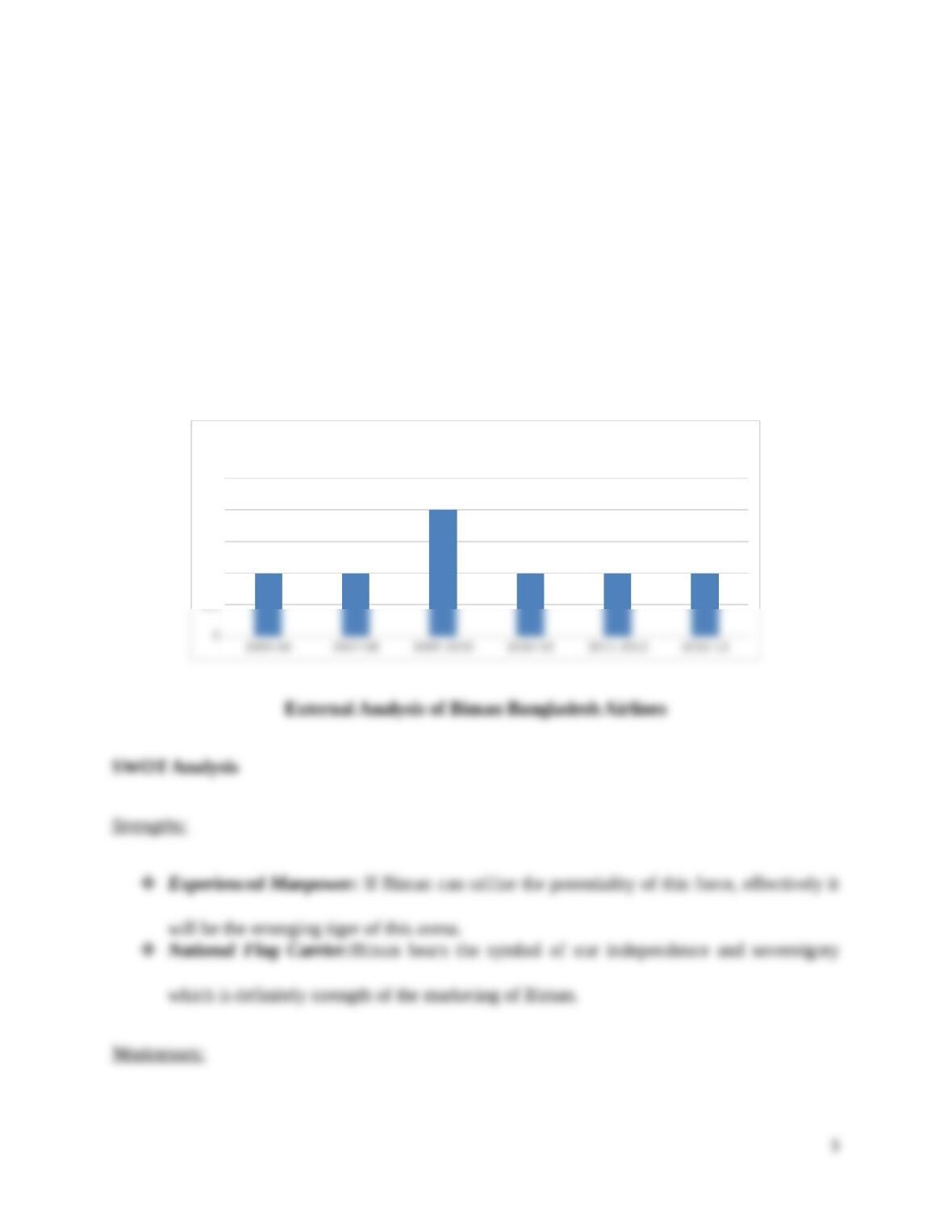
Return on Invested Capital:
Many authorities on the measurement of profitability argue that ROIC is the best measure
because “it focuses on the true operating performance of the company.” The summary of the
ROIC of Biman from year 2008-13 shown in the graph below;
1
1.5
2
2.5
Count of Fiscal Year