BENCHMARKING & BENCHTRENDING
BENCHMARKING
– it is a continuous process of enlisting the best practices in the world – for process, goals, and
objectives – leading to world-class levels of achievement
Types of Benchmarking
1. Product Benchmarking (Reverse Engineering)
2. Competitive Benchmarking
3. Process Benchmarking
4. Internal Benchmarking
5. Strategic Benchmarking
6. Global Benchmarking
Stages in the Process of Benchmarking
Stage Description
1 Planning
a. Determination of benchmarking goal statement (this requires identification of
areas to be benchmarked – e.g., customer satisfaction, profit)
b. Identification of best performance
c. Establishment of the benchmarking or process improvement team
d.
D
efining
the relevant benchmarking measures
2 Collection of data and information
a. Compile information and data on performance
b. Select and contact partners
c. Develop a mutual understanding about the procedures to be followed and, if
necessary, prepare a Benchmarking Protocol with partners
d. Prepare questions and agree on terminologies and performance measures to be
used
e. Distribute a schedule of questions to each partner
f. Undertake information and data collection by chosen methods (example:
interview
s,
site
–
visits, tele
ph
one, fax, and email)
3 Analysis of the findings based on the data collected in Stage 2
a. Review the findings and produce tables, charts, and graphs to support the
analysis
b. Identify gaps in performance between our firm and better performers
c. Seek explanations for the gaps in performance. The performance gaps can be
positive, negative, or zero.
d. Ensure that comparisons are meaningful and credible
e. Communicate findings to those who are affected
f.
I
dentify
realis
tic opp
ortunities for improvements
4 Formulation and implementation of recommendations
Formulating Recommendations Implementing Recommendations
Deciding the feasibility of
making the improvements in the
light of conditions that apply
with
in our own firm
Implement the action plans
Monitor performance
Reward and communicate
success
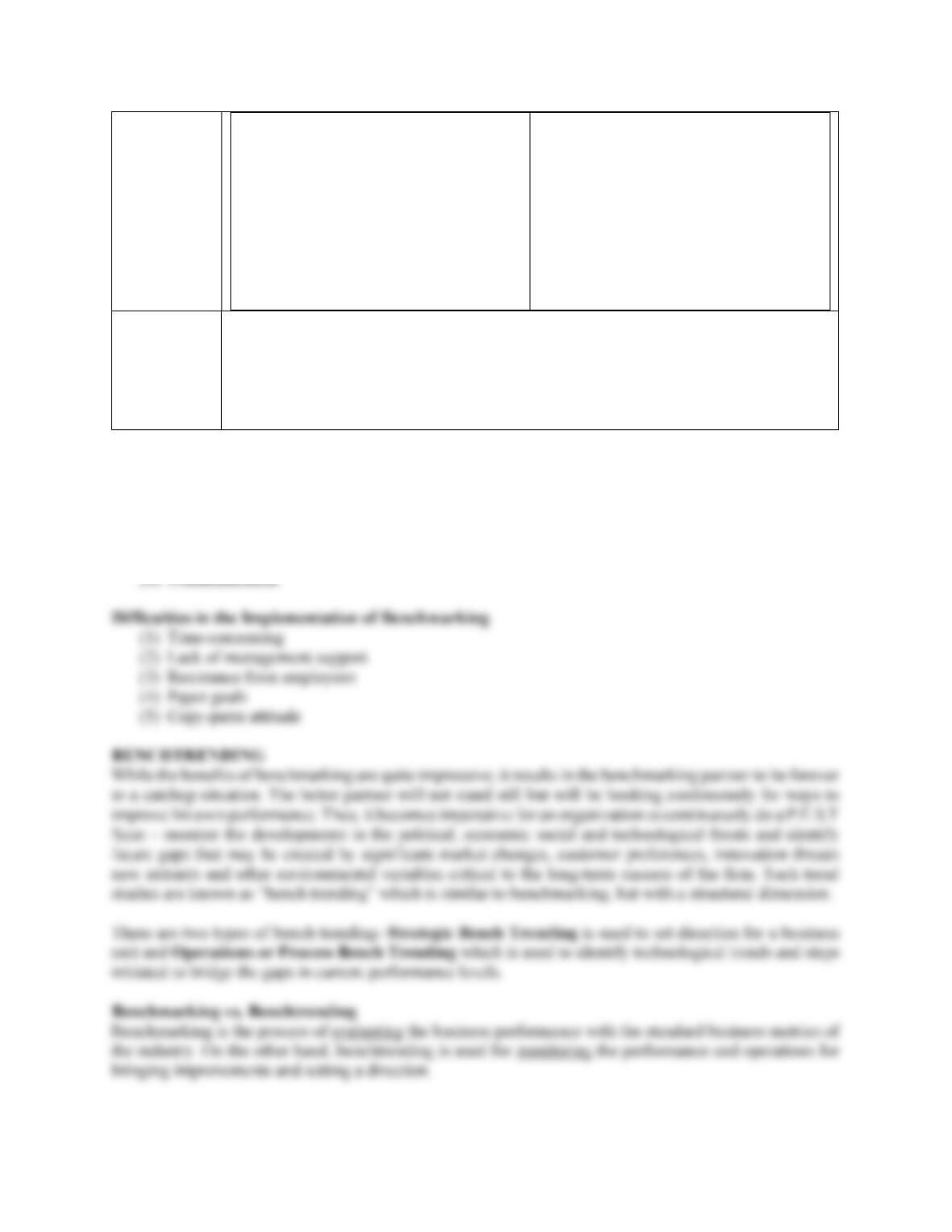
Agreement on the improvements
that are likely to be feasible
Producing a report on
benchmarking in which
recommendations are included
Obtaining the support of owners
or management for making the
changes needed
Developing action plan/s for
implement
ation
Keep owners or management
informed of the progress
5 Constant monitoring and reviewing
a. Evaluating the benchmarking process undertaken and the results of the
improvements against objectives and success criteria plus overall efficiency
and effectiveness
b. Documenting the lessons learned and make them available to others
c.
P
eriodically
recon
si
dering the bench
marks for co
nt
inuous improve
ment
Pre-requisites of Benchmarking
(1) Commitment
(2) Clarity of objectives
(3) Appropriate scope
(4) Resources
(5) Skills