SEPT. 28TH 2017
BEHAVIOUR MODIFICATION PART 1: TARGET BEHAVIOUR
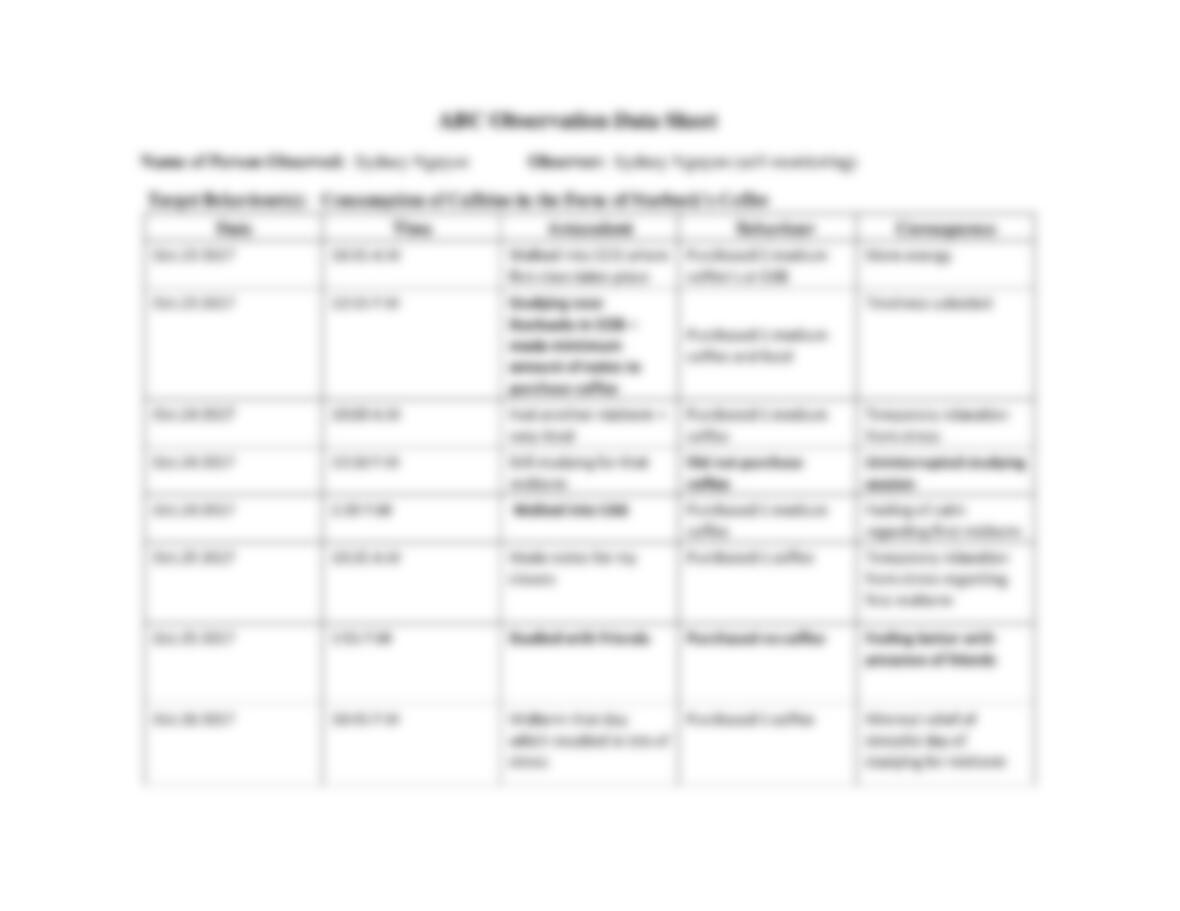
1) My target behaviour is reducing the amount of coffee intake-in the form of four daily Starbucks coffees- received over what would be
over the course of two months. This will then hypothetically reduce my then weekly spending on coffee, which leads to such savings
being allocated towards purchasing something else: a brand new backpack for school. I do not own a coffee maker at home nor do I
purchase coffee anywhere other than Starbucks as I dislike the flavor of coffee anywhere else. Thus, my intake of coffee is solely based
on purchasing it from the Starbucks on campus. The act of purchasing an average of four coffee’s from Starbucks throughout classes has
increased my dependency on caffeine to a point where I believe it now effects my mood and anxiety levels drastically as a result of being
highly sensitized to caffeine as I am told by my physician. This has led me to wanting to decrease this undesirable behaviour due to both
wanting to reallocate my money elsewhere but also in hopes that with caffeine intake lowered, it will have a positive effect on my
mental health.
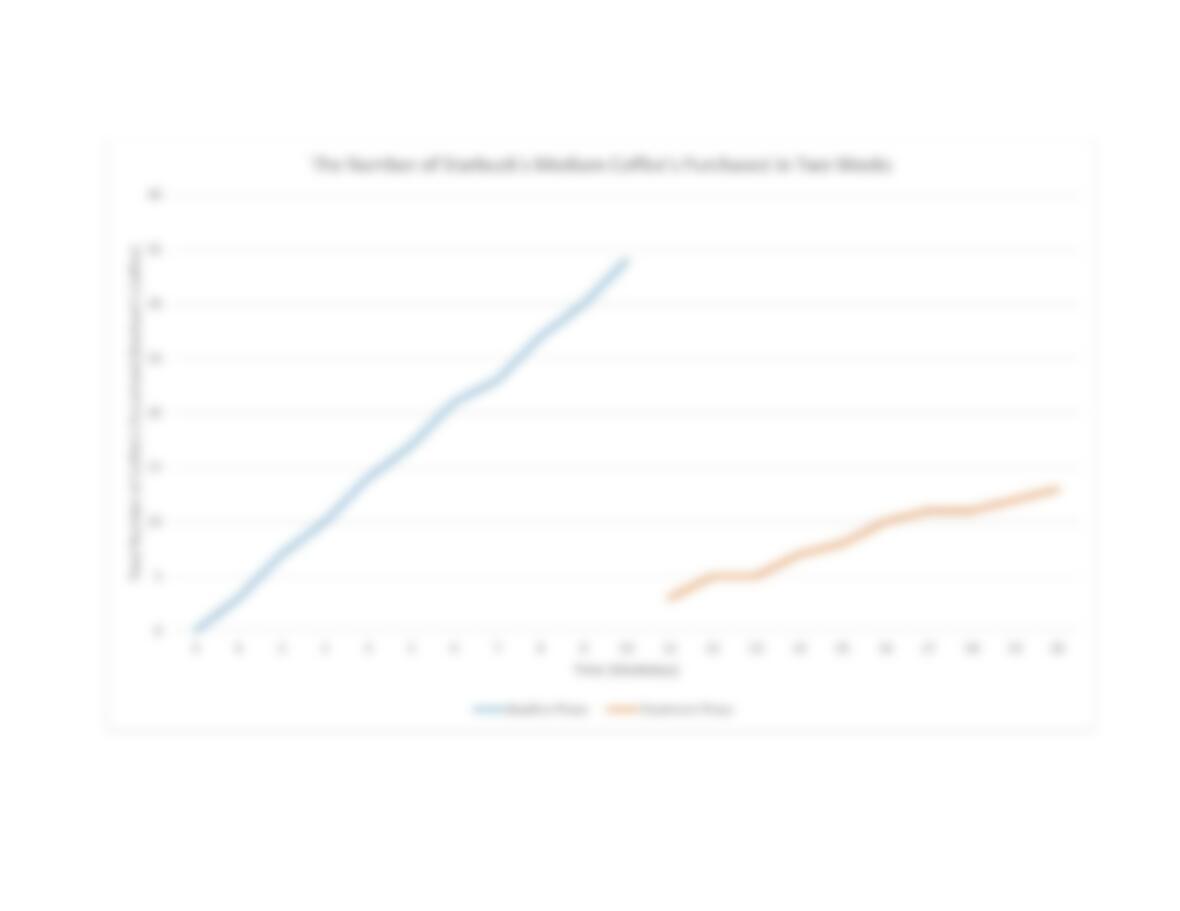
2) The main physical dimension of the target behaviour will be frequency. This is due to being able to track and record each day the
amount of coffee purchased-always in the form of a large coffee bought from Starbucks. I will be tracking the number of coffee’s
purchased daily which will be compiled into a weekly summary for comparison reasons-done by a frequency chart. The raw data will be
converted by Excel, then compiled into a line graph. I
BEHAVIOUR MODIFICATION PART 2: ETHICS
1) The modifying of my target behaviour in terms of decreasing my caffeine intake is highly beneficial is supported by the article referenced
below. The article’s research design further explains the adverse effects of caffeine by highly sensitized individual’s correlating to a
positive relationship between caffeine consumption from coffee and stress levels (Richards & Smith, 2005). Furthermore, the design
study involved a questionnaire, which involved lifestyle questions such as quality of sleep, quality of general health, frequency of
consumption and ranking of general anxiety levels. The research design further explains the large-scale quantitative program purpose:
identifying that high caffeine intake is associated with self-medicating feelings of “high stress, anxiety and depression” (Richards &
Smith, 2005). In addition, one of the premise for this research was to find a correlation between the consumption of highly caffeinated
beverages-usually coffee- and perceived stress levels by undergraduate students.
2) The possible downsides in modifying this particular target behaviour is the fact that my daily intake of coffee effectively alleviates my
sleep deprivation as a result from school. My main concern is that with the absence of my daily four cups of coffee, my sleeping patterns
and current stress level will be further complicated to a point where my anxiety levels will be increased substantially. Although I do
suspect that coffee in hindsight has worsened my stress level during the school year, I can admit that the daily reinforcement of
purchasing and consuming a warm cup of coffee does provide temporary comfort in that it signals the start of a new day. The routine act
of purchasing coffee from Starbucks every morning before class, I can suspect has pleasant implications in that it helps increase my
energy levels-which are at times heavily depleted due to a lack of sleep from studying. Furthermore, there is a certain unknown aspect
to which I can only imagine what the first couple of days will be like in terms of my mood and stress level. There are potential dangers in
that due to my gradual dependency on coffee, the lack of it may cause an immense change to my mood in the morning, which I foresee
it may have an effect on my schooling abilities.
References