Beef Cattle Management Project
Limousin Cattle
Sariah Avila
AnSci-201
Beef Cattle Science
Spring 2020
Jennifer Terpstra

2 | P a g e
TABLE OF CONTENTS
INTRODUCITON PAGE 3-4
LIMOUSIN CATTLE OVERVIEW
WEEMS RANCH LIMOUSINS PROPOSAL AND GOALS
EXPECTED PROGENY DIFFERENCES PAGE 4-6
EPDS RECORDED BY NORTH AMERICAN LIMOUSIN FOUNDATION
LIMOUSIN EPD AVERAGES
EPD GOALS FOR WEEMS RANCH LIMOUSINS
ANIMAL REPRODUCTION AND GENETICS PAGE 6-10
REPRODUCTION GOALS
BREEDING PLAN
SIRE SELECTION
CAPITAL INVESTMENT PAGE 11-15
CATTLE PURCHASES
LAND FOR WEEMS RANCH LIMOUSINS
EQUIPMENT AND FACILITIES NEEDED
ANIMAL HEALTH PAGE 15-18
VACCINATION ROUTINE
BIOSECURITY PROTOCOLS
DISEASES TO BE AWARE OF
ANIMAL NUTRITION PAGE 18-19
FEED PLAN
SUPPLEMENTATION
FEEDING BULLS AND HEIFERS TO SELL
MARKETING PAGE 19-20
LEADING GENETICS
CUSTOMER SERVICE
PRODUCITON DATA PAGE 20-22
TOTAL CAPITAL INVESTMENT
EXPECTED CALF PERFORMANCE
GROWTH OF HERD
MAKING A PROFIT
BIBLIOGRAPHY PAGE 23-25

3 | P a g e
INTRODUCTION
For my Beef Management Project, I was assigned the Limousin breed of cattle.
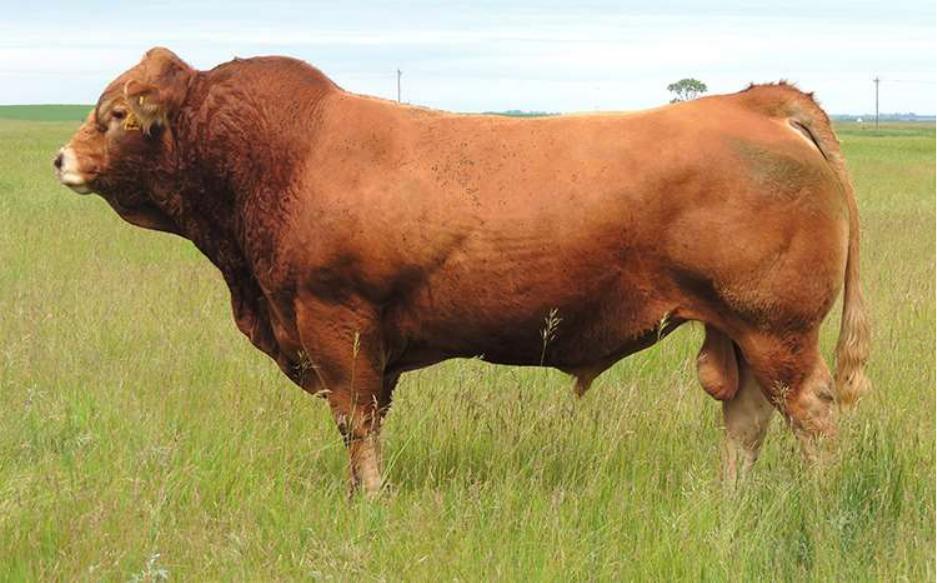
Limousin cattle are a very productive medium to large framed animals and are highly
market-based breed that are well known for their production quality. Limousin cattle are
a Bos Taurus European Breed, native to South-Central France and are naturally
horned, but because of breeding polled genetics have emerged. They range in colors
from golden-red to red-brown or tan, but in more recent years producers have seen
more Black Limousins due to breeding. The breed is valued for their terminal
characteristics, known for high dressing percentages, lean and tender meat, large loin
areas, and a high feed conversion efficiency. Limousins’, being a European Breed of
cattle, are a hardy breed that can prosper in harsher climates and in different terrains.
Genetically they are known to produce low birthweight calves, which makes calving
difficulty quite uncommon for the breed, but the breed is also known to have an issue
with scrotal circumference that can affect the abilities of bulls to cover large amounts of
females.
In this report I will be proposing to start the Weems Ranch Limousins. Weems Ranch
Limounsins based out of the Weems Ranch of Seminole County in Oklahoma, with 456
acres of land for a herd of 300 head of elite females and bulls. The property that will be
home to Weems Ranch Limounsins is located in an area where water is extremely
abundant and the land is abundant with improved and native grasses with roads for
easy access on all sides of the ranch for ease in cattle checking and for hay production
is needed. The property also includes a metal barn with pipe pens to house cattle with

4 | P a g e
alley leads to multiple pastures. With this facility we will be able to house an elite cow-
calf herd of Limousin cattle to produce seedstock cattle to pass highly desirable
genetics for the use of commercial producers.
At Weems Ranch Limounsins, we strive to produce cutting-edge cattle that are industry-
leading in quality while maintaining functionality and high standards in EPDs and
performance data. At Weems Ranch we produce Limousins that are specially bred to
add maternal and market value to seedstock and commercial cow herds throughout the
country. Our cattle are guaranteed to be backed with reputable pedigrees, phenotypical
traits and performance. At our ranch we emphasise fertility and maternal performance in
our females that will be profitable on our pastures. In our bulls we only use the most
elite genetics available with males that lead the Limousin Breed in EPDs and in
performance.
EXPECTED PROGENY DIFFERENCES
There are several Expected Progeny Differences that are recorded by the North
American Limousin Foundation (NALF). Since fall of 2015, the NALF has utilized
genomic-enhanced EPDs (GE-EPDs), this is a system that uses genomic technology
with performance measurements of individual animals and their pedigree and progeny
to produce accurate and reputable measurements of EPDs. The NALF also uses SNPs-
the panel of single-nucleotide polymorphisms- to produce GE-EPDs, they are another
genetic source that can be tested to produce more accurate measurements. The EPDs
in the growth and maternal measurements that are recorded by the NALF include:

5 | P a g e
gestation length, calving ease direct, birth weight, weaning weight, yearling weight, milk,
total maternal, calving ease maternal, scrotal circumference, stayability, and docility.
The EPDs in the intake and carcass measurements that are recorded by the NALF
include: yield grade, carcass weight, rib eye area, marbling, fat and mainstream terminal
index. In Table 1 below, you will be able to see all the EPDs recorded by the NALF and
their averages as of June 11th, 2019.
Table 1 – Expected Progeny Differences Averages of Limousin Cattle
Growth and Maternal
Intake and Carcass Index
Values
GEST CED BW WW YW Milk TM CEM SC STAY DOC YG CW REA MARB FAT $MTI
-2.9 10 1.5 61 90 22 52 6 0.4 11 11 -0.76 8 1.09 -0.46 -0.16 37.93
For the Weems Ranch Limousin herd, there are several EPDs that we will emphasize
the use of in order to produce highly elite seedstock to move our herd and industry
further in meeting our market goals. All females that will be utilized in our herd must
perform well above average in calving ease, total maternal value, and stayability. Since
our breed is such a hardy one and many of commercial cow-calf buyers will most likely
not have the manpower to assist in calving in harsher climates and terrains, we find it
crucial to produce females will plenty of ease in calving and that will remain productive
in herd for long periods of time. In our herd we will also put a great emphasis on growth
of calves since most of our genetics will be used to produce high performing market
animals. Bulls that will be utilized in our herd must perform well in EPDs such as
yearling weight, carcass weight and mainstream terminal index. With reputable bulls
that will be able to perform at the top of the breed both phenotypically and genetically,

6 | P a g e
we will be sure to produce the highest quality genetics to provide for commercial
producers as well as other seedstock operations.
ANIMAL REPRODUCTION AND GENETICS
At the Weems Rach Limousin cattle company, we intend to maintain females that
perform above par genetically for maternal traits and highly productive values. On our
facility we also intend to both use and produce bulls that perform at the top percentile of
the Limousin breed in economic value will highly marketable and productive traits, while
maintaining the genetic potential for structure and soundness.
Our breeding plan consists of breeding our females in two major groups, one to calve in
the fall and one to calve in the spring. We will split the females into the two major
groups, and then smaller groups thereafter. The group that will calve in fall season will
be bred over the span of the months of December and January prior to the fall in which
calves will be born, the calves will drop in the span of months from September to
November and will be weaned around February. For the group that will calve in the
spring season, they will be bred in the months of June and July, the calves will be born
in March and April and will be weaned around August. We plan to utilize mainly artificial
insemination (AI), in order to make things easier at breeding time, we plan to
synchronize the estrus cycle of the smaller groups of females using Controlled Intra-
Vaginal Release Device (CIDR®) for 7 days then once the device is removed, we will
inject with a dosage of Lutalyse, then AI the females in 48 hours. To ensure that the
females are bred, even if the artificial insemination is unsuccessful, we will set a clean

7 | P a g e
up bull out with them once they are back in pasture. The females will be brought up to
the barn in their groups that they will be bred in so that there is ease in the breeding and
synchronizing process, then once they are bred, they will be sent back out to pasture to
gestate. For about the last month of gestation, the female will be brought up to a closer
pasture or in a pen in the barn, depending on the weather conditions and the season.
Once calves are born and healthy, they will be kept out on pasture with their mothers
until weaning, for weaning we will use a fenceline weaning or total separation weaning
processes.
When it comes to selecting sires to use on our females, there are two that we believe
would add an abundance value to our progeny to produce elite cattle. The first of which