Wilfrid Laurier University Wilfrid Laurier University
Scholars Commons @ Laurier Scholars Commons @ Laurier
Theses and Dissertations (Comprehensive)
2020
Be Kind to Your Mind: A Randomized Controlled Trial Comparing Be Kind to Your Mind: A Randomized Controlled Trial Comparing
the benefit of Mindfulness and Self-Compassion vs. Social Skills the benefit of Mindfulness and Self-Compassion vs. Social Skills
Training Among Children and Adolescents Training Among Children and Adolescents
Lindsey Feltis
felt4850@mylaurier.ca
Follow this and additional works at: https://scholars.wlu.ca/etd
Part of the Clinical Psychology Commons, and the Developmental Psychology Commons
Recommended Citation Recommended Citation
Feltis, Lindsey, “Be Kind to Your Mind: A Randomized Controlled Trial Comparing the benefit of
Mindfulness and Self-Compassion vs. Social Skills Training Among Children and Adolescents” (2020).
Theses and Dissertations (Comprehensive)
. 2269.
https://scholars.wlu.ca/etd/2269
This Thesis is brought to you for free and open access by Scholars Commons @ Laurier. It has been accepted for
inclusion in Theses and Dissertations (Comprehensive) by an authorized administrator of Scholars Commons @
Laurier. For more information, please contact scholarscommons@wlu.ca.
Be Kind to Your Mind: A Randomized Controlled Trial Comparing the Benefits of Mindfulness
and Self-Compassion vs. Social Skills Training among Children and Adolescents
by
Lindsey E. Feltis
MASTER’S THESIS
Submitted to the Department of Psychology/Faculty of Science in partial fulfillment of the
requirements for the Master of Arts in Developmental Psychology
Wilfrid Laurier University
© Lindsey Erin Feltis 2020
ii
Abstract
Childhood and adolescence can be difficult for young people as they navigate a variety of
significant transitions. Thus, it is imperative that researchers focus on programs that support
children and adolescents during this time. Mindfulness and self-compassion are two such
programs that may promote positive youth development. Mindfulness and self-compassion have
been explored in the adolescent context, and mindfulness has been explored with young children,
however research on self-compassion for children is currently lacking. The present studies were
designed to examine the feasibility, acceptability and potential benefits of a combined
mindfulness + self-compassion program for children and adolescents in the summer camp
setting. In Study One, adolescent camp counsellors (n=25) were randomly assigned to one of
two training conditions: mindfulness + self-compassion (n=13) or social skills training (n=12).
Throughout the summer, counsellors led activities for their campers that related to their
respective conditions. It was expected that adolescent camp counsellors in the mindfulness +
self-compassion condition would experience greater increases in mindfulness, self-compassion,
resilience, empathy and sympathy, emotion regulation, authenticity, and life satisfaction, when
compared to their control condition (social skills training) counterparts. Additionally, it was
expected that adolescents in the mindfulness + self-compassion condition would experience
greater decreases in social anxiety and depression, when compared to participants in the control
condition. Results indicated that counsellors in both conditions experienced significant increases
in mindfulness, self-compassion, self-esteem, resilience, emotion regulation, and life satisfaction.
Additionally, compared to their control condition counterparts, counsellors in the mindfulness +
self-compassion condition experienced greater increases in life satisfaction and authenticity, with
their increases in resilience approaching statistical significance. Study Two focused on the
iii
feasibility, acceptability and potential benefits of mindfulness and self-compassion for young
campers (n=231). It was expected that young campers would experience the same benefits as the
aforementioned adolescent camp counsellors. Contrary to hypotheses, campers in the
mindfulness + self-compassion condition did not experience greater benefits than their social
skills training condition counterparts on any of the assessed outcomes, demonstrating that further
research is needed in order to examine the potential benefits of mindfulness and self-compassion
for children. Limitations and suggestions for future research are included in the general
discussion. The present set of studies expands upon the research on mindfulness and self-
compassion, and explores the potential benefits for young children and adolescents innovatively
by using active control groups and conducting research in the summer camp setting. Overall, the
present set of studies contributes to existing literature that suggests mindfulness and self-
compassion promote positive development for adolescents, and illustrates the need for additional
research for mindfulness and self-compassion in the context of childhood.
Keywords: mindfulness, self-compassion, children, adolescents, summer camp, life
satisfaction, authenticity, resilience
iv
Acknowledgements
First and foremost, I would like to thank the two women who continually support me, challenge
me and inspire me, my supervisors, Dr. Nancy Kocovski and Dr. Kim P. Roberts. I consider
myself very lucky to have spent the past few years working closely with not one, but two
amazing women, who embrace my enthusiasm and who instill in me a desire for excellence.
I’d also like to thank my committee member Dr. Alexandra Gottardo for her insightful feedback
on many thesis drafts, Dr. Jennifer Robertson-Wilson for serving on my committee and Dr.
Bruce McKay for chairing my defense. Additionally, I’d like to thank all of the research
assistants who supported this project: Jenna Sommerville, Poppy Hua, Jalen Manett, Holly
Nelson, Kelly Schaus, and give special recognition to Ashley Siegel for her assistance with
program delivery. I’d also like to thank my friends and family for their continuous support on
this incredible journey, especially my mother, Patti, for her unconditional love and
encouragement. Finally, I want to acknowledge the overnight summer camp in Southwestern
Ontario who graciously participated in this research project. I want to thank the camp, their
executive director, camp director, leadership team, counsellors and every single camper who
participated in this research. This research would not be possible without you.
v
Table of Contents
Abstract……………………………………………………………………………………………ii
Acknowledgements……………………………………………………………………………….iv
Table of Contents………………………………………………………………………………….v
List of Tables……………………………………………………………………………………..vi
List of Figures……………………………………………………………………………………viii
List of Appendices…………………………………………………………………………………ix
Introduction………………………………………………………………………………………..1
Study One…………………………………………………………………………………………22
Method……………………………………………………………………………………22
Results……………………………………………………………………………………33
Discussion………………………………………………………………………………..38
Study Two………………………………………………………………………………………..44
Method……………………………………………………………………………………45
Results……………………………………………………………………………………50
Discussion………………………………………………………………………………..59
General Discussion………………………………………………………………………………65
References………………………………………………………………………………………..82
Tables…………………………………………………………………………………………….93
Figures…………………………………………………………………………………………..112
Appendices……………………………………………………………………………………...114
vi
List of Tables
Table 1. Mindful Self-Compassion and Making Friends with Yourself Program Activities……..93
Table 2. Study 1 Counsellor Demographics by Condition………………………………………94
Table 3. Study 1 and 2 Constructs Assessed and Measures Completed by Counsellors and
Campers………………………………………………………………………………………….95
Table 4. Study 1 and 2 Activities for Counsellors and Campers by Condition………………….96
Table 5. Study 1 Baseline Measures Compared Across Conditions- Counsellors………………97
Table 6. Study 1 Pearson Correlations among Baseline Variables- Counsellors……………….98
Table 7. Study.1 Acceptability and Feasibility Compared Across Conditions- Counsellors……99
Table 8. Study.1 Self-compassion and Mindfulness at Baseline, Mid-program and Post-program-
Counsellors……………………………………………………………………………………..100
Table 9. Study 1 Outcome Variables at Baseline and Post-program- Counsellors…………….101
Table 10. Study 2 Camper Demographics by Condition……………………………………….102
Table 11. Study 2 Baseline Measures Compared Across Conditions- Campers……………….103
Table 12. Study 2 Pearson Correlations among Baseline Variables- Campers………………..104
Table 13. Study 2 Outcome Variables at Baseline and Post-program- Campers………………105
Table 14. Study 2 Outcome Variables with Age as a Covariate at Baseline and Post-program-
Campers…………………………………………………………………………………………106
Table 15. Study 2 Sample Sizes for each Condition by Age Group- Campers…………………107
Table 16. Study 2 Outcome Variables at Baseline and Post-program- By Campers’ Age…….108
Table 17. Study 2 Completers (all eight measures) vs. Non-completers by Condition, Age and
Gender- Campers……………………………………………………………………………….109
vii
Table 18. Study 2 Completers (all eight measures) vs. Non-completers on Baseline Variables-
Campers…………………………………………………………………………………………110
Table 19. Study 2 Attrition Rates by Age Group (participants who completed less than all eight
measures)……………………………………………………………………………………….111
viii
List of Figures
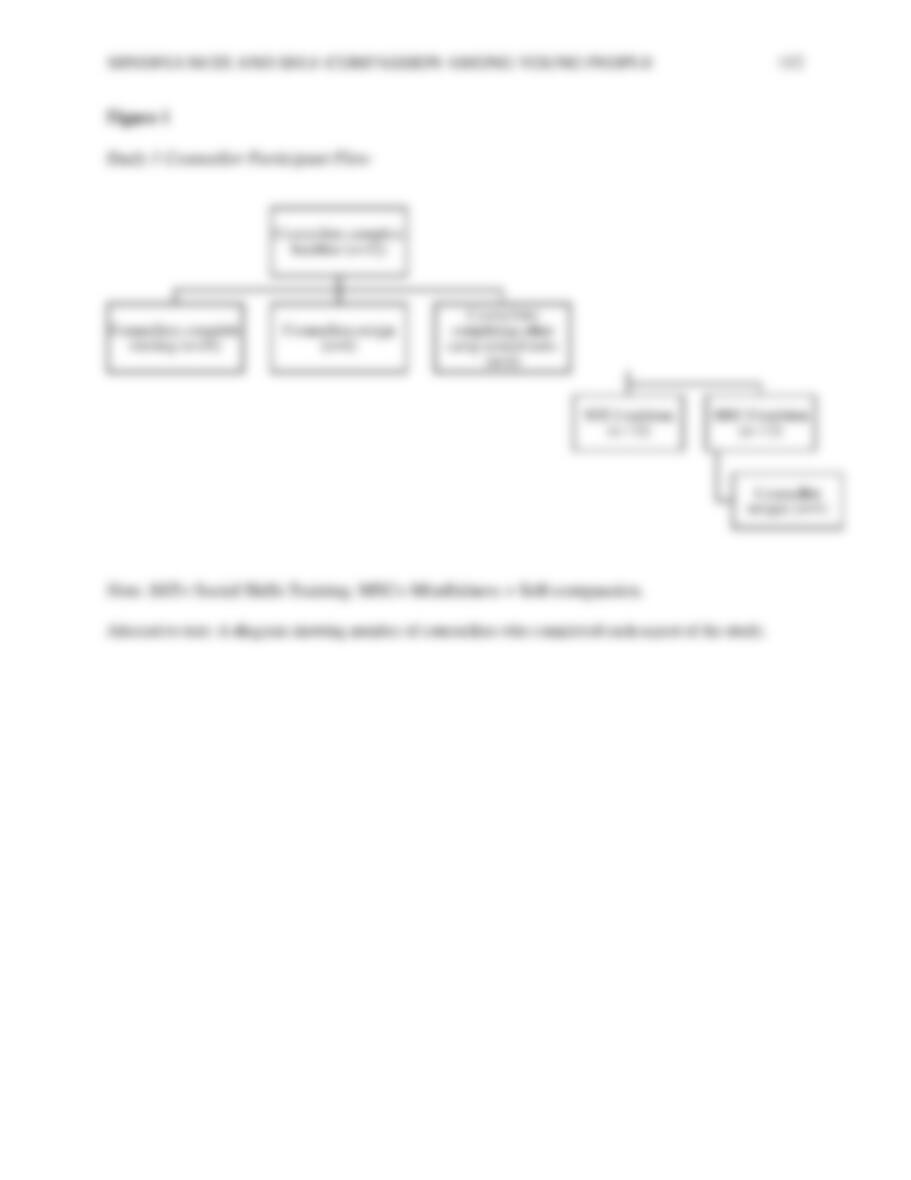
Figure 1. Study 1 Counsellor Participant Flow…………………………………………………112
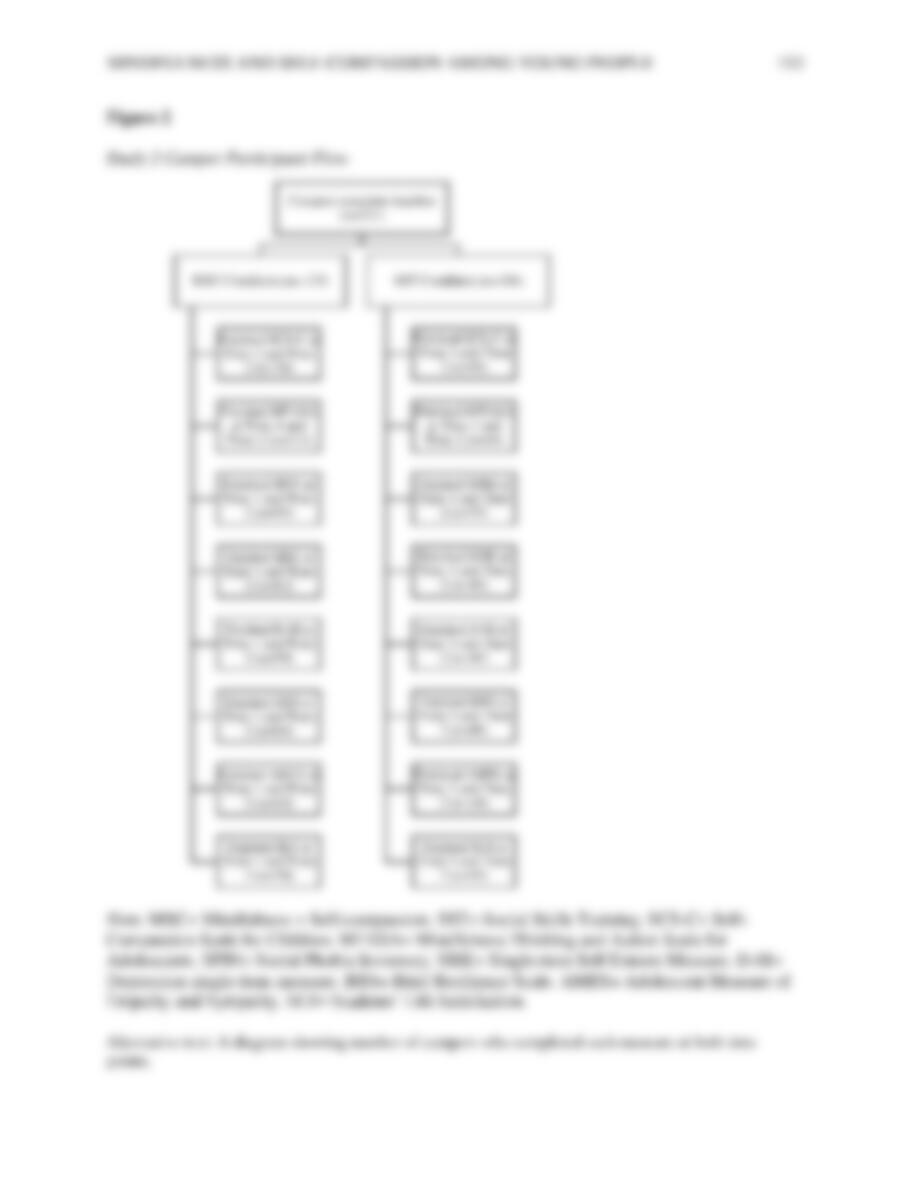
Figure 2. Study 2 Camper Participant Flow……………………………………………………113
ix
List of Appendices
Appendix A: Pre-program Surveys for Counsellors……………………………………………114
Appendix B: Mid-program Surveys for Counsellors……………………………………………126
Appendix C: Post-program Survey for Counsellors……………………………………………133
Appendix D: Pre-program Surveys for Campers……………………………………………….146
Appendix E: Post-program Surveys for Campers………………………………………………154
MINDFULNESS AND SELF-COMPASSION AMONG YOUNG PEOPLE
1
Be Kind to Your Mind: A Randomized Controlled Trial Comparing the Benefits of
Mindfulness and Self-Compassion vs. Social Skills Training among Children and
Adolescents
Adolescence can be a challenging time, filled with physiological, social and
environmental transitions (Bluth, Mallarkey, & Lathren, 2018; Sutton, Schonert-Reichl, Wu, &
Stewart Lawlor, 2018; Ecces, 1999). Adolescence often refers to the years between 12 and 20
when adolescents experience significant physiological changes as they progress through puberty;
this developmental period is characterized by rapid biological and cognitive growth (Meeus, van
de Schoot, Keijsers, Schwartz, & Branje, 2010; Steinberg, 2005; Roeser & Pinela, 2014).
Additionally, identity formation is a particularly salient process throughout adolescence
(Erikson, 1968; Neff & McGehee, 2010). As teenagers begin to ask themselves “who am I?”,
they face intense pressures from their teachers, peers and parents to perform well academically
and socially (Neff & McGehee, 2010). Adolescents must balance their desire for autonomy with
their desire for intimacy; their interpersonal relationships change as they begin to distance
themselves from their parents and prioritize their time with friends and classmates (Eccles,
1999). Furthermore, adolescence is often marked by the environmental transition from
elementary school to high school. These significant transitions, accompanied by rapid
developments, often lead to a variety of challenges for adolescents, including heightened
insecurity, self-doubt and self-criticism (Klingle & Van Vliet, 2017). Additionally, Eccles (1999)
suggests that adolescence may not be the only developmental period characterized by rapid age–
related advances. Eccles (1999) suggests that middle childhood and early adolescence (the years
between 6 and 14) are both characterized by changes in children’s biological and cognitive
functioning.
MINDFULNESS AND SELF-COMPASSION AMONG YOUNG PEOPLE
2
A “crucial shift” (Eccles, 1999, p. 32) in children’s critical thinking abilities occurs at
approximately age six, as children’s self-awareness and self-evaluation skills improve; social
comparison then becomes increasingly predominant throughout middle childhood. Furthermore,
the personalities, behaviours and tendencies that children develop in middle- to late-childhood
often persist into adolescence and adulthood (Schonert-Reichl et al., 2015). When childhood and
adolescence are considered in tandem with one another, it becomes evident that both time
periods are characterized by significant transitions that may leave young people emotionally
vulnerable. Consequently, it becomes important that children and adolescents have positive
coping strategies they can rely on as they navigate the inevitable challenges of growing up.
Additionally, childhood and adolescence may provide a “window of opportunity” (Roeser &
Pinela, 2014, p. 10) for young people to be introduced to programs, such as those teaching