Unit 5
Asset Management and Research

Asset Management
Asset Management refers to the professional management
of investment funds for individuals, families and
institutions
Investments include stocks, bonds, convertibles,
alternative assets (such as hedge funds, private equity
funds and real estate), commodities, indexes of each of
these asset classes and money market investments
Asset managers specialize in different asset classes and
management fees are paid based on the asset class
For alternative assets, additional fees are paid based on
investment performance as well

Alternative Assets
•Management fees can range from 1% to 2% of assets
under management (AUM) and additional fees are charged
based on the fund manager’s performance
•Some alternative asset managers receive performance fees
of 10% to 20% on the annual increase in value of assets.
This means that if a high net worth investor entrusted $10
million to an alternative asset manager, and the value of
this investment increased to $11.5 million in one year (a
15% increase), the asset manager would be paid as much
as 2% x $10 million = $200,000 management fee, plus 20%
x ($11.5 million – $10 million) = $300,000 performance fee.
So total fees paid would be $500,000, which is, in effect, a
5% fee on the original $10 million investment

Alternative Assets contd.
Although this may seem high, the investor’s net
return is still 10% after fees. Therefore, despite
the high fee percentage, this may be a suitable fee
arrangement for an investor if the net return is
better than net returns from other investment
choices
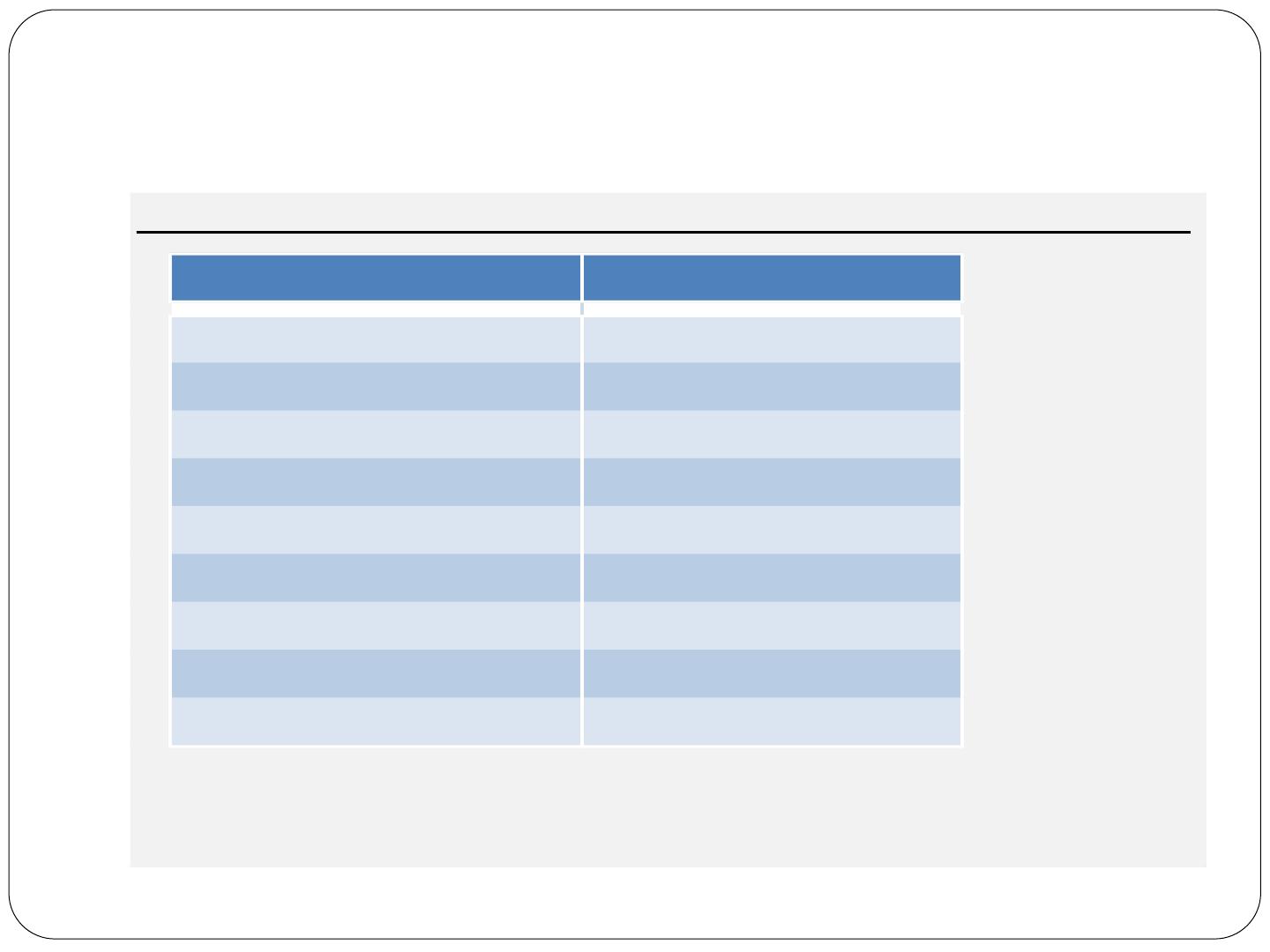
Investment Banks Have Large Asset
Management Businesses
Global Investment Bank Asset Management Divisions
Firm
AUM ($bln)
Bank of America $1,945
Morgan Stanley $1,628
UBS $1,559
Wells Fargo $1,398
Credit Suisse $865
Deutsche Bank $368
J.P. Morgan $284
Goldman Sachs $229
Barclays $185
Source: Scorpio Partnership‘s Annual Private Banking
Benchmark for 2011

Performance Measurement
•Fund performance is a key metric when evaluating Asset
Management capabilities
•Investors measure this by relying on different performance
measurement firms, such as Morningstar and Lipper, who
compile aggregate industry data that demonstrate how
individual mutual funds perform against both indices and
peer groups over time
•For alternative asset classes such as hedge funds and
private equity, there are specialized industry research firms
that track fund performance
•Many funds are ranked into quartiles based on their
relative performance each quarter and each year
•Inevitably, top quartile funds draw disproportionately
more investable funds whenever rankings are announced
Performance Measurement
•For alternative assets such as hedge funds, it is
common to measure performance not only on a
relative basis, but also on an absolute return basis
•These funds attempt to achieve a positive (non-