ASSESSMENT TASK 1: DEVELOP POLICY
SUMMARIES OF THE THREE POLICY OPTIONS
As a Sustainability project officer, I examine complex papers and laws to create simple linguistic
policies, intrinsic memoranda, and exterior PR pieces.
The major aim is to enhance sustainability throughout Tiny Opera Firm’s management in order to
incorporate sustainability in the fulfilment of the diversified firm’s strategic objectives while
preserving and increasing world value.
1. Plain Policy: Offer a simple policy using convenient language to assist the audience grasp
the idea. It applies to all guests to the venue, whether internally and externally.
2. Internal Memos: Short communications for intrinsic personnel and/or internal guests that
document occurrences, insights, and certain other key facts about a particular issue.
3. External Publicity Materials: Offer long-term promotional resources including booklets,
pamphlets, billboards, wall décor, signs, or any other marketing creations to entice the
public to the theatre, for external audiences such as customers, advertisers, presenters,
journalists, and spectators.
The following are the contents:
• Create a workplace policy to reduce the usage of unneeded equipment.
• Minimizing the use of potentially dangerous chemicals and harmful compounds in the
painting process
• Air conditioning that is set to turn off at the end of the day
• Using as little costumes, props, lighting equipment, and infrastructure as possible
• Using efficient heaters in place of wall-mounted radiators
• When the space is unsupervised, equip lighting controllers to switch off the lights.
• Separating reusable material from non-recyclable material
• Recycle paper that has one side that isn’t printed.
• Upgrade the outdated dishwashers with a more sophisticated model.
Tiny Opera Company should have the above-mentioned contents in place by next year to reduce
resources consumption.
DRAFT SUSTAINABILITY POLICY
Tiny Opera Company will have an environmental sustainability policy, which will encompass both
the ethical and optimal utilization and administration of resources in order to limit the influence
on the environment and preserve it for upcoming generations.
Tiny Opera Company intends to emphasis on decreasing potentially dangerous elements and
harmful chemicals usage, limiting consumption of resources, establishing a sustainability
continual enhancement plan, and using life cycle administration techniques as aspects of
sustainable development.
The following are the contents:
• Create a workplace policy to reduce the usage of unneeded equipment.
• Minimizing the use of potentially dangerous chemicals and harmful compounds in the
painting process
• Air conditioning that is set to turn off at the end of the day
• Using as little costumes, props, lighting equipment, and infrastructure as possible
• Using efficient heaters in place of wall-mounted radiators
• When the space is unsupervised, equip lighting controllers to switch off the lights.
• Separating reusable material from non-recyclable material
• Recycle paper that has one side that isn’t printed.
• Upgrade the outdated dishwashers with a more sophisticated model.
This policy is applicable to all Tiny Opera Company employees, partners, and spectators in order
to develop resources and inform viewers about the firm’s sustainability initiatives, as well as
encouraging involvement in actions and practices that improve ecological results.
The relevant standard and legislation:
• The Environment Protection Act of 1997, which conserves the environment from pollutants and
its consequences, is the applicable standard and legislation. The Environment Protection Act of
1997 is the law in question (The Act). The Act establishes a legislative structure to aid in the
reduction and elimination of pollution discharges into the air, land, and water.
• The Energy Efficiency Opportunities Act of 2006 requires businesses that consume more over 0.5
petajoules (p) of power every year to analyse their power consumption and find energy-saving
possibilities utilizing the system’s conceptual model.
• The National Greenhouse and Energy Reporting Act (NGER Act) mandates that businesses that
fulfil certain criteria disclose on their glasshouse releases, energy output, and intake.
• The National Pollutant Inventory (NPI) disclosure rules compel companies to report on their
emissions and waste transference if they exceed any of the criteria, which include ninety-three
designated chemicals, quantities of incinerating and/or fuels, and quantities and kinds of energy
consumption.
REPORT
HOW I DEVELOPED A SUSTAINABILITY POLICY THAT REFLECTS TINY OPERA
COMPANY’S COMMITMENT TO SUSTAINABILITY
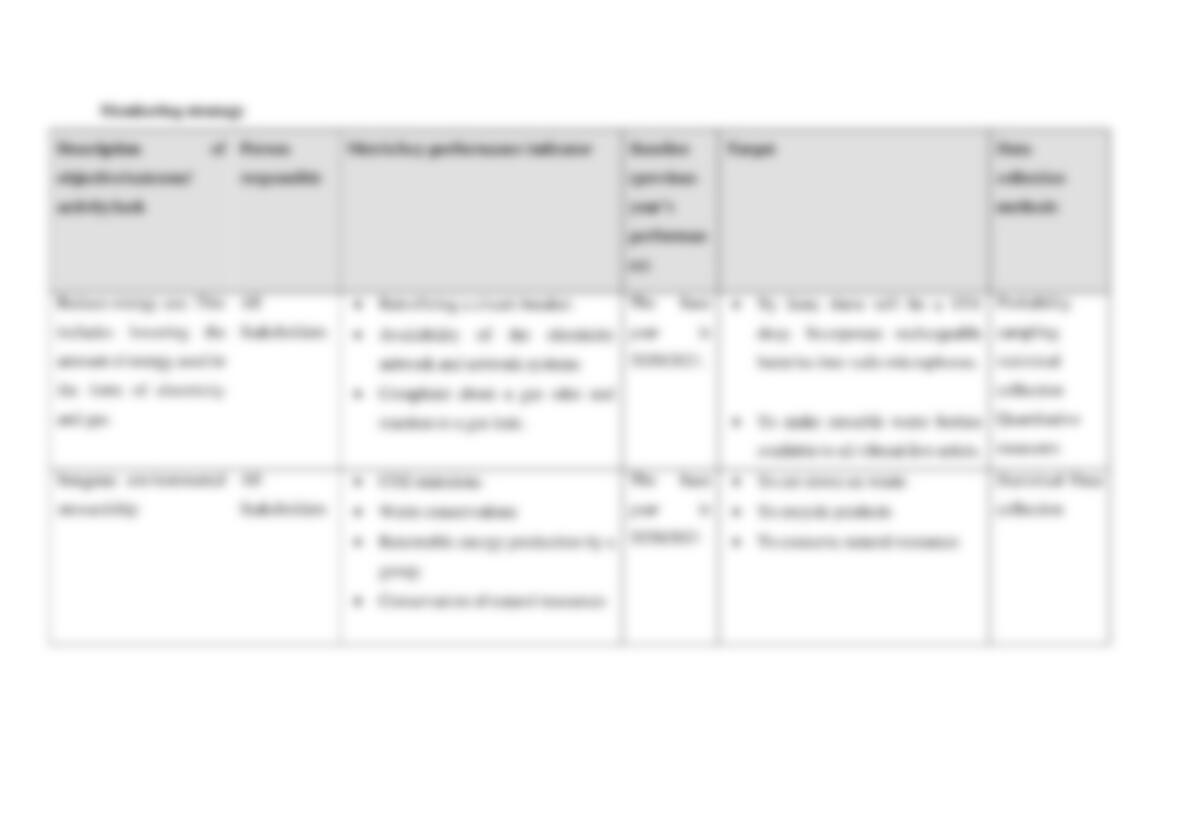
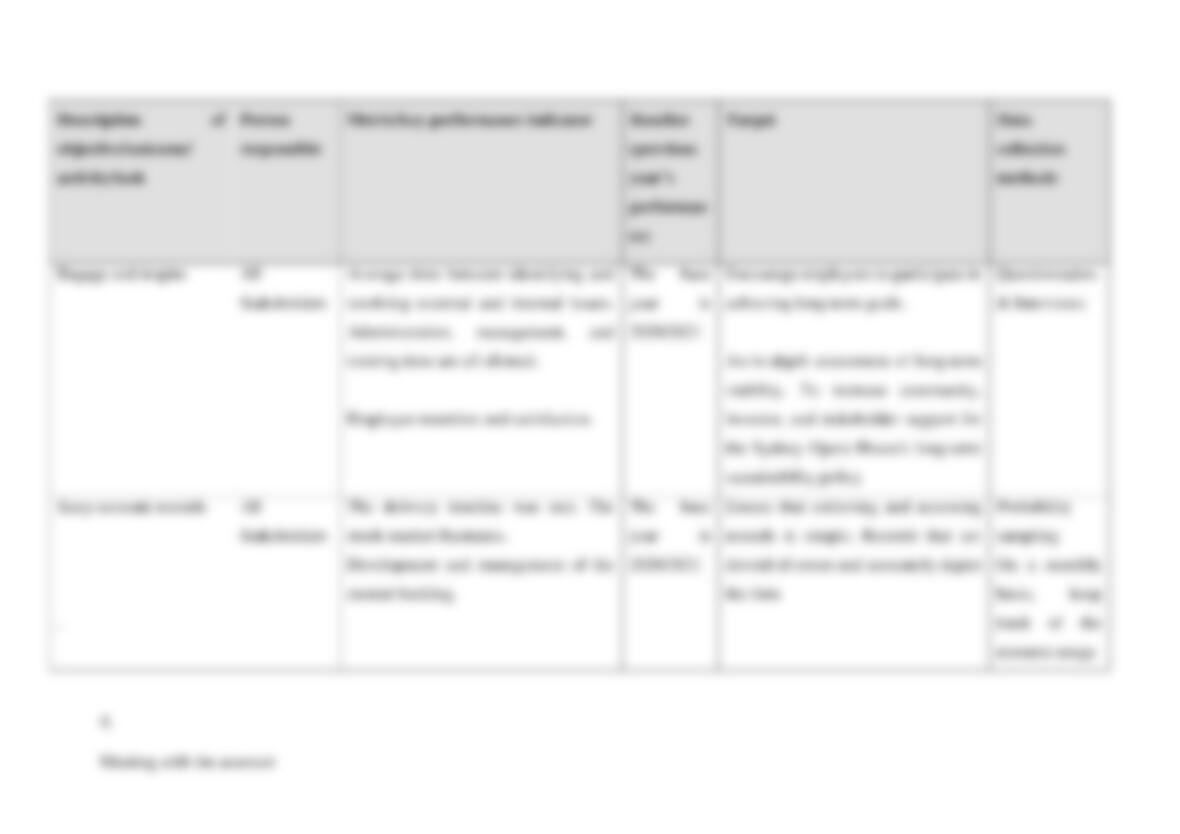
Tiny Opera Company is dedicated to offering timely management reviews of long-term business
operational practices and processes. It is dedicated to tracking, evaluating, and report the status of
the sustainability implementation success. The law’s standards and disclosure requirements have a
serious influence on this behaviour.
The goal is to decrease the use of harmful materials and hazardous chemicals while also decreasing
resource consumption, establishing a sustainable continual enhancement plan, and using life cycle
management techniques.
To do this, the policies will establish a worksite regulation that will limit the utilisation of
superfluous machinery and restrict the utilisation of dangerous chemicals and poisonous chemicals
when remodelling. Upgrade wall-mounted heaters with modern heaters, configure lighting
controllers to shut off lighting while area is unsupervised, recycling and recovery papers, and set
air conditioning to turn off at the ending of the day.
BEST PRACTICE MODELS THAT WERE REVIEWED AND HOW THEY INFORMED
THE SUSTAINABILITY POLICY
As a Sustainability Project Officer, I create optimal practise frameworks to enhance sustainability
initiatives throughout the firm, which contains the information:
The learning platform for social sustainability, which assists regional officials and employees in
accessing and sharing materials that promote their communities to examine and adopt financially,
culturally, and ecologically appropriate practises.
Furthermore, trash minimization and recycling minimise the possibility for methane production at
landfills, and also impurities produced during garbage transportation to dumping locations, and
save natural resources.
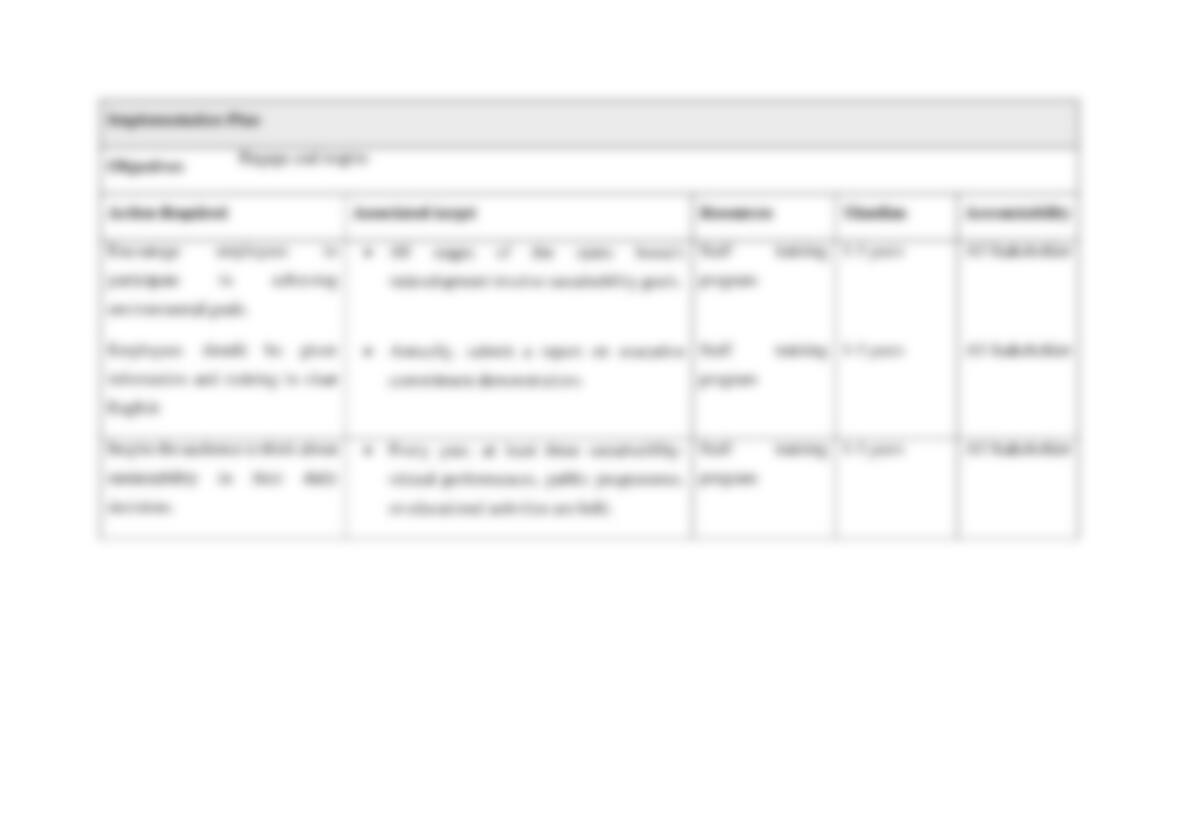
STRATEGIES FOR PROMOTING SUSTAINABILITY POLICY AWARENESS
As a Sustainability Project Officer, I devise tactics for raising sustainability policy awareness, such
as:
• Create sustainability challenges, such as offering community service to encourage
sustainable behaviour.
• Post the sustainability programme on a poster.
• Install signs in the cafeteria and restrooms emphasising water saving efforts.
• Distribute the trash and recycling expense, and the electricity costs, among the personnel.
• At the regular staff meeting, discuss progress on sustainable development.
• To reduce the usage of paper, employees should be notified about the sustainability report
through email.
STRATEGIES FOR MAXIMIZING THE POLICY’S IMPACT (TRAINING,
MARKETING, STAKEHOLDER ENGAGEMENT)
When implementing the new sustainability strategy, the Tiny Opera Company can use the
following techniques to maximise its impact:
• To urge personnel to practise sustainable development, provide instructional programmes
such as sustainability incentive programmes and power efficiency planning processes.
• Boost advertising to increase profits and strengthen long-term relationships with customers
and suppliers.
• Empower stakeholders to utilise resources wisely through encouraging stakeholder
involvement.
FINAL VERSION OF THE SUSTAINABILITY POLICY
To incorporate sustainable development throughout Tiny Opera Company’s operation and to
incorporate sustainable development in the achievement of the diversified firm’s strategic
objectives while preserving and improving global value, the firm will use the following strategies:
1. Plain Policy: Offer a simple policy using convenient language to assist the audience grasp
the idea. It applies to all guests to the venue, whether internally and externally.
2. Internal Memos: Short communications for intrinsic personnel and/or internal guests that
document occurrences, insights, and certain other key facts about a particular issue.
3. External Publicity Materials: Offer long-term promotional resources including booklets,
pamphlets, billboards, wall décor, signs, or any other marketing creations to entice the
public to the theatre, for external audiences such as customers, advertisers, presenters,
journalists, and spectators.
Tiny Opera Company’s sustainability strategy encompasses both the ethical and effective
utilization and administration of materials in order to reduce environmental effect and protect
materials for current and upcoming generations.
Tiny Opera Company intends to focus on decreasing toxic materials and dangerous chemical
usage, limiting consumption of resources, establishing a sustainable development & continual
enhancement plan, and using life cycle management techniques as areas of sustainable
development.
The following are the contents:
• Create a workplace policy to reduce the usage of unneeded equipment.
• Minimizing the use of potentially dangerous chemicals and harmful compounds in the
painting process
• Air conditioning that is set to turn off at the end of the day
• Using as little costumes, props, lighting equipment, and infrastructure as possible
• Using efficient heaters in place of wall-mounted radiators
• When the space is unsupervised, equip lighting controllers to switch off the lights.
• Separating reusable material from non-recyclable material
• Recycle paper that has one side that isn’t printed.
• Upgrade the outdated dishwashers with a more sophisticated model.
This policy relates to all Tiny Opera Company employees, partners, and audiences in order to
produce resources and enlighten viewers about the firm’s sustainability initiatives, as well as
encouraging involvement in actions and practises that promote environmental results.
The relevant standard and legislation:
• The Environment Protection Act of 1997, which conserves the environment from pollutants and
its consequences, is the applicable standard and legislation. The Environment Protection Act of
1997 is the law in question (The Act). The Act establishes a legislative structure to aid in the
reduction and elimination of pollution discharges into the air, land, and water.
• The Energy Efficiency Opportunities Act of 2006 requires businesses that consume more over
0.5 petajoules (p) of power every year to analyse their power consumption and find energy-saving
possibilities utilizing the system’s conceptual model.
• The National Greenhouse and Energy Reporting Act (NGER Act) mandates that businesses that
fulfil certain criteria disclose on their glasshouse releases, energy output, and intake.
• The National Pollutant Inventory (NPI) disclosure rules compel companies to report on their
emissions and waste transference if they exceed any of the criteria, which include ninety-three
designated chemicals, quantities of incinerating and/or fuels, and quantities and kinds of energy
consumption.
Tiny Opera Company is dedicated to offering timely management reviews of long-term business
procedures and practises. It is committed to tracking, measuring, and reporting on the performance
of the sustainability practise implementation. The law’s standard and reporting requirements have
a direct impact on this behaviour.
The goal is to decrease the use of harmful materials and hazardous chemicals while also decreasing
resource consumption, establishing a sustainable continuous improvement plan, and using life
cycle management techniques.
Tiny Opera Company must also decrease the possibility for landfills to produce methane, as well