BERNINI’S ART AS
PROPAGANDA
FOR THE CHURCH
December 1, 2017
Jamie Frank
ARH 384 Rome in the Age of Bernini

Frank
2
Bernini’s art and architecture was used as propaganda to promote the politics and
power within the Catholic religion and Vatican. This is seen through the baroque style of his
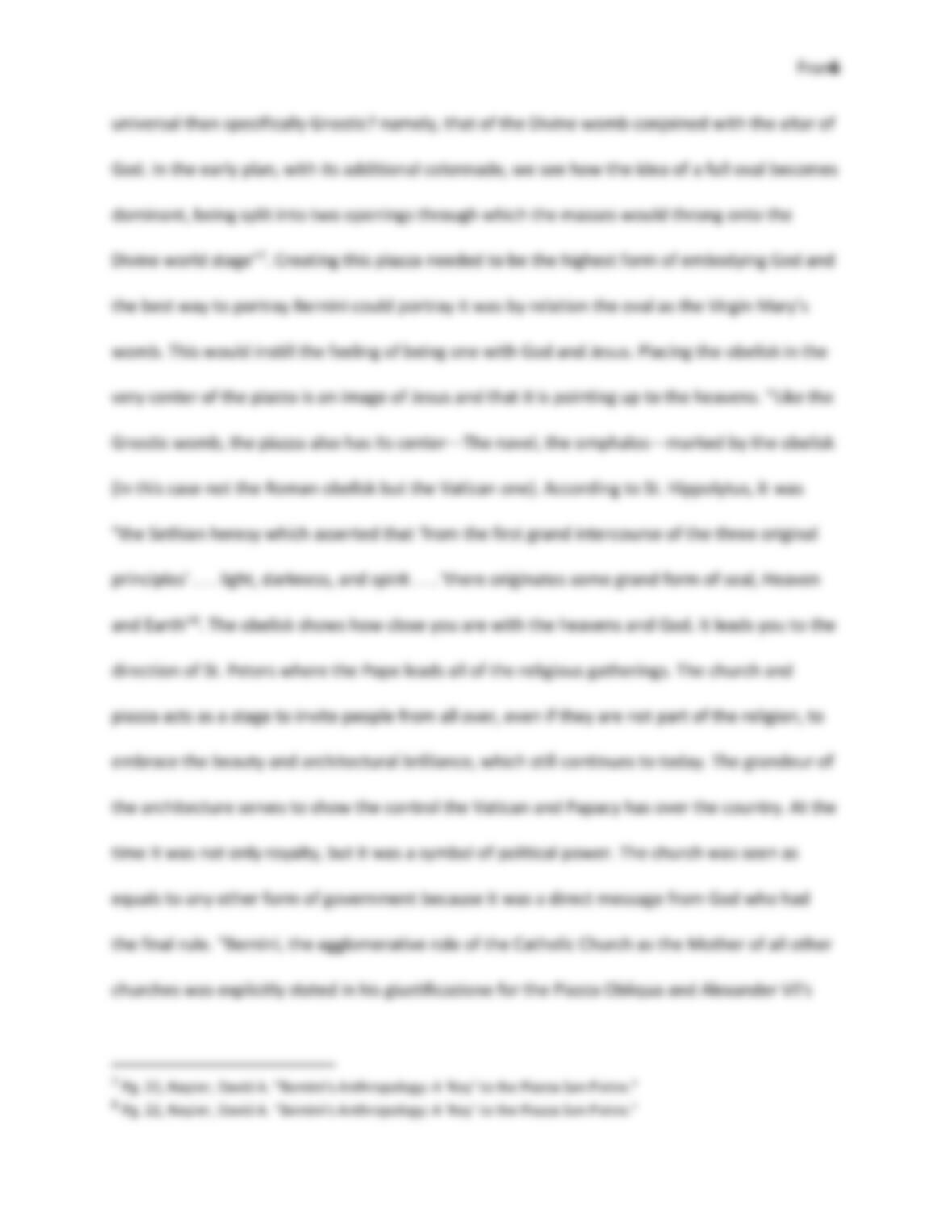
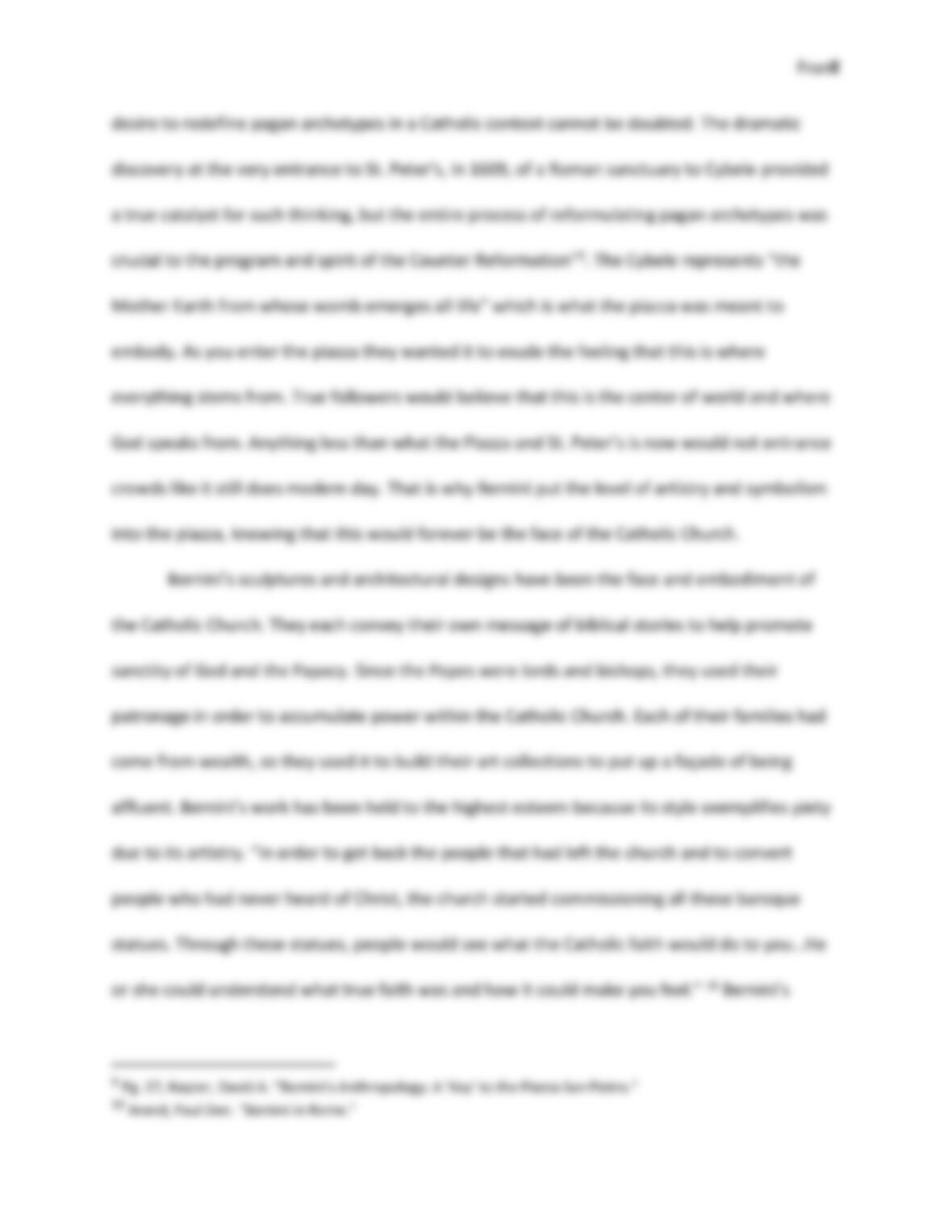
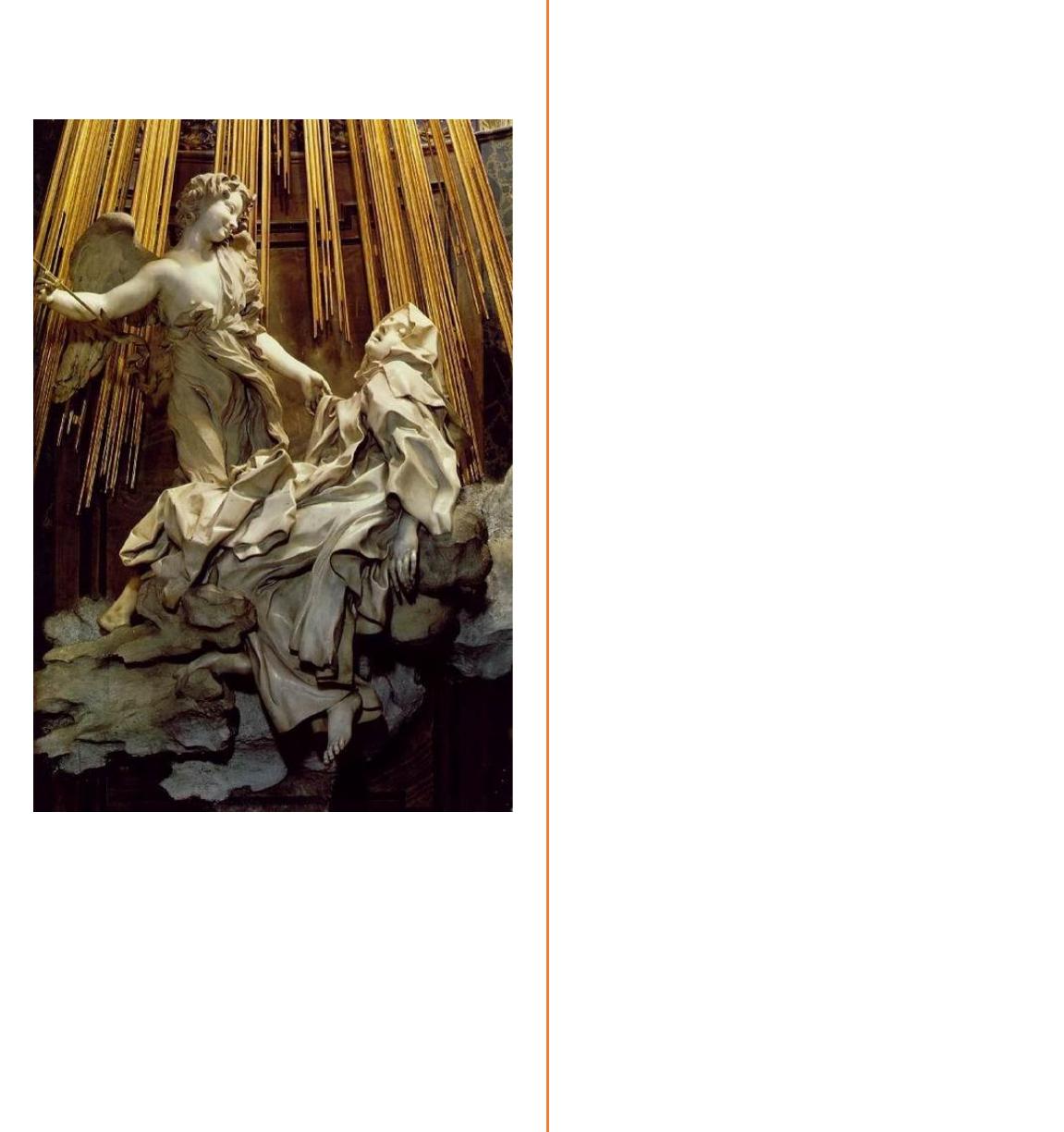
religious pieces like the statue of David, Ecstasy of Saint Teresa, and Piazza at St. Peter’s
Basilica. All of these pieces have something in common, which is the amount of detail and
embellishment that was given in order to represent opulence. The Catholic church has always
represented itself as the highest form of authority with the most power. Its copious amount of
wealth made it easy for the church to purchase beautiful pieces of art and momentous
architecture installations. “The formulations of the Council of Trent (1545–63) that the purpose
of religious art was to teach and inspire the faithful and to serve as propaganda for the Roman
Catholic Church. Religious art should always be intelligible and realistic, and, above all, it should
serve as an emotional stimulus to piety. The development of Bernini’s religious art was largely
determined by his conscientious efforts to conform to those principles”
1
. Bernini’s devotion to
the Catholic Church and the pontificates largely influenced his style of work and how vast his
production would be. Seen in both sculpture and architecture he conveys spirituality, light, and
grandeur to engage the spectators into having an overwhelming feeling of power and divinity.
Bernini’s representations of the biblical story of David, was not only created in the self-
image of the artist, but he used his talents to represent the power and presence of the biblical
story through his baroque narrative. Bernini was very transfixed on illustrating David in many
different ways. One of his most famous works is his version of the statue of David, where David
is seen in motion discharging his sling-shot in the air. The features of his face show
concentration and determination while his body represents agility and strength. He did this to
1
Hibbard, Howard. “Patronage of Urban VIII.”

Frank
3
also mirror his own self-image since he identified with that biblical character. Every illustration
that he has made of David has had personal representation either in their physical features or
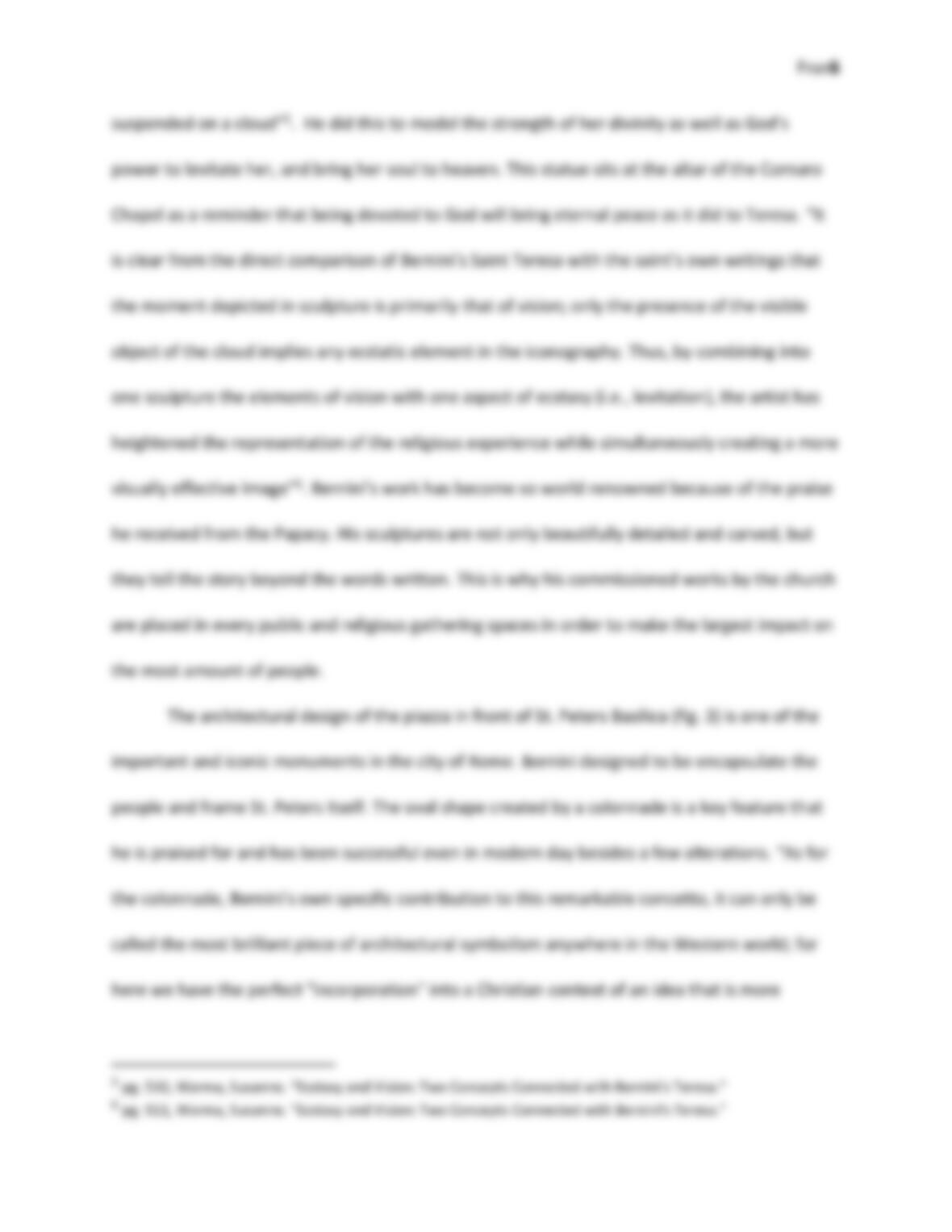
in an artistic triumph. In David with Goliath’s head (fig. 1), he portrays himself as a juvenile
David while holding the head of the lion and presents this image to Pope Urban. His artistry
allowed him to create another portrait of David strangling Goliath’s head, which became an
even more exaggerated image of power and strength. “The correspondence of this description
to Bernini’s Goliath may seem incongruous; but, rather than being a narrative depiction of
David’s triumph, the painting is an “iconic image” in which the severed leonine head, recalling
apotropaic images on antique breastplates, is the victor’s attribute. The physiognomic
characterization of Goliath, therefore, refers not his prowess, but to David’s. David’s own
deeply set, piercing eyes and “aquiline” nose suggest an eagle. According to Della Porta,
individuals possessing such features have the eagle’s royal qualities, the innate magnificence of