Appliche
mBUAD 6600
SCMers
Meagan Frances Ayers
James Franks
Emelie Hall
Jean-Hubert Trahan
Instructor:
Sachin
Modi
Objective/Scope
The purpose of this article is to determine whether or not Applichem should keep their production of
Release-Ease within their current plants or move production to another location. This new location
would be one, or more, of Applichems’ production locations including: Gary (Indiana/USA), Mexico,
Frankfurt (Germany/Europe), Sunchem (Japan). To determine this, a cost analysis must be conducted to
verify the benefits of keeping production of Release-Ease in their current locations, or moving
production to another location. When determining the cost benefits, transportation and production cost
differences must be considered.
Recommendations
Through careful analysis, it is recommended that Production of Release-ease be maintained in Gary,
Indiana. Instead of abandoning the Gary production facility due to its lack of production efficiencies,
measures to improve the facility should be implemented.
Ceasing production of Release-ease in Japan is also recommended. Although the plant in Japan is more
technologically advanced, its high production costs and low productivity levels are valid reasons for
eliminating the Release-ease production lines. It is recommended, however, that the plant continues its
current production of the other product it manufactures. The plant will also be useful in conducting
R&D for other Applichem products.
Changes in the production volumes among the various plants are also recommended. These changes will
increase production to full capacity for some plants while reducing transportation costs.
Analysis
Cost Analysis
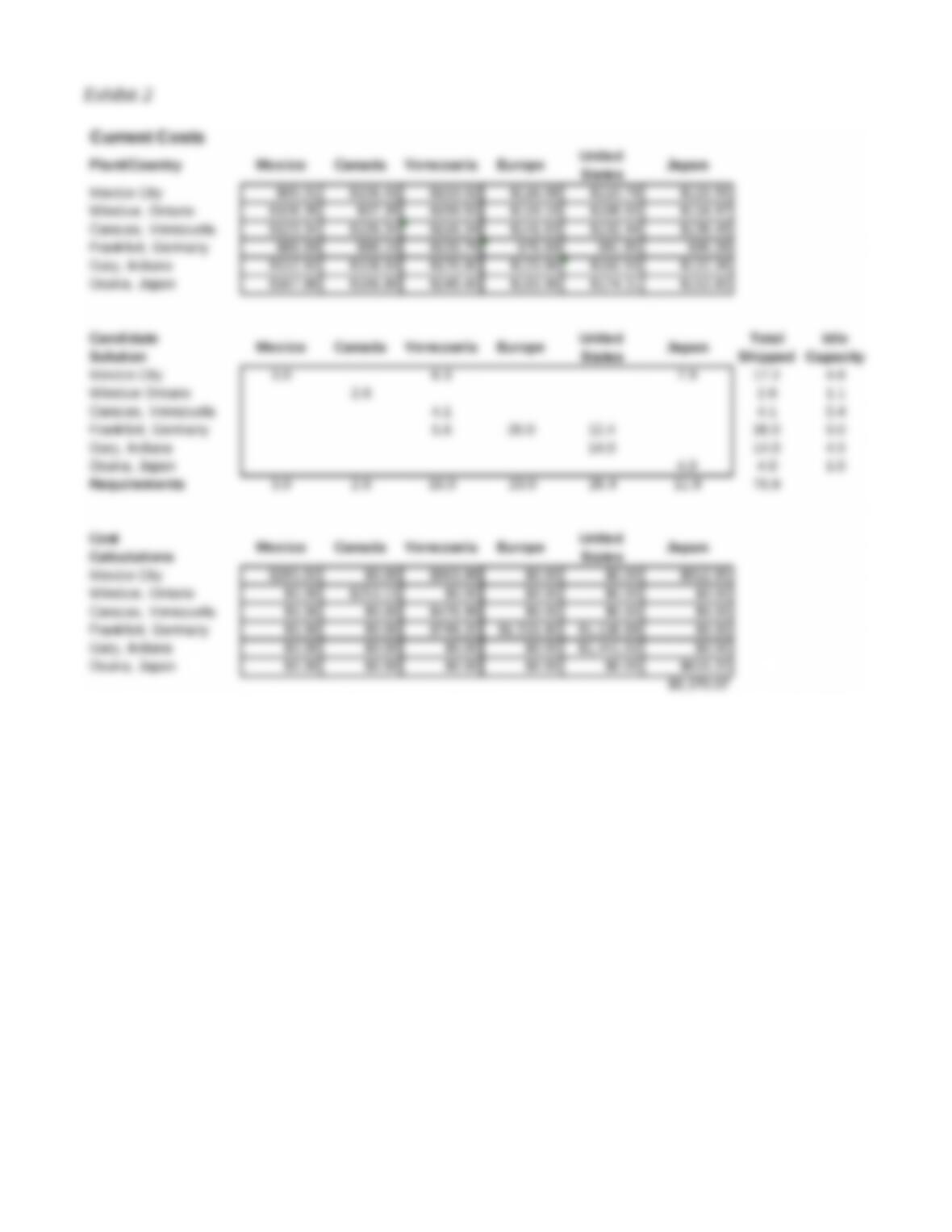
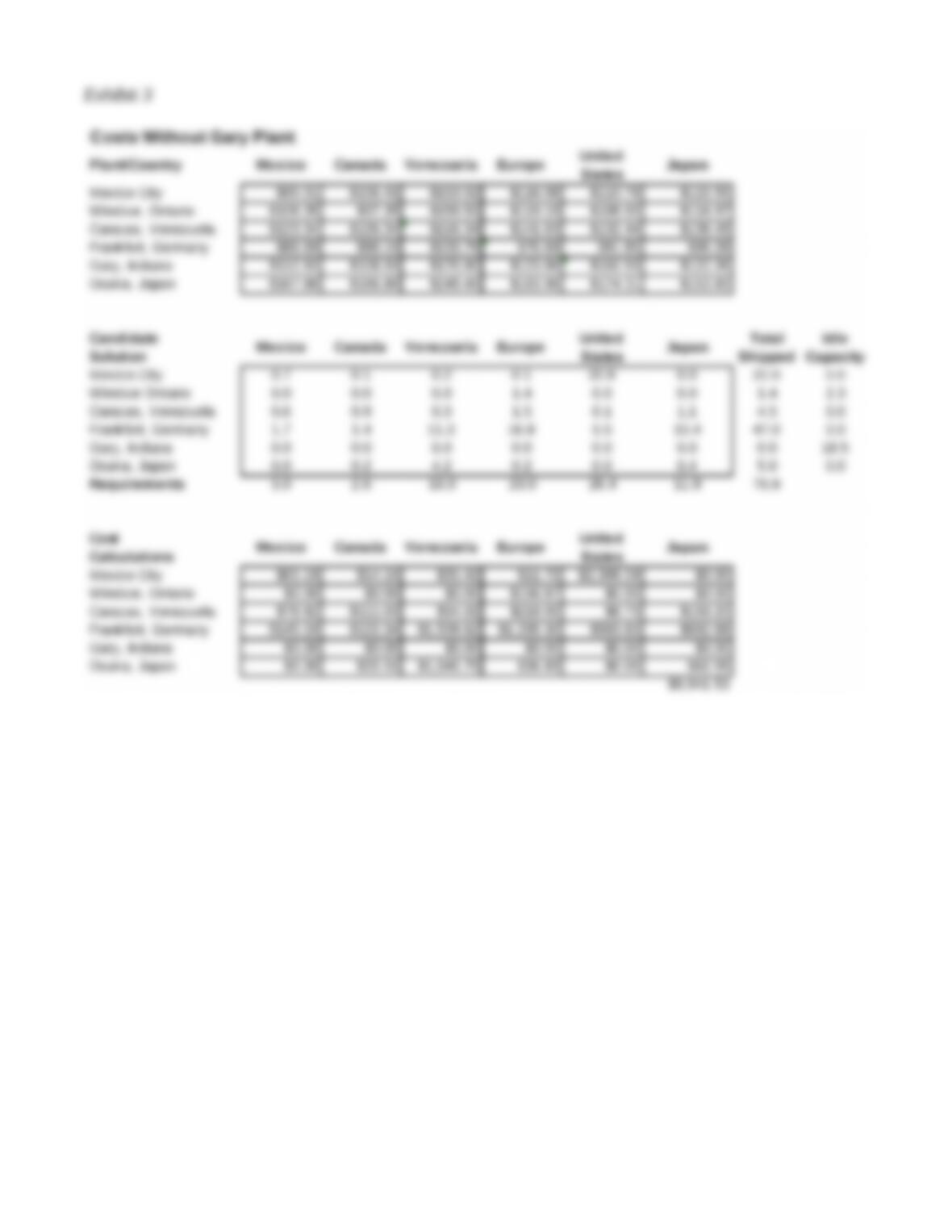
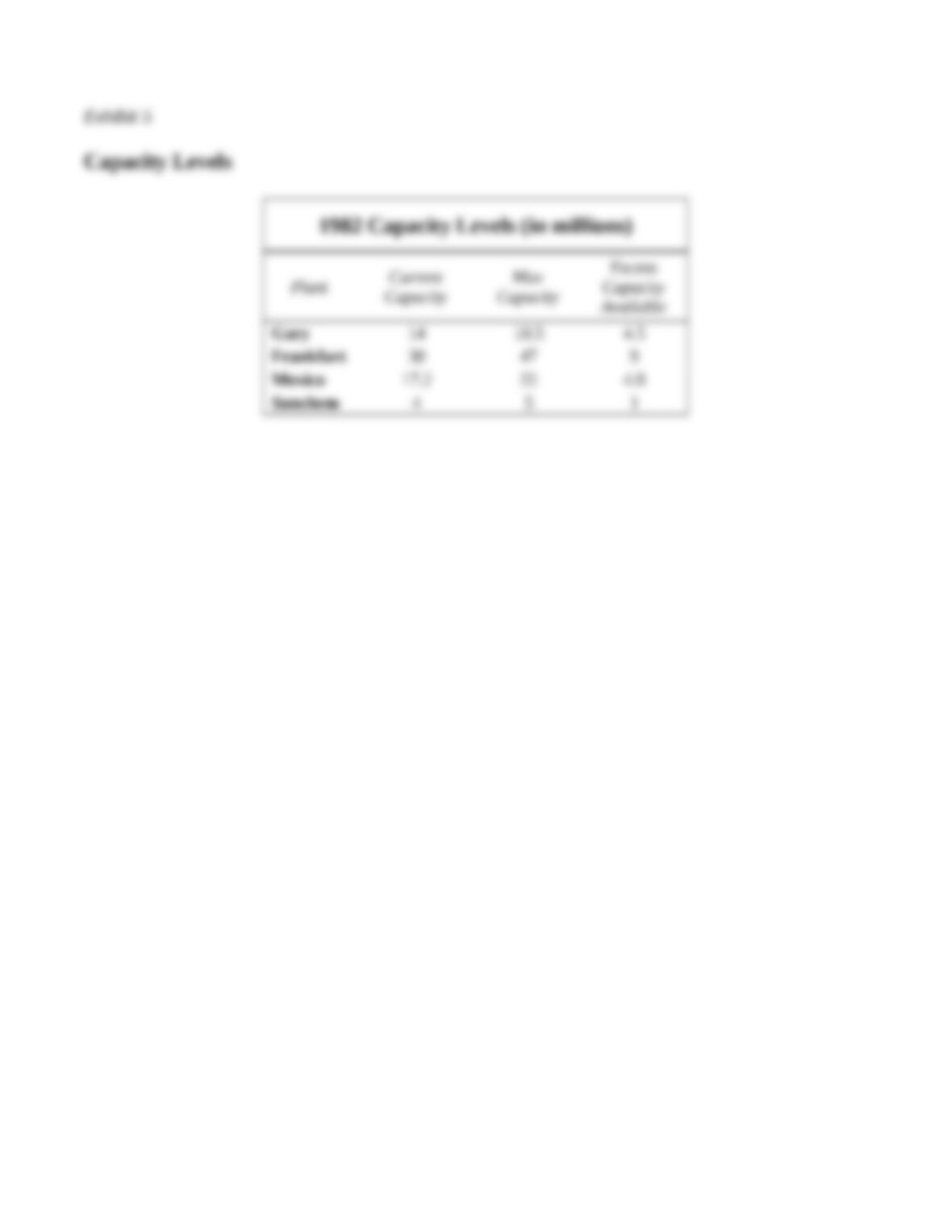
The first observation that can be made about Applichem’s current production is the amount of excess
capacity that could be used in its Frankfort, Gary and Mexico plants. (Exhibit 2) Import duty costs, as
well as, important transportation costs have to be minimized in order to optimize efficiency of the
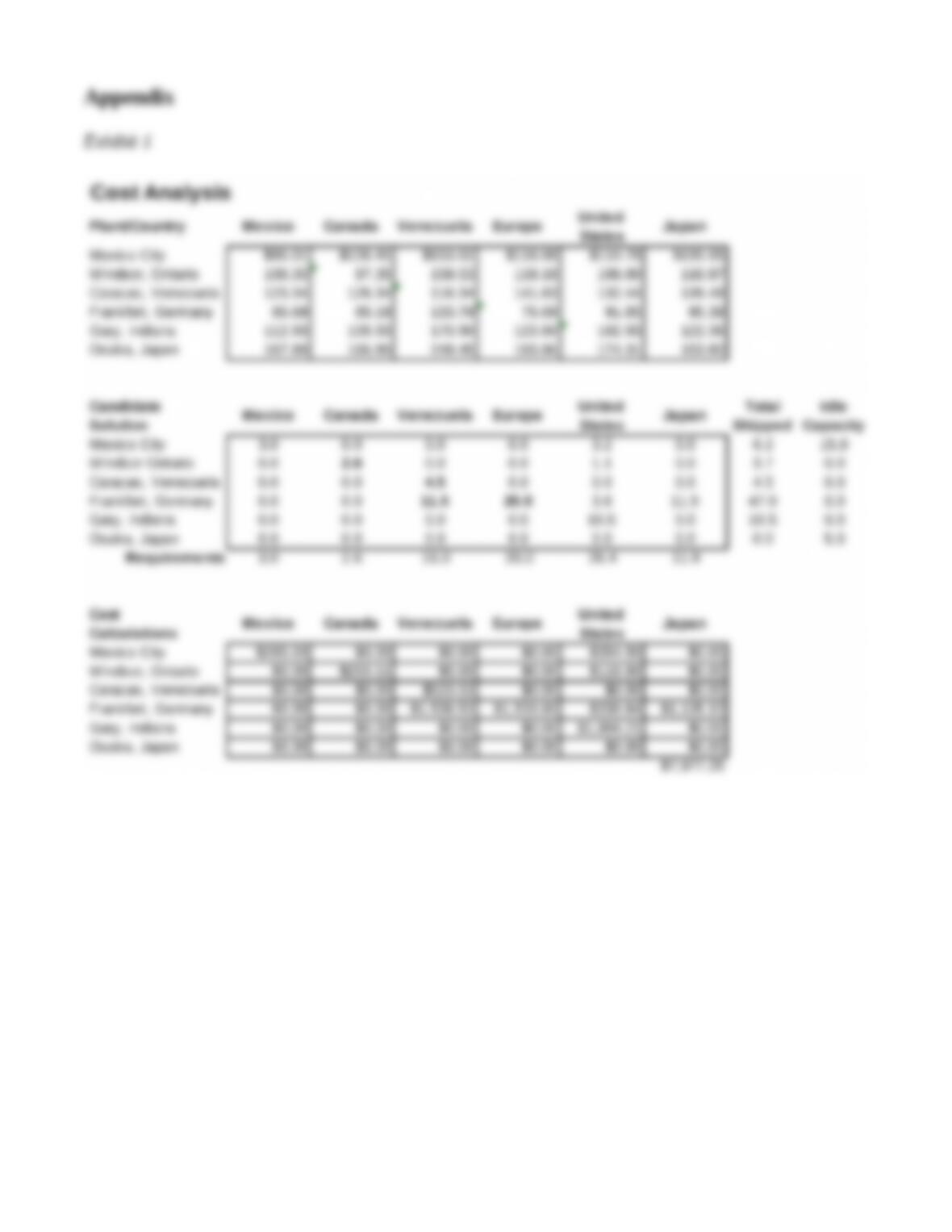
manufacturing. Three different analyses were performed to evaluate the costs of manufacturing; if Gary
was shutdown (Exhibit 3), a cost optimization was calculated (Exhibit 1), and status quo was maintained
(Exhibit 2).
At the current level, it costs Applichem $83 million to produce and ship its worldwide production. To
shut down Gary, every other plant would have to be used at maximum capacity and total costs would
increase by $4 million per year if demand stayed constant. The cost optimization analysis suggested that
the Japanese plant should not be used to manufacture the Release-ease product. The cost decrease
generated by the plant closure would be around $4 million from its current costs.
By eliminating the production in Japan, volumes would have to be readjusted in the other plants. Both
Gary and the Frankfort plants would have to operate at full capacity. Reduction in production at the
Mexico plant was forecasted to reduce overall costs. This would give Applichem excess capacity that it
could use again in the future if demand were to grow.
Keeping the Gary plant protects Applichem from exchange rate risk when importing in the US.
Importing all of the US demand would expose Applichem to a lot of variability in its costs and revenues
making it difficult for them to forecast properly. Demand in the US would also be greatly affected if the
US dollar were to go low for a long period of time. Since the US market is Applichem’s most important
one, the risk is too great to shut down the Gary plant.
Productivity Analysis
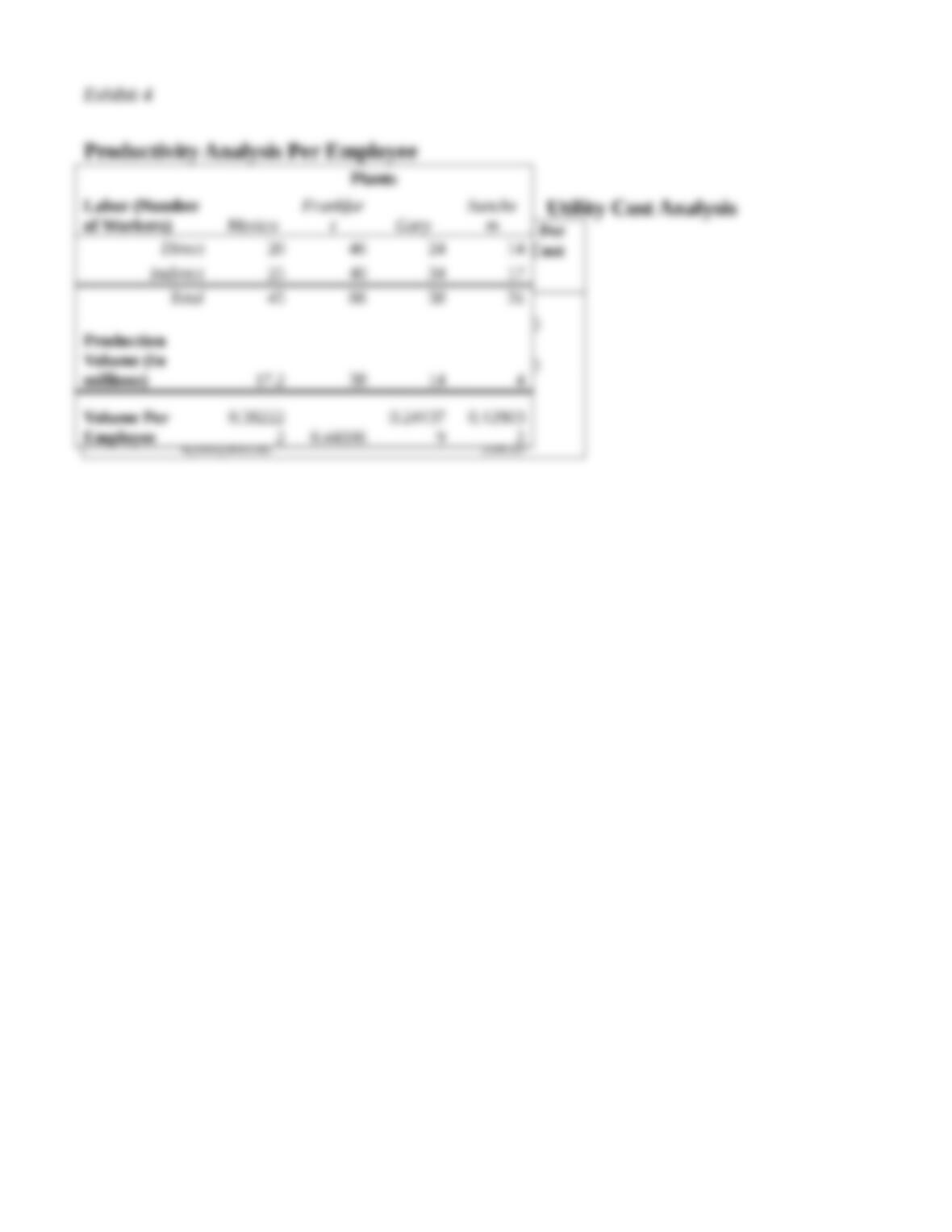
Two productivity analyses were performed to evaluate which plants were manufacturing more
efficiently. (Exhibit 4) The volume per employee analysis confirmed the choice to shut down the
Japanese plant since they have the lowest productivity ratio. Since Gary has the second lowest it will be
important to improve their efficiency. As for Frankfort, it is the leading plant in employee output and
taking a closer look at their operation could be beneficial in improving the US plant.
Same results are given by the volume per utility cost dollar produced analysis. Frankfort is far ahead and
Japan is trailing back giving Applichem no other choice but to strongly consider shutting production of
Release-ease in Japan.
Other Advantages of Release-Ease Plants
Gary:
The plant has very loyal employees, which can lead to low employee turnover rates. Not
only are employees loyal to Applichem as a company, but they are also loyal to the plant
manager as well. This can be an implication of how well Gary plant employees will react
when new production process and training programs are implemented.
Frankfurt:
With only 600 employees and about 38 million pounds of ease release made annually, the
employees at the Frankfurt plant are more productive than any other plant.
One piece of equipment used to produce Release-ease was installed between 1971 and
1974, and the other was installed in 1961 and has had major modifications added to
increase capacity.
The employees at Frankfurt implement their own processes to improve Release-ease.
There are only 2 formulations for Release-ease.
Release-ease is only produced in one standard size: 50-kilo bags.
Mexico:
Release-ease is only produced in one standard size: 50-kilo bags.
Employees at the Mexican plant are able to maintain process improvements suggested by
the plant manager in Frankfurt
Plant equipment used for the production of Release-ease was installed in 1968 with
modifications made in 1978.
Japan:
The plant in Japan only produces one other product for the plastic industry. This allows
the plant operators to concentrate on the production and improvement of Release-ease
more so than the other plants.
Release-ease is produced in two standard sizes: 1/2-kilo bags and 1-kilo bags
The Japanese plant is more technologically advanced than other Release-ease plants. The
plant conducts a lot of R&D functions which includes laboratory testing, plastics
engineering, and environmentally-friendly process changes.
Other Disadvantages of Release-Ease Plants
Gary:
The equipment used for the production of Release-ease was installed between 1959 and
1964, which is outdated according to an estimated useful technical life of 20 years.
Gary has 8 different formulations for Release-ease.
Release-ease is produced in 80 different package sizes.
The Gary plant produces 19 other products other than Release-ease. The plant was also
designed to be a batch operation, not a streamline operation, which causes production to
switch between different product lines.
Frankfurt:
The Frankfurt plant produces 12 other products in addition to Release-ease, which means
its production processes are not solely concentrated on the production of Release-ease.
Mexico:
The Mexico plant produces 6 other products in addition to Release-ease, which means its
production processes are not solely concentrated on the production of Release-ease.
Educational levels of employees are lower in Mexico than in other plants.