AP Macroeconomics Studyguide
Basic Terms for Economics
– Economics: the study of how scarce resources are used to satisfy unlimited wants.
– Resources: we never have enough to satisfy all of our wants.
– Scarcity: the lack of a product or resource.
– Shortage: a short term lack of a product or resource.
– Necessities: goods which satisfy basic human needs.
– Luxuries: goods which consumers want, but don’t need
– Consumer Goods: products used for immediate consumption. For example: cars, food, toys.
– Producer Goods: products used to make consumer goods. For example: hammer and cranes.
– Three Factors of Production:
o Land: natural resources such as trees, water, or minerals
o Labor: mental and physical labor such as autoworkers or scientists.
o Capital: factories, machines (producer goods), and money.
– Rational Self Interest: economists believe that people choose options that give them the
greatest satisfaction. People use available information, weigh costs and benefits, and make a
self-interested choice.
– Macroeconomics: macroeconomics is the study of the economy as a whole.
– Positivist Economics: focus on measurable outcomes.
– Normative Economics: the question of what we should do. The analysis of the economy as an
ethical value judgment.
Production Possibilities Curves and Tradeoffs
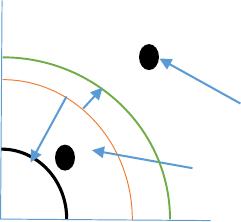
– Production Possibility Curve (PPC) and Tradeoffs
Growth
Item 1 Decline Beyond economic means of production
Inefficiency, producing under the capacity of production
Item 2
o The Production Possibility Curve shows the tradeoff between spending projects or
production of one good to another.
o A shift on the PPC signifies either economic growth or economic decline.
o Some Assumptions of the Production Possibilities Curve:
1. Resources are fully employed.
2. Production takes place over a specific time period.
3. The resource inputs, in both quantity and quality, used to produce the
goods are fixed over this time period.
4. Technology does not change over this time period.
o Why do we care about Tradeoffs?

There is a scarce amount of resources available so decisions are needed to
be made to maximize utility of said resources.
The costs of doing one thing over the other is considered the opportunity
cost. The opportunity cost is the value of the foregone good, or the next
best alternative.
o How does the curve shift?
There are two key factors:
1. Change in the amount of productive resources in the economy.
2. Changes in technology and productivity.
o Adam Smith
Key arguments:
Division of labor means that production is more efficient
People should pursue self-interests because competition is good
since it means cheaper products.
The government should keep its hands off the economy
o This is also known as laissez faire
Invisible Hand – profits drive the economy with self-interests.
Free trade is crucial – nations benefit by specializing in production
of goods and by trading for items that they are less efficient in
producing.
o Therefore, it would be logical to let countries do what they
do best for what they need.
o Two types of advantages in free trade:
Absolute:
Economists look at the amount of labor hours/costs it will take to
produce a product.
Comparative:
Theory of Comparative Advantage: even nations with absolute
advantages still benefit from trade. Both nations trading would
benefit from trading products if they specialized in items that they
have the lowest opportunity cost to produce.
o Calculating Opportunity Costs
The opportunity cost of a product is:
Opportunity Cost = 𝐹𝑜𝑟𝑔𝑜𝑛𝑒 𝐺𝑜𝑜𝑑 (𝑇ℎ𝑒 𝑂𝑡ℎ𝑒𝑟 𝐺𝑜𝑜𝑑)
𝐺𝑜𝑜𝑑 𝑌𝑜𝑢 𝐴𝑟𝑒 𝐶𝑎𝑙𝑐𝑢𝑙𝑎𝑡𝑖𝑛𝑔 𝑂𝑝𝑝𝑢𝑟𝑡𝑢𝑛𝑖𝑡𝑦 𝐶𝑜𝑠𝑡𝑠 𝐹𝑜𝑟
Basic Microeconomics Supply and Demand
– Demand
o Definition: the willingness and ability for consumers to pay for goods and services.
o Law of Demand:
As prices go up, the demand goes down
As prices go down, the demand goes up
o The Graph

P1
Price D
Q1
Quantity
o Factors that Influence the Shifts in Demand:
Non-price factors like people’s tastes shifts the curve.
Substitute products, or products that replace another product, can find an
increase demand or a decrease in demand depending on the costs of the
product that it is substituting.
Complementary products, or products that go with another product, can
find an increase in demand if the product it complements has an increase of
demand.
The Income Effect: as consumers’ incomes fluctuate, so does the level of
demand.
Increase in wages increase the demand for goods
Decrease in wages decrease the demand for goods
Population shifts can also effect the level demand for a product.
Future expectations of prices can lead to a change in the demand for goods.
– Supply
o Definition: the quantity of goods that producers will supply at various prices.
o The Law of Supply:
As prices go up, the quantity supplied will increase
AS price goes down, the quantity supplied will decrease.
The Law of Supply holds true because businesses are motivated by profits.
o The Graph:
P1 S
Price
Q1
Quantity
o Factors that Influence the Shifts in Supply:
The Price of Inputs: When the cost of land, labor, tax/tariff, and capital
change in the process of production.
High costs of input reduce the amount supplied whereas low costs of input
increase the amount supplied.
Technological improvements make the production process more efficient
and thus increases the level of supply
An increase in the amount of sellers or businesses in a market will lead to an
increased level of supply. The converse of this is also true.
Increase of quotas, tariffs, and taxes influence supply as well:
Higher taxes increase costs and reduce supply
Lower taxes decrease the costs of production and increase the
supply.
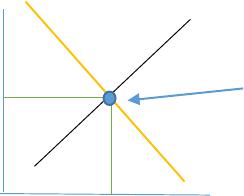
– Equilibrium
o Definition: The point where the supply curve and the demand curve intersects.
This is also known as the Market Clearing Price
o The Graph:
P1 S Equilibrium Point
Price D
Q1
Quantity
– Goods and Utility and How That Effects Demand and Supply:
o Normal Goods: products for which the demand increases when the income of
people increase. This also applies conversely when the income lowers.
o Inferior Goods: products that decrease in demand, even when the income of people
rise.
o Diminishing Marginal Utility: As a person increase consumption of a product, there
is a decline in the marginal utility that person gets from consuming each additional
product.
o Diminishing Marginal Returns: This happens when a factor of production is
increased and at some point, each additional unit produced will decline. For
example, adding more workers when production is near 100% will decrease
marginal output.
– Indeterminate Shifts in Supply and Demand:
o When both the supply and the demand curves move simultaneously, the movement
of prices and quantities can be indeterminate because we don’t know which one is
more decisive than the other.
o Example of the Indeterminate Graph Shift:

S1
S2
P1
Price D1 D2
Q1
Quantity
Government Policy and Macroeconomics
– Price Adjustments
o Price Ceiling: A government policy which sets the legal maximum price that may be
charged for that good. Ceilings cause a shortage in the good.
Price Level
S
P1
PCeiling D
Qs Q1 QD