301
EurAsian Journal of BioSciences
Eurasia J Biosci 14, 301-307 (2020)
Anthropogenic load on water resources of Kazakhstan
A. R. Medeu 1, S. K. Alimkulov 2, A. A. Tursunova 3, A. B. Myrzakhmetov 4,
A. A. Saparova 5, G. R. Baspakova 6*, K. M. Kulebayev 5
1 Doctor Sc. Geography, Prof, Academician of the Ministry of Education and Science of the Republic of Kazakhstan,
Director, Institute of Geography, Almaty, KAZAKHSTAN
2 Cand. Sc. Geography, Deputy Director, Institute of Geography, Almaty, KAZAKHSTAN
3 Cand. Sc. Geography, Head of the laboratory of “Water resources”, Institute of Geography, Almaty, KAZAKHSTAN
4 PhD, Senior Researcher, Institute of Geography, KazNU named after Al-Farabi, Almaty, KAZAKHSTAN
5 Researcher, Institute of Geography, Satbayev University, Almaty, KAZAKHSTAN
6 Junior Researcher, PhD student, Institute of Geography, Kazakh National Agrarian University, Almaty,
KAZAKHSTAN
*Corresponding author: G. R. Baspakova
Abstract
In the article the main factor affecting water resources – irrevocable water consumption in the main
river channels and administrative regions of the Republic of Kazakhstan, the degree of its impact on
water resources is considered. Quantitative assessment of water resources use was carried out on
the basis of data analysis of the statistical form of the departmental statistical observation 2-TP (water
farm) and basin inspections. The most complete annual data are available only since 1992. For earlier
years, water consumption accounting is not systematic and data are sometimes incomplete and
contradictory. In this regard, this study uses data for the period 1992-2015. Anthropogenic changes
in river flow at reference points in the main river channels draining the waters of a certain water
collection were determined, channel water balances were compiled, transformations of water balance
elements in each section were studied and compared with real water-intake facilities, and the share
of irrevocable water consumption in certain sectors of the economy was determined. Using data on
water consumption, the impact of water consumption on water resources was assessed by comparing
the water resources available in the region with the volume of water used according to the so-called
water load criterion. It is characterized by the capacity factor of water resources Ccap, equal to the
ratio of the percentage of total water consumption to renewable water resources. This assessment
was carried out for each WMB, as well as for all administrative regions of Kazakhstan.
Keywords: water resources, anthropogenic changes, water consumption, method of hydrological
analogy, method of water balance, anthropogenic load, projected estimates of water resources
Medeu AR, Alimkulov SK, Tursunova AA, Myrzakhmetov AB, Saparova AA, Baspakova GR,
Kulebayev KM (2020) Anthropogenic load on water resources of Kazakhstan. Eurasia J Biosci 14:
301-307.
© 2020 Medeu et al.
This is an open-access article distributed under the terms of the Creative Commons Attribution License.
INTRODUCTION
Within large water management basins, water
resources are usually affected simultaneously by many
anthropogenic factors. One of the main factors affecting
the quantitative characteristics of river flow is water
withdrawal from water sources or water consumption.
The scale of the impact of water consumption on water
resources is determined by the ratio between the
parameters of water consumption and the
characteristics of the water body from which water is
taken and where it is discharged after use. Depending
on these ratios, water consumption can have a large
impact on small, medium, and sometimes large river
systems, while the conditions for the formation of flow in
the water collection do not change much.
Water resources on the territory of the Republic of
Kazakhstan are distributed very unevenly. Water
resources are one of the most important components of
the environment, a renewable, limited and vulnerable
natural resource. They ensure the economic, social, and
environmental well-being of the country’s population and
the existence of the region’s flora and fauna.
Water resources change over time and space,
fluctuations are mainly determined by climate factors,
but recently, namely since the second half of the XX
century, the role of anthropogenic influence is
commensurate with natural influence. It is possible to
divide the set of factors into natural and anthropogenic
ones, which differ in the nature and consequences of
their influence on water resources.
Received: June 2019
Accepted: November 2019
Printed: March 2020
EurAsian Journal of BioSciences 14: 301-307 (2020) Medeu et al.
RESEARCH METHODS
To assess the anthropogenic load, a method has
been developed based on the complex application of
various techniques, with a detailed study of the state of
irrevocable water consumption in economic sectors,
which in general can be combined into two groups
(Koronkevich and Zaitseva 2003, Water resources of
Russia and their use 2008, Voskresensky et al. 1974,
Vodogretsky 1974, Vodogretsky 1979, Shiklomanov
1976, Shiklomanov 1989, 2004, UN/WMO/SEI 1997):
1) Statistical methods – based on a joint analysis of
long-term flow fluctuations and natural factors, as well
as the dynamics of economic activity in the basin;
The methods of the first group include techniques
and methods for restoring natural flow for a period with
a disturbed water regime using regression equations
that relate the amount of flow in the range under
consideration:
– with the flow of one or a group of analogous rivers
whose regime is in a natural state;
– with the flow of the basin area that has not been
changed by economic activity or private areas of the
basin;
– with meteorological factors.
The restored series is compared with the actual ones
and on the basis of this, the change in river flow caused
by economic activity is detected and evaluated.
2) Water balance method – calculations are
reliable scenarios for the long-term impact of
anthropogenic loads on water resources in the future.
At the first stage, an assessment of anthropogenic
changes in river flow was made for the main reference
points of observations based on the method of
hydrological analogy (Table 1). The method gives quite
reliable results, although they are integral values of
changes and are limited for evaluating the role of
individual industries or types of economic activity. These
results, as the most reliable, will be used as control
materials for further detailing of anthropogenic changes.
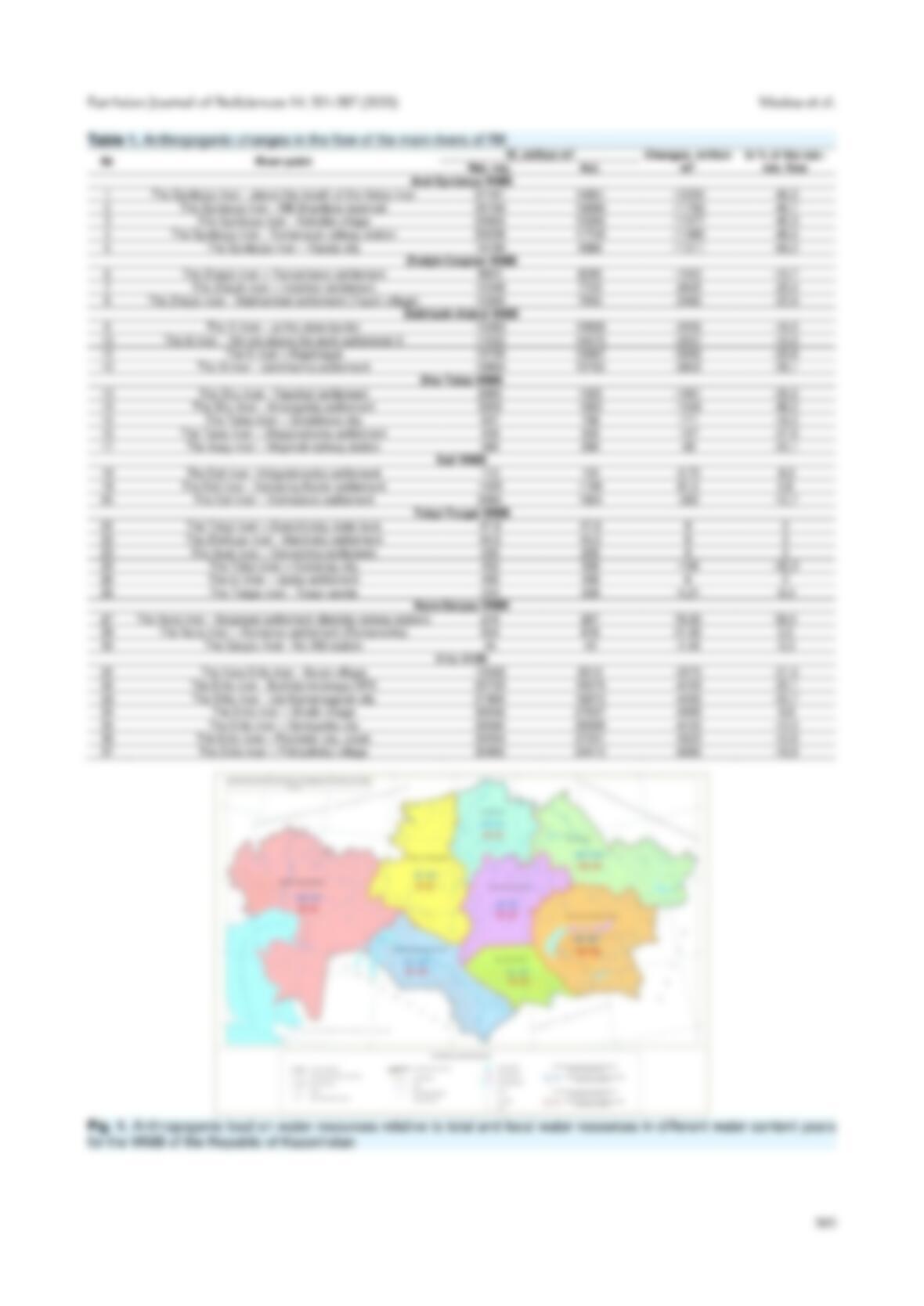
According to the results of Table 1, the largest changes
occurred in the Aral-Syrdarya, Balkash-Alakol, Ertis,
Shu-Talas, the smallest – in the Esil, Nura-Sarysu water
management basins (hereinafter WMB), which is quite
consistent with the level of water resources development
in Kazakhstan.
According to Table 1, the total anthropogenic
impacts of the main river in the basin are recorded in
each WMB in the final AC.
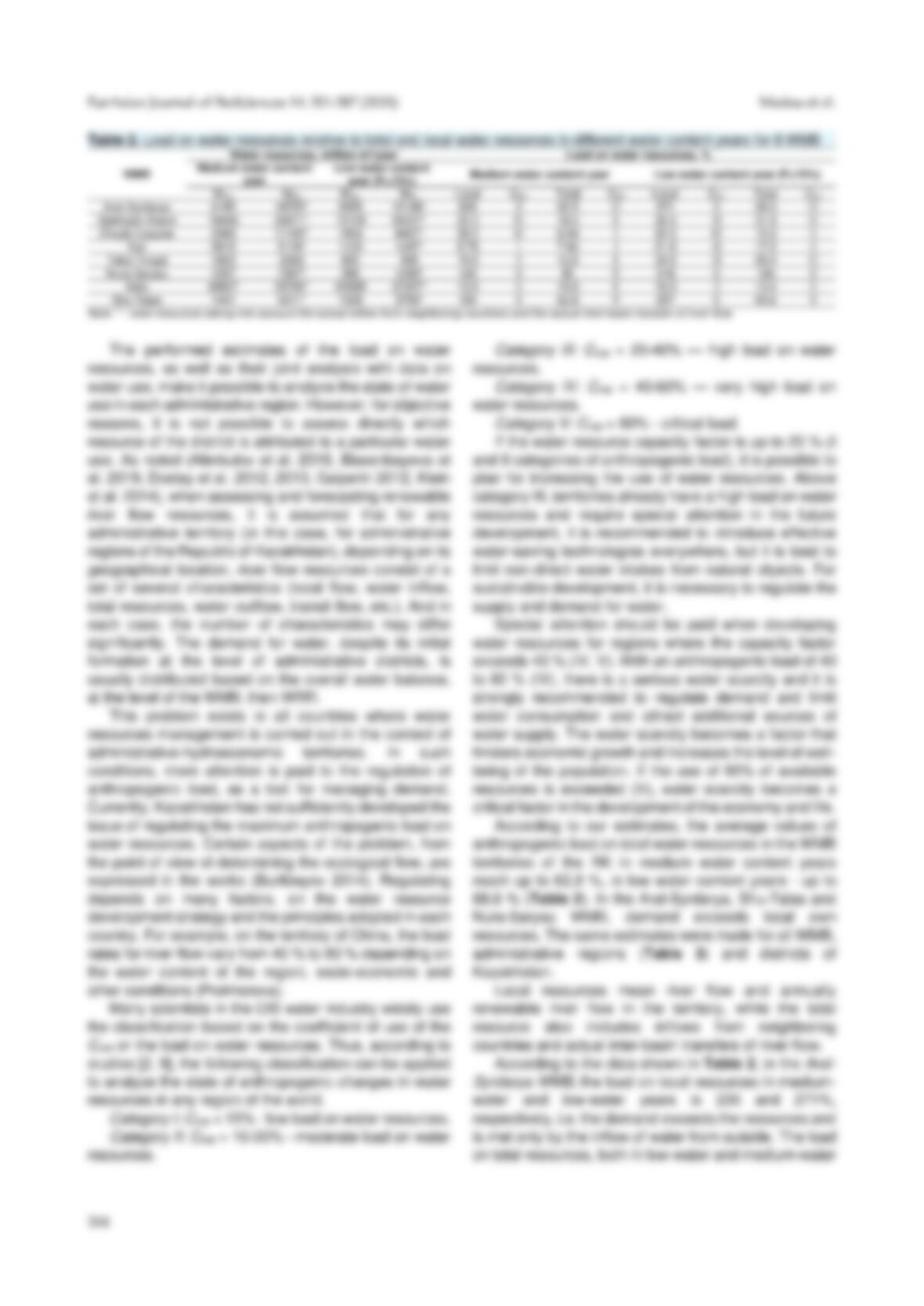
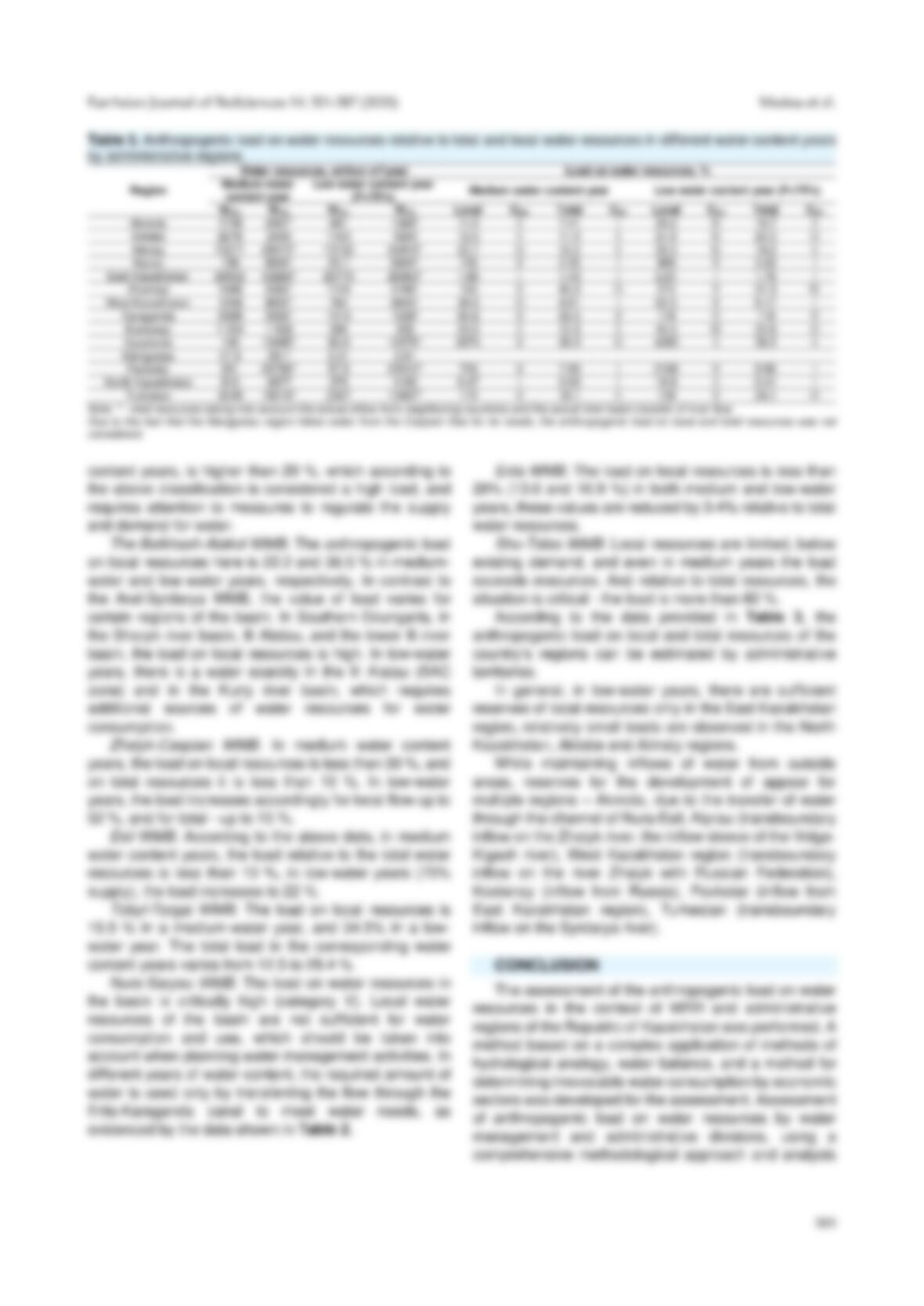
Fig. 1 graphically shows the anthropogenic load on
water resources relative to total and local water
resources in different by water content years for 8 WMB.
Local resources here refer to river flow and annually
renewable river flow in the territory, while the total
resource also includes tributaries from neighboring
countries and actual inter-basin transfers of river flow.
For all the main rivers of the RK WMB within the