1
Animal Virology
Lecture 10
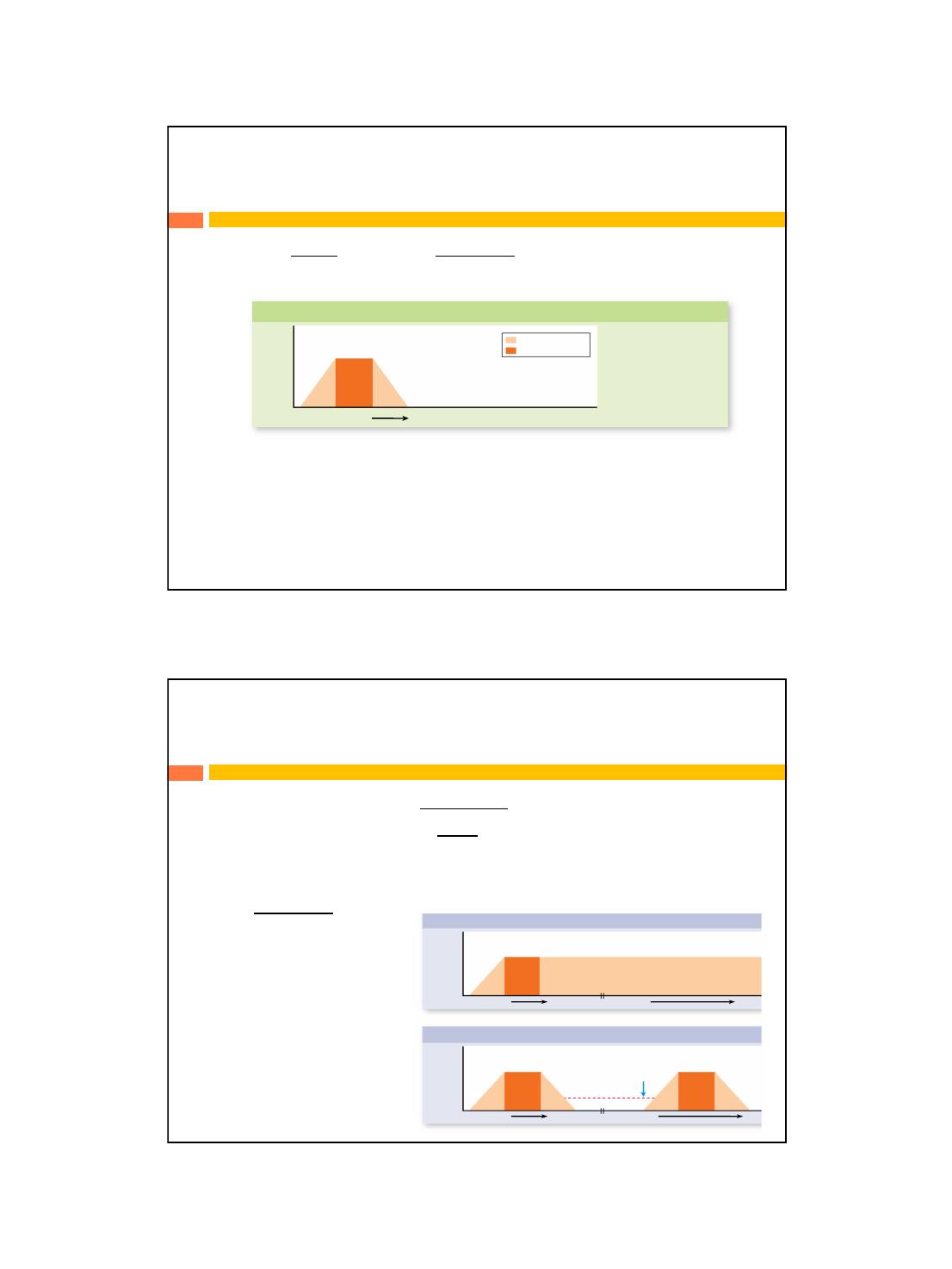
Diversity of Animal Viruses
¨Classified by the structure of their genomes
2
Types of viruses
¨Cause acute infections or persistent infections
State of Virus
Virus disappears
after disease ends.
Acute infection (influenza)
Time (days)
Infectious virions
Influenza Disease
Appearance of
symptoms and
infectious virions
Types of viruses
¨Chronic infections have continuous low level virus production
¨Latent infections remains silent
¤Silent viral
genomes are
proviruses
Chronic infection (hepatitis B)
Latent infection (cold sores)
YearsTimeDays
Days
Cold
sores
Cold
sores
Virus
activation
Non–infectious
Time Years
Release of virusHepatitis B
Appearance
of symptoms
and
infectious
virions
Appearance
of symptoms
and
infectious
virions
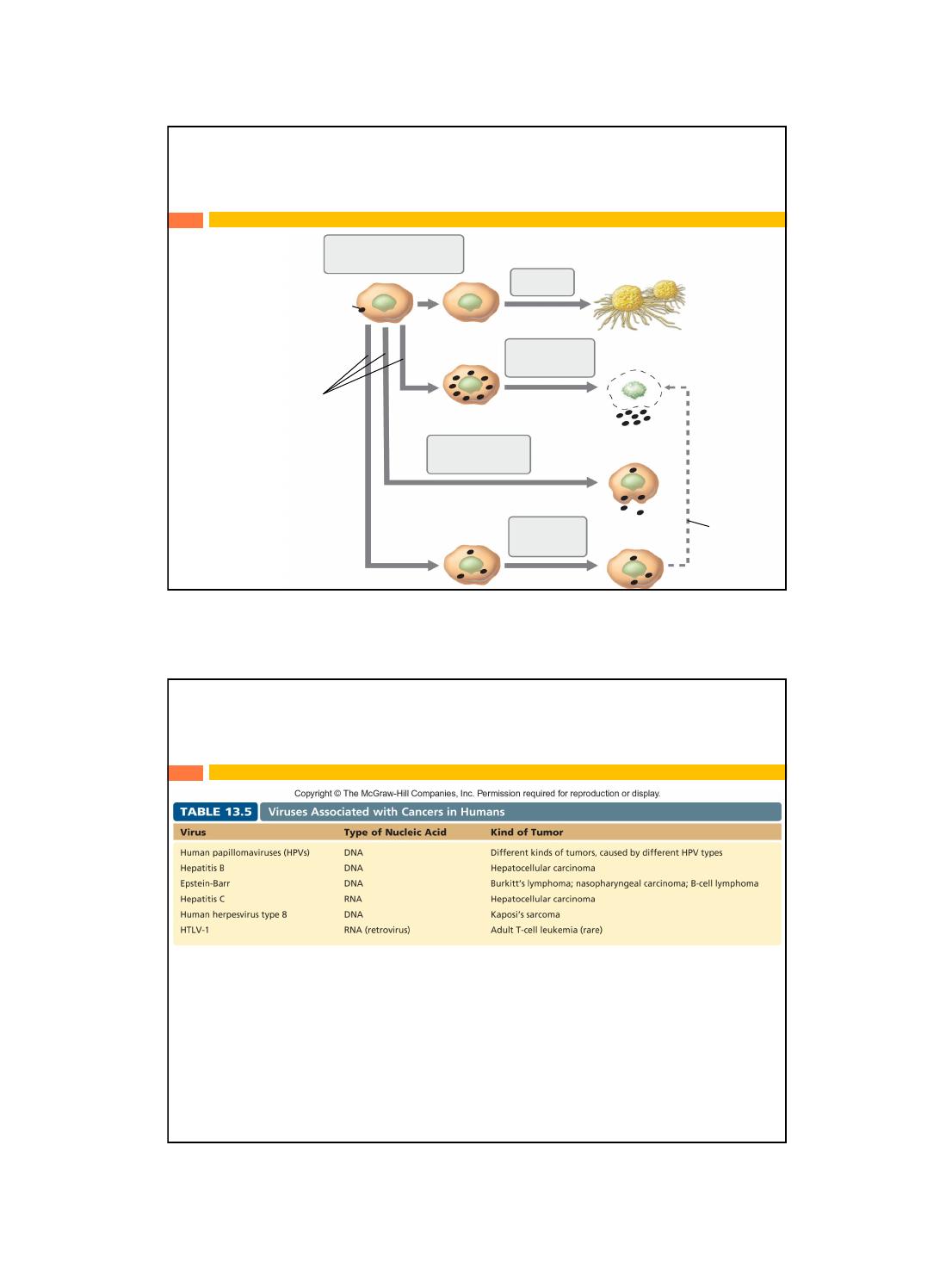
3
Formation of proviral
state and transformation
into tumor cell
Virus
Cell
Virus
multiplication
Lysis
Transformation
Persistent
infection
Latent
infection
May revert to
lytic infection
Tumor cell
division
Death of the
cell and release
of the virus
Slow release of
virus without
causing cell death
Virus present
but not
replicating
Results of viral infection
Viruses and cancers
¨Which kinds of cancer are linked to HPV?
4
Multiple Choice XC
Because the influenza virus is segmented, when two different strains
infect the same cell, a major change in the virus can occur that is
called __________.
A. hybridization
B. viral mutation
C. antigenic drift
D. antigenic shift
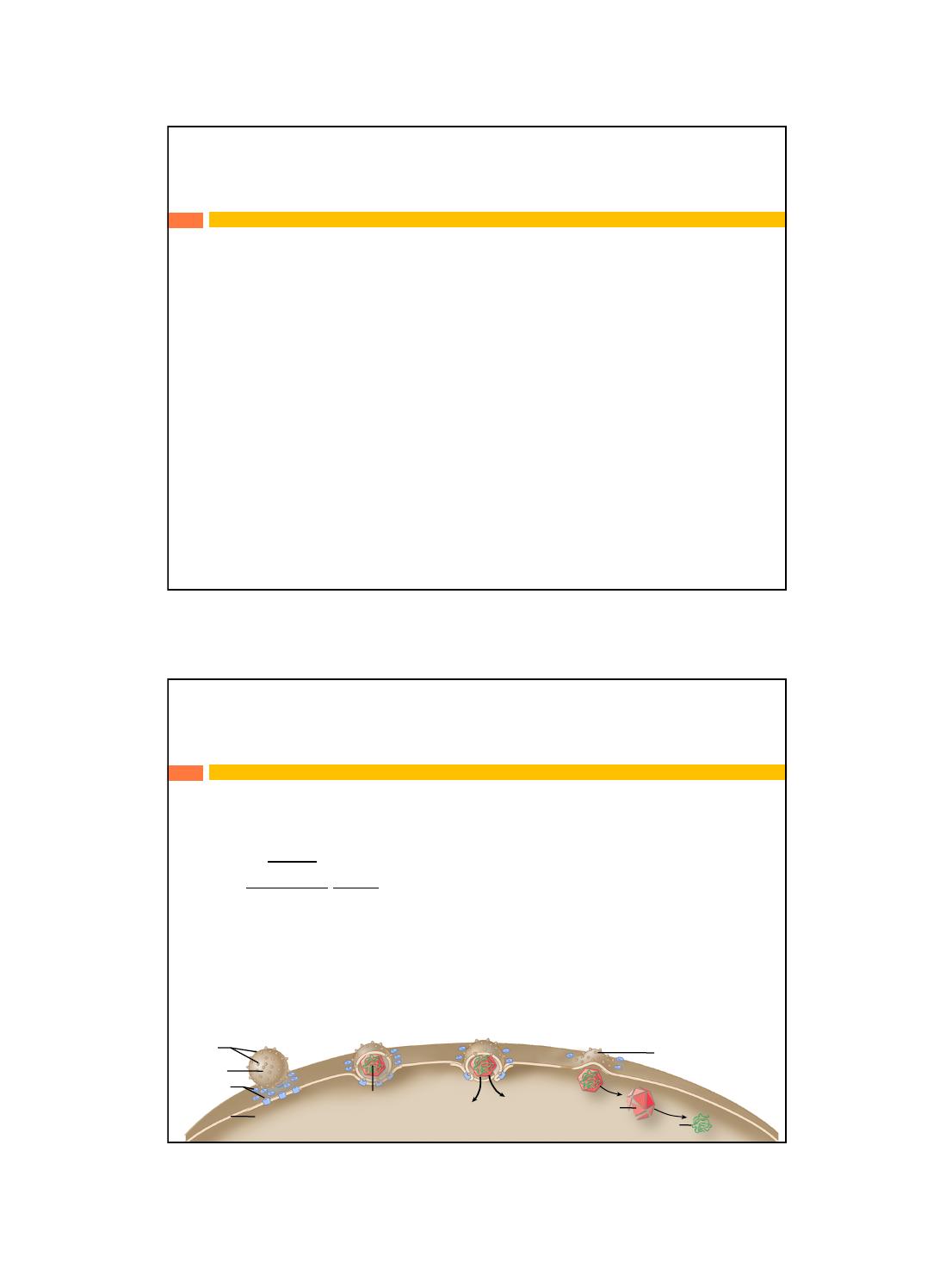
General Animal Virus Life Cycle
Membrane Fusion
1. Attachment to receptors
¤Limits the cell types that can be infected
2. Membrane fusion
3. Nucelocapsid released into cytoplasm
4. Uncoating of nucleic acid
Protein
spikes
Envelope
Receptors
Nucleic acid
Nucleocapsid
Host cell
plasma membrane
Fusion of virion and
host cell membrane
Capsid
1. 2. 3. 4.
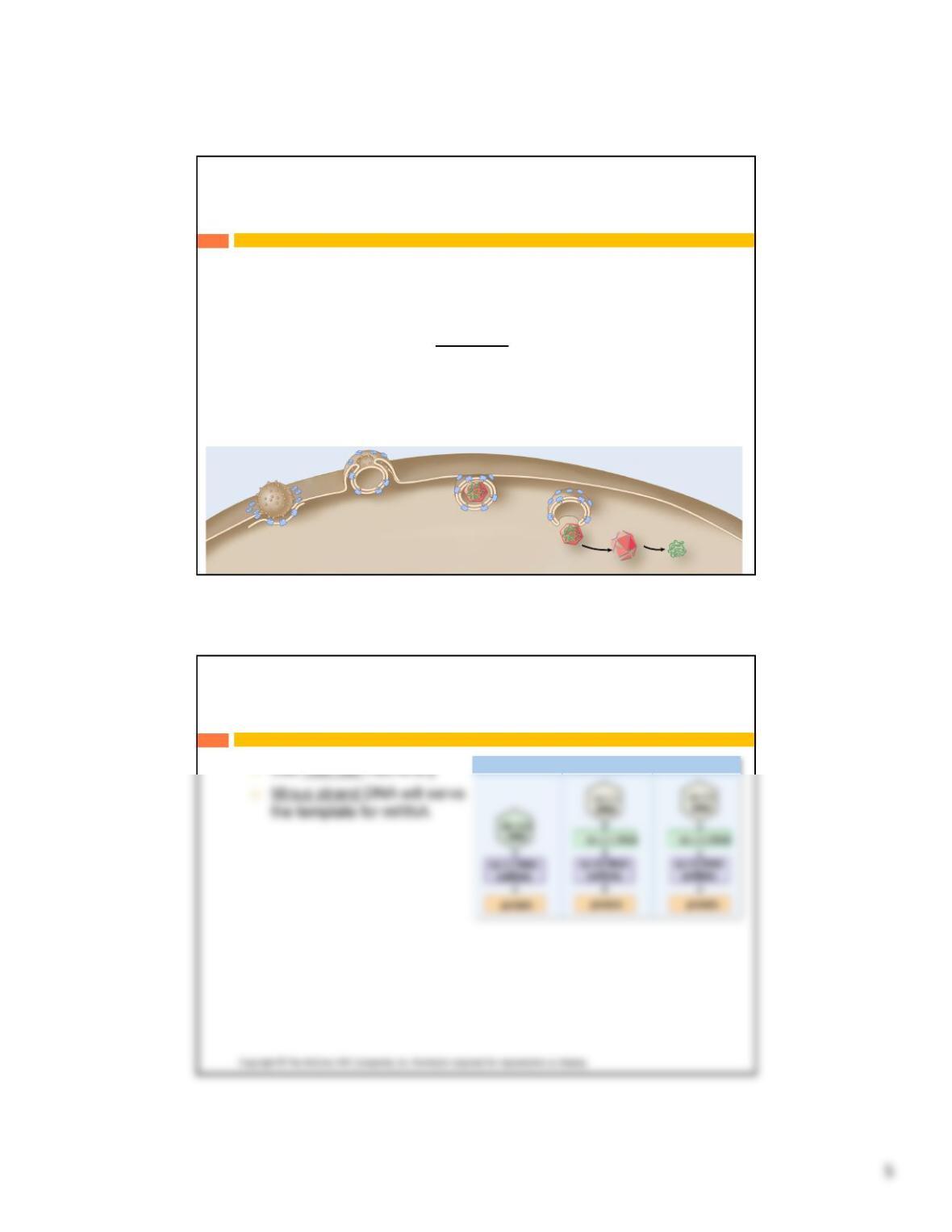
General Animal Virus Life Cycle
Endocytosis
1. Attachment
2. Endocytosis
3. Envelope fuses with the endosome
¤For naked viruses, damage endosome membrane
4. Uncoating
1.
2. 3.
4.
Viral replication: DNA viruses
DNA viruses