1. Amazon India
Since 1994, Jeff Bezos, founder, Amazon has expanded his empire from an online book
seller to the world’s largest online store, valued at more than 180 billion $ today. The
product range is diverse from diapers to electronics to grocery. The growth of Amazon’s
business has been fuelled by three fundamentals of the business: choice, price and
delivery. A vast stock selection, low prices, and fast and reliable delivery along with
effective management creates value and convenience for customers – over 215 million at
last count.
In United States, Amazon is primarily a retailer who sells directly to customers, and also a
marketplace where other retailers can list and sell their products. In India, where Foreign
Direct Investment laws don’t allow international online retailers to sell multiple brands,
Amazon operates through a marketplace model – its tenth such venture across the globe.
Marketplace accounts for 40 per cent of Amazon’s global sales.
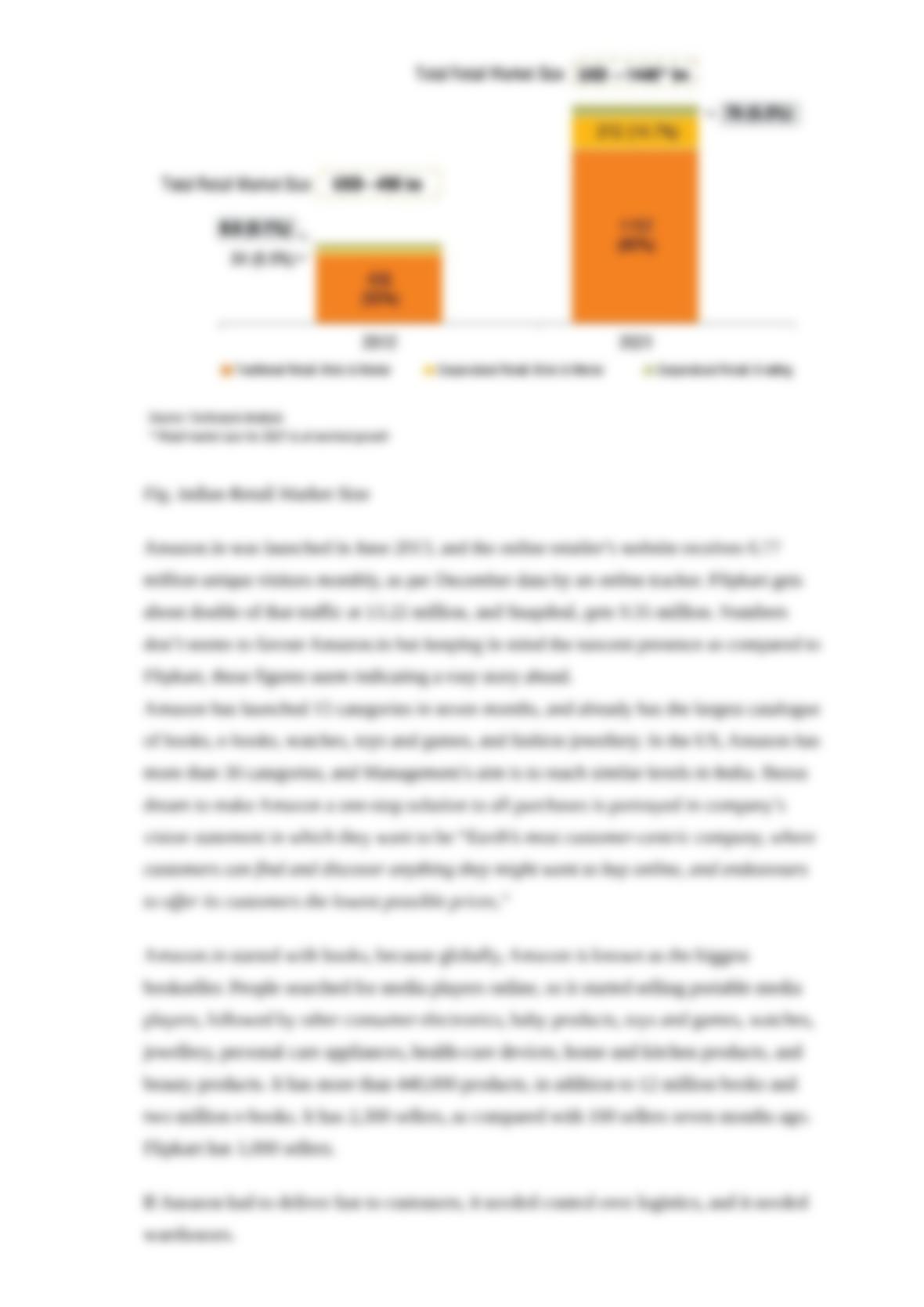
India is Bezos’s biggest new bet for simple and obvious reasons – it has the world’s third
largest Internet user base, and online retail promises immense scale. In a retail business of
about half a trillion dollars, online retail (excluding ticketing) is close to a billion dollars.
Retail consultants expect it to grow 61 times in the next 10 years. (Fig. 1)
Indian market is significantly different from Amazon’s previous markets though. The
country’s online retail industry already has a fierce player: Flipkart, the largest domestic
e-commerce company, which replicated Amazon’s model and is often called the Amazon of