Airports: The Arcata-Eureka Regional Airport
8.5-Research Paper Submission (PLG1):
Airports
The Arcata-Eureka Regional Airport (ACV)
1
Airports: The Arcata-Eureka Regional Airport
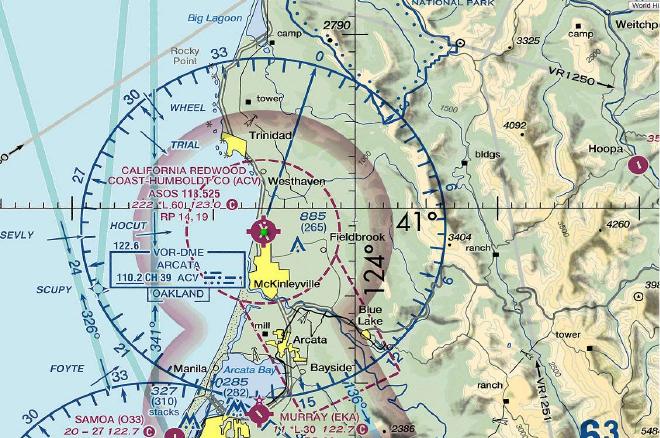
The civil airport that I’ve selected to use in my research paper is the Arcata-Eureka Regional
Airport (ACV) – a small, single-terminal airport located 15 miles north of the small, quaint town of
Arcata – about 8 miles outside of the small, unincorporated Northern California town of
McKinnleyville and resided directly on the (mostly fogged in) coastal shoreline which poses its
challenges for all air traffic in the area, which is the reason for its construction by the U.S. Navy during
Second World War: to test defogging systems. The airport is co-located with the command center (and
primary facilities) of the U.S. Coast Guard Air Station (Humboldt Bay), which provides helicopter and
small fixed-wing rescue and law enforcement for the northern coastal region of California located north
of the San Francisco Bay. The airport accommodates three scheduled routes within its service area,
which currently include destinations limited to San Francisco and Portland, Oregon and in June of 2018
will provide service to Los Angeles.
Currently, the Arcata-Eureka Airport commutes around 68,000 commercial passengers and
680,000 pounds of cargo each year using its current two carriers: PenAir and SkyWest Airlines with
three to four scheduled flights each day. Commuting airlines include: SkyWest Airlines operating as
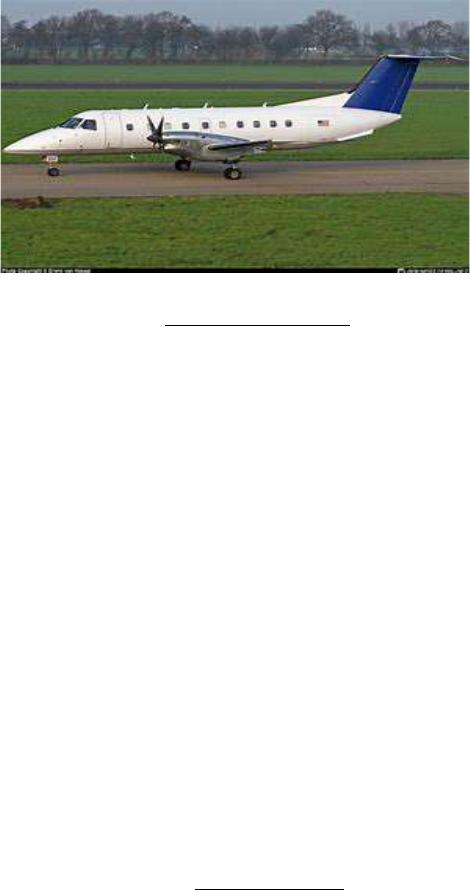
United Express serves the airport. This feeder service for United that is now flown with an Embraer
EMB-120 “Brasilia“, a twin-engine turboprop aircraft capable of up to 30 passengers.
2
Airports: The Arcata-Eureka Regional Airport
Embraer EMB-120
The airport is owned by the county of Humboldt, in which it resides, and is included in the
National Plan of Integrated Airport Systems for 2011–2015 (Thatcher, T.P., 2011), which has
categorized the small airport as a primary commercial service airport. As per FAA records, the airport
had 106,637 boarded passenger in 2008’s calendar year, 102,440 in 2009, and 93,402 in 2010. The
airport is of a federal design, which may be used as a port of entry for civil aircraft arriving to the U.S.,
but has limited its usage and reduced its servicing airlines as well as servicing destinations increasingly
since the 1980’s when servicing to such destinations as far as Salt Lake City, UT. and international
flights to Mazatlan and Guadalajara, Mexico and using such aircraft as the CRJ-200 and Boeing 737-
which transported many more passengers than their current supported platforms.
Airport History
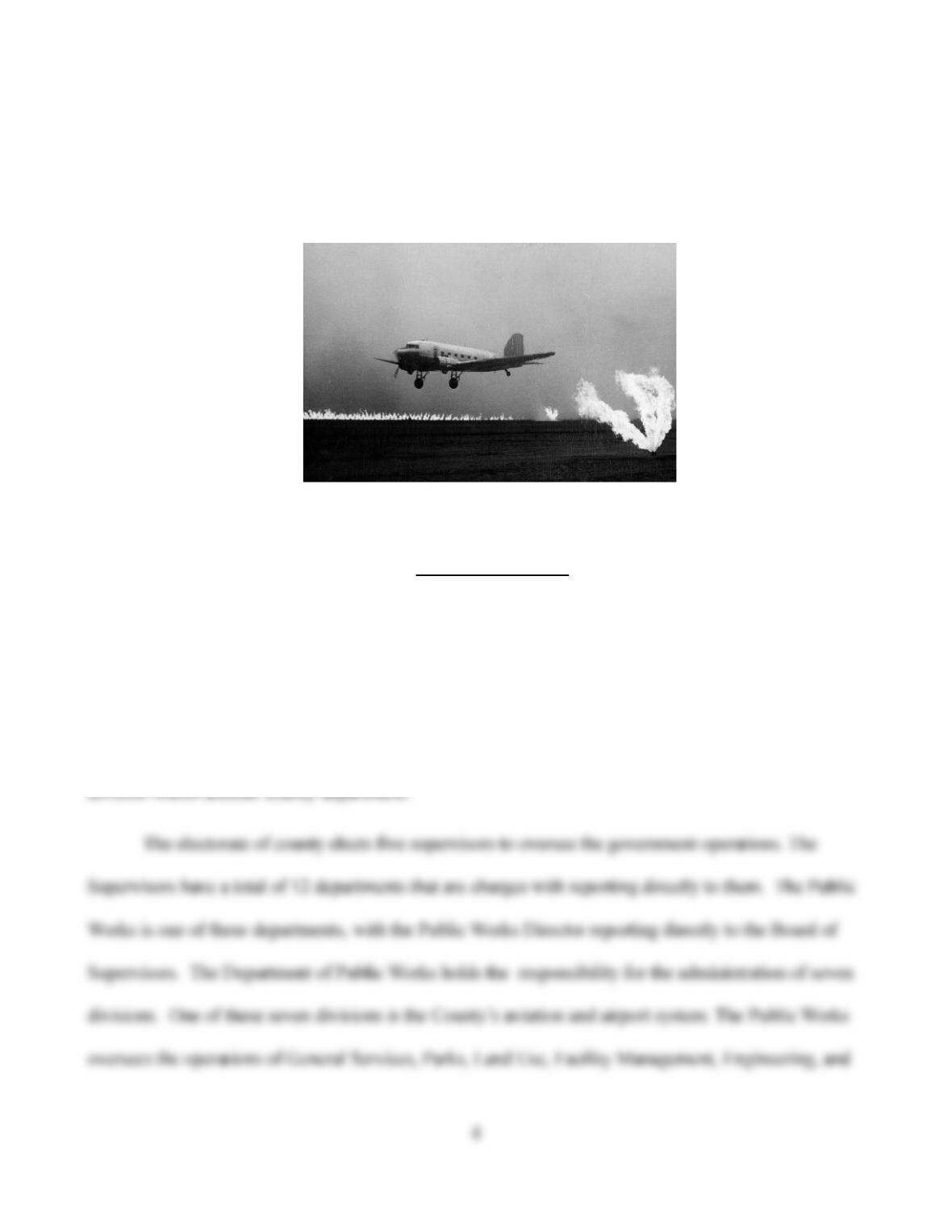
Historically, the airport is best known for the world’s first blind landing in December of 1947 by
a (scheduled) DC-3 commercial airliner ( operated by Southwest Airlines). Using the newly (at hat
time) innovative Ground-Controlled Approach (GCA) radar, Instrument Landing System (ILS) devices,
and Fog Investigation and Dispersal Operation (FIDO) the aircraft made and safe landing with the use
of several oil-burning lanterns lining the runway. By the next year, there were more that 1,200 recorded
instrument landings made to the infamously fog-blanketed coastal airport. Under the thick cover of
3
Airports: The Arcata-Eureka Regional Airport
dense fog, this also provided a strategic location for wartime logistics and a staging point for military
aircraft in the case of another wartime threat in the pacific region, following the events of WW2.
Airport Governance
The Humboldt County aviation division is held responsible for the management of six airports
within the County, to include the Arcata-Eureka Airport (ACV). The aviation division is considered to
be a sub-department of the county’s Public Works Department. Therefor, it is considered to be unique
that Humboldt County being just one of two counties in the State of California that resides its aviation