Osterman 1
Caroline Osterman
Professor Sarah Miller
HAVC 140A
15 March 2016
Acknowledging Nature in American Art (Question A)
Nature is a prevalent subject in works throughout the course of American art
history. Captured in both painting and photography, the recurring theme of mankind and
its relationship with the natural world is often presented. Certain artists, however, have
specifically chosen to portray their work with a more cautionary underlying message –
that their pieces serve as a warning against our exploitation of nature. Thomas Cole’s
landscapes of rural America, Alexander Gardner’s publication of Civil War negatives
and Dorothea Lange’s photography of the Dust Bowl are all works that distinctly
highlight the faltering harmony between man and earth in American history. Through
imagery and tone these artists convey a sense of urgency for environmentalism, and
encourage the viewer to acknowledge the dangers of incessantly exploiting the earth
and its resources.
Thomas Cole revolutionized outlooks on American scenery with his landscape
paintings and use of analogy. In his work Cole highlights the sacredness of the
wilderness, insisting that nature and the liberal arts can soften manners and mend
hearts. He urges the beholder to seek and find pleasure in the rural earth’s beauty,
referring to it as a place of immorality, and somewhere to be with and speak to God. It
represents the connection between the beautiful and the good, an “unfailing fountain of
Osterman 2
intellectual enjoyment, where all may drink” (Cole 265). Cole most notably stresses the
importance of nature as the dominant force of the universe – his greatest assertion as
an artist is that the cultivated must not be forgotten, that the raw beauty of the earth be
loved and appreciated. His painting series The Course of Empire
encapsulates this
argument and serves to warn the human race. The paintings exhibit the recurring
conflict between nature and mankind – while the earth graciously provides its natural
resources, humans continue to hedonistically consume and exploit these resources,
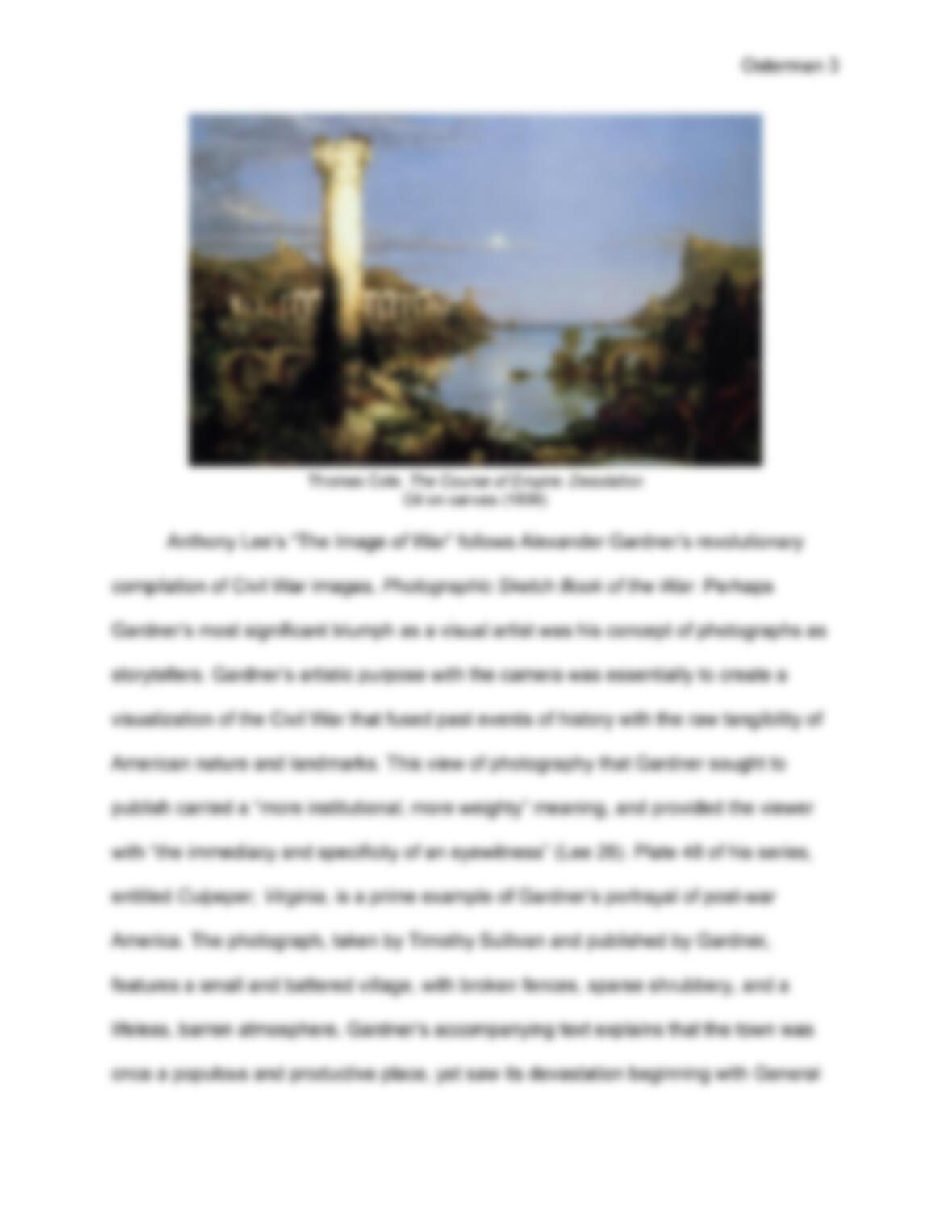
until once again nature retaliates as the dominating force. The last of the collection, The
Course of Empire: Desolation
, features the remains of a celestial white city, once a
grand and glorious place, now sitting in ruin. The city, featured throughout the collection