ACCT 4510 Topic 1 Outline Page 1
ACCT4510
Auditing
Topic 1 Introduction to Auditing
Lecture Outline
Read HKICPA (2015), chapter 5 generally.
1. What is auditing? What does an audit involve? What are the responsibilities of
the management and the auditor in a financial statement audit?
2. What is the difference between audit and
• Accounting
• Assurance
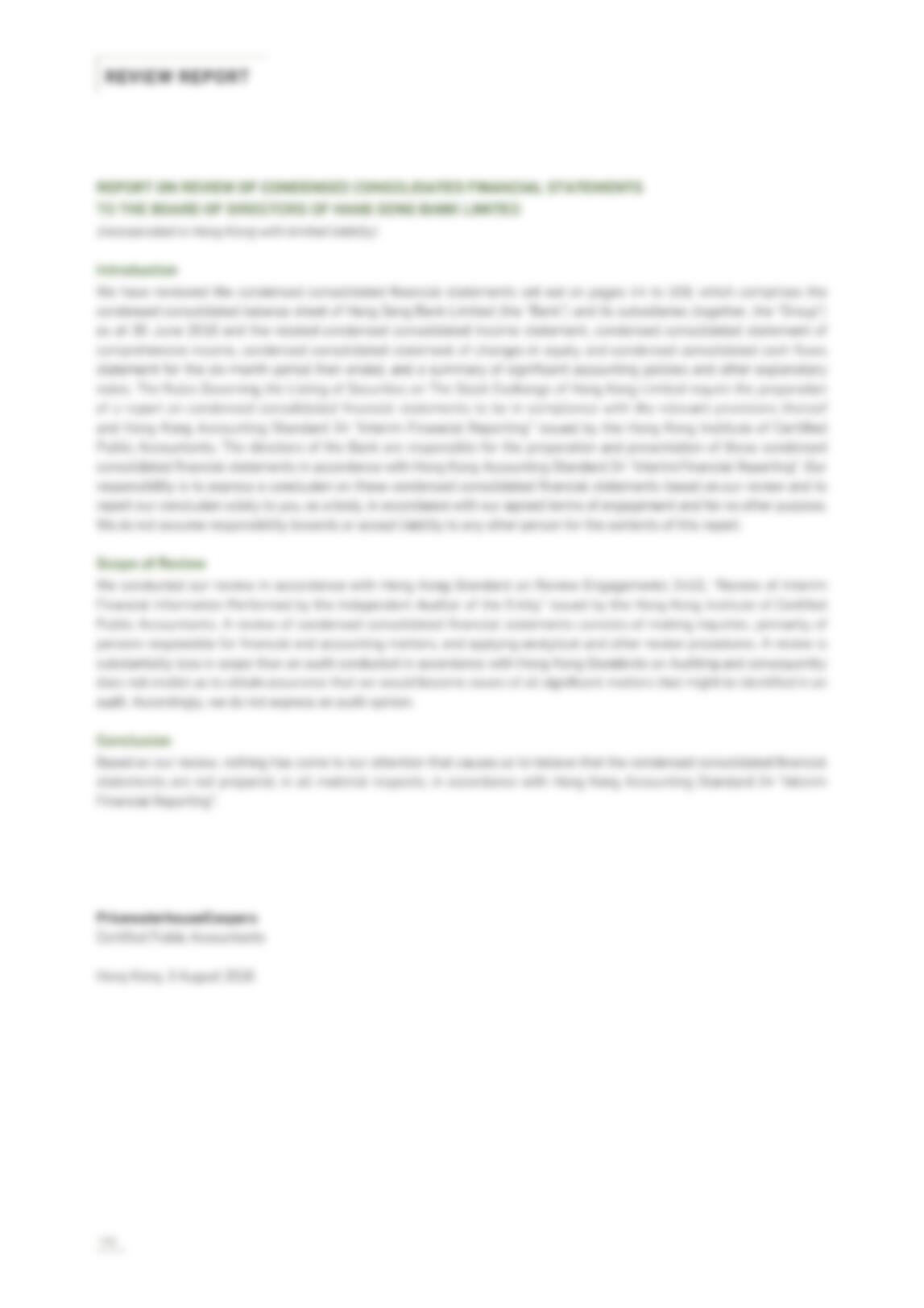
• Review
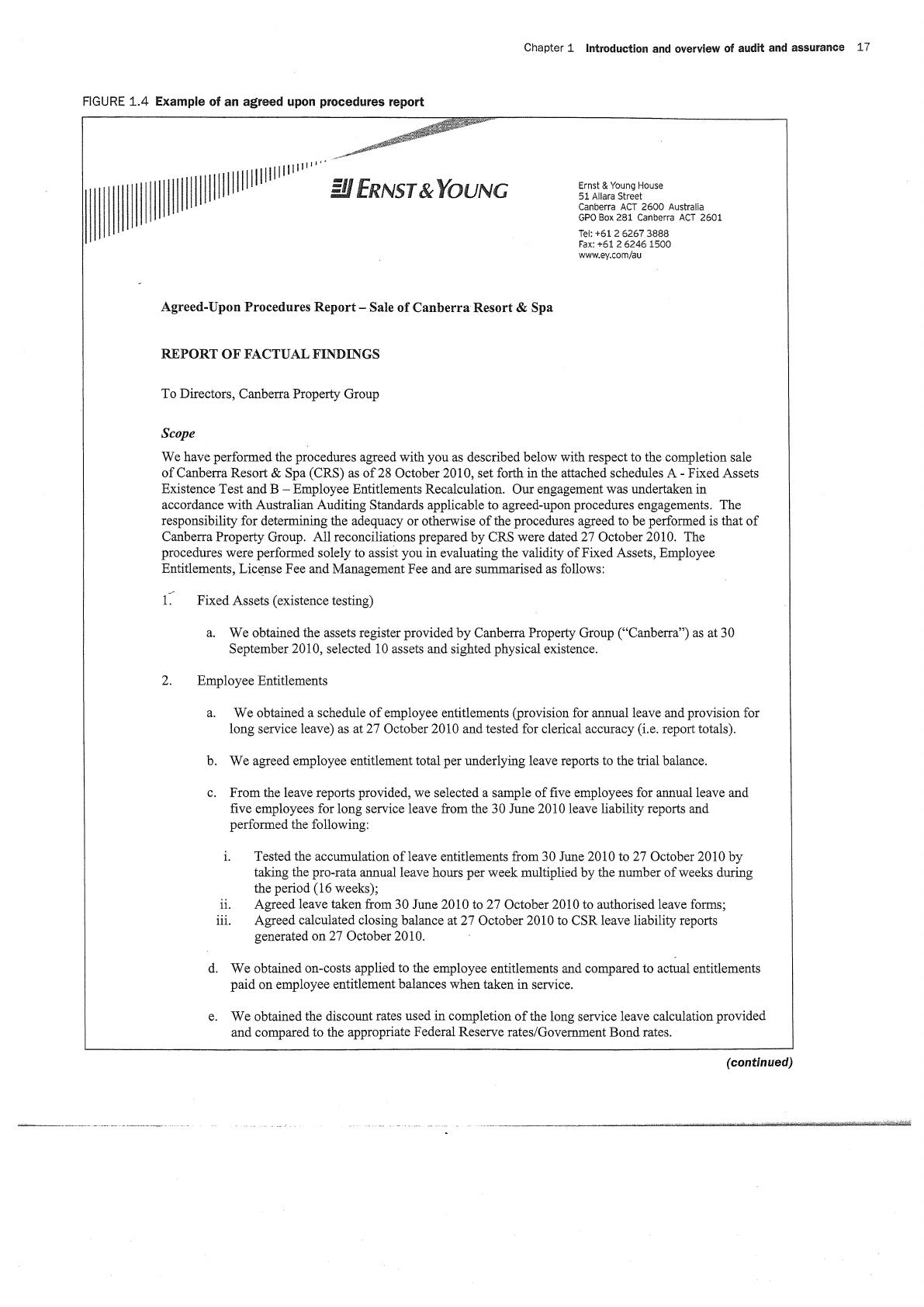
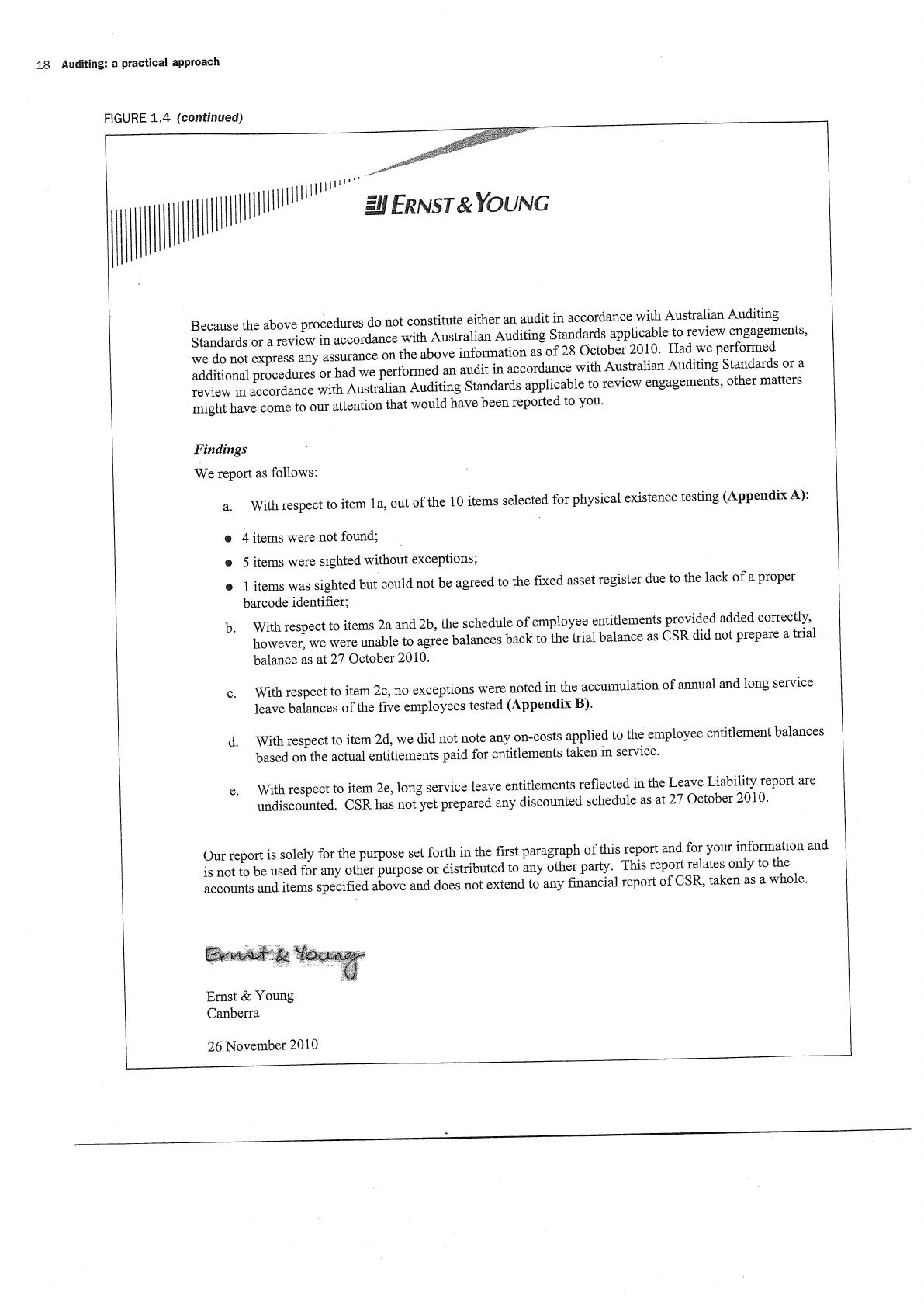
• Agreed-upon procedures
• Statutory audit?
3. What is the difference between external auditors and internal auditors? What
are the differences between external auditing and internal auditing?
4. What are the other common types of auditors? What kinds of work do they do?
5. Why do we have auditors? What are the theoretical frameworks that explain the
demand for auditing? Read Leung et al. (2011), pp.8-12.
6. What are the benefits and limitations of an audit? Read Leung et al. (2011),
pp.259–261.
7. What is the audit expectation gap? How can the gap be closed or reduced?
Read Leung et al. (2011), pp.30-32.
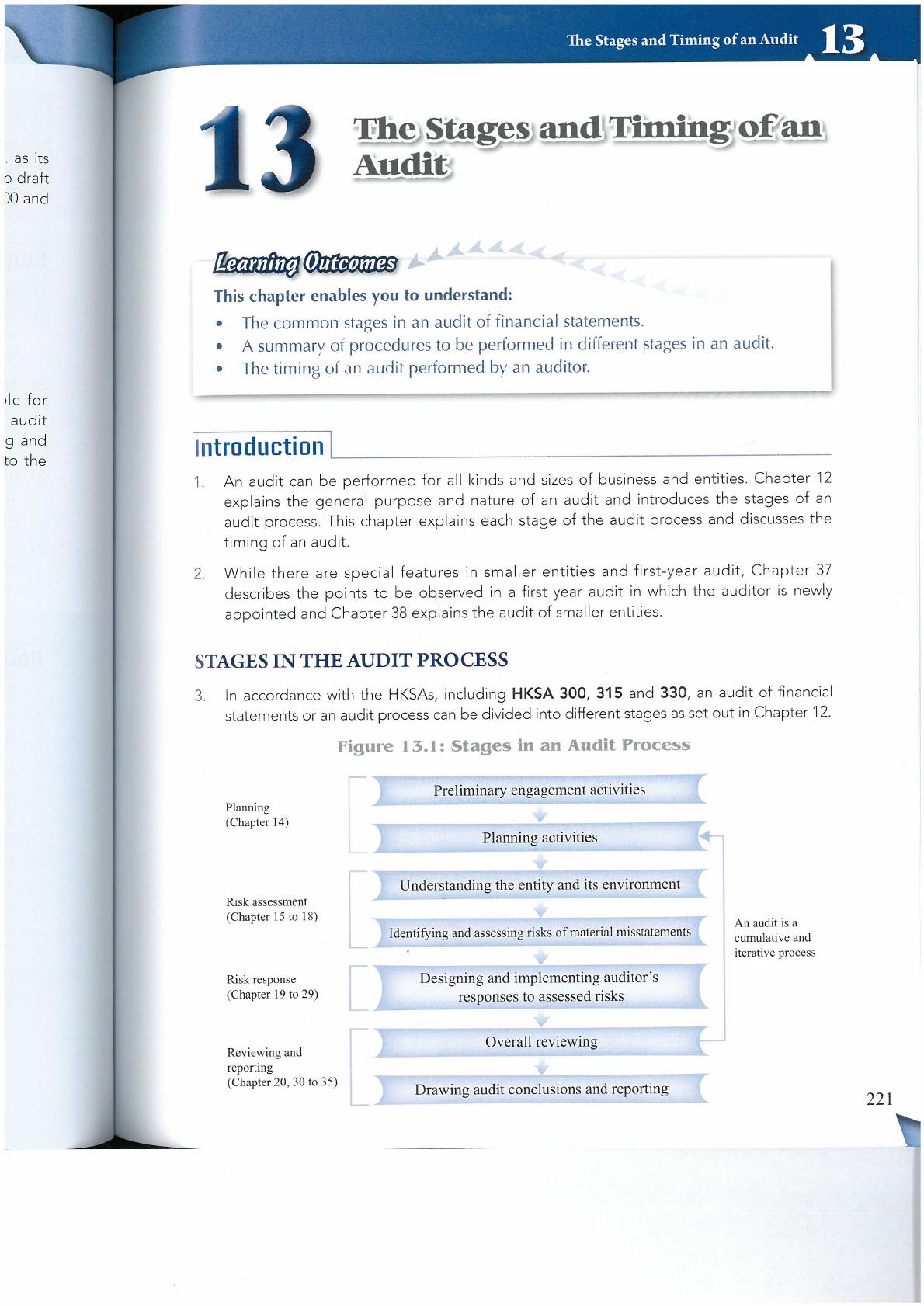
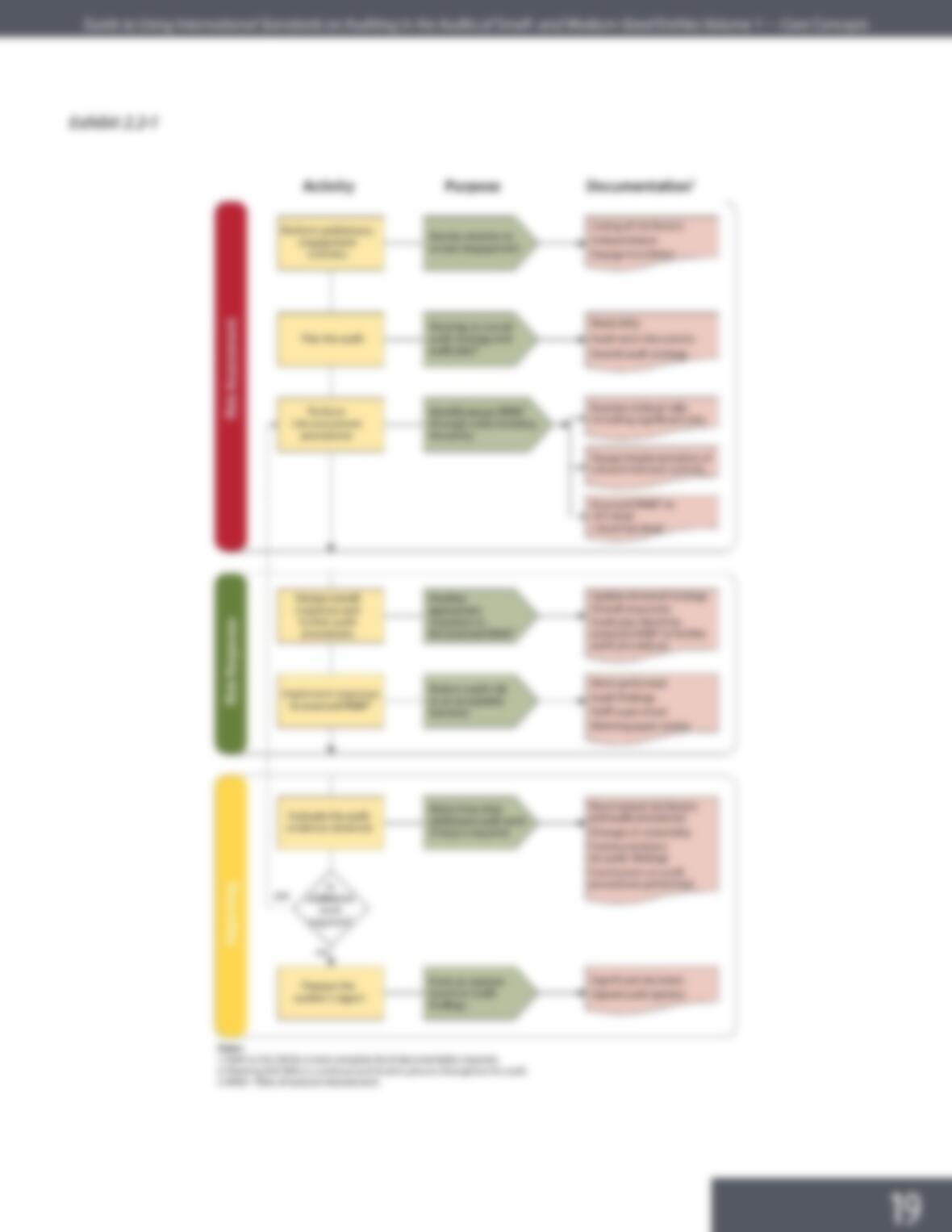
8. What are the stages involved in the audit process?
References
HKICPA (2015), Qualification Programme – Module C: Business Assurance
Learning Pack, 5th edition, Chapter 5. (Reading 1)
Leung, P., Coram, P., Cooper, B., and Richardson, P. (2011), Modern Auditing &
Assurance Services, 5th edition, pp.8–12, pp.30–32, and pp. 259–261. (Reading 2)

ACCT 4510 Topic 1 Outline Page 2
Key terms
An audit is a systematic process of objectively obtaining and
evaluating evidence regarding assertions about economic
actions and events to ascertain the degree of correspondence
between those assertions and established criteria and
communicating the results to interested users.
An assurance engagement is an engagement in which a
practitioner expresses a conclusion designed to enhance the
degree of confidence of the intended users other than the
responsible party about the outcome of the evaluation or
measurement of a subject matter against criteria.
Internal auditing is an appraisal or monitoring activity
established within an entity as a service to the entity. It
functions by, amongst other things, examining, evaluating and
reporting to management and the directors on the adequacy
and effectiveness of components of the accounting and internal
control systems.
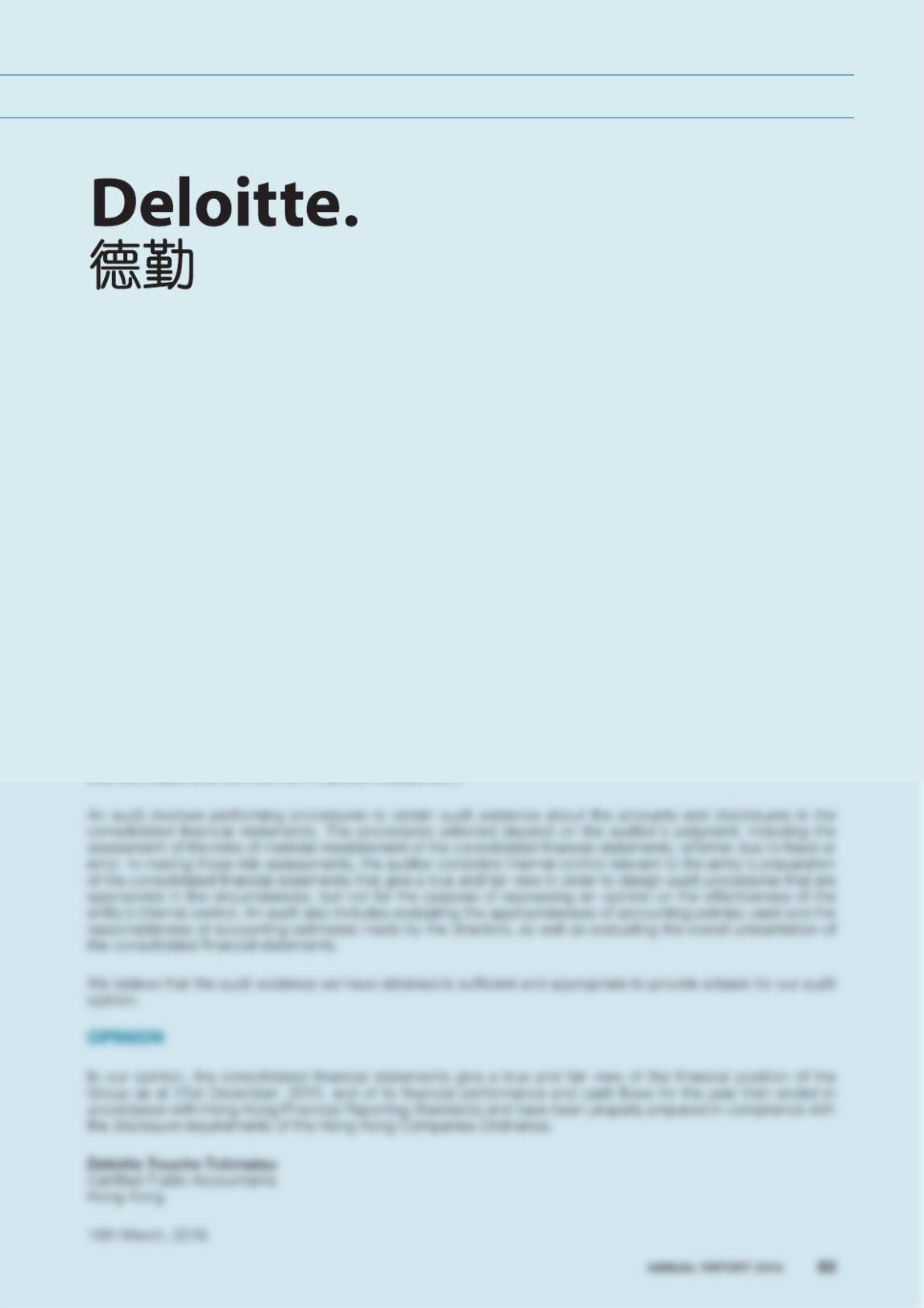
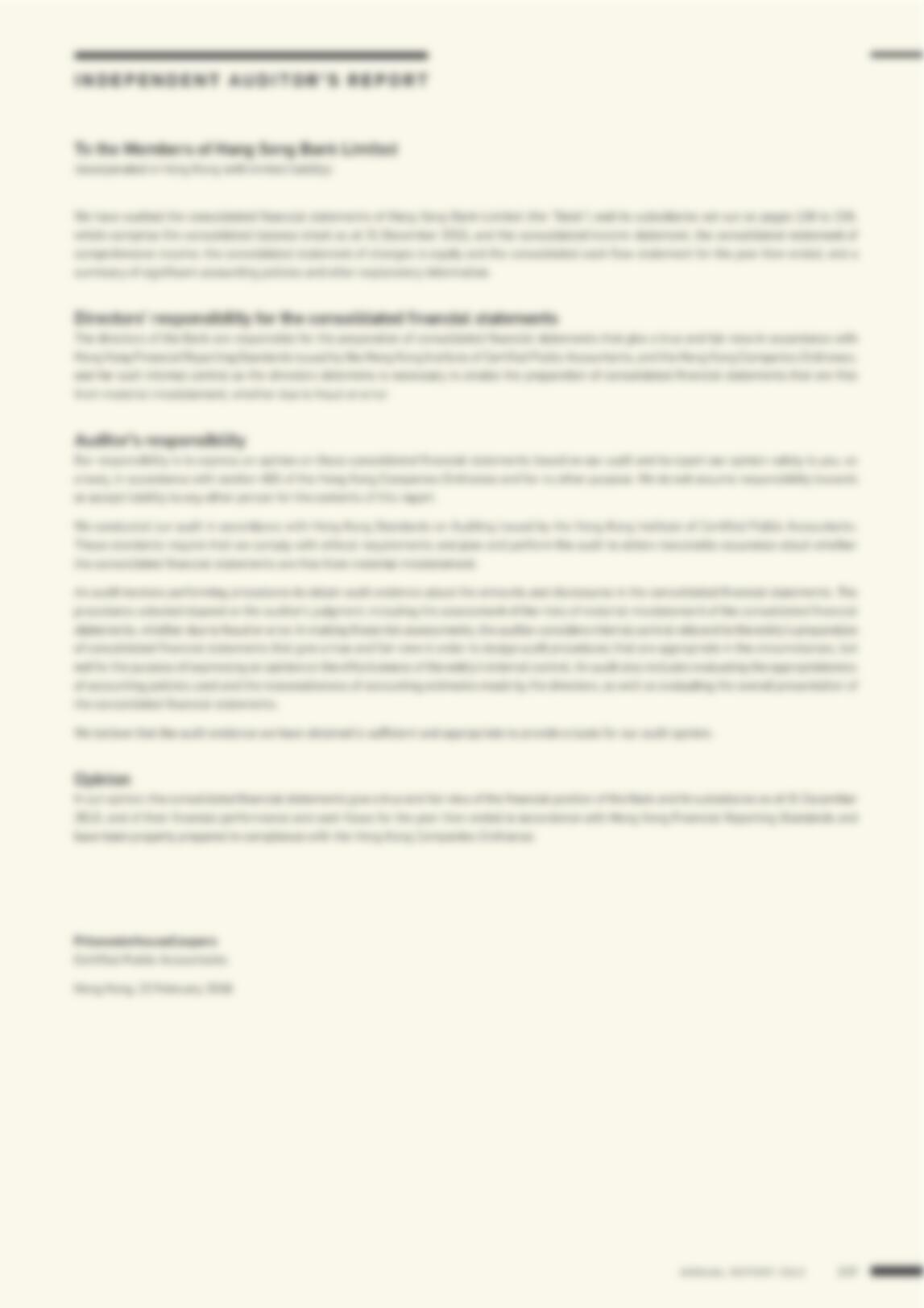
TO THE MEMBERS OF CHEUNG KONG INFRASTRUCTURE HOLDINGS LIMITED
(Incorporated in Bermuda with limited liability)
We have audited the consolidated financial statements of Cheung Kong Infrastructure Holdings Limited (the
“Company”) and its subsidiaries (collectively referred to as the “Group”) set out on pages 84 to 153, which
comprise the consolidated statement of financial position as at 31st December, 2015, and the consolidated
income statement, consolidated statement of comprehensive income, consolidated statement of changes in
equity and consolidated statement of cash flows for the year then ended, and a summary of significant accounting
policies and other explanatory information.
DIRECTORS’ RESPONSIBILITY FOR THE CONSOLIDATED FINANCIAL STATEMENTS
The directors of the Company are responsible for the preparation of consolidated financial statements that give a
true and fair view in accordance with Hong Kong Financial Reporting Standards issued by the Hong Kong Institute
of Certified Public Accountants and the disclosure requirements of the Hong Kong Companies Ordinance, and for
such internal control as the directors determine is necessary to enable the preparation of consolidated financial
statements that are free from material misstatement, whether due to fraud or error.
AUDITOR’S RESPONSIBILITY
Our responsibility is to express an opinion on these consolidated financial statements based on our audit and
to report our opinion solely to you, as a body, in accordance with Section 90 of the Bermuda Companies Act,
and for no other purpose. We do not assume responsibility towards or accept liability to any other person for the
contents of this report. We conducted our audit in accordance with Hong Kong Standards on Auditing issued
by the Hong Kong Institute of Certified Public Accountants. Those standards require that we comply with ethical
requirements and plan and perform the audit to obtain reasonable assurance about whether the consolidated
INDEPENDENT AUDITOR’S REPORT