International Accounting Summary for the exam
– Accounting: System for measuring business activities, processing of information into reports
and making the findings available to decision-makers
– These reports are the financial statements organized and regulated by national and
international standards in order to ensure unified and comprehensive information serving as an
effective tool to measure the
➔ financial performance as a continuous cycle of measurement of results and
➔ reporting of results to decision makers
History of Accounting
– Accounting: Traced back to ancient times in China, Babylonia, Greece, Egypt
→ Used to keep records regarding the cost of labor, materials used in building
– Accounting grew in the same time as marketing activities did (in particular with the industrial
revolution since mass production rose)
– Government was also responsible for accounting developments:
→income tax brought the concept of “income statement”
→Different other decision referring to health, economic planning, social rights that need
accurate & reliable information
What is Accounting for?
→Organizing→analyzing→communication
= Financial information that is used for decision-making
For Who?
– Internal users:
Internal in the organization who use financial information to make day to day decisions
Typically managers & other employees who use financial information to confirm/justify past results
and help make adjustments for future activities
External users:
Outside the organization who use the financial information to make decisions or to evaluate an entity’s
performance
→e.g. investors, financial analysts, loan officers, governmental auditors, stakeholders
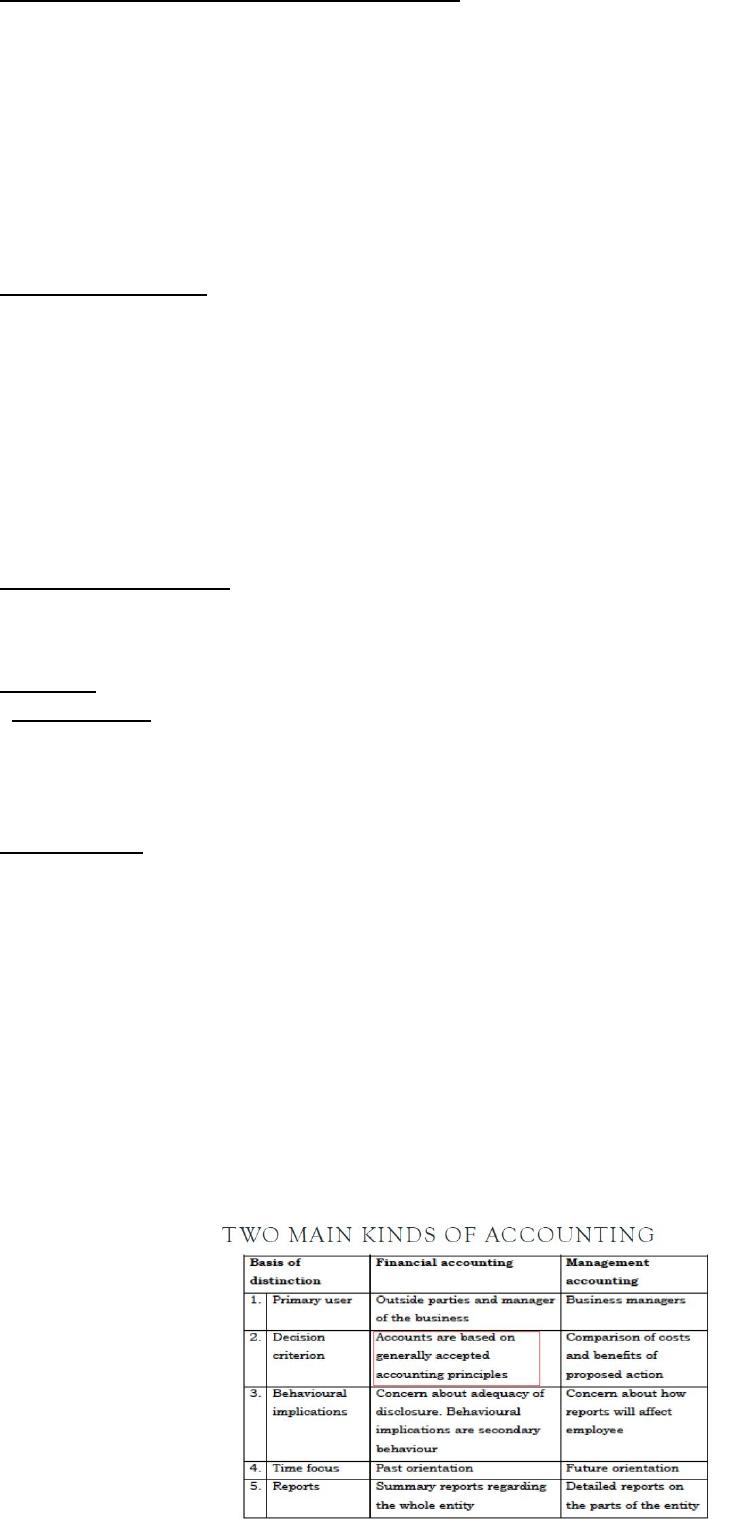
– Financial statements include: Income Statement, Statement of Owners Equity, Balance Sheet,
Notes & Statement of CF’s & Disclosures
→ ensure that information is consistent from period to period & can be compared to other
organizations
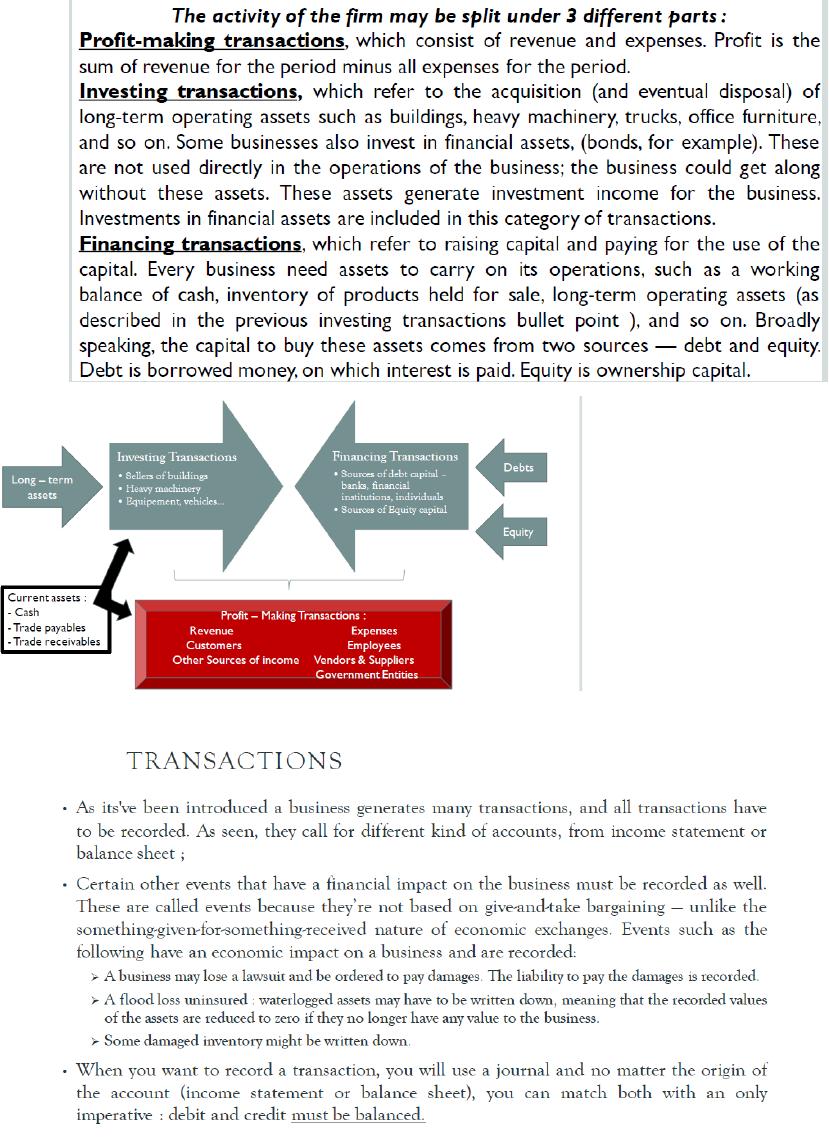
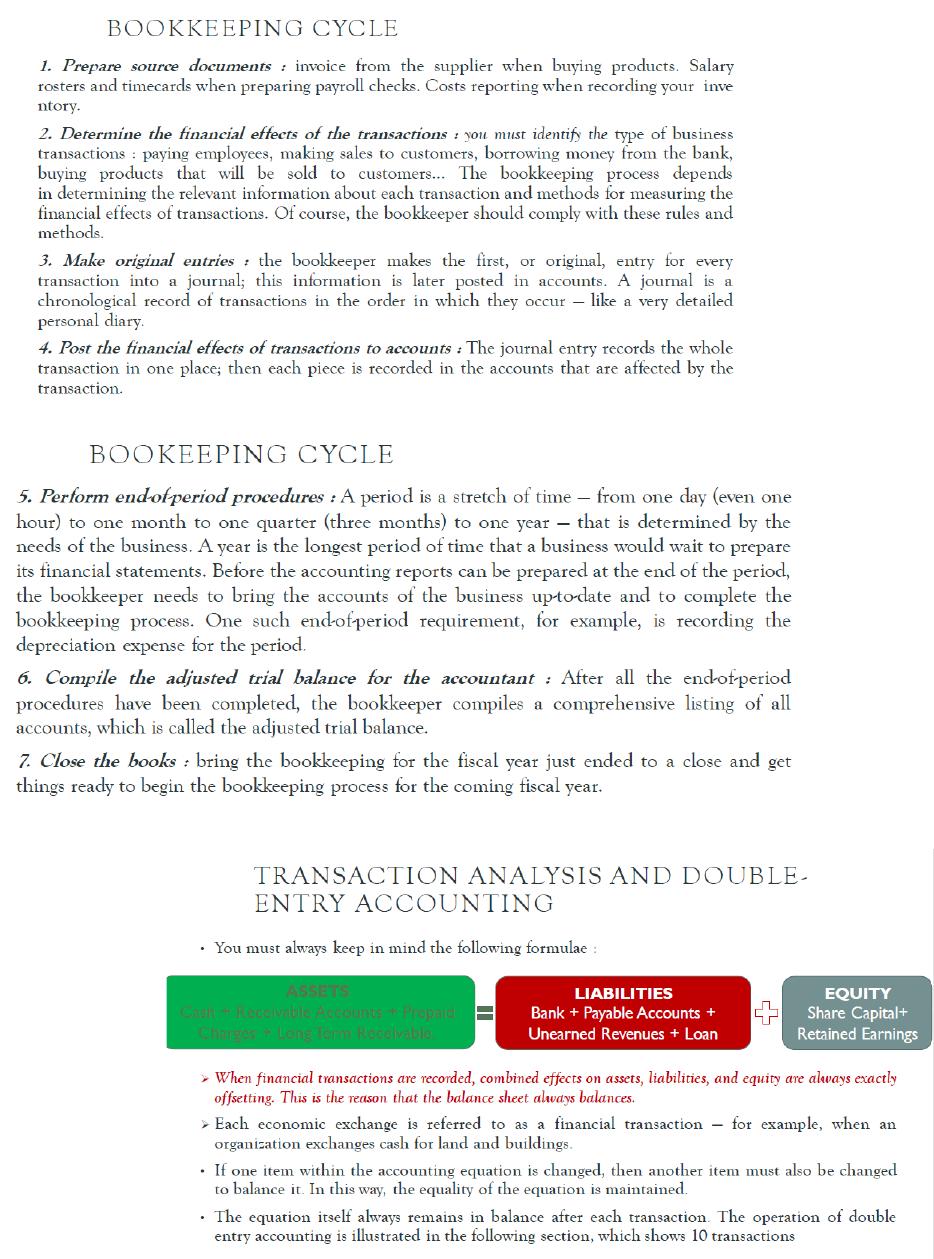
→ every activity that occurs has an associated cost or value and is known as transaction
– The accuracy of any transaction depends in the ability to evaluate it reliably (principle of
prudence)
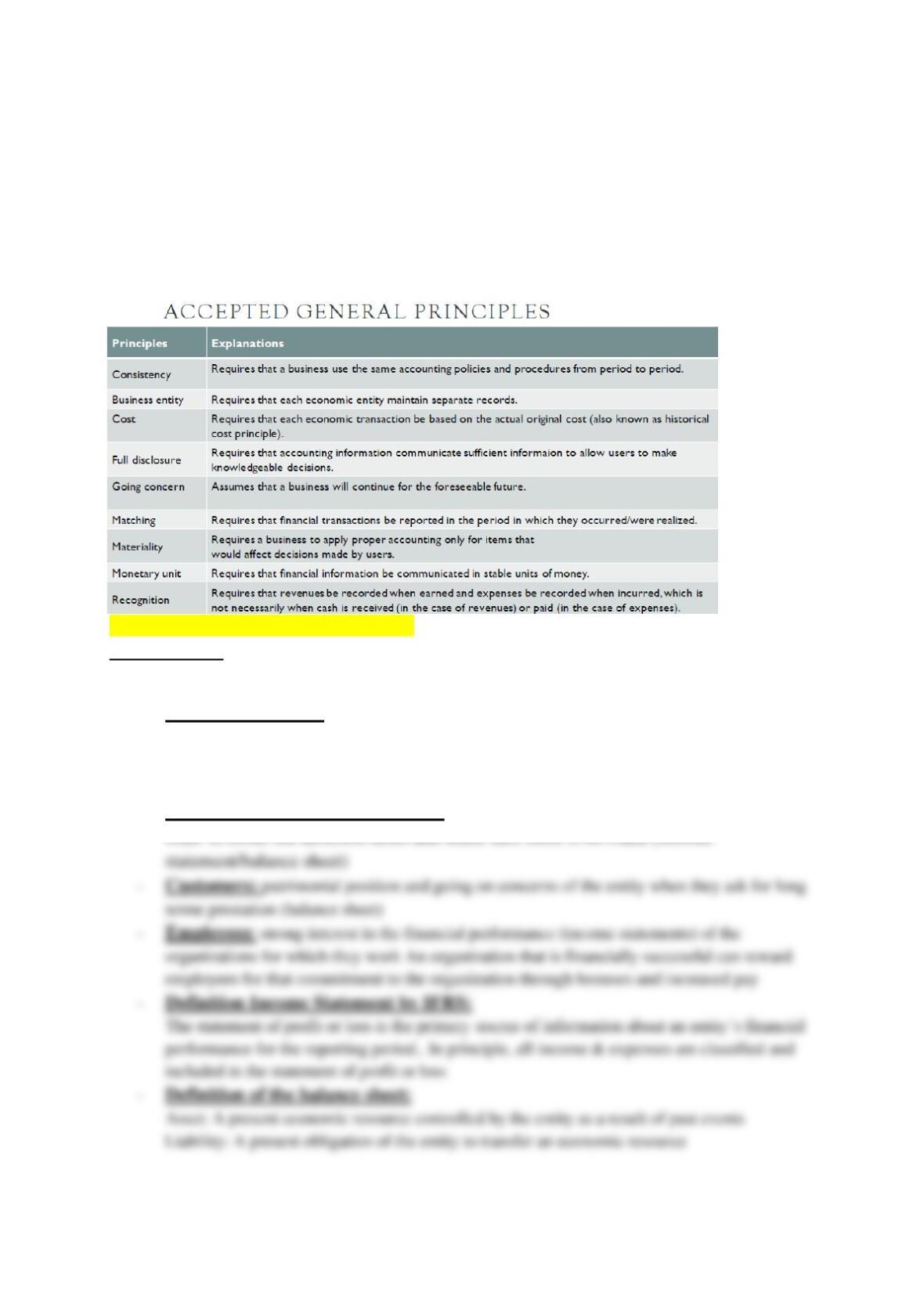
The GAAP
– They are the common set of rules, standards, and procedures that traded companies
must follow when composing their financial statements
– They are specific to each countries
– At international level, the IFRS are recognized as the international language for the
financial statements
Stakeholders interested in accounting:
– Stockholders = want to make sure of the continuity of the business of the entity, its good
performance (income statement), ensuring validity of their investment
– Creditors & lenders: use financial information to make decisions: will the funds be
repaid by the borrower? The longer the money is borrowed, the higher the risk
involved. Are therefore interested in patrimonial/ asset position (balance sheet) &
financial position (income statement)
– Government & regulatory agencies: financial performance (income statement) in