Time period assumption – the idea that the life of a business is divided into distinct and
relatively short time periods so that accounting information can be timely
Fiscal year – an entity’s reporting year, covering a 12 month accounting period
Calendar year – an entity’s reporting year from January 1 to December 31
Accrual basis of accounting – a system of accounting in which revenues are recognized when
certain criteria are satisfied, and expenses are recorded as they are incurred, not necessarily
when cash is received or paid
Matching principle – the concept that all costs and expenses incurred in generating revenues
must be recognized in the same reporting period as the related revenues
Cash-basis accounting – a system of accounting in which transactions are recorded and
revenues and expenses are recognized only when cash is received or paid
• Accrual accounting is the process of recording expenses and revenues when incurred
and recognized, regardless of when cash is received. Accrual accounting is required by
GAAP because it provides a better measure of performance than does cash-basis
accounting
• The revenue recognition criteria stipulate the condition to be fulfilled when recognizing
revenue
• The matching principle states that expenses are reported when the corresponding asset
or service is used, which is often not the same time period as when cash is paid
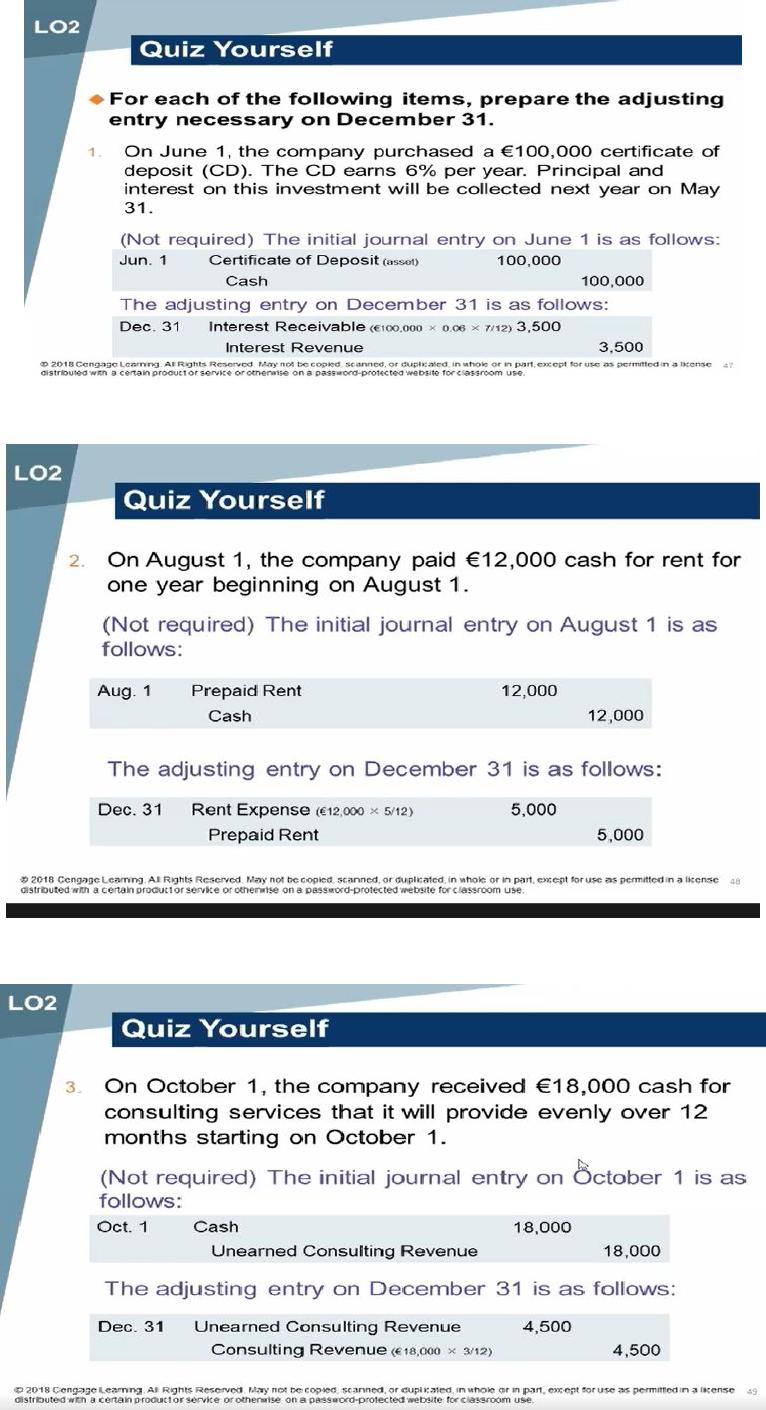
Adjusting entries – entries required at the end of each accounting period to recognize, on an
accrual basis, revenues and expenses for the period and to report proper amounts for assets,
liability, equity, revenue and expense accounts
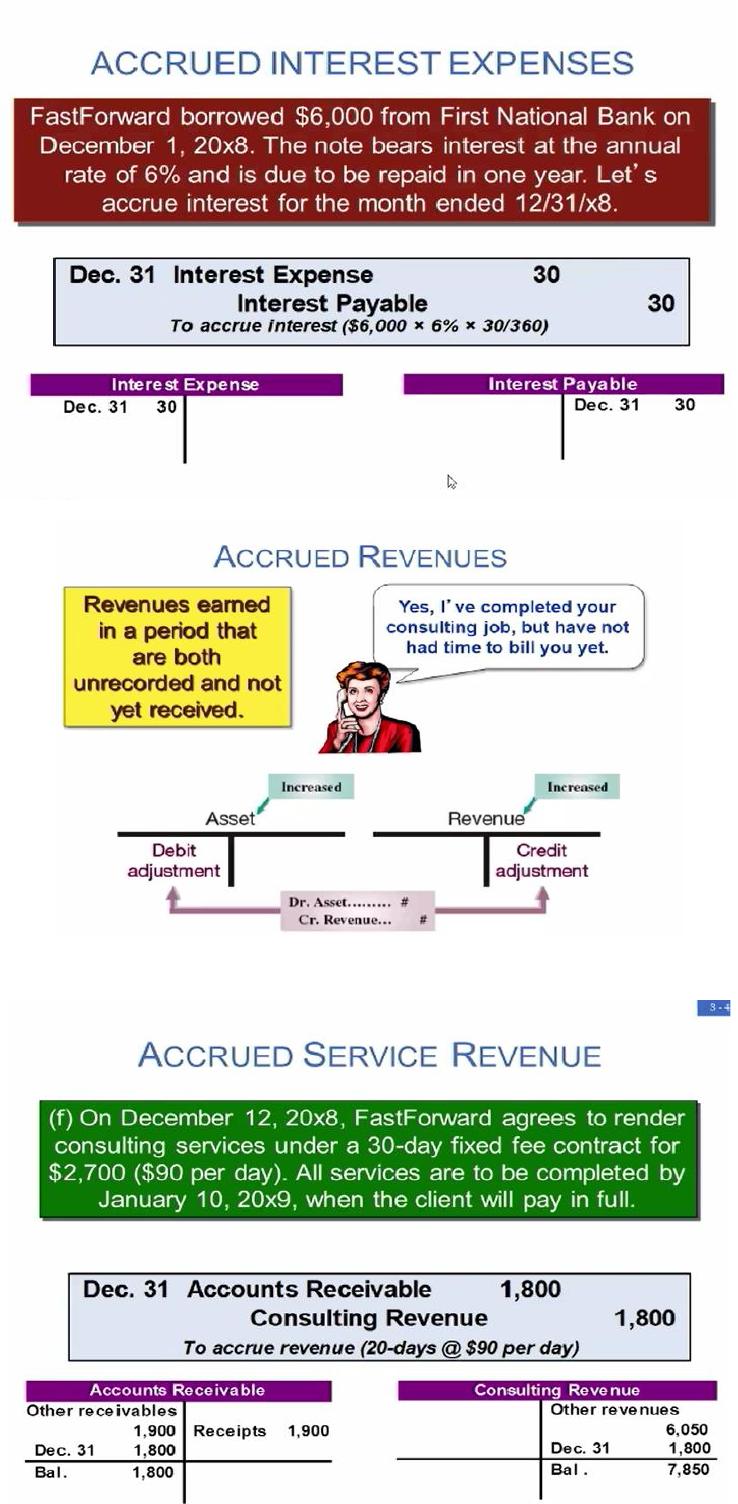
Unrecorded receivables – revenues earned during a period that have not been recorded by the
end of that period
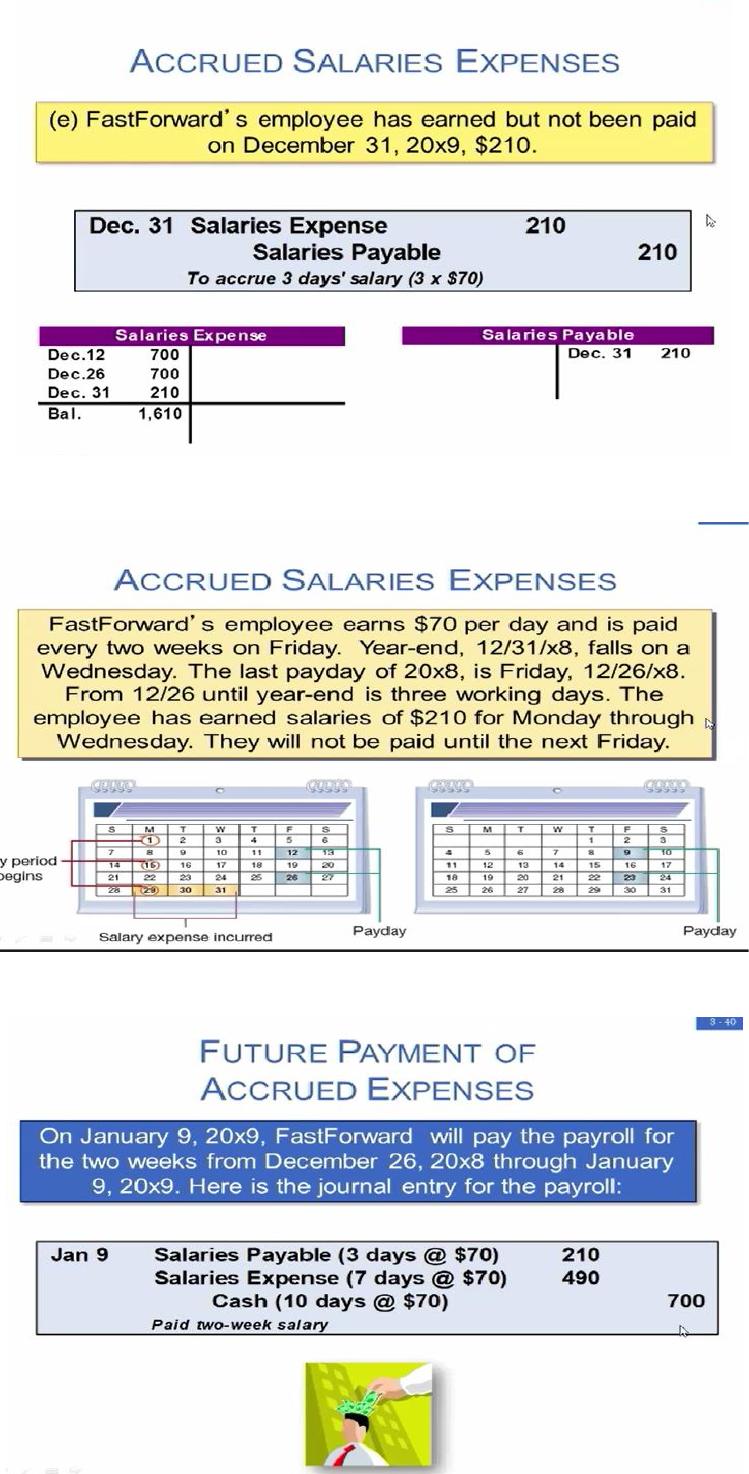
Unrecorded liabilities – expenses incurred during a period that have not been recorded by the
end of that period.
Prepaid expenses – payments made in advance for items normally charged to expense
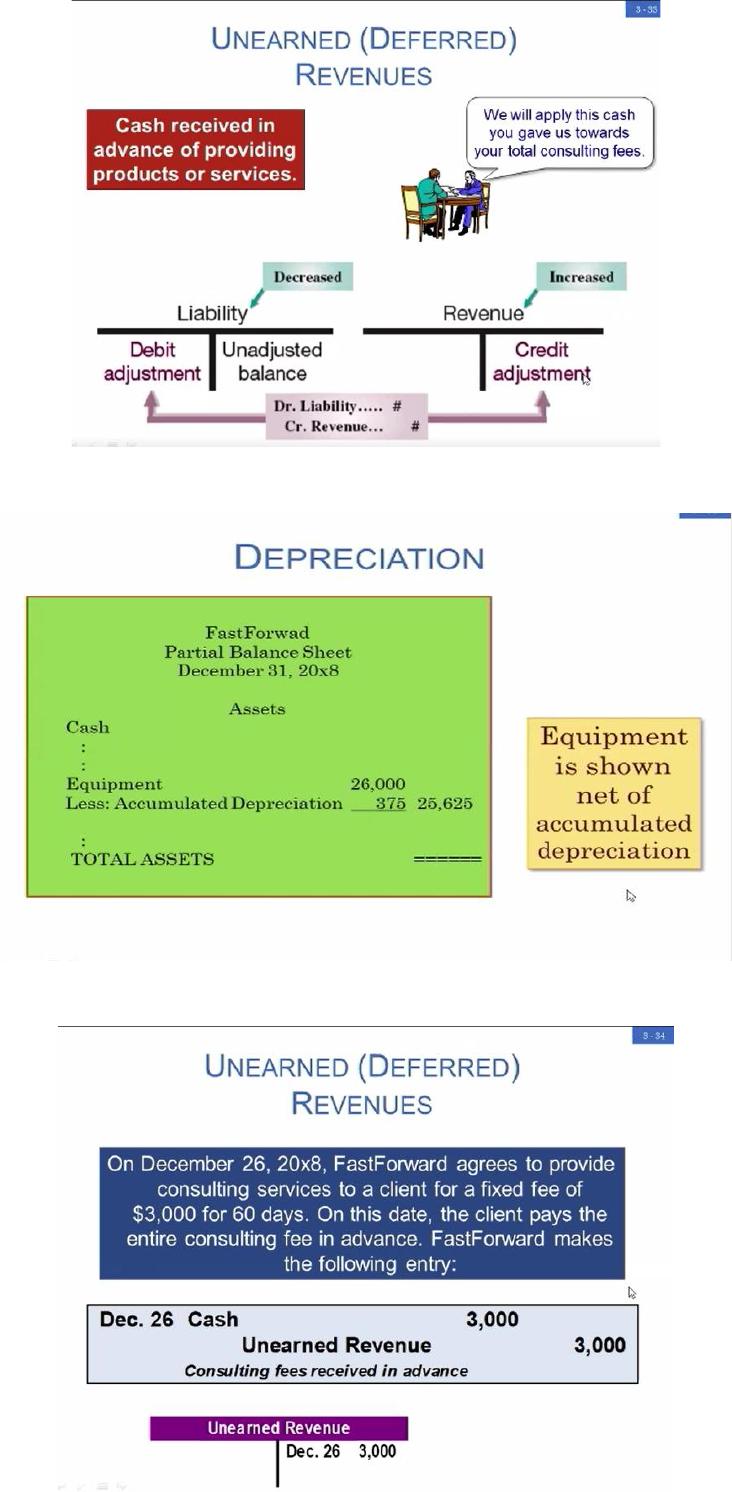
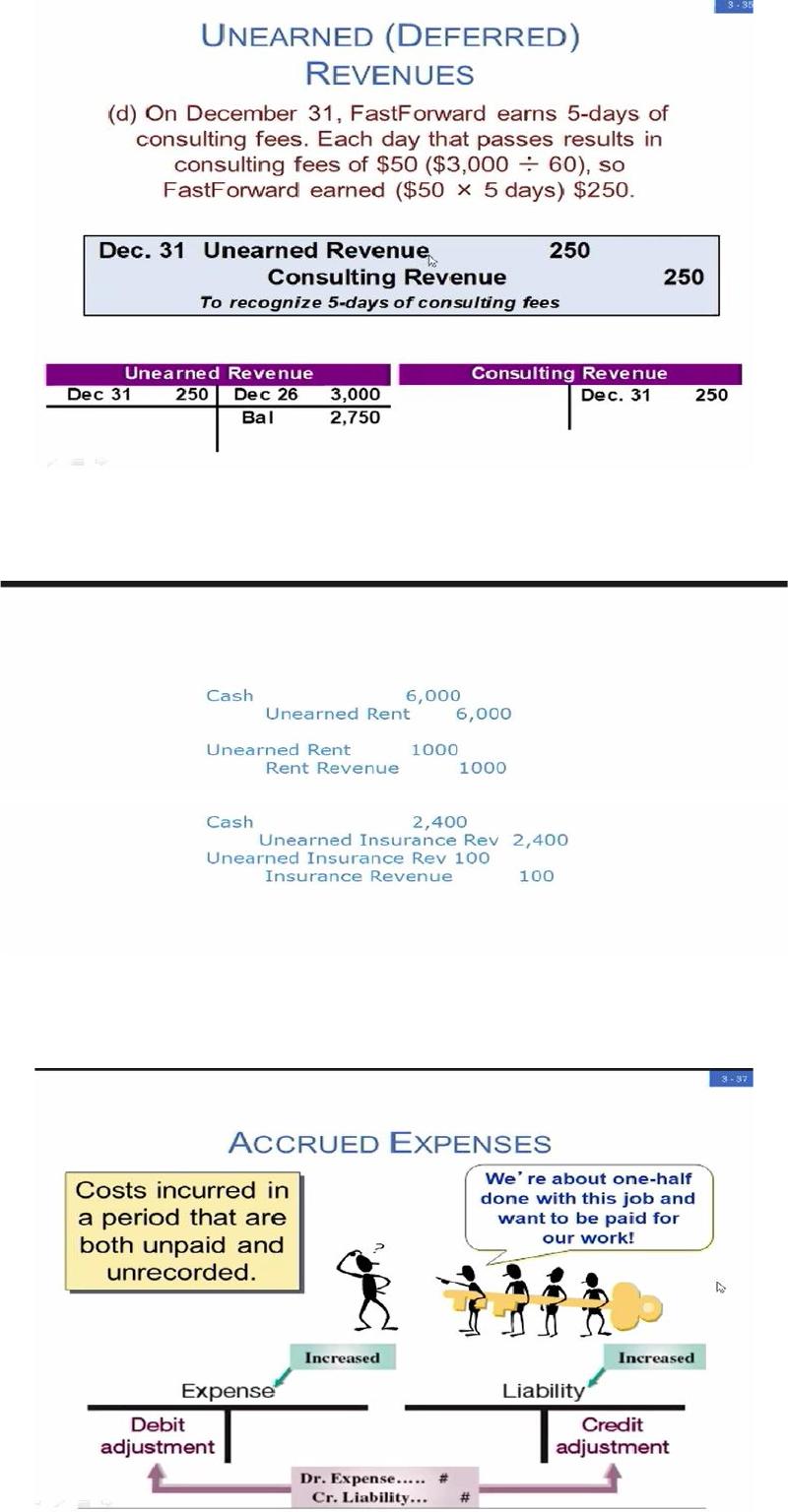
Unearned revenues – cash amounts received before its corresponding revenue can be
recognized
• Determine what adjustments are necessary to ensure that all asset and liability amounts
have been properly recorded
• Determine which revenues or expenses must be adjusted to correspond with the
changes in assets and liabilities recorded on the previous step
Unrecorded receivables
– Debit asset
– Credit revenue
Unrecorded liabilities
– Debit expense

– Credit liability
Prepaid expenses
– Debit expense
– Credit asset
Unearned revenues
– Debit liability
– Credit revenue
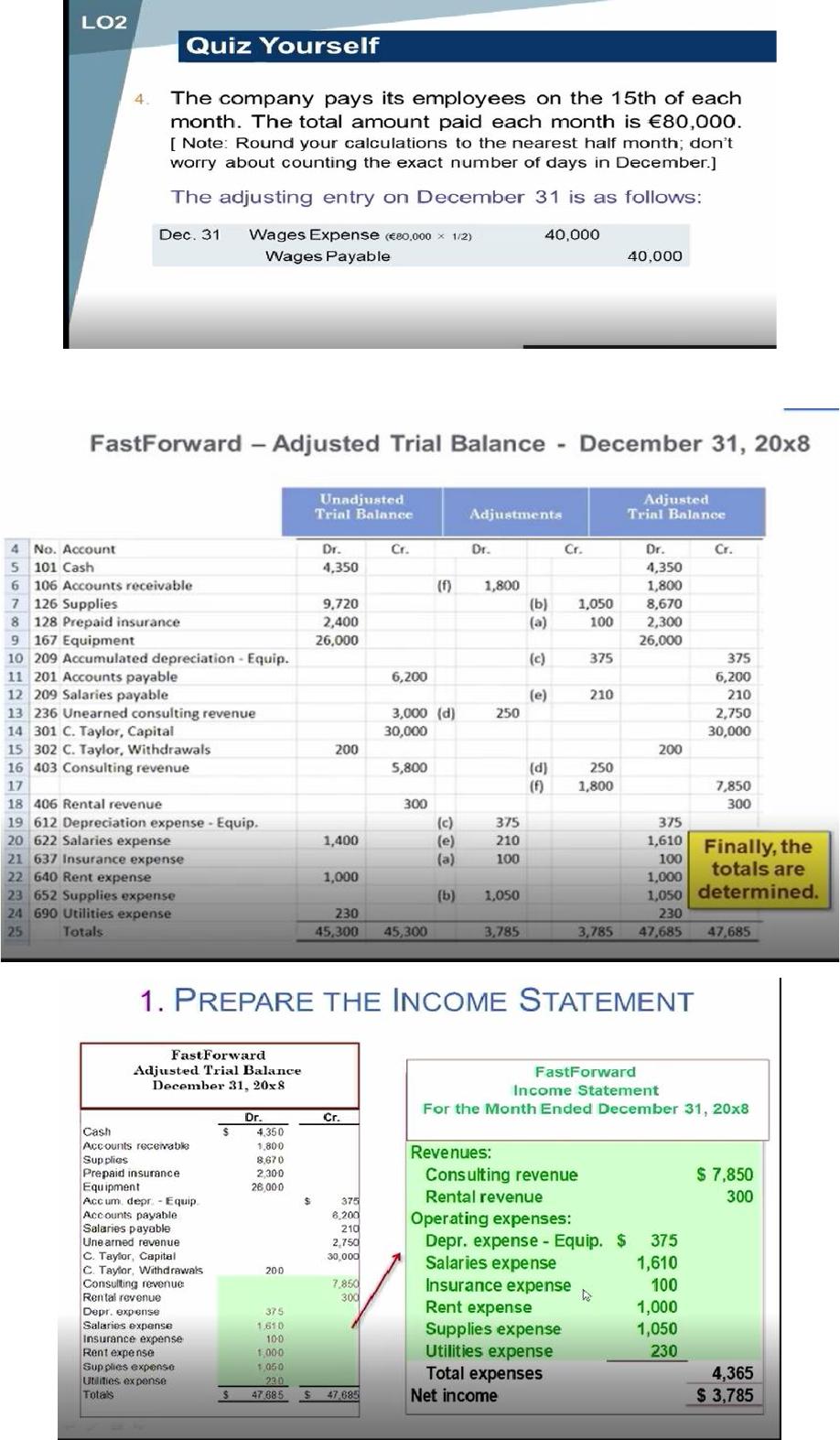
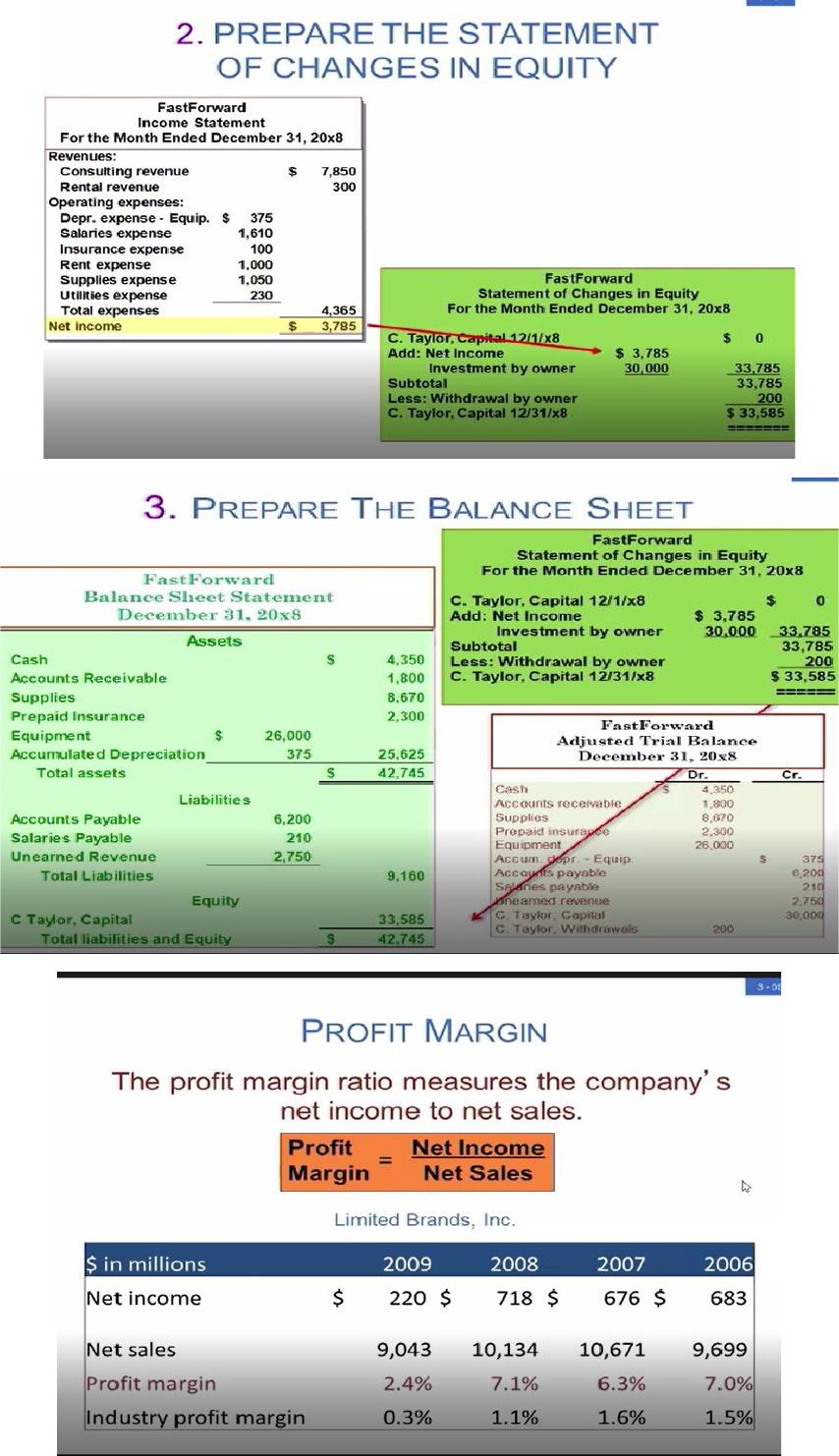
• The adjusted trial balance provides the raw material for the operation of the balance
sheet and the statement of comprehensive income. Accounts in the adjusted trial
balance are reported in either the balance sheet or the statement of comprehensive
income, but not both
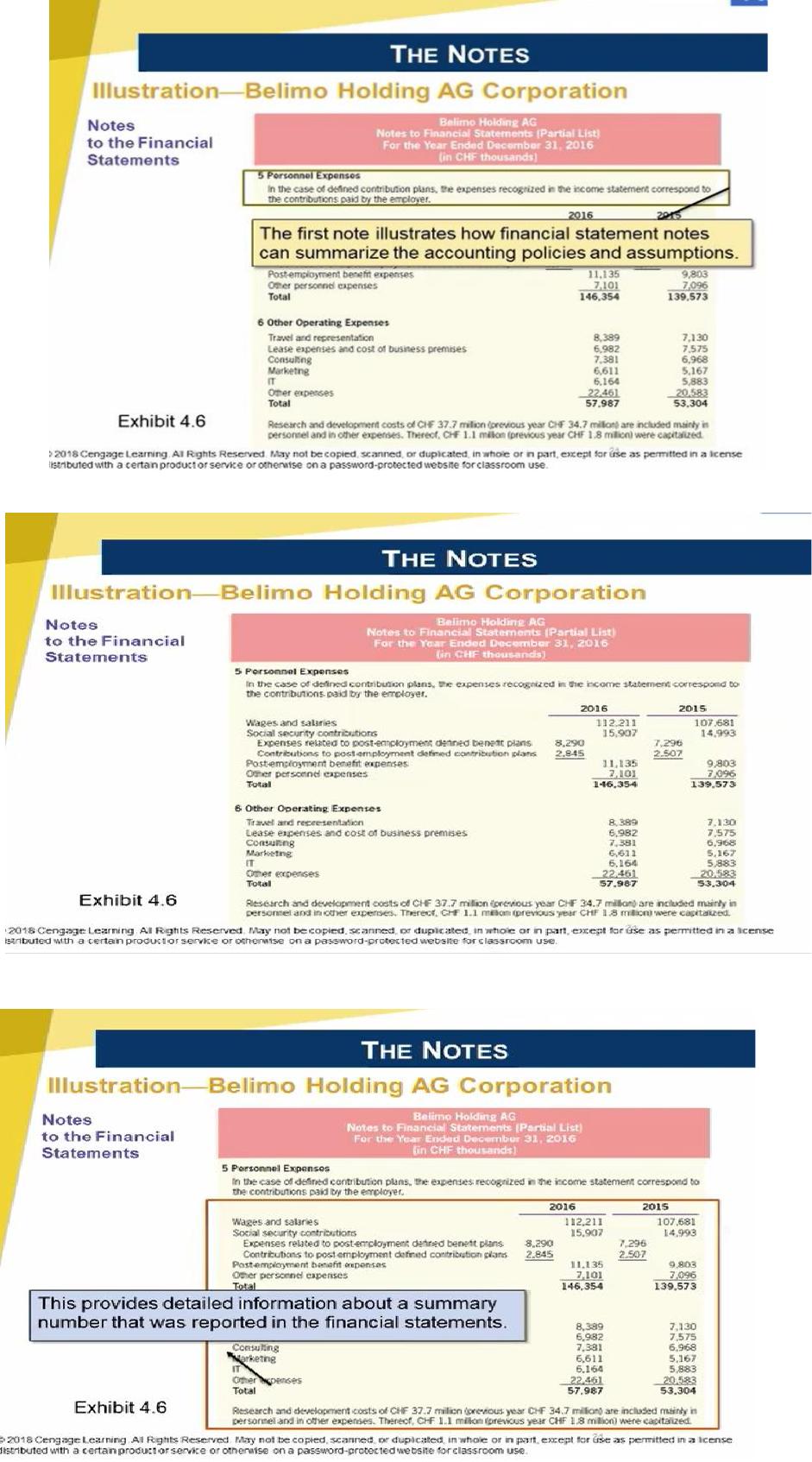
• The notes to the financial statements provide further information about the methods
and assumptions used in preparing the financial statements as well as further detail
about certain financial statement items
Real accounts – accounts that are not closed to a zero balance at the end of each accounting
period; permanent accounts appearing on the balance sheet
Nominal accounts – accounts that are closed to a zero balance at the end of each accounting
period; nominal accounts primarily include revenue and expense accounts
Closing entries – entries that reduce all nominal (temporary) accounts to a zero balance at the
end of each accounting period, transferring their pre-closing balances to a permanent balance
sheet account
Post-closing trial balance – a listing of all real account balances after the closing process has
been completed; tests whether total debits equal total credits for all real accounts prior to
beginning a new accounting cycle
• Nominal (temporary) accounts = revenues, expenses, and dividends
• Real (permanent) accounts = assets, liabilities and equity
• Two objectives of closing entries
– Close all revenue, expense and dividend accounts to zero in preparation for the start of
a new period
– Transfer all revenue, expense and dividend balances to retained earnings
• The four steps in the accounting cycle are as follows
– Analyze transactions
– Record the effects of transactions
– Summarize the effects of transactions
– Prepare reports using the following detailed steps as covered in this chapter
o Adjusting entries
o Financial statements
o Closing entries
Closing entry for
debit
credit
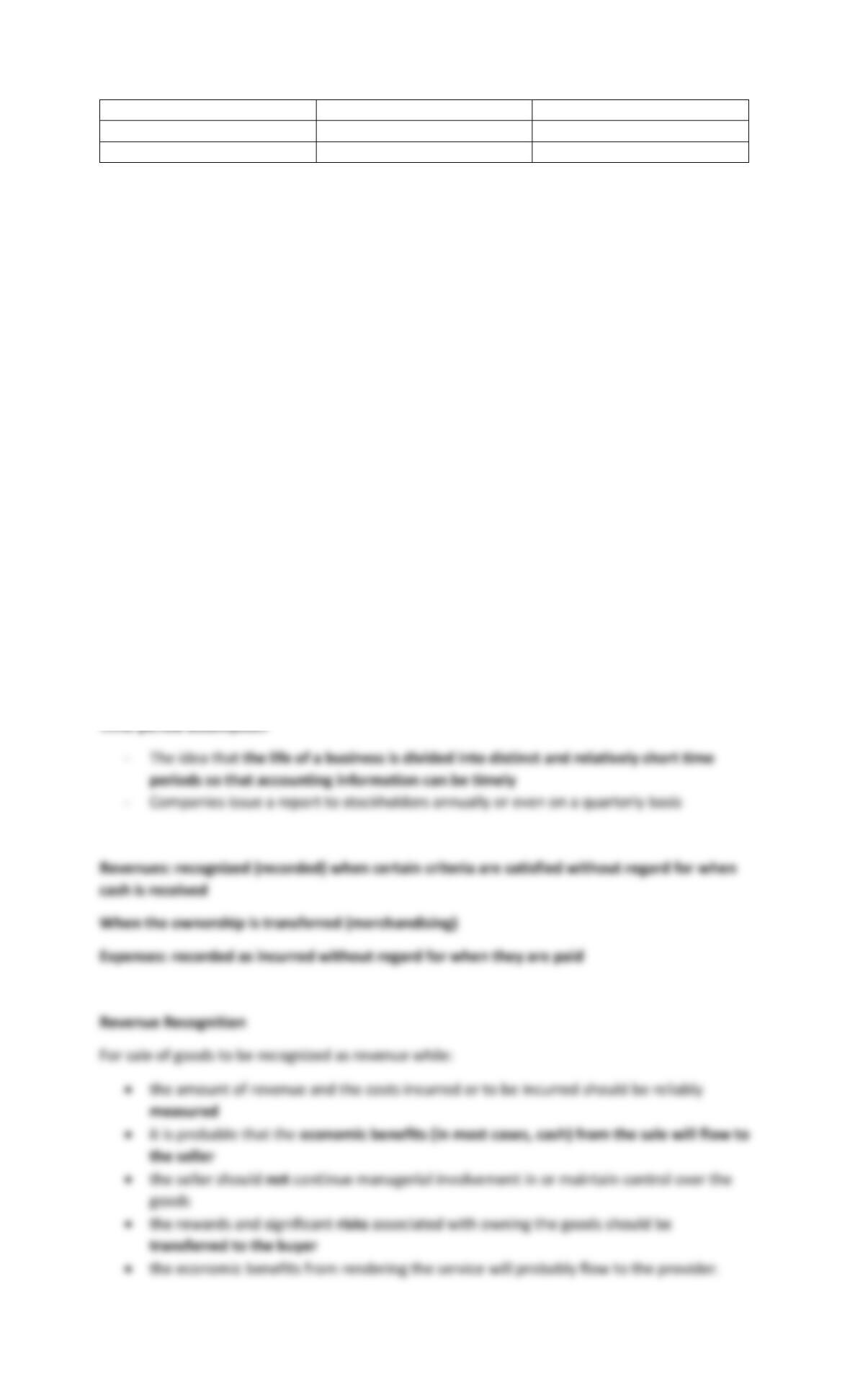
Revenue
Revenue
Retained Earnings
Expense
Retained Earnings
Expense
Dividends
Retained Earnings
Dividends
Day 1 Discussion
Accrual Accounting
– Required by the GAAP
– Realization principle (recognized revenue when it is earned), and Matching principle
(matching the revenue with the expenses)
In 2017, two brothers sign a contract. The total contract price is 20,000
The brothers do most of the consulting work in 2017 and finish the job in 2018. They received a
2,000 cash payment from the contract in 2017 and receive the remaining 18,000 cash in 2018.
On December 31, 2017, the brothers prepare a 2017 statement of comprehensive income to
use in applying for a bank loan.
Estimate the amount of work completed in 2017
Accrual basis
Revenues are recognized when earned and expenses are recognized when incurred
Cash basis
Revenues are recognized when cash is received and expenses are recorded when cash is paid