Running head: ECONOMICS 1
Factors Affecting House Prices in Melbourne CBD
Student’s Name
Institution
Course Instructor
Date

ECONOMICS 2
Introduction
Real property represents an enormous and critical part of the majority people’s
possessions, and such is particularly factual for numerous landlords in my city. As per the latest
Customer Finances survey by Government Reserve, 66.3% of Australian families possesses their
personal primary house. The scale and size of the property marketplace create it to be an
appealing and profitable industry for numerous entrepreneurs. This paper will examine a number
of the major forces that influence the housing business sector in Melbourne CBD.
Analysis
The prices of houses in Melbourne CBD are reliant on numerous factors as explained
below:
Affordability
Affordability more often than not is expressed as far as the maximum cost a customer is
able to offer in exchange for a house and get authorized for a mortgage needed for paying that
sum. Rising wages imply that individuals have the capacity to pay to expend extra funds on
accommodation. In times of financial development, the need for accommodation has the
propensity to increase. In addition, need for houses had the propensity of being lavishness good.
Therefore, an increase in wages results in an enormous percentage increment of demand for
houses (Kulish, Richards & Gillitzer, 2012).
ECONOMICS 3
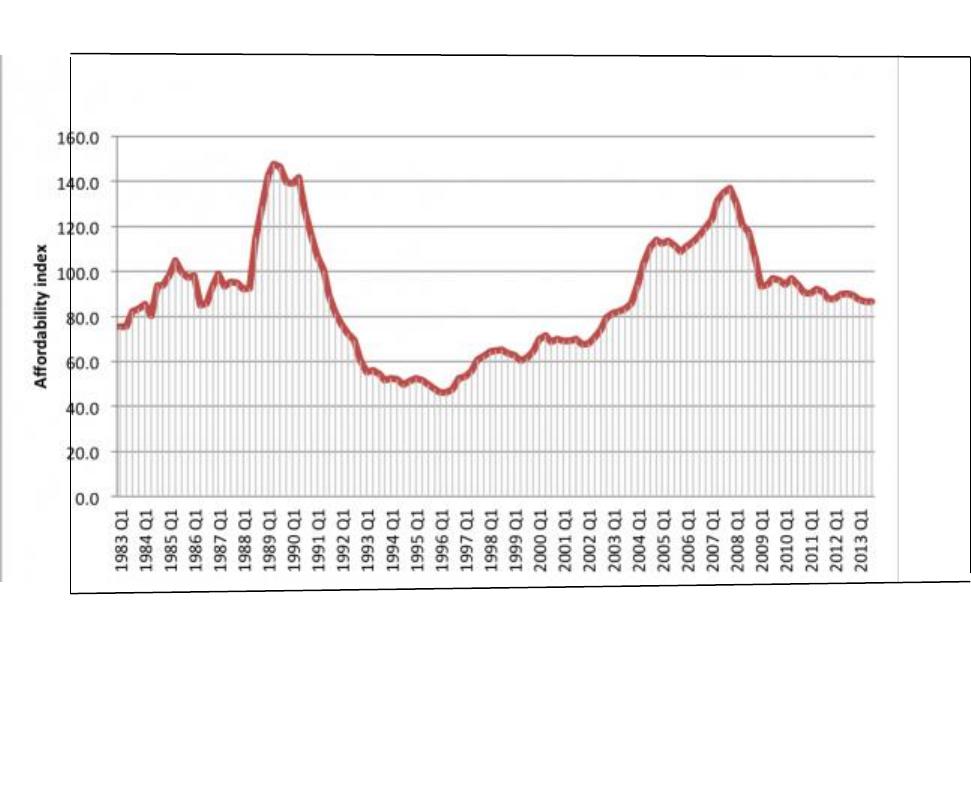
Graph 1: Affordability Index-Australian Housing
Accessed from Kulish, Richards and Gillitzer (2012).
This chart demonstrates that the price of houses (and as a result demand for
accommodation can increase a great deal speedier than income, implying there are numerous
other elements affecting demand –no less than during the short-run.
Interest Rate
Interest rates assume a huge role in determination of the price of house loan interest
repayment. Most of Australian homeowners in Melbourne CBD thus far prefer taking out
changeable house loan rates (than other nations wherein invariable rate house loan contracts are
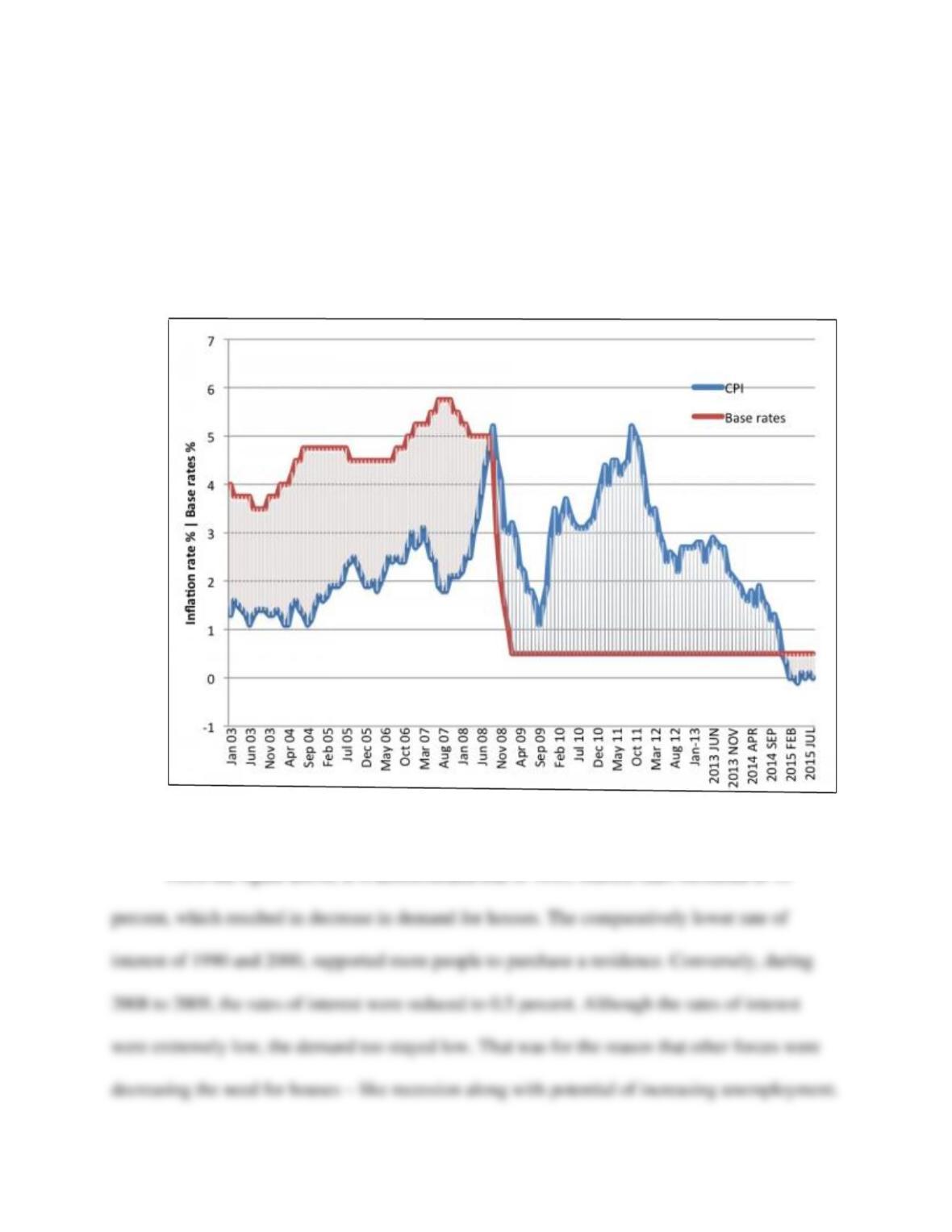
widespread). Thus, any adjustment in base rates by Australian Commercial Bank will directly
impact the house loan interest payment. Such is an important variable in establishing housing
affordability. Mortgage payment take an enormous percentage of individual’s private disposable
earnings (average stands at 25 percent; however, for other landlords it is most elevated.) If one
ECONOMICS 4
has a mortgage of £150,000, a 0.6 percent alteration in the base rate will alter hi/her monthly
payment by approximately £70 every month. Hence, even minor adjustments in the rate of
interest can prevent individuals from purchasing (Bjornlund & McKay, 2016).
Graph 2: Australian Base Rates and Inflation
Accessed from Bjornlund and McKay (2016).