Updated: 12/08/2015
PART A: TO BE COMPLETED BY STUDENT
Course Name/
Course Code:
Lecturer:
Title of
Assignment:
Submission Date:
PART B: DECLARATION
We hereby declare that the assignment is based on our work except for quotations and citations that have been
duly acknowledged. We also declare that this assignment has not been previously or concurrently submitted for
credit, either at Putra Business School or elsewhere. We understand that if we are found guilty of plagiarizing or
cheating in this assignment, we will fail this course.
Date:
Accepted by:
Signature: ____________________________________________
Name: Date:
Remarks:
Name
Matric No.
Signature
PART C: FOR OFFICE/LECTURER USE
SUBMISSION OF ASSIGNMENT
(GROUP)
MARKS
ACCOUNTING FOR DECISION MAKING (ACC7101)
ASSOC. PROF. DR. AHMED RAZMAN ABDUL LATIFF
CASE STUDY FOR GROUP ASSIGNMENT
FLY ASH BRICK PROJECT : FEASIBILITY STUDY USING CVP ANALYSIS
2nd NOVEMBER 2020
MD. RIYAD HOSSAIN
NG JIEN HUN
NURUL HUSNA BINTI MOHD AMIR
SAIFUL ISLAM BIN WAN ZAHIDI
SALINDA BINTI SANY
SITI NUR BALQISH BINTI AMINUDDIN
WILLIE ANAK MONGIN
PBS20101063
PBS20101013
PBS20101052
PBS20101014
PBS20101015
PBS20101062
PBS20101022
willie
balqish
salinda
saiful
husna
ng jien hun
riyad
2nd NOVEMBER 2020
CASE STUDY FOR GROUP ASSIGNMENT
FLY ASH BRICK PROJECT – FEASIBILITY STUDY USING CVP ANALYSIS
GROUP 4
MD. RIYAD HOSSAIN
PBS20101063
NG JIEN HUN
PBS20101013
NURUL HUSNA BINTI MOHD AMIR
PBS20101052
SAIFUL ISLAM BIN WAN ZAHIDI
PBS20101014
SALINDA BINTI SANY
PBS20101015
SITI NUR BALQISH BINTI AMINUDDIN
PBS20101062
WILLIE ANAK MONGIN
PBS20101022
ACCOUNTING FOR DECISION MAKING (ACC7101)
ASSOC. PROF. DR. AHMED RAZMAN ABDUL LATIFF
PUTRA BUSINESS SCHOOL
2 NOVEMBER 2020

TABLE OF CONTENT
Section
Topic
Page
1
Case Summary
1-2
2
I. Cost Classification
II. Contribution Margin
III. Breakeven Point Analysis
IV. Operating Leverage
3-5
6
7-8
9-11
3
Conclusion
12
4
References
13

FLY ASH PROJECT: FEASIBILITY STUDY USING CVP ANALYSIS
FLY ASH BRICK PROJECT: FEASIBILITY STUDY USING CVP ANALYSIS Page 1
CASE SUMMARY
This case study is about a business plan which was proposed by Rajiv Sharma to his friend to set
up their own business in a very prospective way of constructive industry in India. The two
partners would like to manufacture bricks out of fly ash. Rajiv has years of experience in the
construction industry and has good contacts, and he knew about the potential of fly ash bricks in
the market due to increasing construction in the market would raise the demand for these bricks.
A fly ash brick producing is a brand-new segment in the market of construction materials. The
segment appeared due to the problem of fly ash disposal in the country. This market sector has a
big potential in the future because of easy access to cheap fly ash and forecasted considerable
increase in volume of construction in India. The use of fly ash in the manufacture of bricks gives
an opportunity not only to manage the increasingly generated fly ash but also to reduce the
environmental footprint of the brick sector of India.
Fly ash is the wastage that could be used to produce the fly ash bricks that is comparatively good
against the other bricks produced through burnt clay. The market has potential to adopt the ash
bricks because it is anticipated that there would be a shortage of 20 million to 70 million home
units to accommodate the increasing population of India. It was a great business opportunity
because there is a huge gap in the construction industry to sell a new product that is much more
reliable than conventional bricks. Meanwhile, a single unit of brick in the market would be sold
for 7 rupees per unit.
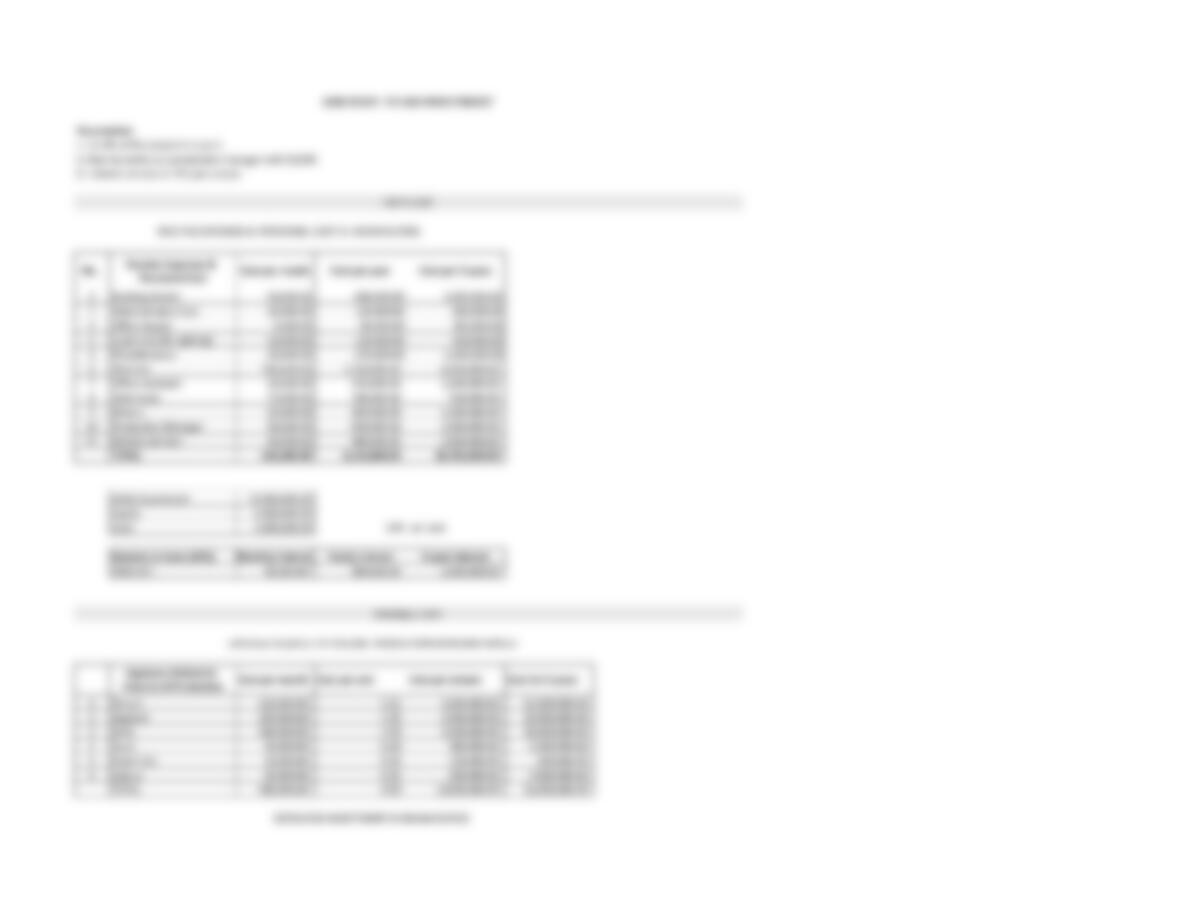
Therefore, coming back to investment proposals, it is important to know how much a company
would need to invest in fixed assets, and what should be their working capital. Meanwhile, if the
company has the production capacity of 4 million bricks annually, so, how much should the
company make the sale to be on break-even point? Moreover, what would be the company’s
fixed costs and variable costs? Moreover, it is important to know how much a company would
have a return on equity, and that would be able to meet its debt obligations that it is supposed to
take a mortgage loan from the bank. Because the company has to ensure that it is earning
sufficient to meet with future complications of acquiring new plant and equipment since the
plant and equipment have five years life with no salvage value.
Process of Manufacture:
Fly ash, lime sand and gypsum are manually fed into a pan mixer where water is added in the
required proportion for intimate mixing.
The proportion of the raw material is generally in the ratio :-
60-80% of fly ash
10-20% lime