1) Select the correct answer for each of the following questions:
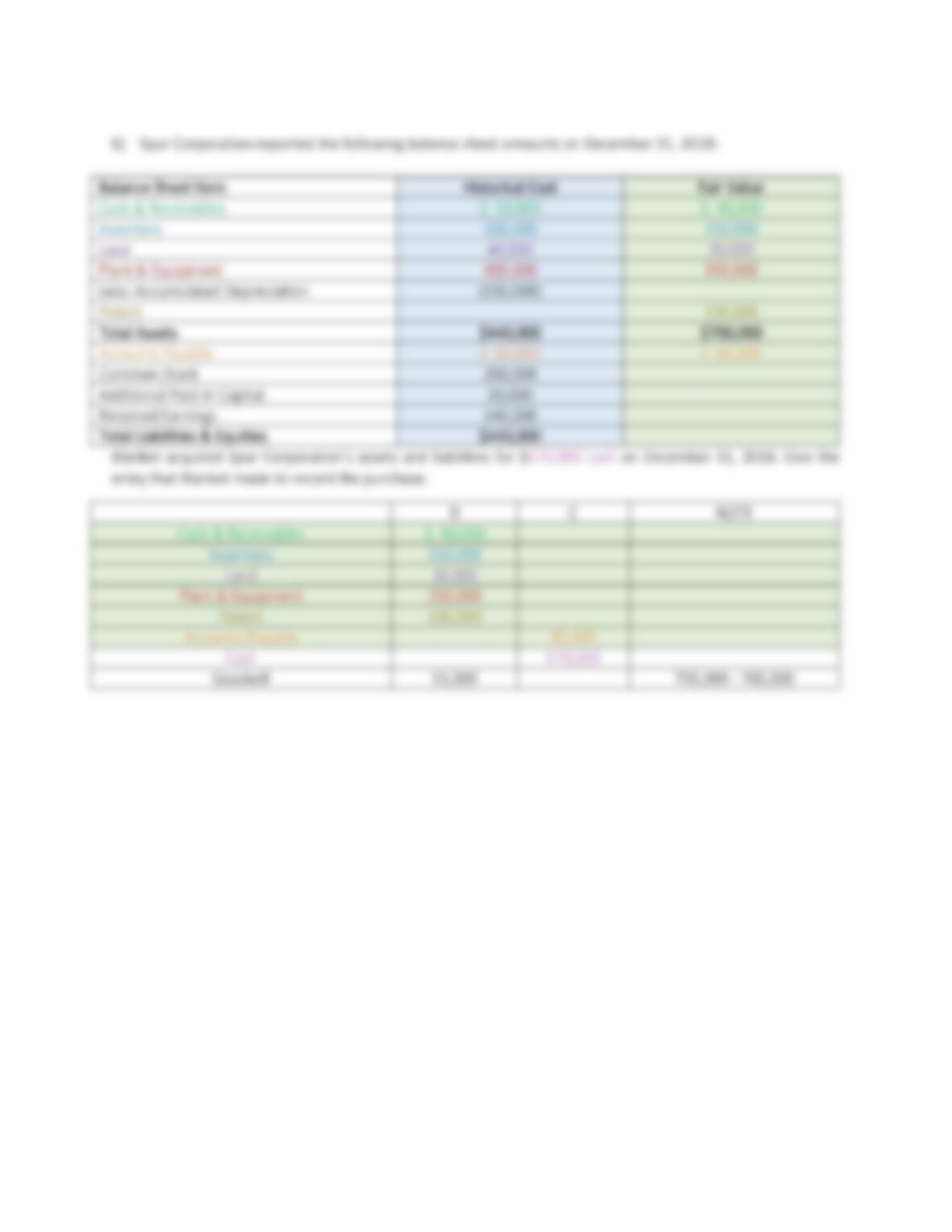
1. Goodwill represents the excess cost of an acquisition over the
a. sum of the fair values assigned to intangible assets less liabilities assumed.
b. sum of the fair values assigned to tangible and intangible assets acquired less liabilities
assumed.
c. sum of the fair values assigned to intangibles acquired less liabilities assumed.
d. book value of an acquired company.
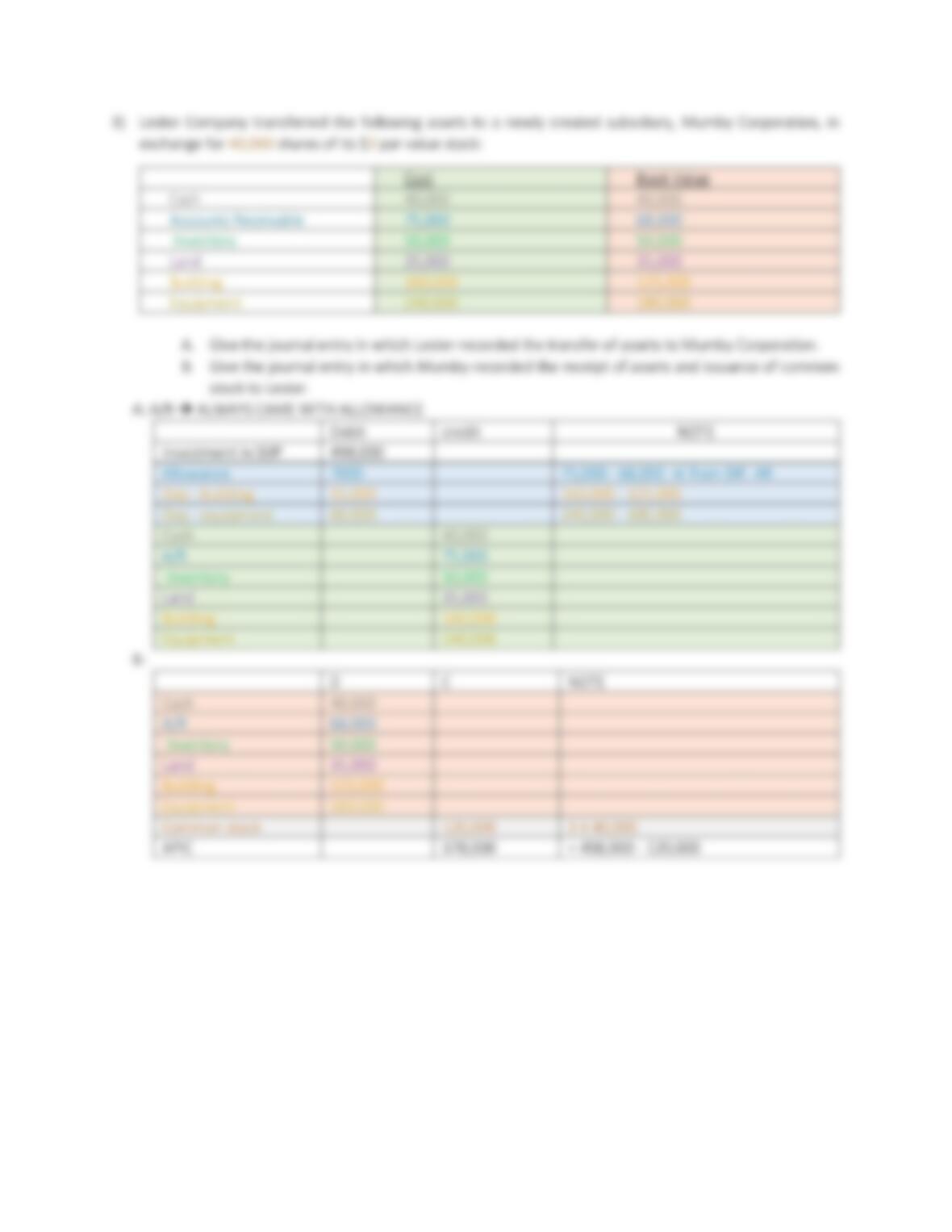
2. Tear Company, a newly established subsidiary of Stern Corporation, received assets with an original cost
of $260,000, a fair value of $200,000, and a book value of $140,000 from the parent in exchange for
7,000 shares of Tear’s $8 par value common stock. Tear should record
a. Additional paid-in capital of $0.
b. Additional paid-in capital of $84,000.
c. Additional paid-in capital of $144,000.
d. Additional paid-in capital of $204,000.
200,000 – ( 7000 X 8 ) = 144,000
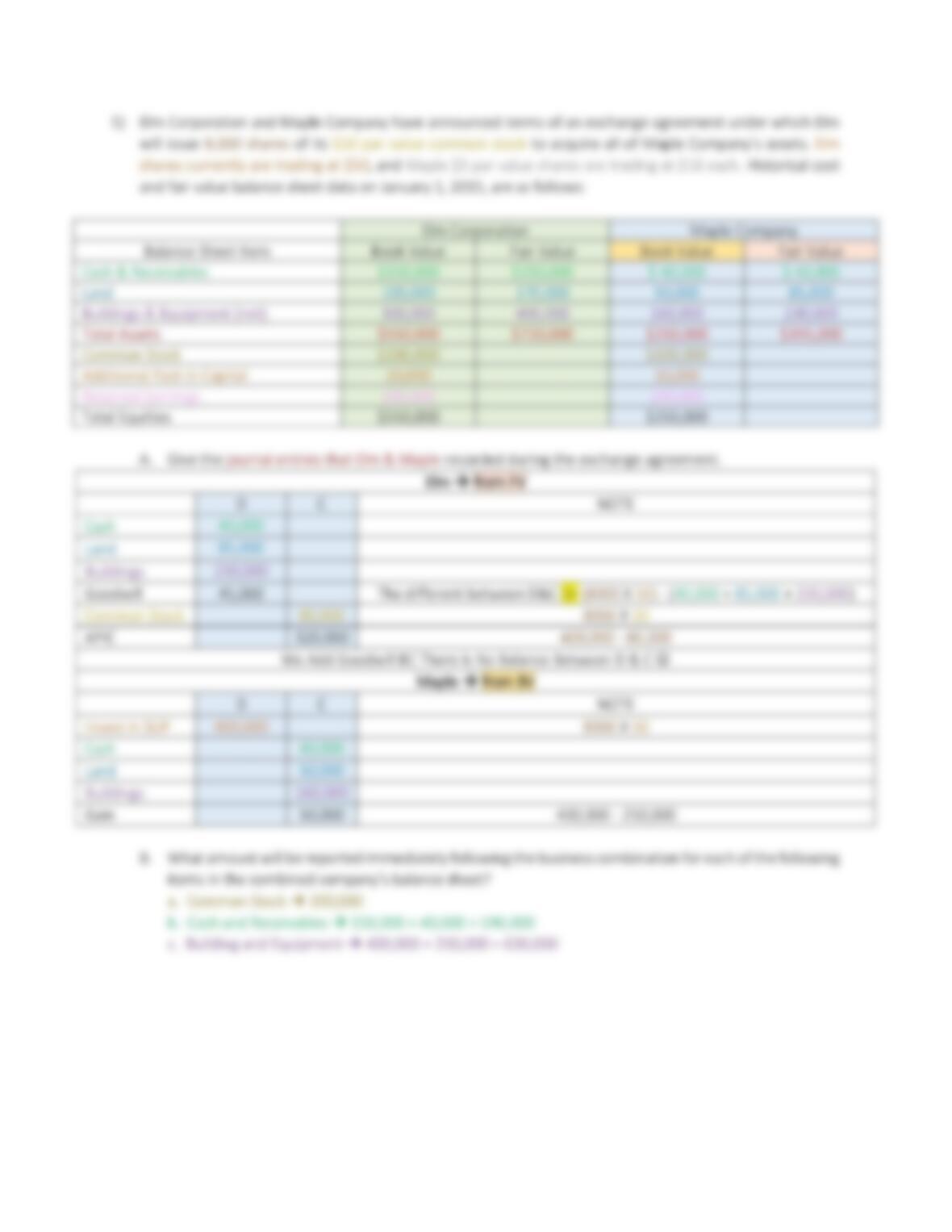
3. Twill Company has a reporting unit with the fair value of its net identifiable assets of $500,000. The
carrying value of the reporting unit’s net assets on Twill’s books is $575,000, which includes $90,000 of
goodwill. The fair value of the reporting unit is $560,000. Twill should report impairment of goodwill of
a. $60,000.
b. $30,000.
c. $15,000.
d. $0
90,000 – (560,000 – 500,000) = 30,000
4. Separately identified intangible assets are accounted for by amortizing:
a) exclusively by using impairment testing.
b) based upon a pattern that reflects the benefits conveyed by the asset.
c) over the useful economic life less residual value using only the straight-line method.
d) amortizing over a period not to exceed a maximum of 40 years.
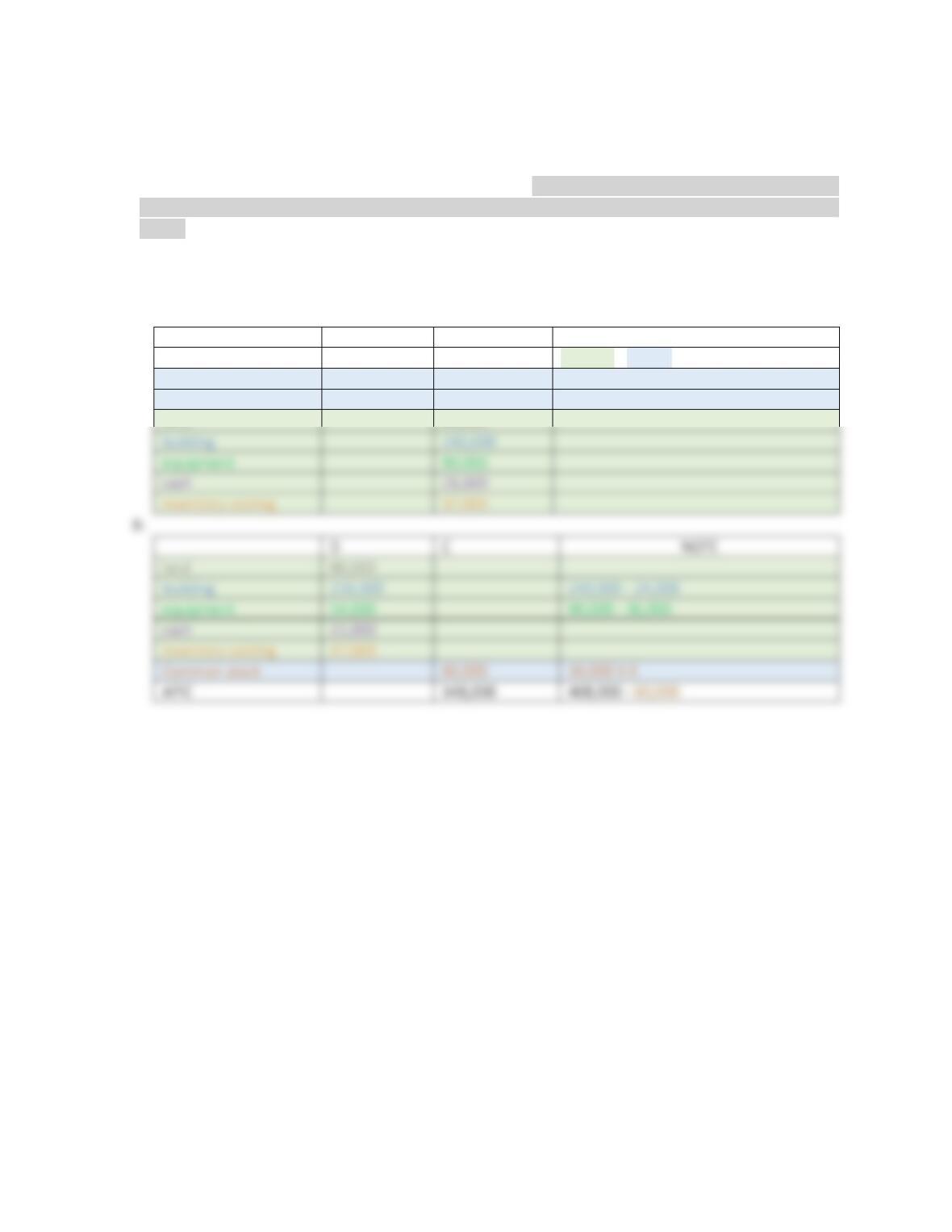
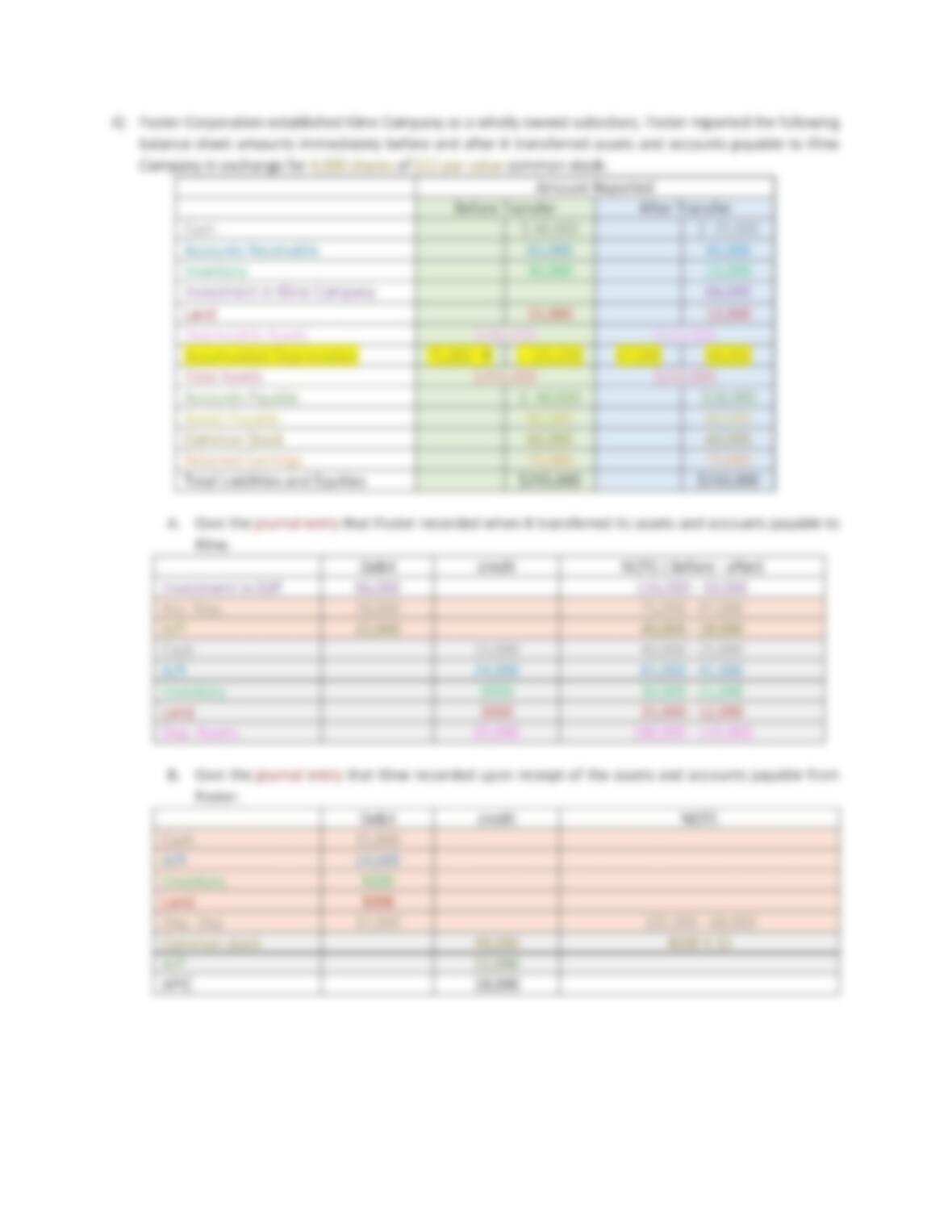
2) Pale Company was established on January 1, 2016. Along with other assets, it immediately purchased land
for $80,000, a building for $240,000, and equipment for $90,000. On January 1, 2020, Pale transferred these
assets, cash of $21,000, and inventory costing $37,000 to a newly created subsidiary, Bright Company, in
exchange for 10,000 shares of Bright’s $6 par value stock. Pale uses straight-line depreciation and useful
lives of 40 years and 10 years for the building and equipment, respectively, with no estimated residual
values.
a. Give the journal entry that Pale recorded when it transferred the assets to Bright.
b. Give the journal entry that Bright recorded for the receipt of assets and issuance of common stock
to Pale.
A:
Debit
credit
NOTE
Investment in SUP
408,000
468,000 – 60,000
Dep – building
24,000
( 240,000 / 40 ) X 4
Dep – equipment
36,000
( 90,000 / 10 ) X 4
D
C
240,000 – 24,000
90,000 – 36,000
APIC
348,000
408,000 – 60,000