A Schismatic Ideology:
The deliberate vanquishing of the voice of Indian Muslims against the dissection of their
motherland
Yusra Shah
Institute of Management Sciences, B.S Social Sciences
January 13, 2020

Introduction
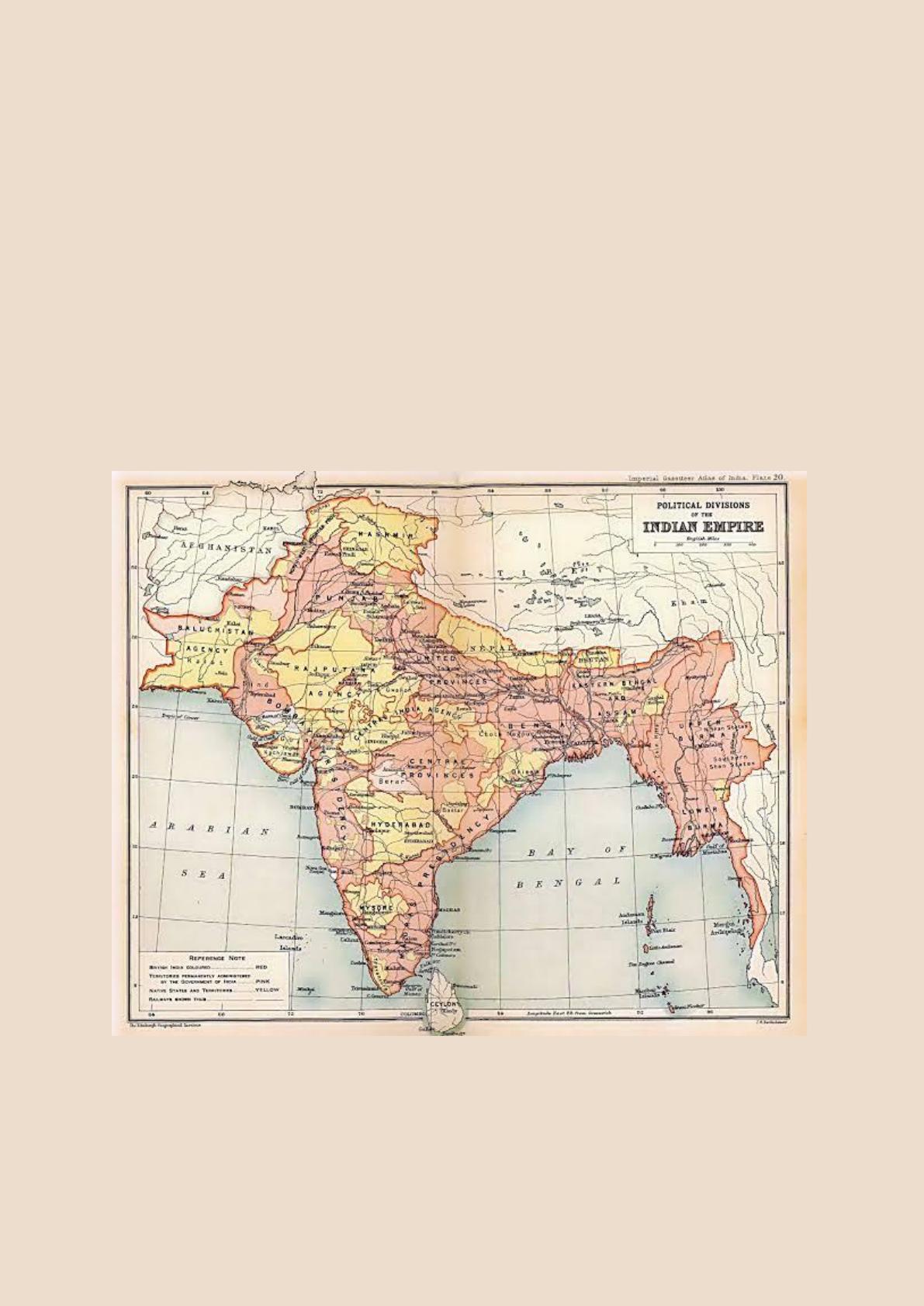
In 1947, the British India was divided into two countries, modern day India and Pakistan.
But, behind that tandem was 50 years of struggle. Many people assume that the creation of
Pakistan was the translation and the direct result of the demand of millions of Muslims of
India, in their yearning for a separate homeland. However, what many people don’t know, is
that behind the freedom struggle, there were even more Muslims who opposed its creation
and fought for the unity of their motherland, India. The unity that was threatened by the
British, the Muslim league, the Hindu Mahasaba and later on, even the congress, all alike.
In this paper, we will investigate and try to identify the main Muslim elements who were
against the Muslims League’s politics, the variables that played a part in their views and
identify the alternative solution to the communal problem in India.
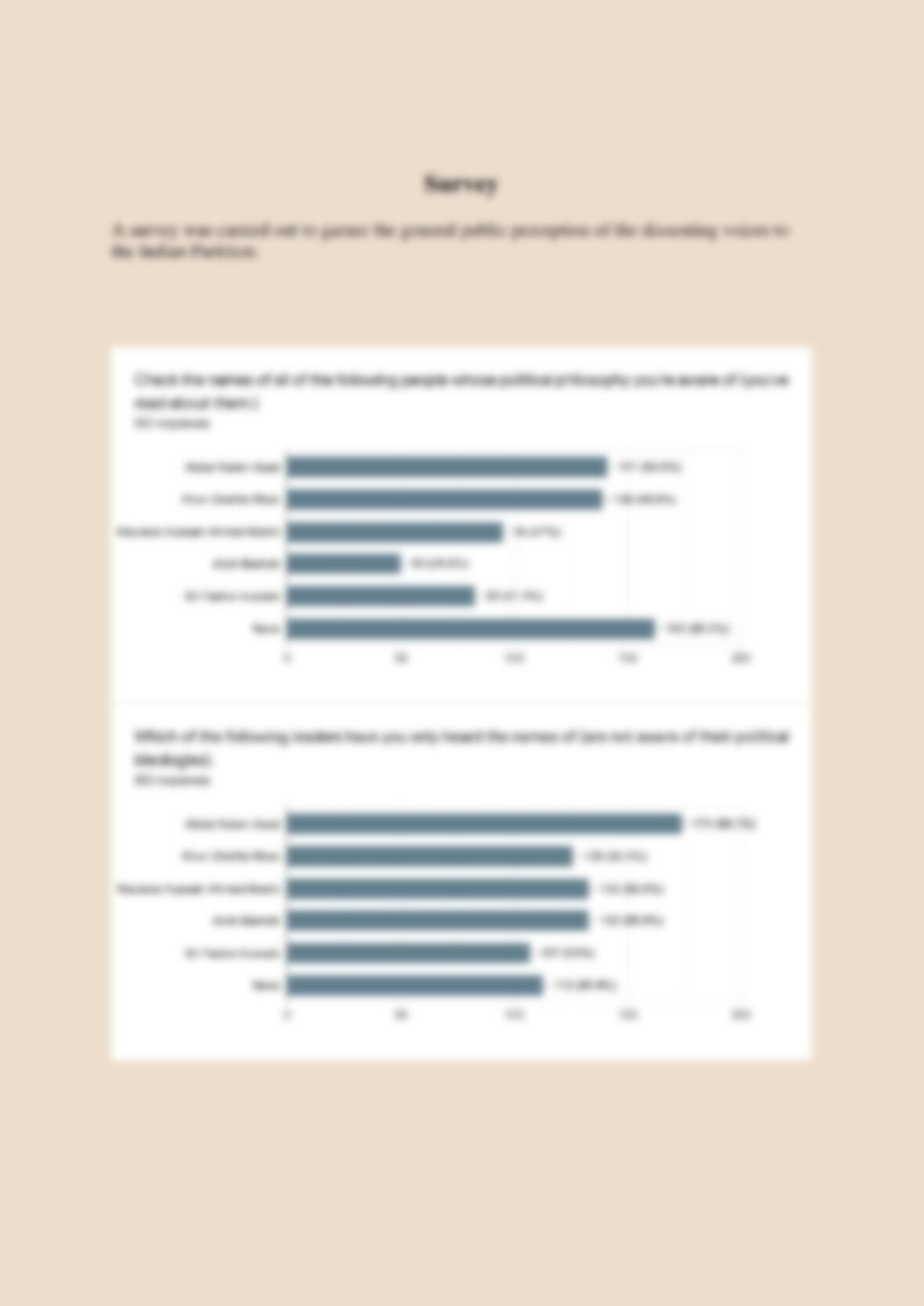
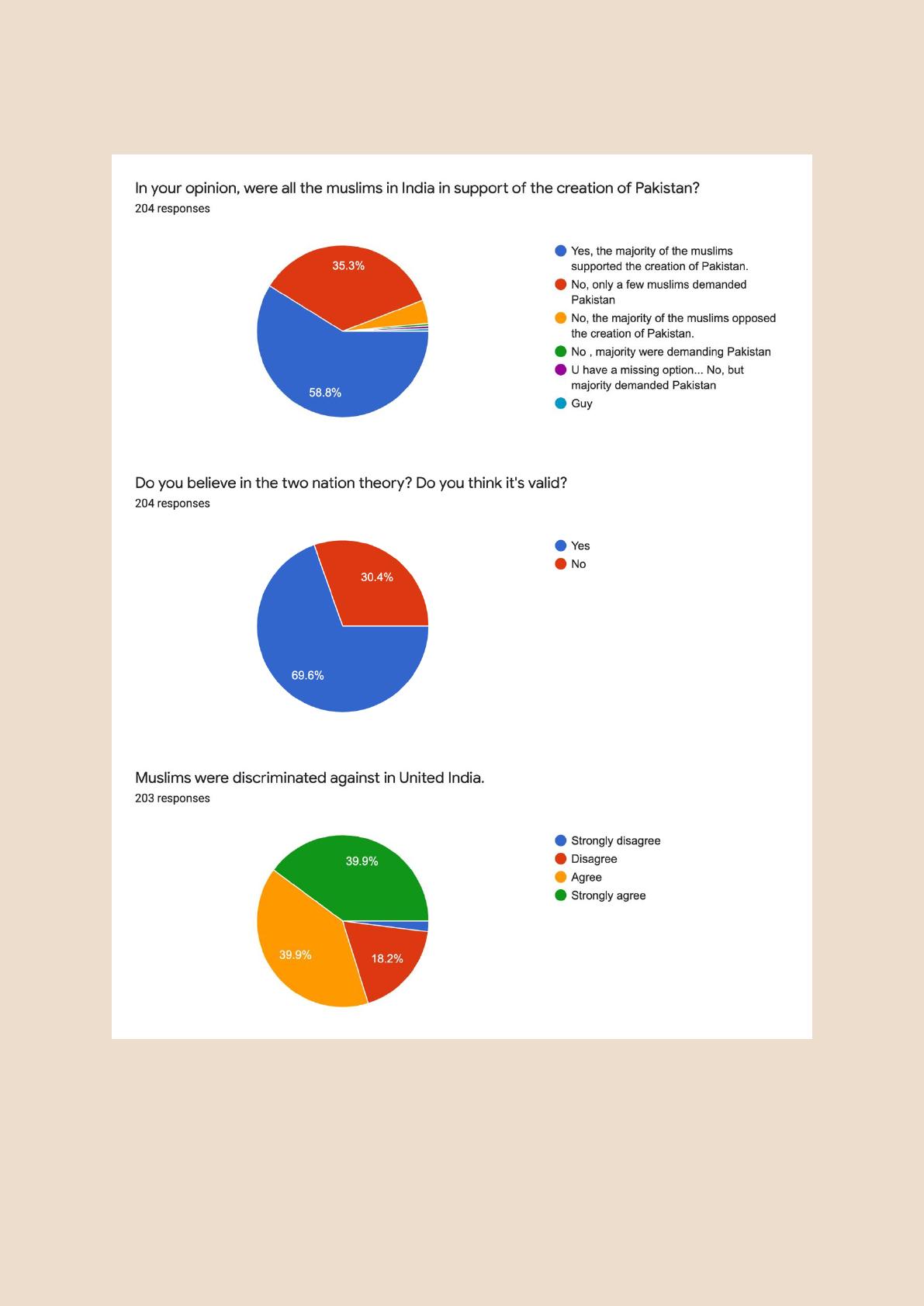
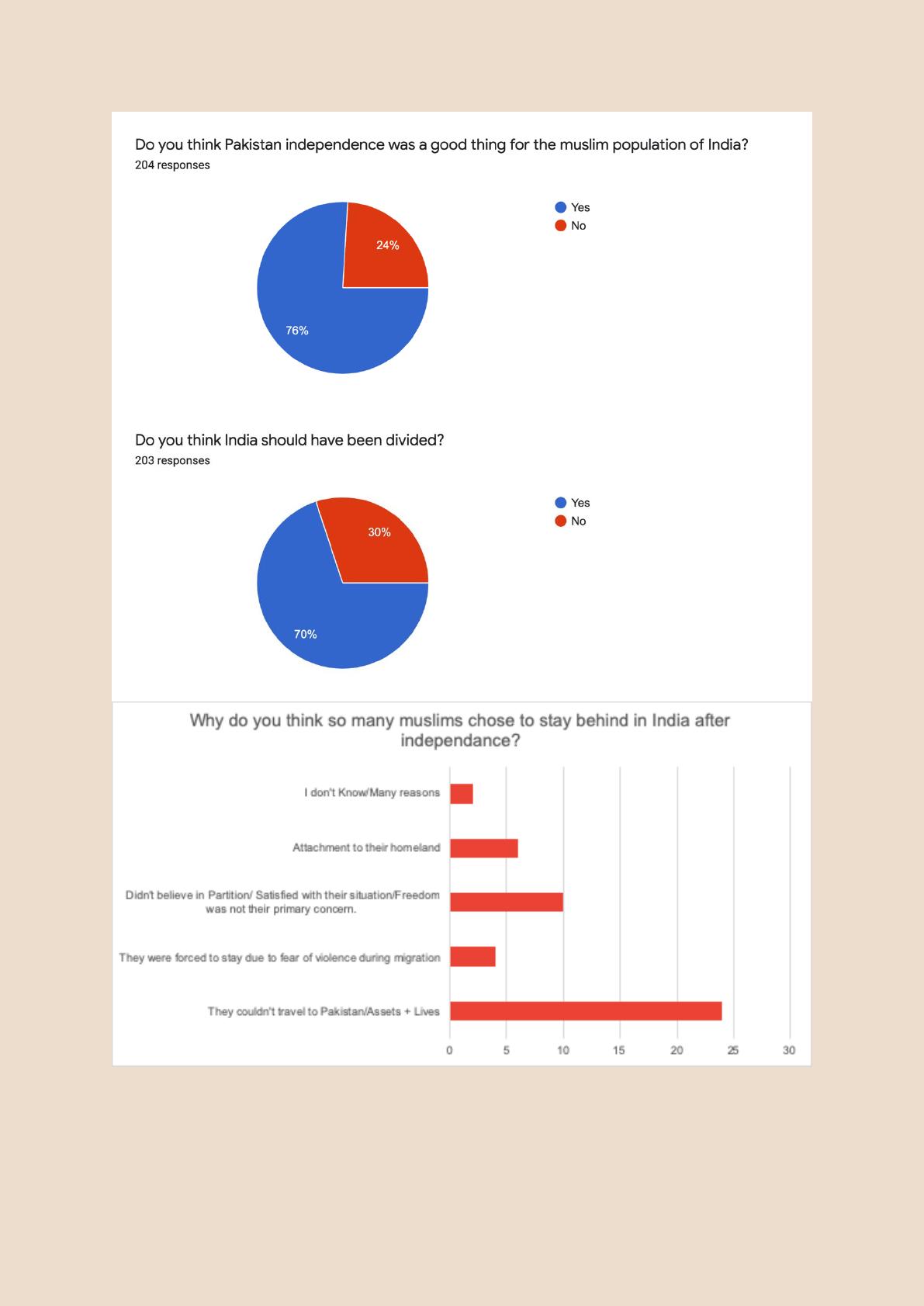
For this purpose, we will carry out both primary and secondary research. A survey will be
carried out to analyse the popular conception in Pakistan regarding these leaders and their
politics.
Background
The struggle for freedom
After the failure of the war of independence in 1857, some steps of the British government
like the Allahabad declaration of 1858, ensured that anyone who opposed the British rule
would be excluded from government jobs. Since Muslims took a leading role in the
aforementioned war, the Muslim community was majorly impacted by this order. This
resulted in the advantage the Hindu community garnered, leading to their prevalence in every
sphere of political, economic and social life in the country while the Muslim community was
left behind in almost everything. (Ali & Online, 2017) This was the beginning of the division
of Indian Nationalism into Hindus and Muslims.
The Indian National Congress was formed in 1885, as a representative of the Indians as a
whole. However, after some instances, like opposition to the pro-Muslim partition of Bengal
in 1905, frustrated Muslims, citing Hindu biasedness of the congress, formed their own
separate organization, the Muslim league in 1906. On the basis of the two-nation theory and
the development of the Pakistan ideology, Muslim league, towards the 1940s, started to
advocate for a separate Muslim state. Hence, The Muslims of the subcontinent came to be
divided into two groups, majorly, those in favor of partition, under the Muslim league and
those who were against partition, challenging communal politics.
Opposition to Partition
As the Muslim league rhetoric for a separate state became more famous, so did the opposition
to it. A month after the Muslim league adopted it’s Pakistan Resolution, on April 27, 1940,
the biggest opposition to this idea came in the form of the All India Azad Muslim
Conference. According to many third party observers, like Wilfred Smith, this conference
seemed to be more reflective of the majority of the Indian Muslims, with about 1400
delegates taking part. (“The dissenters,” 2016) They belonged mostly to the working and
lower strata of society.

The major Muslim organizations present at the conference included –All India Jamiat Ulama,
Momin Conference, Khudai Khidmatgars, the Anjuman-e-Watan of Baluchistan, Bengal
Krishak Proja Party, Jamiat Ahl-e-Hadees etc. In his speech, the leader of the conference,
Allah Baksh declared that;
“No power on earth shall be permitted to rob Indian Muslims of their just rights as Indian
nationals.”
According to him, the idea of partition was a result of the upper class, elitist thinking of Hindus
and Muslims, propagating communalism. The conference also resolved that the idea of
Pakistan was impractical and harmful to not only the country but especially to the Muslims.
The intention of the conference could be gleaned through its slogans, such as; “Inquilab
Zindabad”, “Hindustan Azad”, “Pakistan Murdabad”, “Freedom through National Unity”, “We
are Indian and India is our Home.” (Ali & Online, 2017)
The Bombay Chronicle opined that, whatever was the number of followers behind Jinnah, the
conference made it clear that there was yet a greater number of Muslims and Muslim
organizations who opposed him, with the attendance being five times greater. According to the
Times of India, the conference through its huge mobilization, proved that the public opinion
was against the obstinacy of the Muslim league. (Nanda, 2013)
The greatest opposition to the idea of Pakistan came from none other than Abdul Kalam Azad,
member of the Indian national Congress. Jamiat Ulama-e-hind was also an important
organization fighting for Indian unity. Maulana Hussain Ahmed Madni, one of the foremost
Islamic scholars in the country, was of the opinion that nations were based not on the basis of
religion, but homelands.
Vociferous opposition to the partition could be seen in even the Muslim majority provinces
that would go on to constitute Pakistan, Abdul Quaiyum Khan from the NWFP declared that
they would fight against partition even if blood was shed. Syed Habibul Rahman member of
the Krishak Praja Party in Bengal called the proposal absurd and meaningless. Sir Ghulam
Hussain Hidayatullah, of Sindh also rejected the idea of Partition. Khan Abdul Ghaffar Khan
(1890–1988), was another important personality for shared Indian nationalism. W.C. Smith
observed, that no one in India was as committed to nationalism as the Khudai Khitmatgars,
established by Bacha Khan. When Congress accepted the partition plan in 1947, he expressed
his sentiments in the following words: “We Pakhtuns stood by you…. But you have deserted
us and thrown us to the wolves.” (Ghaffar Khan; “Frontier Gandhi” of India—Los Angeles
Times, n.d.)
Major Reasons for opposition to the Two Nation Theory
1. Impractical and Unnatural:
The All India Momin Conference, an organization that regarded itself as safe guarding the
interests of the ordinary Muslims, as opposed to Muslim league. It consisted mostly of
weavers from the north and eastern parts. It challenged the two nation theory on the basis that
along with being impractical, it was also un-Islamic and unnatural. They argued that the
geography and the intermingled populations of Hindus and Muslims would make the
proposed scheme impossible. (Azad, 1988)

Azad argued that the two regions that would make up Pakistan, had no point of physical
contact, moreover, the people of these two regions were completely different from each other
in all regards. For Azad, it was one of the biggest deception that religion could unite people
who were geographically, linguistically and culturally different. Thus, he predicted it would
impossible for Pakistan to function as a single nation, for even within the west wing, Sindh,
NWFP, and Punjab were all incompatible with separate motives. (Azad, 1988, p. 248)
2. Product of elitist thinking:
Allah Baksh declared communalism a product of upper-caste Hindus and Muslims. Afzal
Haq, the leader of Majlis-e-Ahrar-e-Islam, a Punjabi organization, was of the opinion that
the demand for partition came from the upper class, a stunt made to divert the attention of the
poor from important social and economic issues. He called it a strategy of the anti-people
rulers. (Ali & Online, 2017)
3. Indian Nationalism:
For many Muslims, like Allah Baksh, the idea of India being inhabited by two separate
nations was false. In his words, all Indian Muslims were also proud Indian nationals. And;
“No segregated or isolated regions, but the whole of India is the homeland of
all the Indian Muslims and no Hindu or Muslim or any other has the right to
deprive them of one inch of this homeland.”
The whole Indian culture was a product of both Muslim and Hindus and thus belonged to
both rather than to just one group. (Ali & Online, 2017) According to the JUH and other
Islamic parties, the idea of Muslim Nationalism propagated by the Muslim League was a
European idea of nation-state and sought to confine Islam within its boundaries. (Paracha,
2014)
4. Weakening of the Muslim minority:
One of the biggest criticism of the league was that it’s actions would further weaken the
already weak Muslim minority in India. At the time of the Lucknow Pact in 1916, Jinnah in a
sense sacrificed the legislative majorities of Muslims in Punjab and Bengal. Where Muslims
got over-representation in Bihar, Bombay, Madras, the central provinces and UP, etc. They
lost representation from 55% to 50% in Punjab and to 40% in Bengal. (Jinnah & Muslims of
India—Criterion Quarterly, n.d.) The major criticism regarding the Lucknow Pact was that it
weakened the position of Muslims in the provinces where they were already a majority,
making it impossible for them to gain a majority in elections.
In his biography (Qaiser, 2005), Abdul Kalam Azad states his main concern as:
‘The only result of the creation of Pakistan was to weaken the position of the
Muslims in the subcontinent of India.‘
5. Continuation of the British Rule:
Out of those who opposed the Muslim League, some Muslim leaders like, Sir Fazl-e-Hussain,
Sir Khizr Hayat Tiwana, Sir Sikander Hyat, etc. were in support of the continuation of the
British Rule and against the freedom struggle in general. (Ali & Online, 2017)
6. Opposition to a theocratic state:
Many Muslim leaders like Allah Baksh denounced the very idea of a theocratic state, as the
majority of them believed in the separation of religion from politics. (Qasmi, n.d.) Madani, of
Jamiat Ulama-e-Hind, (Ali & Online, 2017) said that:
“In the current age, nations are based on homelands, not religion…..the
Islamic sanction for Muslims is to work and live with non-Muslims in a
shared polity, and specifically, to embrace the secular democracy.”
7. Popularizing Communalism and it’s long term effects:`
For many nationalist leaders, the Muslim league, towing the lines of communalism was a
dangerous precedent for India, with disastrous long-term effects. Once communalism and
bigotry was introduced into society, it would be hard to fight back against it, as witnessed by
the events today in both countries against their minorities. (Dar, n.d.)
8. Resulting bloodshed and the hostage theory:
As witnessed by history, the numerous cries for the resulting bloodshed turned out to be a
reality. The situation took a turn for the worse when, according to A.K Azad, some members
of congress starting propagating the hostage theory. The theory gained more traction after
partition when the feelings of vengeance and retaliation were high. (Azad, 1988, p. 216)
(Qaiser, 2005) The hostage theory was also something Jinnah had in mind, telling the News
Chronicle in 1946, that the presence of 25 million Hindus in Pakistan was a fortunate thing
for the Muslims in India. (Jinnah & Muslims of India—Criterion Quarterly, n.d.) In 1947,
Collier’s Weekly quoted him, stating that: