COMPENSATION
A Human Resource Management Approach
Copyright © 2013 Pearson Education,
Inc. Publishing as Prentice Hall 1-12/15/2023

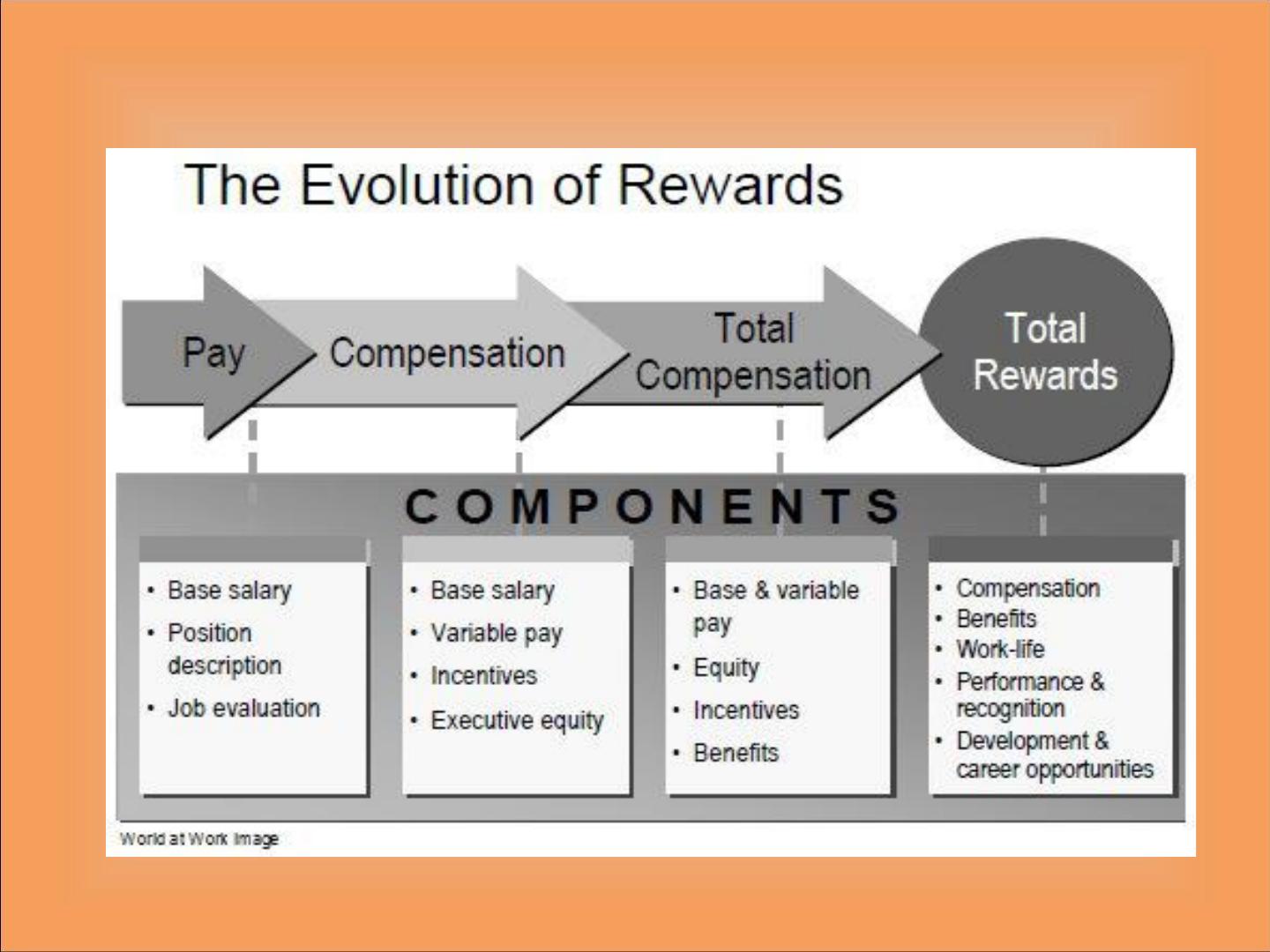
What Is Compensation?
•Compensation represents the rewards
employees receive for performing their job.
They are either:
–Intrinsic: intrinsic compensation represents
employees’ critical psychological states that
result from performing their jobs.
–Extrinsic: extrinsic compensation includes
both monetary and nonmonetary rewards.
2/15/2023 Copyright © 2013 Pearson Education,
Inc. Publishing as Prentice Hall 1-2
COMPENSATION
Copyright © 2013 Pearson Education,
Inc. Publishing as Prentice Hall 1-32/15/2023
COMPENSATION
Copyright © 2013 Pearson Education,
Inc. Publishing as Prentice Hall 1-42/15/2023

Components of a Total
Compensation
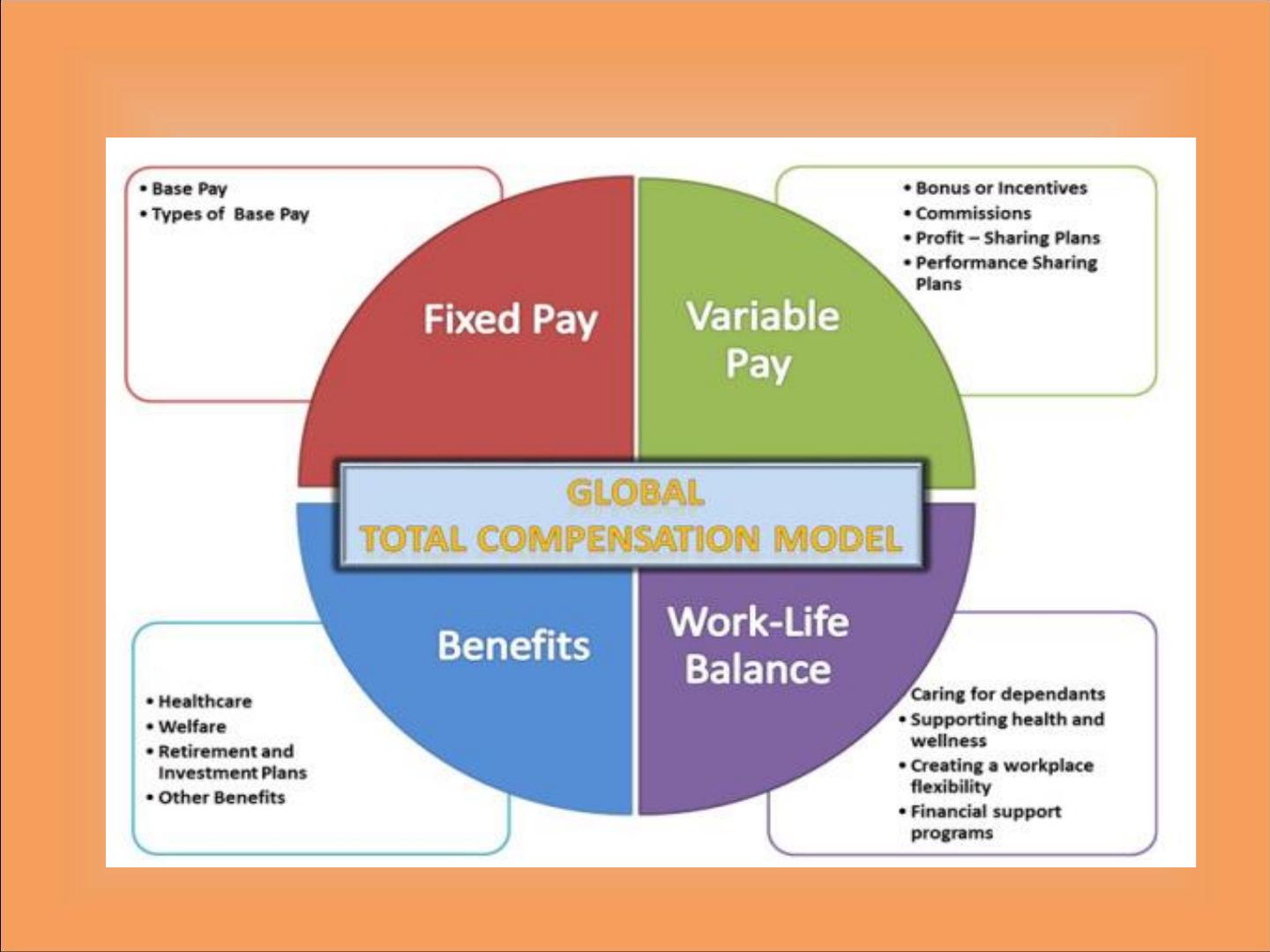
•Financial
•Direct
–wages, salaries, commissions, bonuses
•Indirect
–insurance plans
•life, health, dental, disability
–social assistance benefits
• retirement plans, social security, workers’ comp
–paid absences
•vacations, holidays, sick leave

Components of a Total
Compensation Program – 2
•Non-Financial
•The Job
–interesting, challenging, responsible
–opportunity for recognition, advancement
–feeling of achievement
•Job Environment
–policies, supervision, co-workers, status
symbols, working conditions, flextime,
compressed work week, job sharing,
telecommuting, flexible benefits programs
What Is Compensation?
–Intrinsic: Job Characteristic Theory
•Employees experience enhanced psychological
states (intrinsic compensation) when their jobs rate
high on five core job dimensions:
–Skill variety, task identity, task significance, autonomy