8Chapter
Managing
Change and
Innovation
8-1
1

Learning Outcomes
After studying this chapter, you will be able to:
•Define organizational change and compare and contrast
views on the change process.
•Explain how to manage resistance to change.
•Describe what managers need to know about employee
stress.
•Discuss techniques for stimulating innovation.
8-2
After studying this chapter, you will be able to:
•Define organizational change and compare and contrast views on the change
process.
•Explain how to manage resistance to change.
•Describe what managers need to know about employee stress, and
•Discuss techniques for stimulating innovation.
2
8-3
3
What Is Organizational Change?
8-4
If it weren’t for change, a manager’s job would be easy. Organization design would be stable because the
environment would be free from uncertainty so there would be no need to adapt. Decision making would be
simplified because the outcome of each alternative could be accurately predicted. A manager’s job would be
much easier if competitors never introduced new products or services, if customers didn’t make new demands, if
government regulations were never modified, if technology never advanced, and if employees’ needs remained
the same.
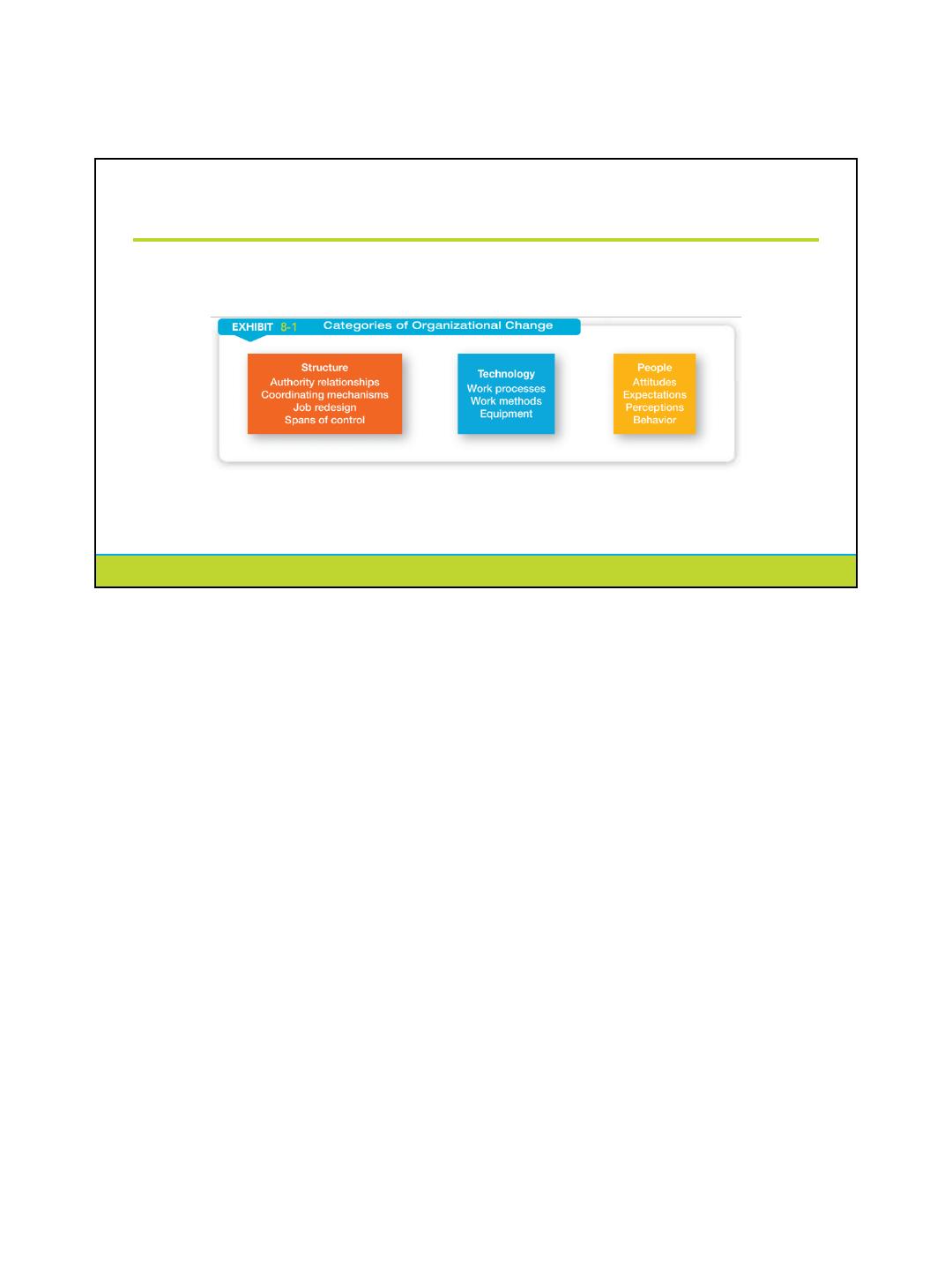
But change is an organizational reality. Workplace changes are classified as organizational change, which is any
alteration of an organization’s structure, technology, or people, as illustrated here in Exhibit 8–1.
1. Changes in structure includes any alteration in authority relationships, coordination mechanisms,
degree of centralization, job design, or similar variables. For example, restructuring can result in
decentralization, wider spans of control, reduced work specialization, and work teams.
2. Changing technology includes modifications to the way work is done or to the methods and equipment
used. One organizational area where managers deal with changing technology is continuous
improvement initiatives, which focus on developing flexible processes to support better-quality
operations. Employees committed to continuous improvement are constantly looking for things to fix,
so work processes must be adaptable to continual change. This adaptability requires an extensive
commitment to educating and training workers in problem solving, decision making, negotiation,
statistical analysis, and team-building. Workers must also be able to analyze and act on data.
3. Changes in people refer to changes in employee attitudes, expectations, perceptions, or behaviors. To
adapt well to change, the workforce must be committed to quality and continuous improvement, which
stem from proper employee education and training, performance evaluation, and a reward system that
supports and encourages those improvements.
4
The Need for Change: External Factors
External factors:
•Marketplace
•Government laws and
regulations
•Technology
•Fluctuations in labor markets
•Economic changes
8-5
Both external and internal forces in the environment bring about the need for change.
The external forces that create the need for organizational change come from various
sources, including:
•The marketplace reflects intense competition in recent years.
•Government laws and regulations are another impetus for change. For example,
when the Americans with Disabilities Act was signed into law, thousands of
businesses were required to widen doorways, reconfigure restrooms, and add
ramps.
•Technology also creates the need for organizational change. The Internet has
changed how we get information, how products are sold, and how we get our work
done. Technological advancements have created significant economies of scale for
many organizations.
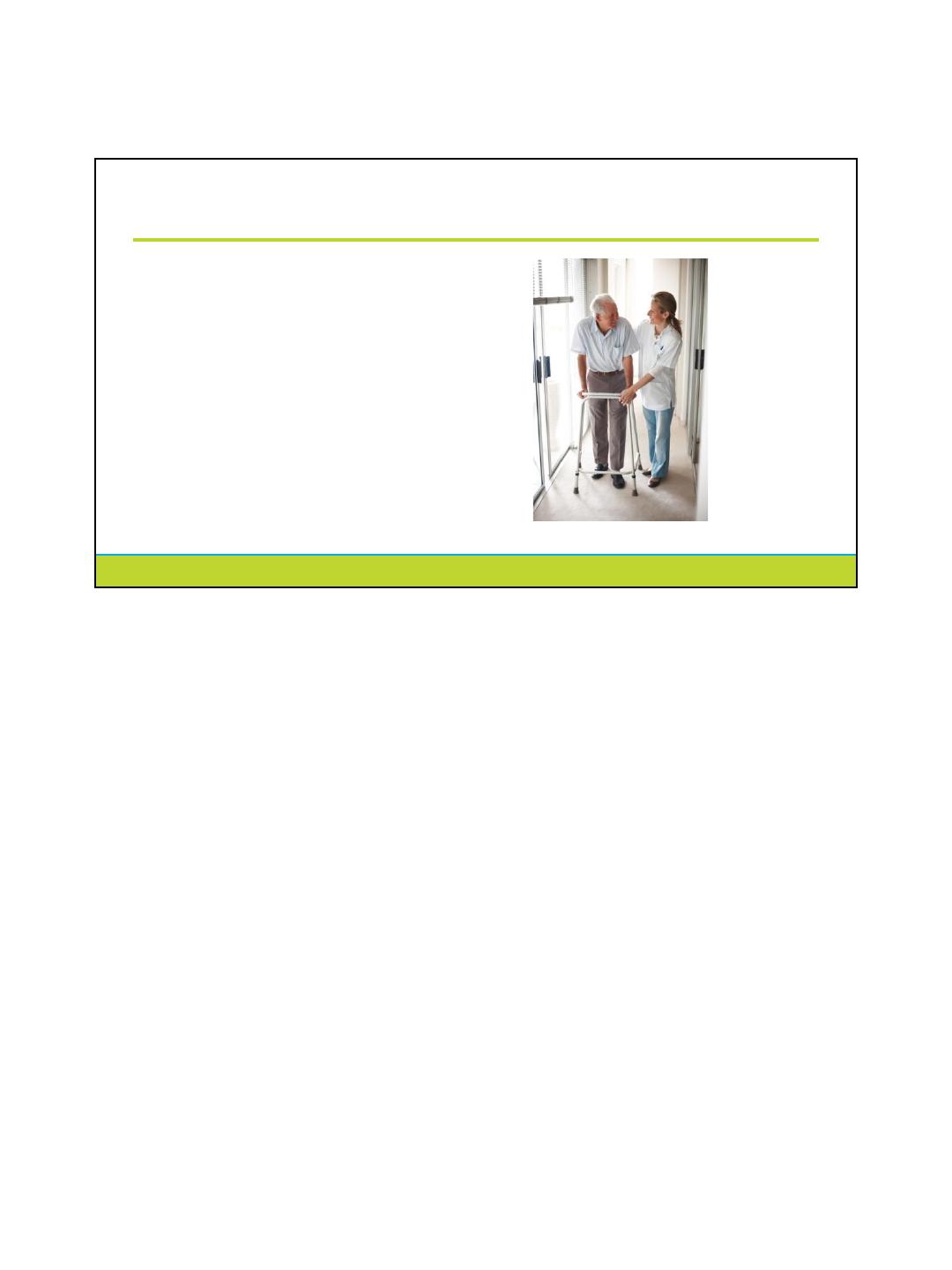
•Fluctuations in labor markets can force managers to initiate changes. For example,
the shortage of registered nurses in the United States has led hospital administrators
to redesign nursing jobs, alter their rewards and benefits packages for nurses, and
join forces with local universities to address the shortage of nurses.
•Economic changes affect almost all organizations. For example, prior to the
mortgage market meltdown, significant growth in the housing market meant more
jobs, more new hires, and increased sales in other businesses that supported the
building industry. But as the economy soured, the housing industry and other related
industries shrunk as credit markets dried up and businesses couldn’t get the capital
needed to operate.
5

The Need for Change: Internal Forces
Internal forces:
•Redefined or
modified
organizational
strategy
•Composition of
workforce
•Employee attitudes
8-6
Internal forces can also create the need for organizational change. These internal
forces can originate from the internal operations of the organization or from the
impact of external changes, both of which are a normal part of the organizational life
cycle.
Redefining or modifying an organization’s strategy often introduces a host of changes.
For example, bringing in new equipment is an internal force for change that can result
in employees facing job redesign, undergoing training to operate the new equipment,
or establishing new interaction patterns within their work groups.
Another internal force for change is a shift in the composition of an organization’s
workforce in terms of age, education, gender, nationality, and so forth. A stable
organization in which managers have been in their positions for years might need to
restructure jobs to retain more ambitious employees and to rework the
compensation and benefits systems to reflect the needs of a diverse workforce and to
respond to market forces in which certain skills are in short supply.
Employee attitudes, such as increased job dissatisfaction, may lead to increased
absenteeism, resignations, and even strikes. Such events will likely lead to changes in
6

organizational policies and practices.