HOMETASKS FROM ECONOMETRIC-4.
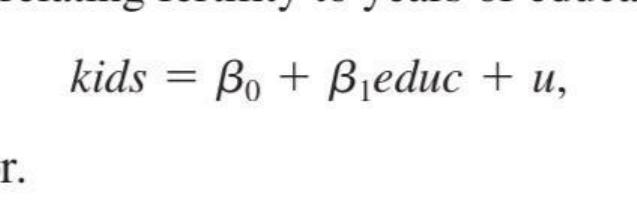
1} Let kids denote the number of children ever
born to a woman, and let education denote
years of education for the woman. A simple
model relating fertility to years of education is
where u is the unobserved error.
A} What kinds of factors are contained in u? Are
these likely to be correlated with level of
education?
B} Will a simple regression analysis uncover the
ceteris paribus effect of education on fertility?
Explain.
SOLUTIONS:
A} Education of the woman’s parents, number
of siblings the woman has, her income, her
marital status, her job, etc., are all likely to be
contained in u.
That is, each of these factors could be thought
of as “explanatory.” Each of them (and many
others that you could come up with) help
determine the number of children a woman
has. Many of the factors that I just listed are
likely to be correlated with a woman’s level of
education. Education of the woman’s parents:
certainly correlated. Number of siblings the
woman has: arguable whether or not
this is correlated with the woman’s
level of education. Marital status: correlated.
Job: correlated.
B} Because the omitted explanatory variables
(such as those above) are embodied in u, and
because these variables are also correlated
with education, the regression will not reveal a
causal relationship. The assumption E (u | x) = 0
is violated and so SLR.3 fails.
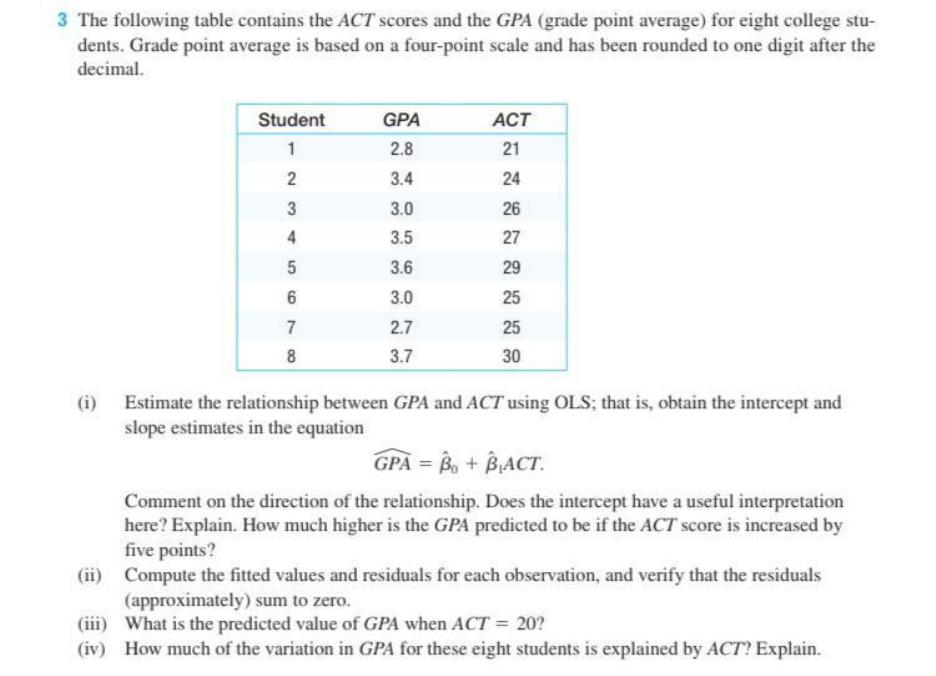
Solution:
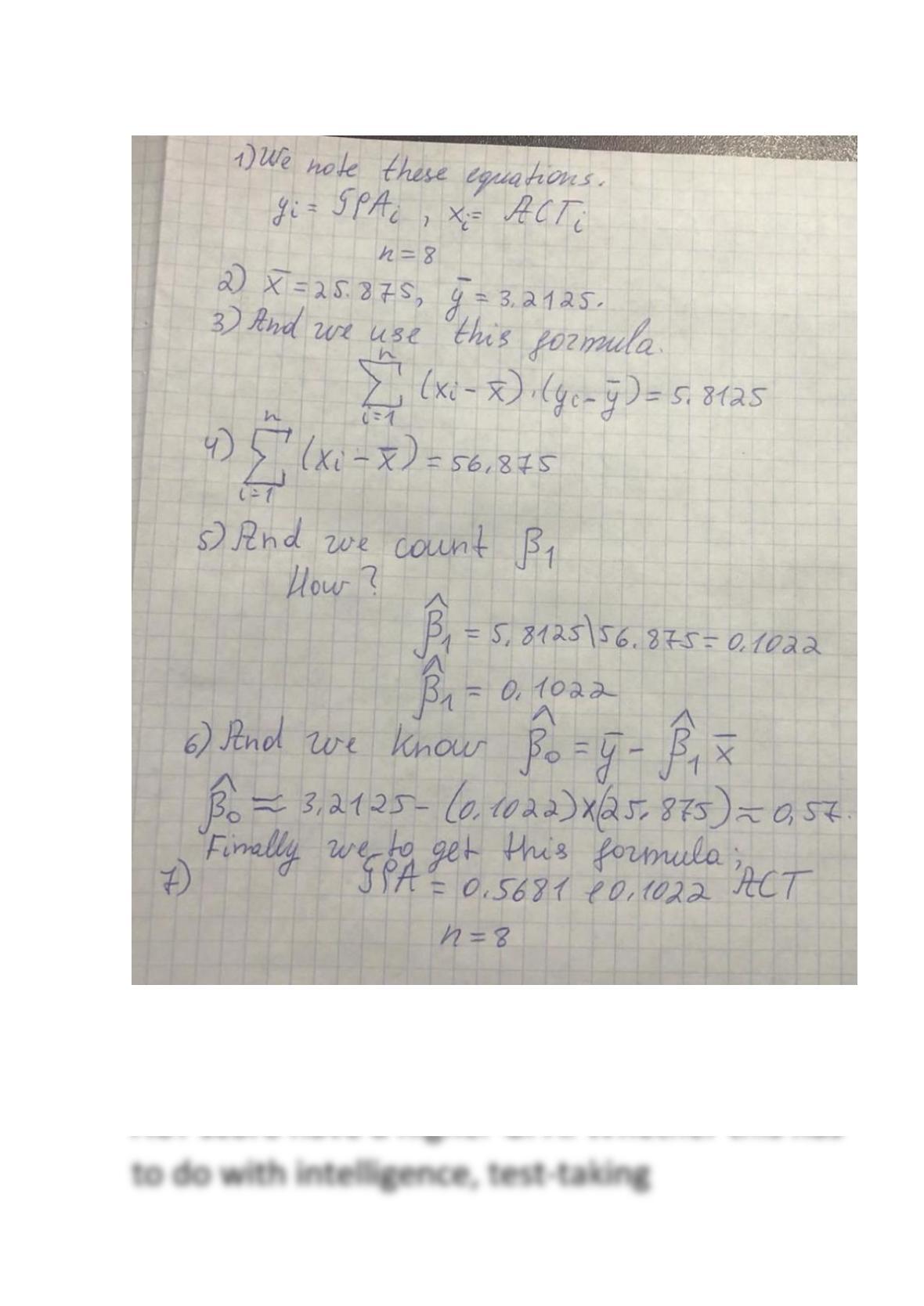
A}
The direction of the relationship
is positive, as expected. Students with a higher